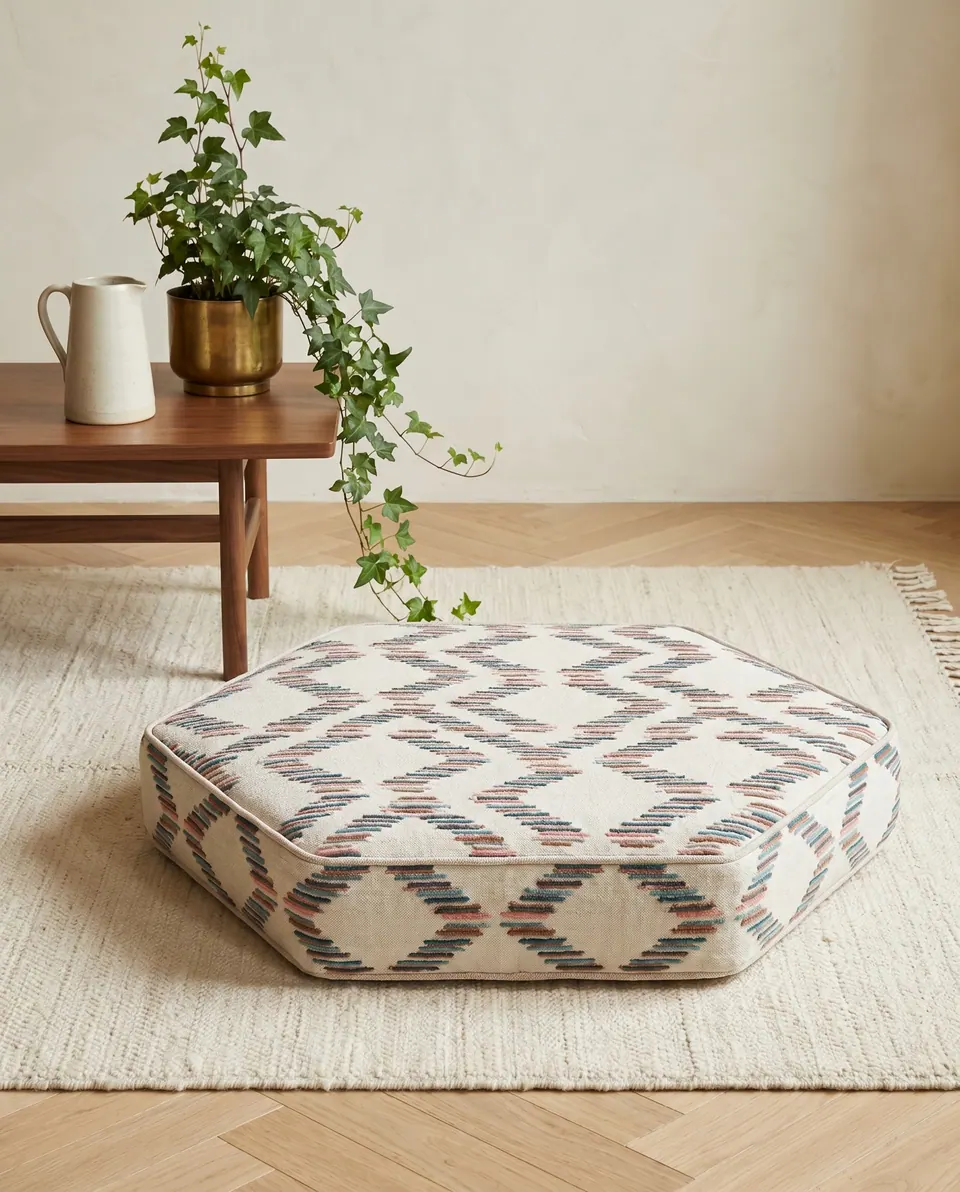
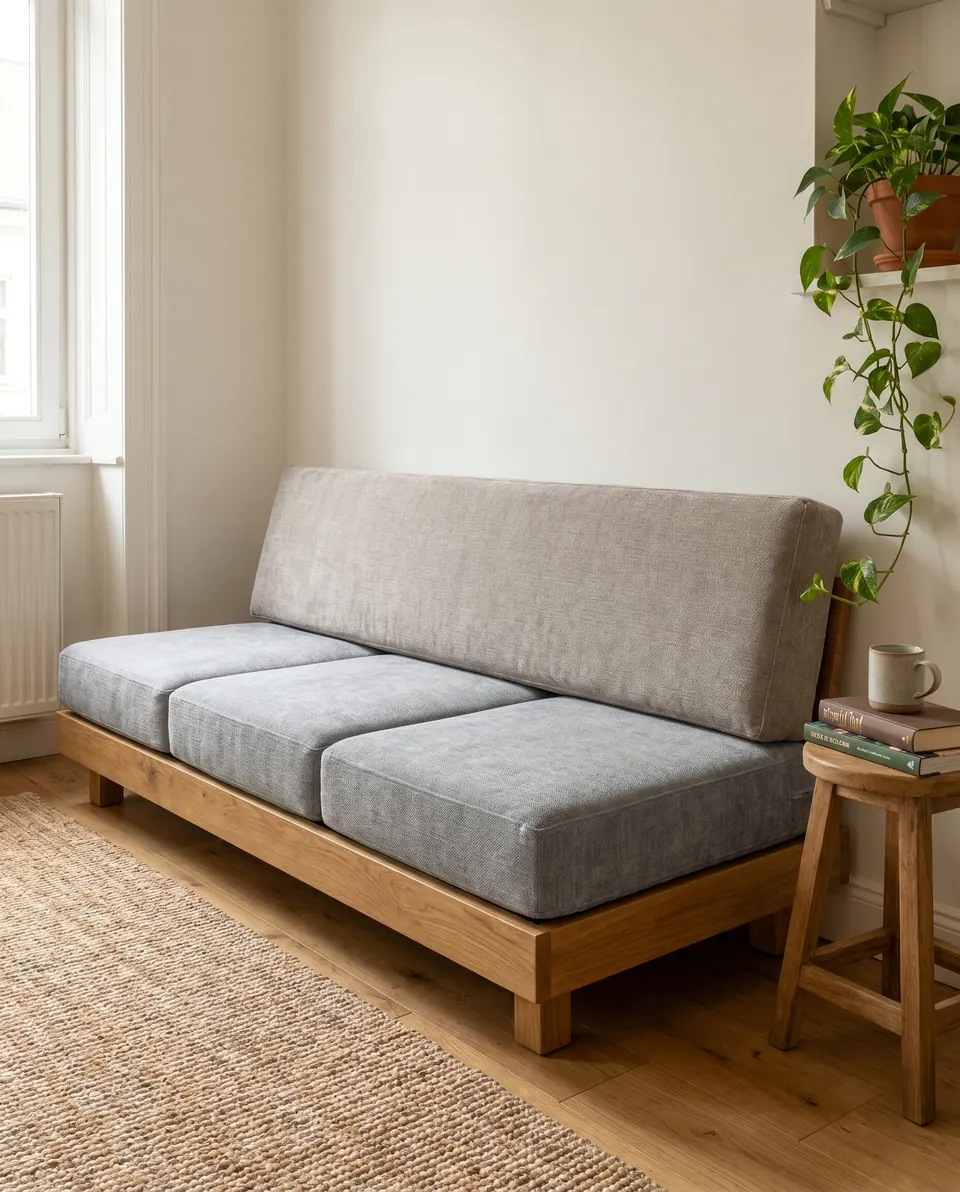
A Reading by RosaPiano Bench Cushions
A raspberry tweed piano bench cushion, and how it lives with kids, sun and scales
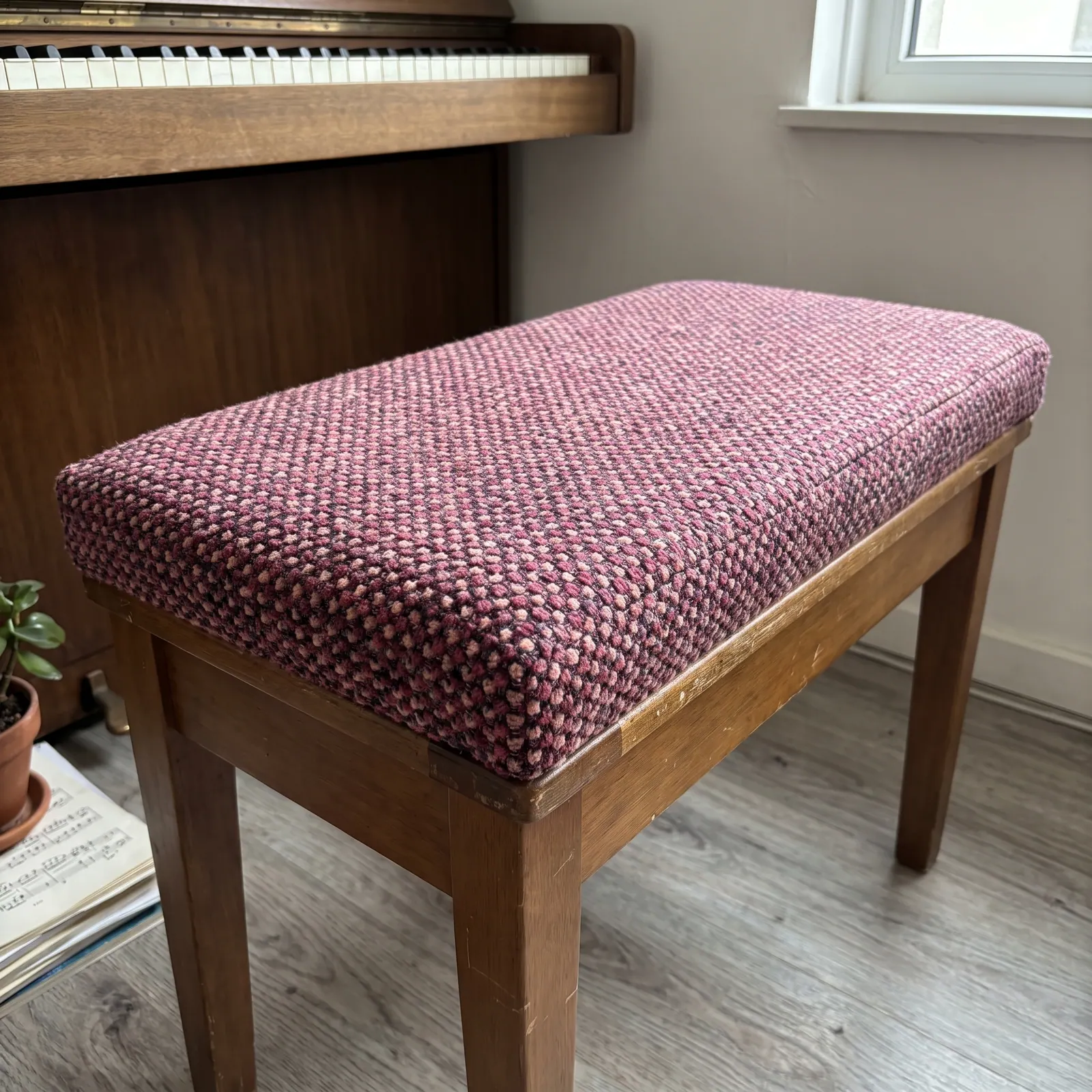
This walnut bench gets sat on every afternoon by somebody working through scales, and a cushion in that spot takes more daily wear than any sofa in the house.

 Save
The quick answer
A piano bench cushion that survives daily practice is firm, cut flush with the bench top and covered in a textured weave that doesn't slide. The raspberry cushion here does all three, and because a player sits toward the front edge, any overhang would press into the legs. Check your playing height with the cushion's thickness in mind before you order.
Before the reading: three questions
- A common question
My bay window has several angles. Can you make one cushion to fit it?
The workshop's answerYes. Multi-angle bay window cushions are made regularly. Send a rough diagram with the measurements, and the workshop checks it and confirms.
- A common question
Is there an extra discount for an angled bay window cushion?
The workshop's answerNo. One four-sided bay seat, 73 1/4 in (186 cm) on its longest side and 21 1/4 in (54 cm) at its deepest, was quoted at exactly the price the listing showed for those dimensions. Angled custom shapes take more complex labor, and the listing price is already the discounted rate.
- A common question
Can you make the cushion flat, with no buttons or tufts?
The workshop's answerYes. Cushions can be made flat, without any buttons or tufting, if you prefer a plain look.
Now, the reading
What those three questions have to do with a piano
Pull up a chair. Read those questions again and you'll hear daily life in every one: a shape you live around, a budget, and a plain top with nothing to twist loose. That last one matters at a piano more than anywhere. A button at the front edge is the first thing small fingers find between pieces, and a flat top means nothing to find.
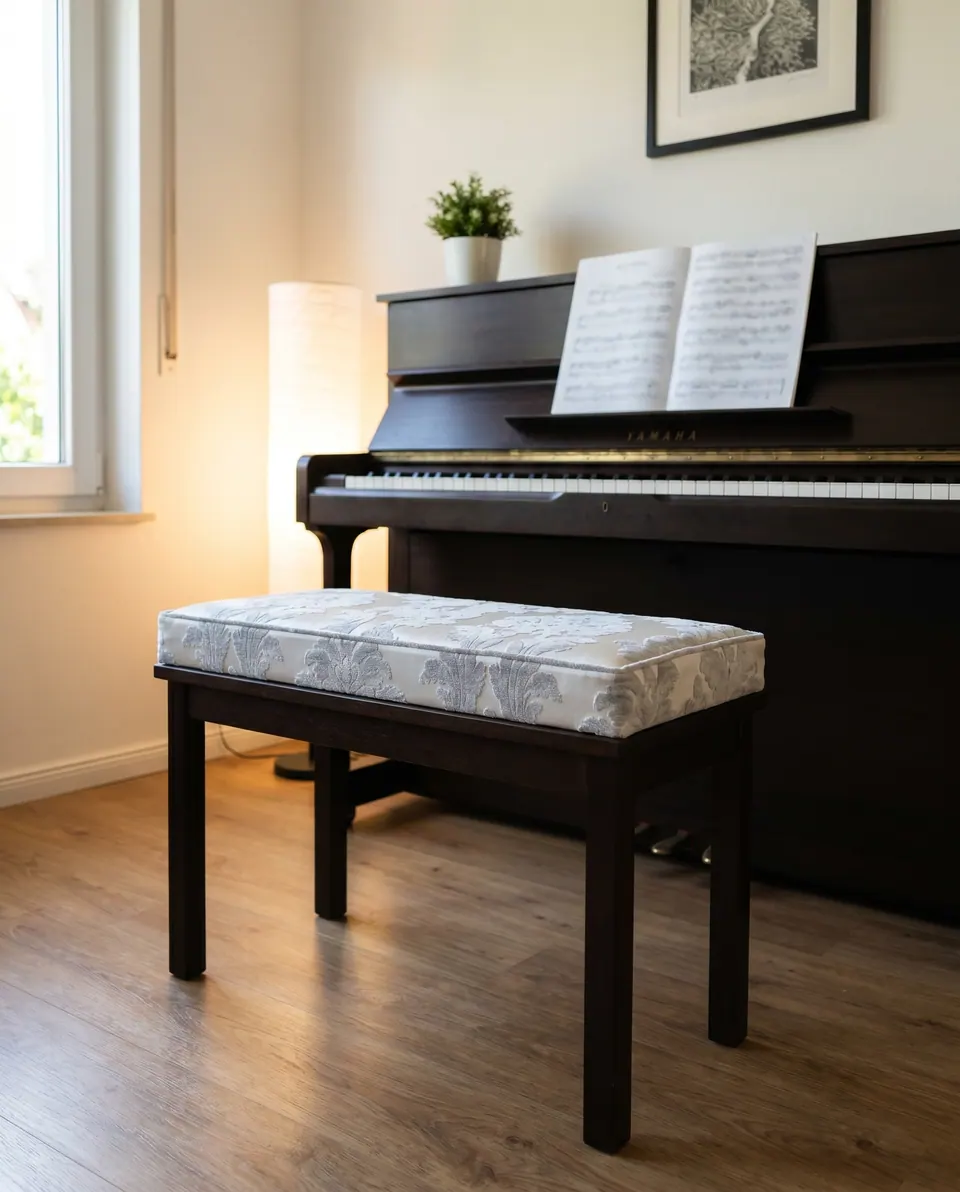
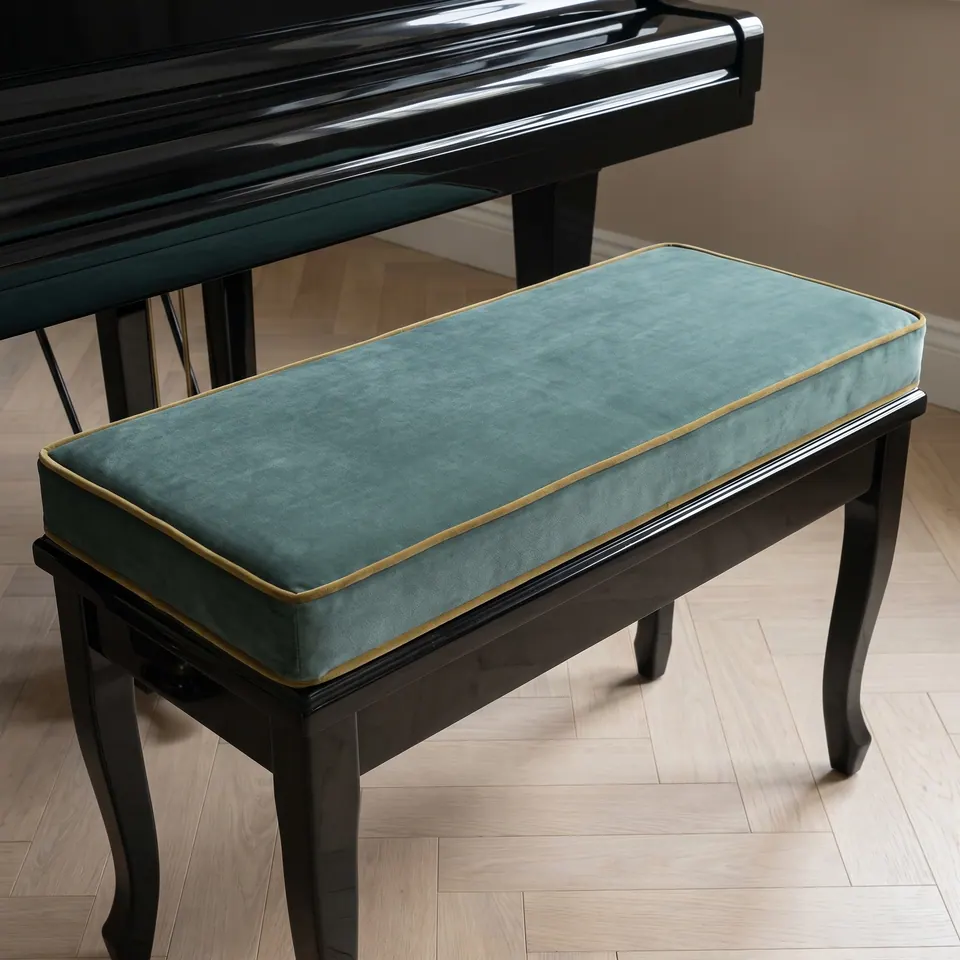
A piano bench cushion is simple on paper, a rectangle, but it gets sat on hard, shifted on, slid across for the low notes, and left in the same patch of window light every afternoon.
Five pins at the keyboard
Five pins, from the keys down to the sheet music on the floor.
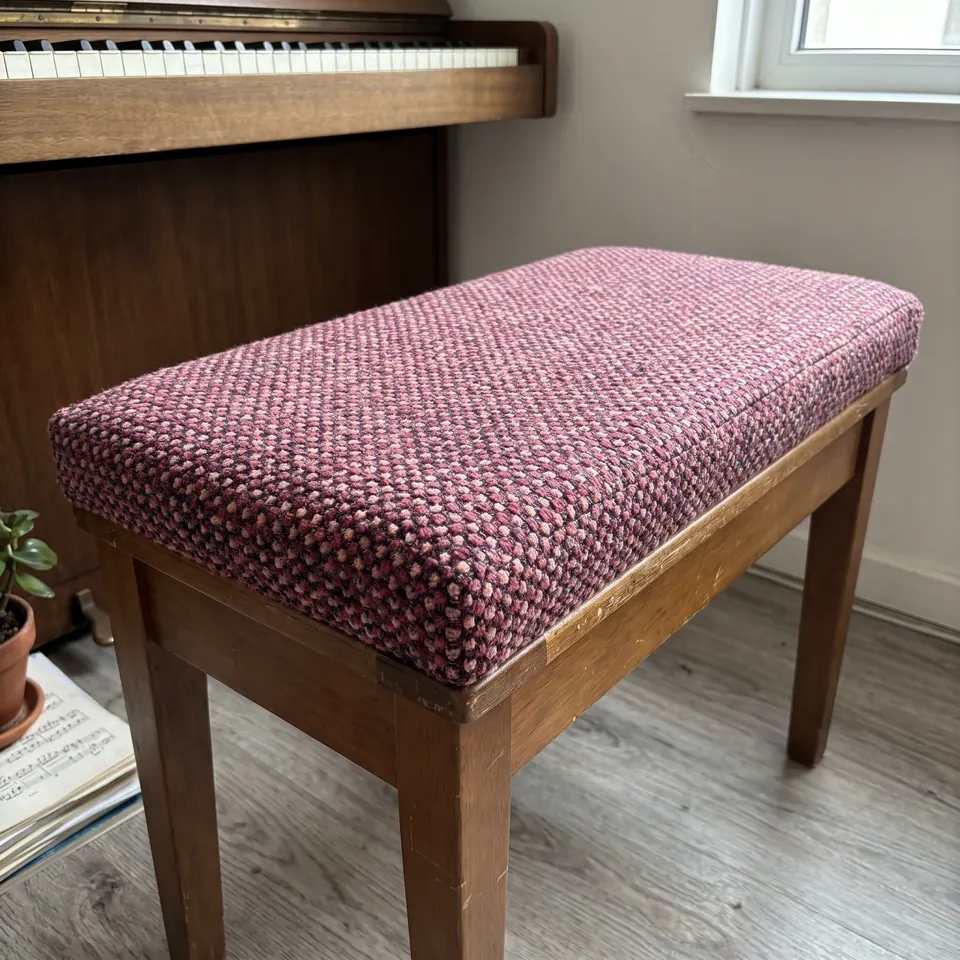
- Upright piano keys
The walnut piano sets the color story; raspberry sits warmly against its reddish wood.
- Raspberry nubby top
A textured weave is less slippery than a smooth fabric, which helps on a bench you shift about on.
- Square front corner
The cushion is cut flush with the bench top, so it doesn't press into the backs of the legs while playing.
- Jade plant
A small green plant is the complement of raspberry and keeps the corner lively.
- Sheet music
Scores on the floor show a bench that is actually played from.
- Upright piano keysThe walnut piano sets the color story; raspberry sits warmly against its reddish wood.
- Raspberry nubby topA textured weave is less slippery than a smooth fabric, which helps on a bench you shift about on.
- Square front cornerThe cushion is cut flush with the bench top, so it doesn't press into the backs of the legs while playing.
- Jade plantA small green plant is the complement of raspberry and keeps the corner lively.
- Sheet musicScores on the floor show a bench that is actually played from.
The daily-life test: grip, edges, marks and sun
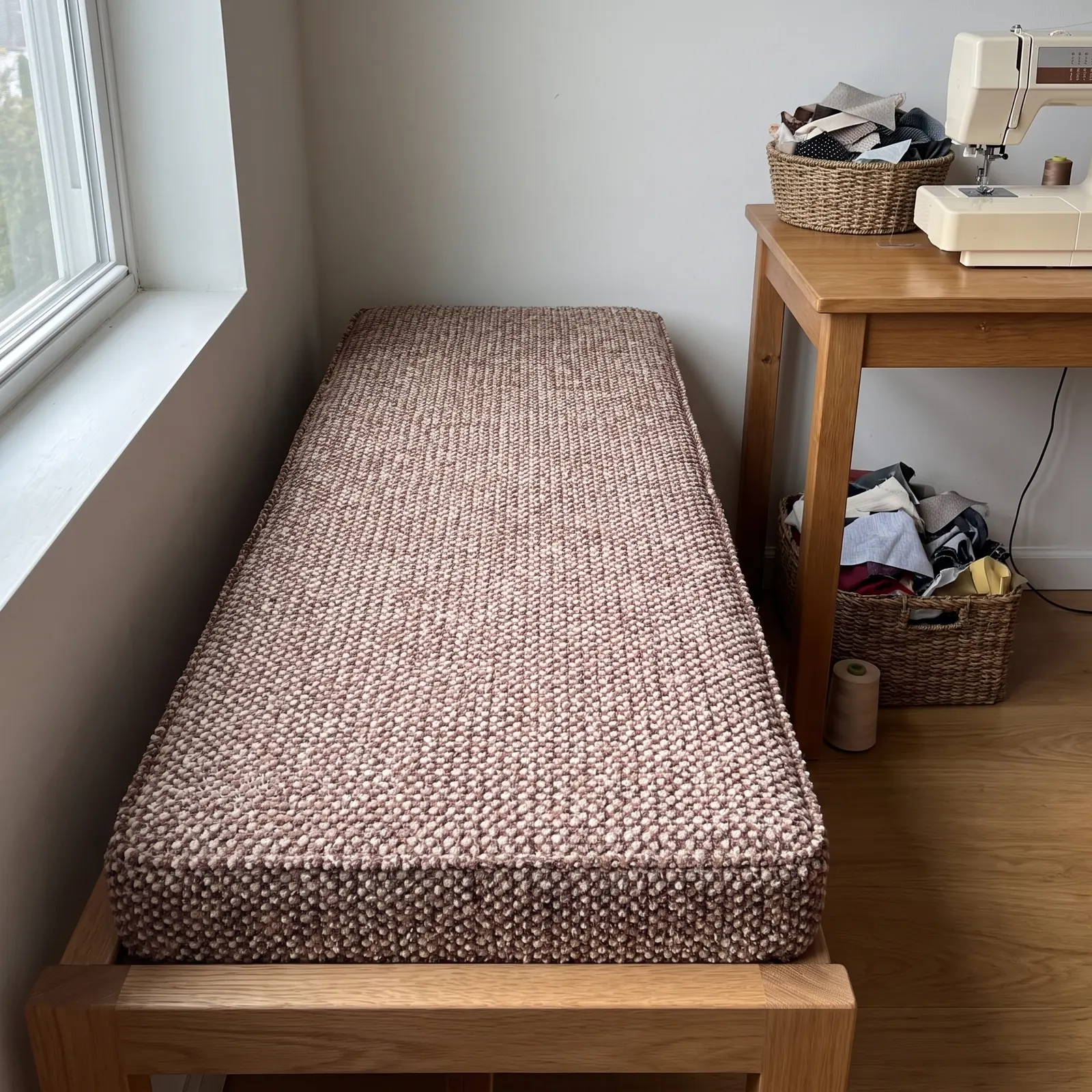
Grip. The raspberry, mauve and blush weave is nubby, and a textured weave is less slippery than a smooth fabric. On a bench you shift along while playing, that grip is comfort. To my eye a tweedy mix also forgives small marks better than a flat solid, the way a speckled floor forgives crumbs.
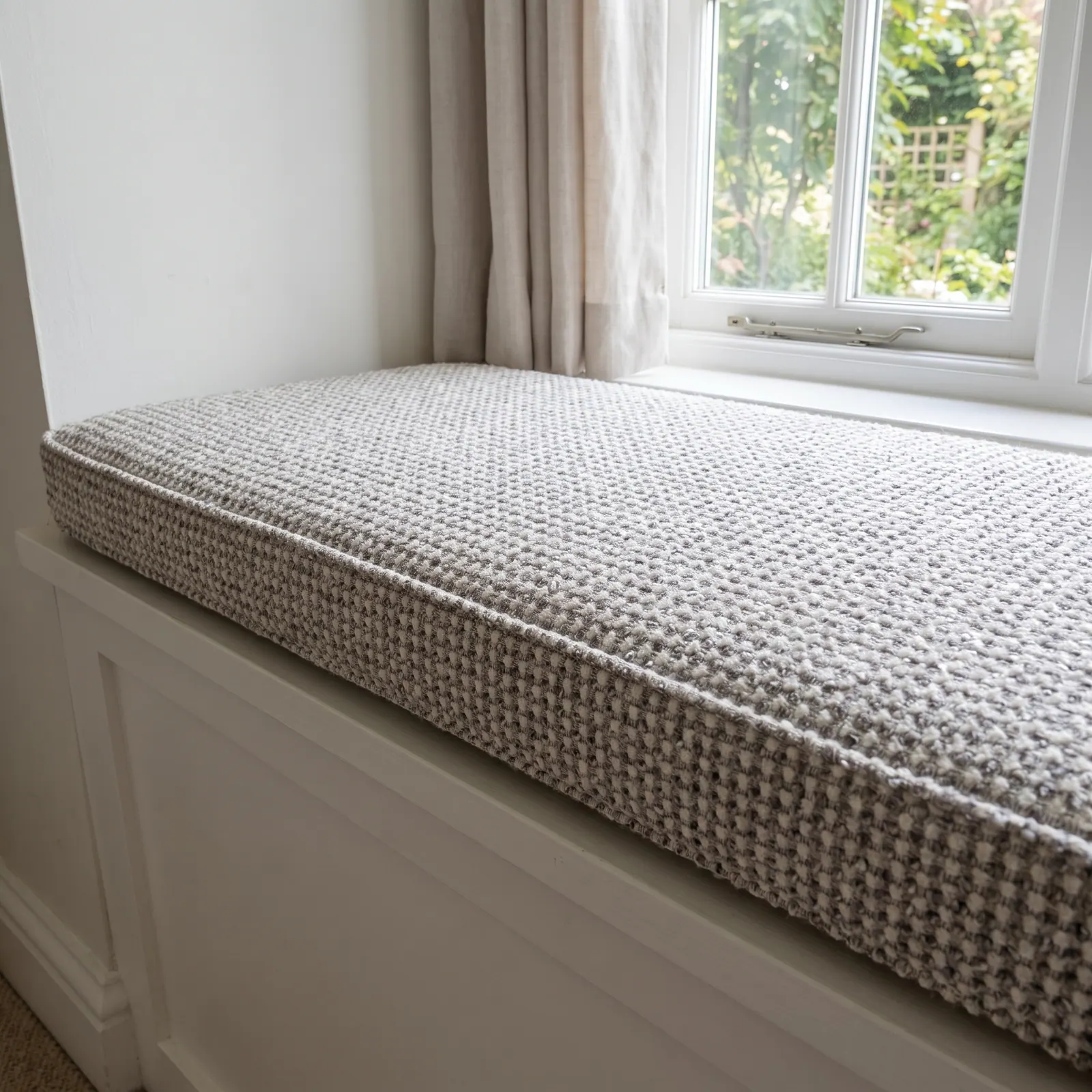
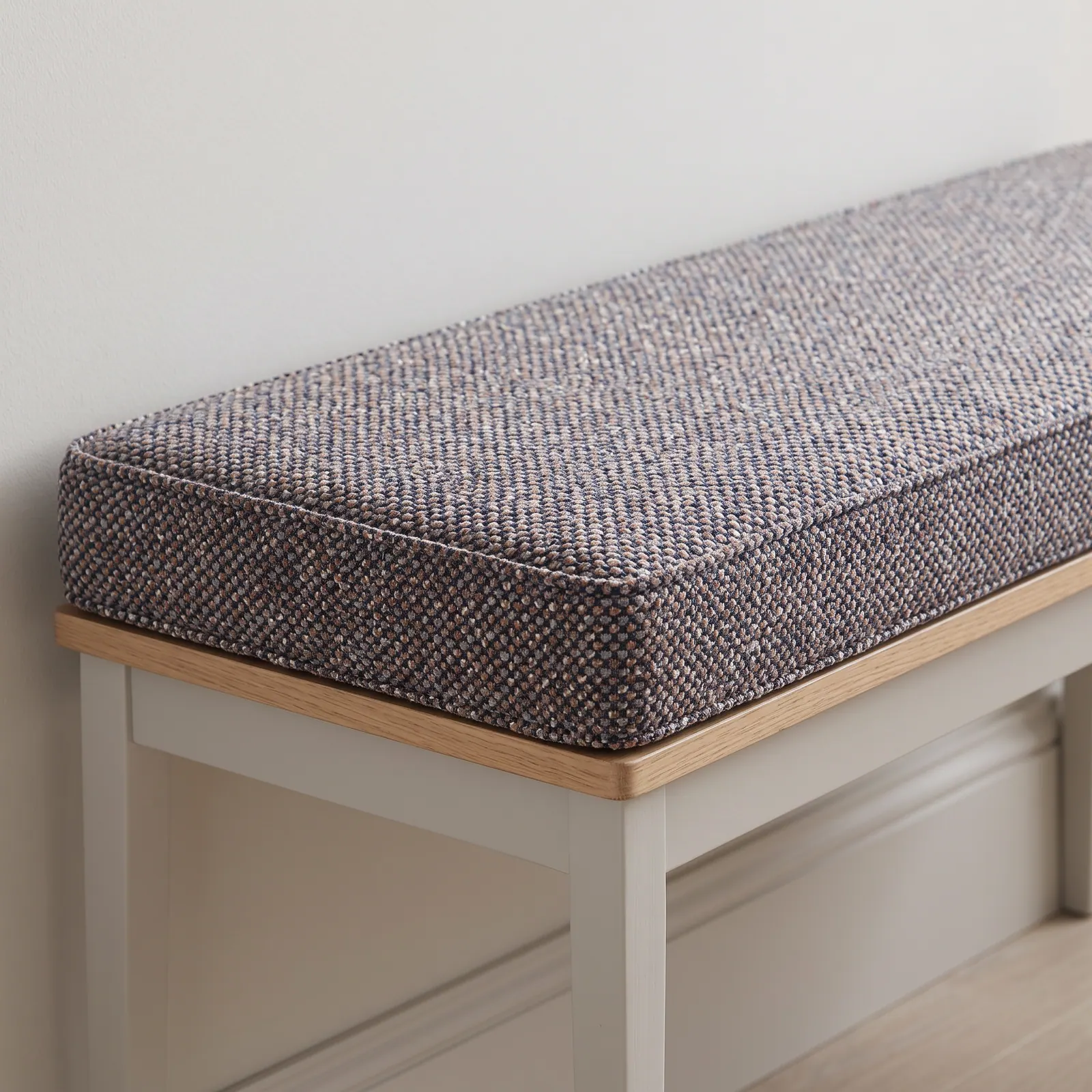
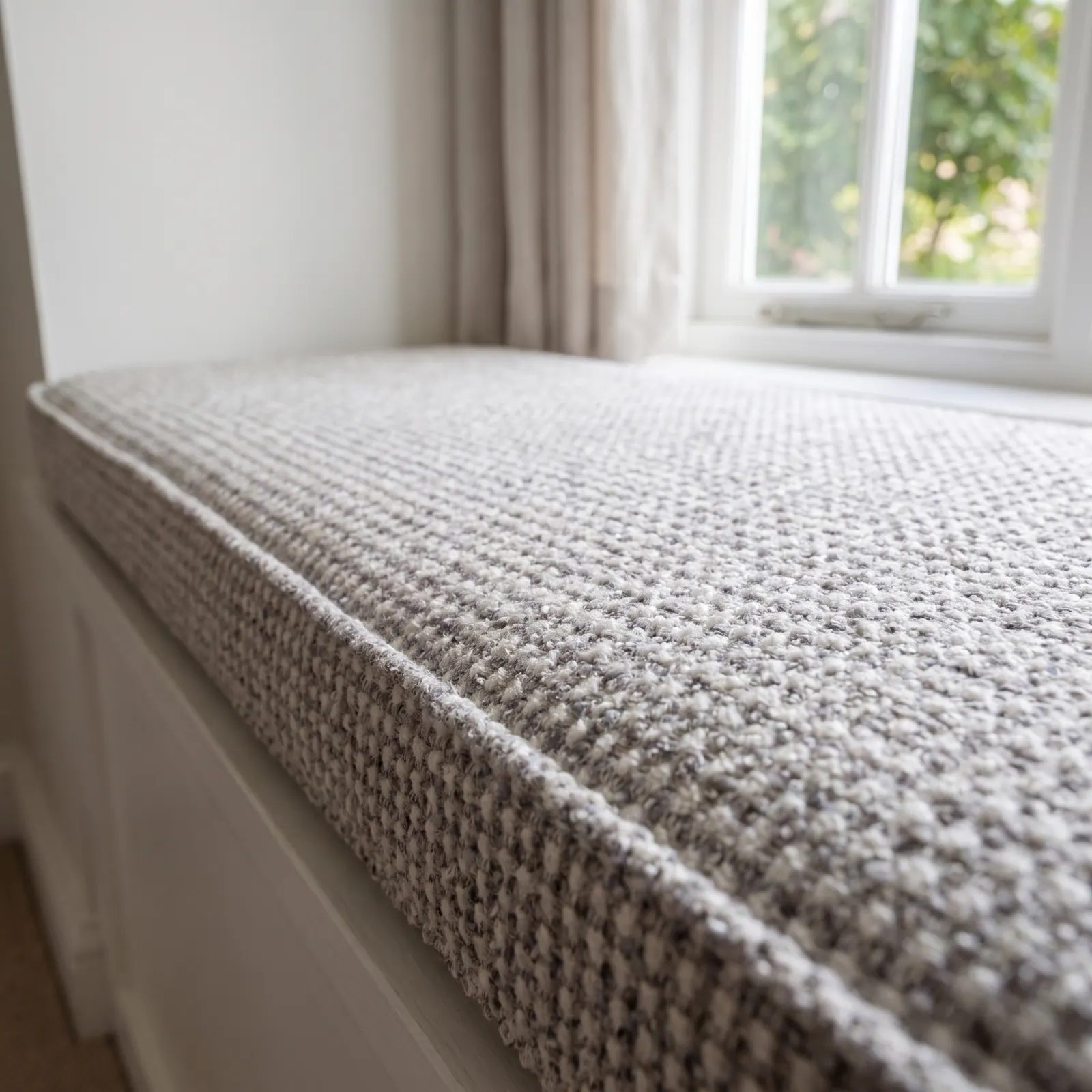
Edges. The cushion is cut flush on all sides with a moderate boxed depth. Players sit toward the front, so any overhang digs into the backs of the legs, and a lip is something to pick at. No piping here either: the box edge stays plain.
Sun. The bench sits under a white-framed window. A strong color that meets the same light every afternoon deserves a turn end to end now and then; the Pattern on window seat fading explains why.
The room. Raspberry warms the reddish walnut of the upright. The jade plant in its terracotta pot is raspberry's opposite, and a small dose keeps the corner lively. The scores on the gray plank floor say this bench is played from, not posed. With a dog in the house, a flush edge leaves nothing hanging down to tug. Who sits at your piano most, and for how long?
For the weave family, see jacquard and damask; for sizing, the piano bench cushion size Pattern.
The buyer who wanted a 1 inch pad
A buyer in the US measured a trapezoid window seat: 70 in (178 cm) across the front, 44 in (112 cm) at the back, 20.5 in (52 cm) deep, with 2.5 in (6.4 cm) notches at the back corners. They wanted it 1 in (2.5 cm) thick. The thinnest option the workshop offers is 2 in (5 cm), quoted through the trapezoid listing with a drawing uploaded, and the buyer felt 2 in would sit too high.
Same arithmetic at a piano, where every inch of foam lifts your wrists. Check the 2 in minimum before you design around a thin pad, and try the seat height calculator first.
On the cutting table: the practice-room bench
| Cushion | Piano bench box cushion, cut flush on all sides |
|---|---|
| Fabric | Nubby chenille weave in raspberry, mauve and blush |
| Piping | None; the boxed edge stays plain |
| Top | Flat, no buttons or tufts |
| Grip | Textured weave, less slippery than a smooth fabric |
| Thinnest foam offered | 2 in (5 cm) |
| Sun | Turn it end to end now and then under a window |
| Best for | Benches that get daily practice beside a window |

Have it made
Have this made — ask Rosa’s workshop
Every good cushion I know started with a long porch chat. This is the short version: leave your number and the workshop will call. — Rosa
Leave your details and the workshop will call you to confirm measurements, fabric, foam and piping. No prices, dates or payment on this page: it is a request, not an order.
A piano bench cushion should end flush with the front edge, because a player sits forward and any overhang presses into the backs of the legs.
Rosa
Questions buyers ask next
Should a piano bench cushion hang over the edge of the bench?
No. Cut it flush on all four sides. A player sits toward the front edge, and foam or fabric hanging past the bench presses into the backs of the legs during a long practice.
What color cushion suits a walnut upright piano?
Warm reds and pinks such as raspberry sit well against walnut's reddish grain. A small green plant nearby, the opposite color, keeps the corner from turning too sweet.
How do I measure a piano bench top for a cushion?
Measure the top edge to edge in both directions and order those numbers so the cushion ends flush. Then sit at the keys and decide how much height you can add; the thinnest foam offered is 2 in (5 cm).
Porch light's on — Rosa
More photographs to read
 Save
 Save
 Save
 Save
 Save
 Save