 Save
A Reading by CallumChaise Lounge & Sunbed Cushions
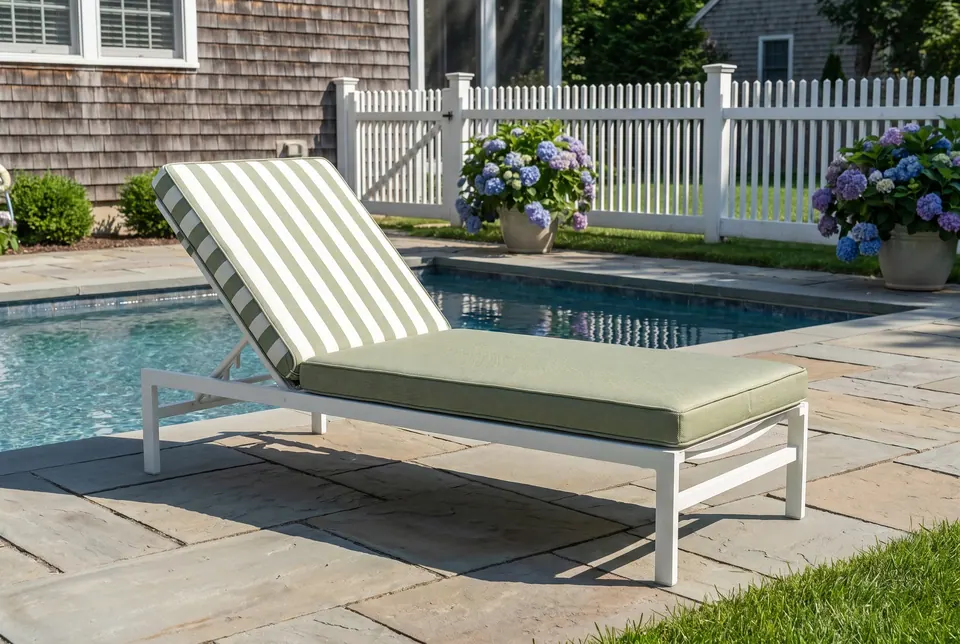
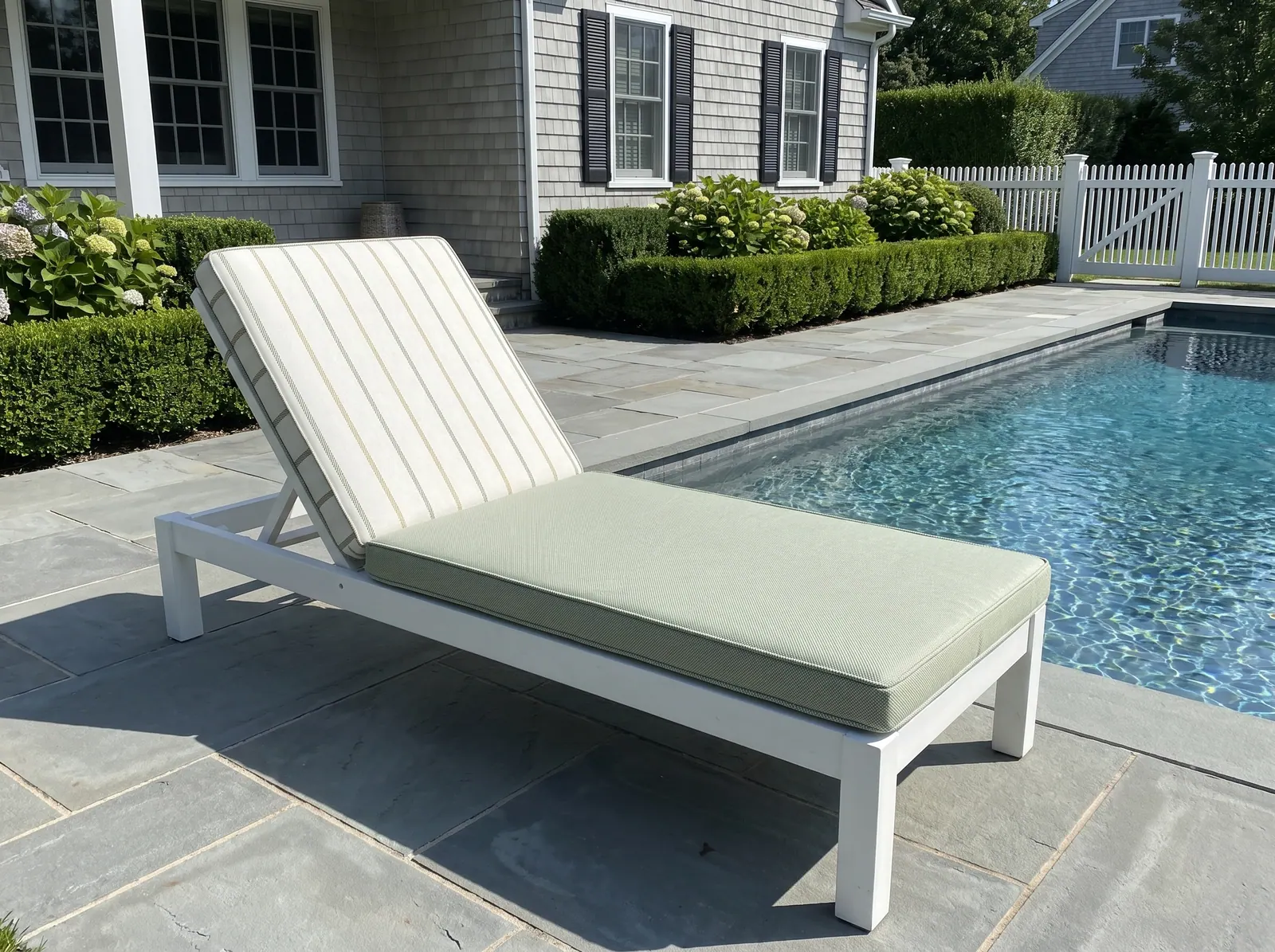
A sage and olive-pinstripe sunbed cushion by a shingle-house pool, read for its hand-finishing
Clear morning light, clipped boxwood, not a thing out of place. The details that keep this lounger cushion looking tailored are small, and most are settled before the first cut.
Clipped boxwood, black shutters and a white picket gate give this two-fabric lounger a formal Hamptons backdrop.
The quick answer
On a two-fabric sunbed cushion, the hand-finishing that matters is a self-piped box edge, a fine stripe kept to the backrest, and a thickness planned for each piece: 4 in (10 cm) for a seat, 2 in (5 cm) for chair pads. When cushions stack, subtract the seat thickness from the backrest height before ordering.
A formal terrace, a quiet cushion
Some pool terraces are loud, friend. This one isn't. Bluestone paving, a gray shingle house with black shutters, clipped boxwood, white hydrangeas, a white picket gate, a white aluminum lounger. Clear morning light and everything in its place.
The sunbed cushion takes its cue from the garden. The backrest is ivory with a narrow olive-gold pinstripe, plain from a few steps back and textured up close. The seat is solid sage, the same family as the boxwood right behind it. A formal garden asks for a fine stripe, and this one leaves the strong colors to the architecture: the black stays on the shutters, and the only saturated color in the frame is the pool.
The finishing is where the craft shows. Each section is piped in its own cloth, so the box edge stays sharp without a third color coming in. The two fabrics meet at the fold, so the change of cloth reads as a change of job, back and seat. Both come from the water-repellent outdoor range.
None of that is decoration. It is decided on paper, piece by piece, before the fabric is cut, and every cushion is measured again after sewing. Then it's your turn. Bring them in before the first frost and they'll forgive you everything. Where do yours spend the winter?
Pinned by Callum: from the pinstripe backrest to the shutters
Five pins, from the pinstripe back to the black shutters that keep the dark color in the house.
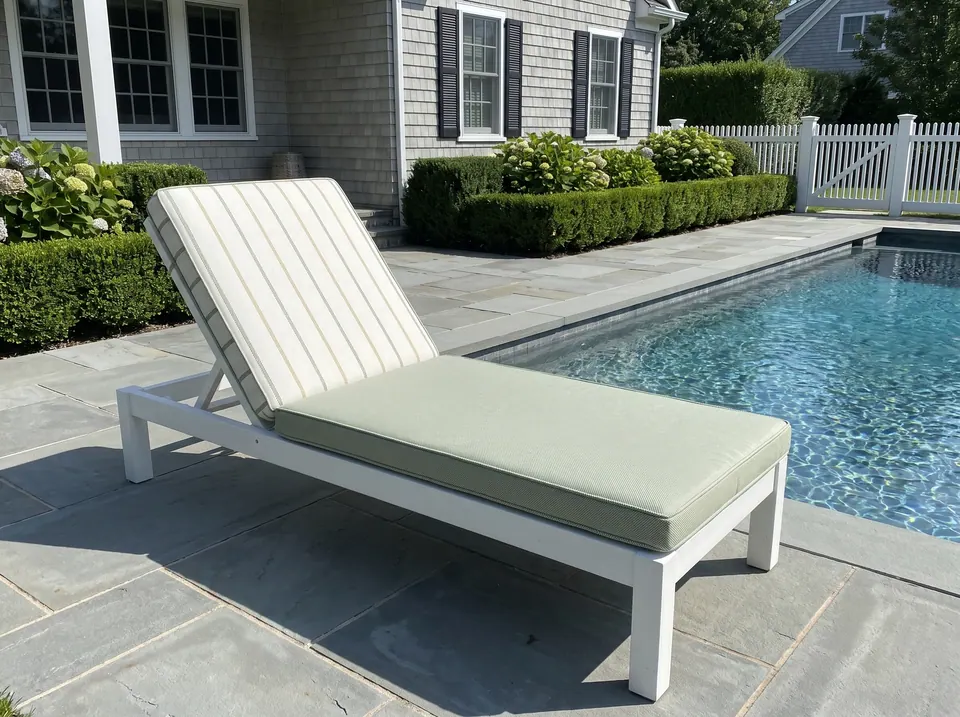
- Olive pinstripe back
A narrow olive-gold stripe on ivory looks plain from afar and textured up close.
- Sage seat cushion
The seat color links to the clipped boxwood right behind it.
- Boxwood hedge
Formal planting calls for a fine stripe rather than a bold one.
- Black shutters
White frame and window trim are repeated; the black stays in the architecture.
- Pool
The only saturated color in the scene is the water.
- Olive pinstripe backA narrow olive-gold stripe on ivory looks plain from afar and textured up close.
- Sage seat cushionThe seat color links to the clipped boxwood right behind it.
- Boxwood hedgeFormal planting calls for a fine stripe rather than a bold one.
- Black shuttersWhite frame and window trim are repeated; the black stays in the architecture.
- PoolThe only saturated color in the scene is the water.
Piping, stripe and thickness to settle before the cut
Pick the piping for each piece
Self piping keeps each section's edge sharp in its own color. Contrast piping can come from any code on any chart; there is no separate piping chart.
Keep the stripe fine in a formal garden
A narrow stripe on the backrest and a solid seat, as here. Save the wide stripes for relaxed decks.
Set a thickness for every piece
Outdoor seats are usually made 4 in (10 cm) thick; thin chair pads can be 2 in (5 cm).
Do the stacking math
When a backrest stands on a seat cushion, subtract the seat thickness from the backrest height.
Label length and depth
Length runs left to right, depth back to front. Write both on every piece; the lounger measuring pattern shows the hinge.
Ask for the proof
Every order is photographed before shipping. Ask for those photos and check the edges yourself.
A 90th birthday, a balcony and the wall he leans on
A buyer wrote to the workshop planning a balcony set for their father's 90th birthday. He likes to lean against the wall, so the order had five pieces: a 19 3/4 x 47 1/4 x 4 in (50 x 120 x 10 cm) seat, an 11 3/4 x 47 1/4 x 2 in (30 x 120 x 5 cm) backrest, a 19 3/4 x 15 3/4 x 2 in (50 x 40 x 5 cm) cushion for the wall he leans on, and two 15 3/4 x 15 3/4 x 2 in (40 x 40 x 5 cm) chair pads. All in outdoor fabric, piped in a second outdoor color to match a tablecloth.
The workshop recommended 4 in for the seat and 2 in for the chair pads, and added the reminder that saves the most grief on stacked cushions: subtract the seat thickness from the backrest height.
- Sizes
- Seat 19 3/4 x 47 1/4 x 4 in; backrest 11 3/4 x 47 1/4 x 2 in; wall cushion 19 3/4 x 15 3/4 x 2 in; two chair pads 15 3/4 x 15 3/4 x 2 in
- Fabric
- Outdoor fabric, piped in a second outdoor color
The lesson: Subtract the seat thickness from the backrest height when stacking cushions.
Buyer questions: old inserts, a 17-piece set and which way is length
- A common question
Can you make zippered covers for my outdoor chair cushions that go over the inserts I already have?
The workshop's answerYes, in the workshop's own outdoor fabrics rather than a name brand. Send photos and a drawing with every size; the outdoor charts are on the zippered-cover order page. The old cushions don't need to be sent: measurements and photos are enough.
- A common question
Can you quote a mixed outdoor set of seat pads, bench pads, lounger pads and pillows, and what would covers only come to?
The workshop's answerYes. One 17-piece set, with four 18 x 18 in (46 x 46 cm) seat pads, three bench pads, two lounger pads about 75 in (190 cm) long and eight pillows, was quoted as a bundle below the piece-by-piece total. Covers only came in lower again, with shipping included.
- A common question
Is length left to right, and width back to front?
The workshop's answerYes. Think of the sides of a rectangle: length runs left to right, and width, also called depth, runs back to front.
When a backrest cushion stands on a seat cushion, subtract the seat thickness from the backrest height, or the stack comes out taller than you measured.
Callum
On the cutting table: the two-fabric sunbed cushion
| Cushion | Chaise lounge cushion in two sections, box edge |
|---|---|
| Backrest | Ivory with a narrow olive-gold pinstripe, water-repellent |
| Seat | Solid sage, water-repellent |
| Piping | Self piping on each section |
| Thickness | 4 in (10 cm) for outdoor seats; 2 in (5 cm) for chair pads |
| Cover | Zippered and removable |
| Quality check | Measured after sewing, photographed before shipping |
| Care | Bring indoors off-season; a fabric protectant spray helps |
| Best for | Formal pool terraces and clipped gardens |
Have it made
Have this made — ask Callum’s workshop
Sun, rain, salt. Say which of them your cushion will meet, and the workshop will plan around it. — Callum
Leave your details and the workshop will call you to confirm measurements, fabric, foam and piping. No prices, dates or payment on this page: it is a request, not an order.
Questions buyers ask next
Why pipe each section of a two-fabric cushion in its own color?
Self piping keeps each box edge sharp without adding a third color, so the pinstripe back and the sage seat stay two clean blocks. Contrast piping is equally possible from any chart code; the choice is about how much outline you want.
How thick should outdoor chair pads be next to a lounger seat?
Outdoor seat cushions are usually 4 in (10 cm) thick, and outdoor quotes assume that. Thinner 2 in (5 cm) pads suit chairs, where a thick cushion would lift you too far. A mixed set can carry a different thickness for each piece.
Are outdoor cushions checked before they ship?
Yes. Every cushion is measured after sewing, and every order is photographed before shipping, often with the packing filmed. You can ask for those photos, including ones that show the measurements on custom shapes.
Do tufted cushions work outdoors?
Not well. Tufted cushions let water in even when they are made in outdoor fabric, so outdoor pieces are made as plain, non-tufted foam cushions with zippered covers that come off for cleaning.
Fair winds — Callum
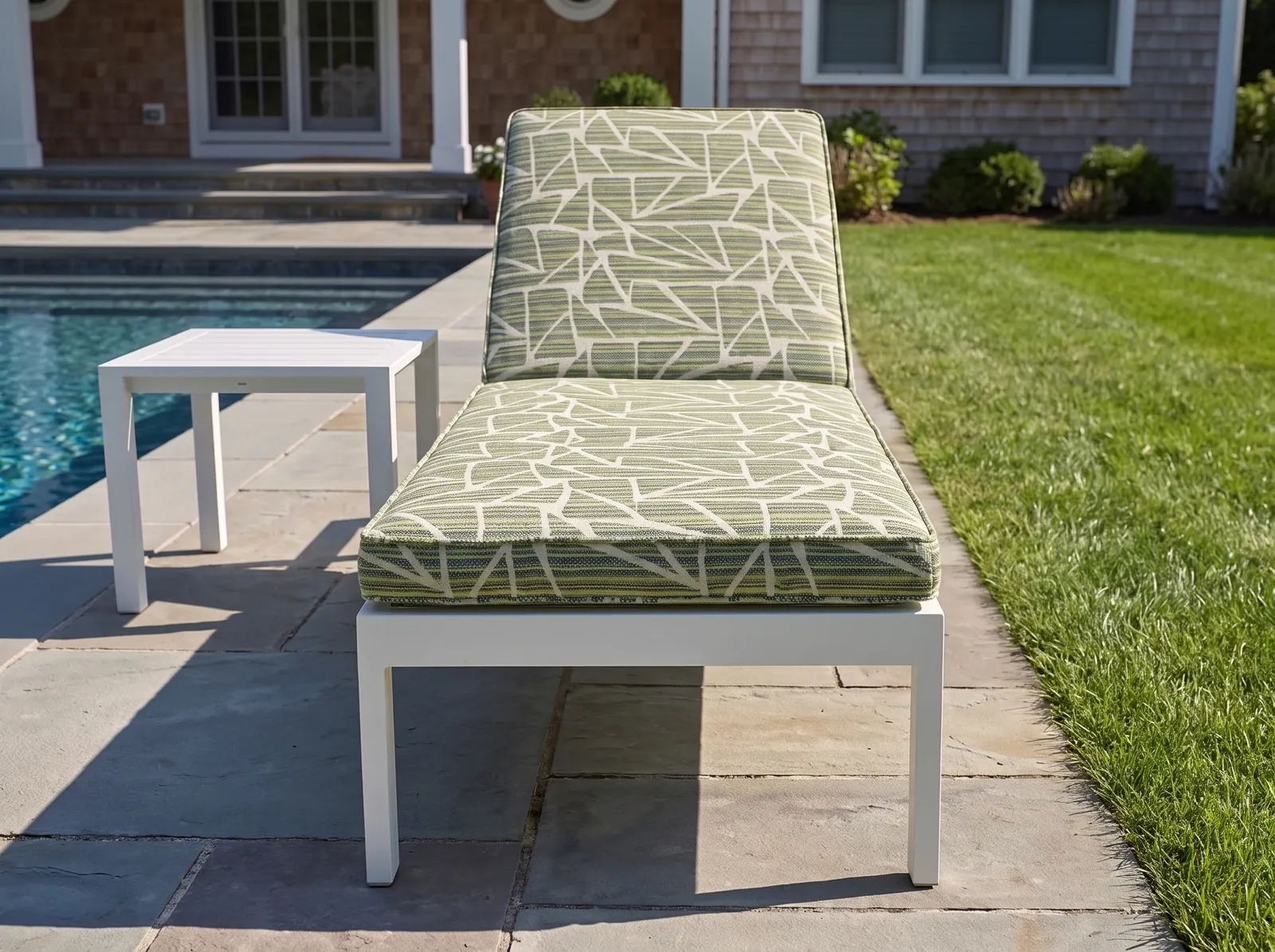
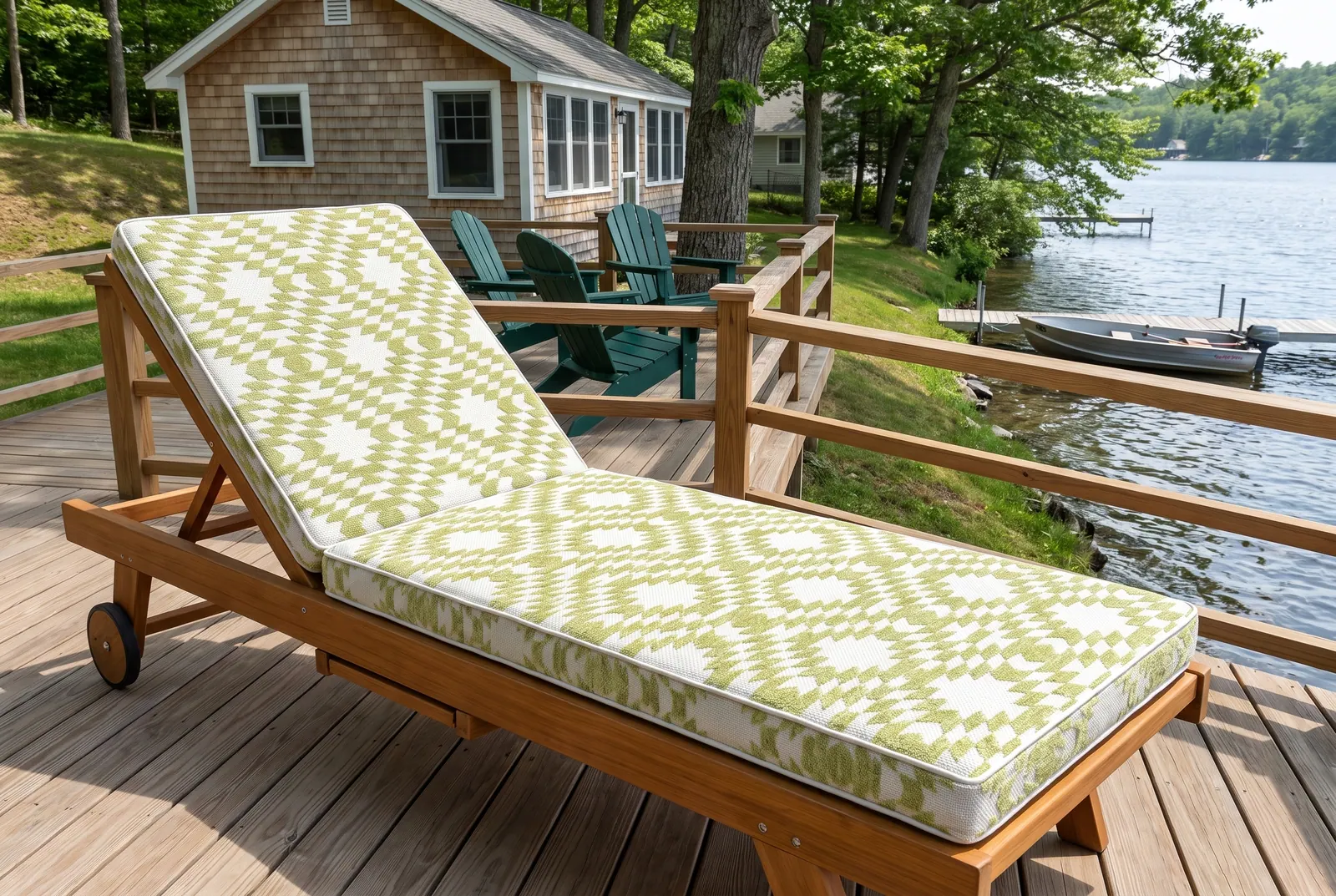
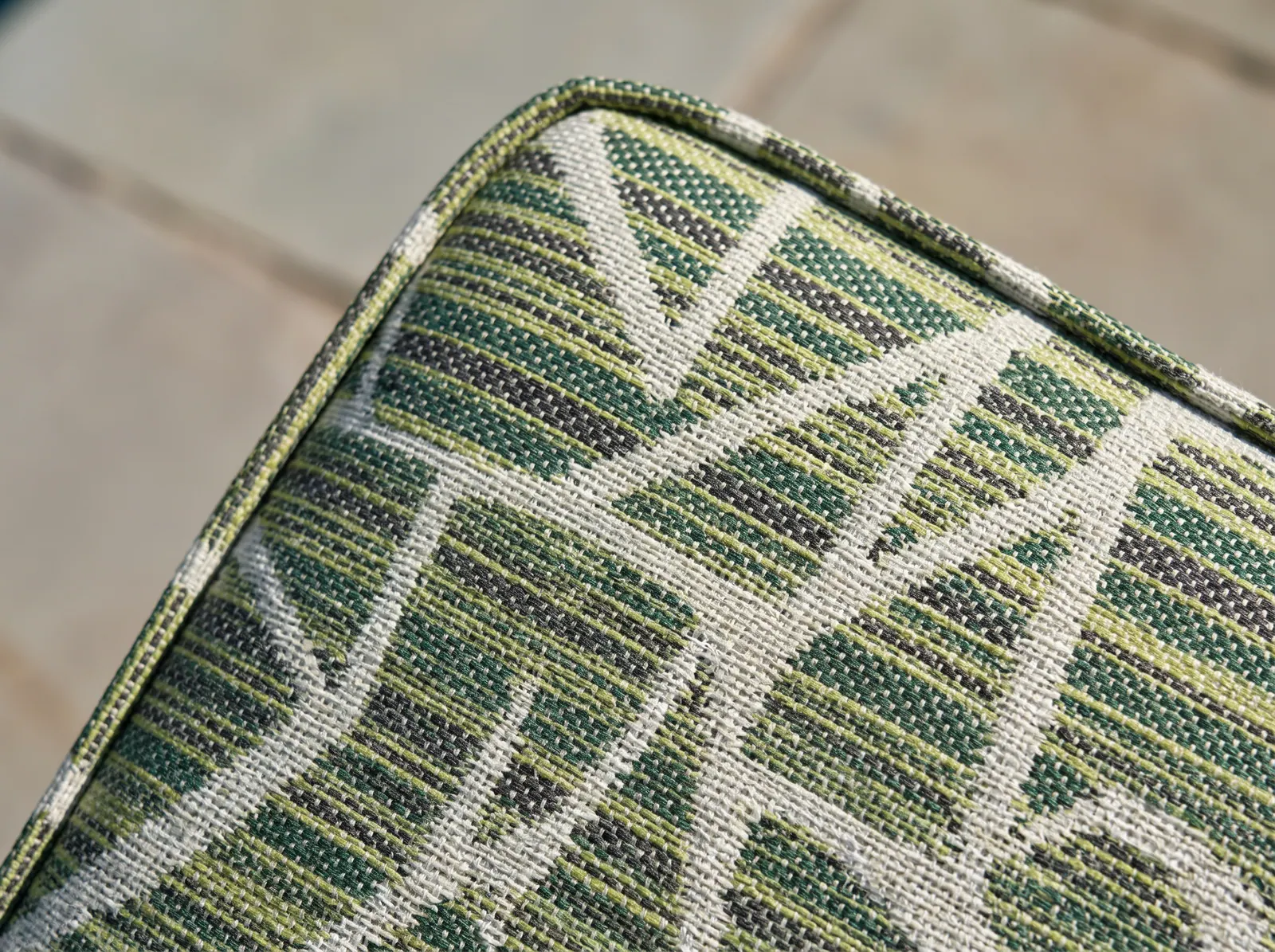
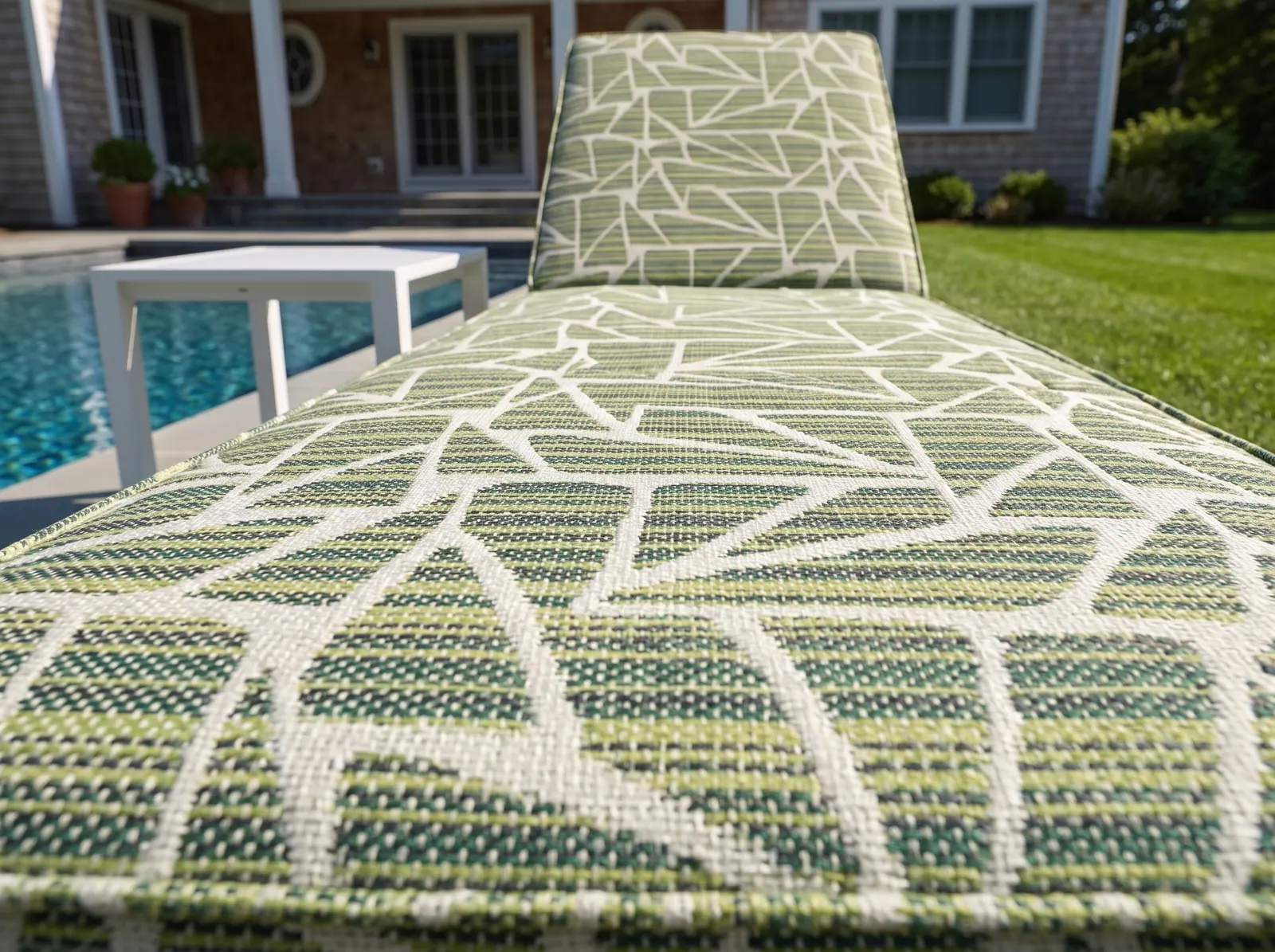
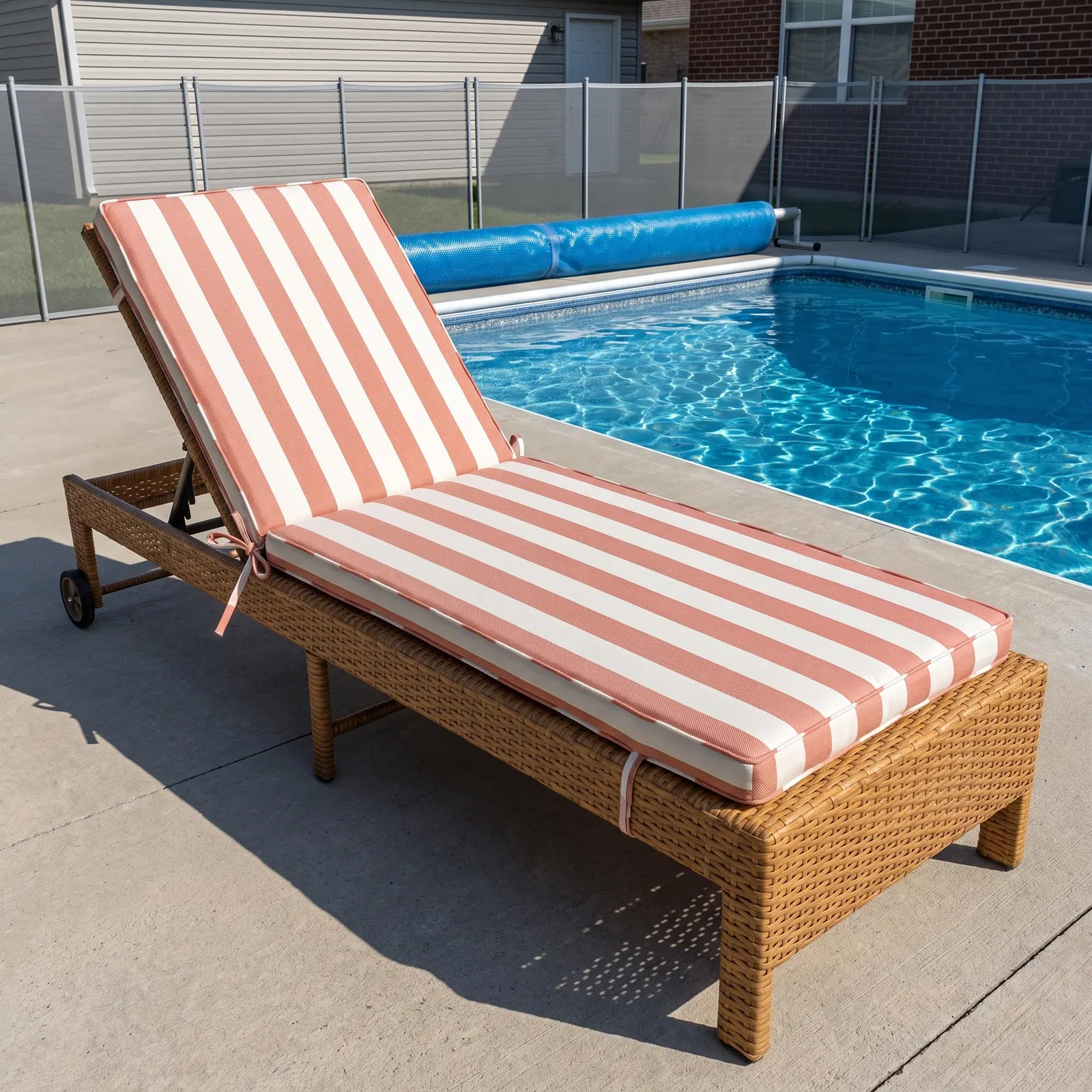
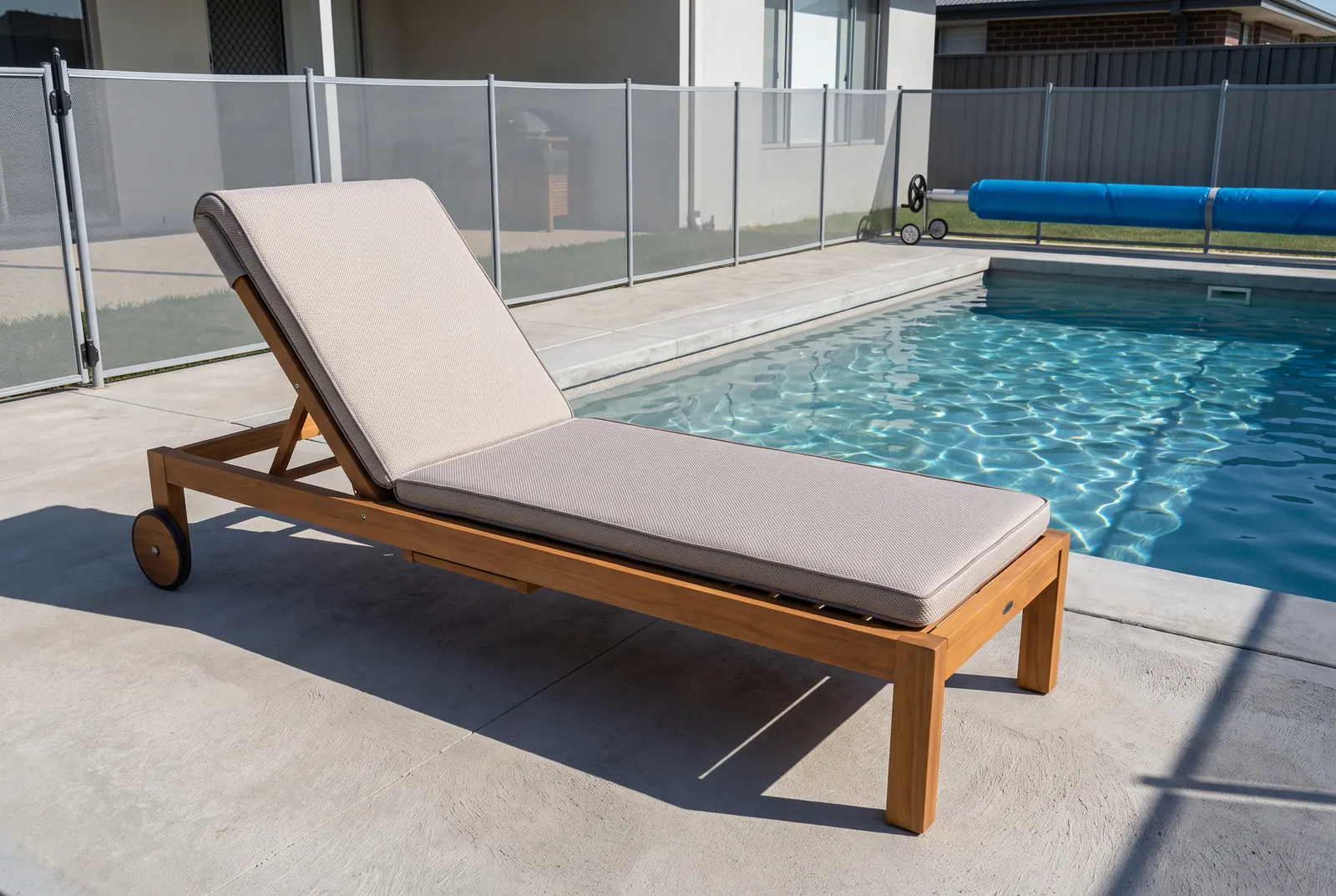
Greens, geometrics and a coral stripe on other loungers
 Save
 Save
 Save
 Save
 Save
 Save