 Save
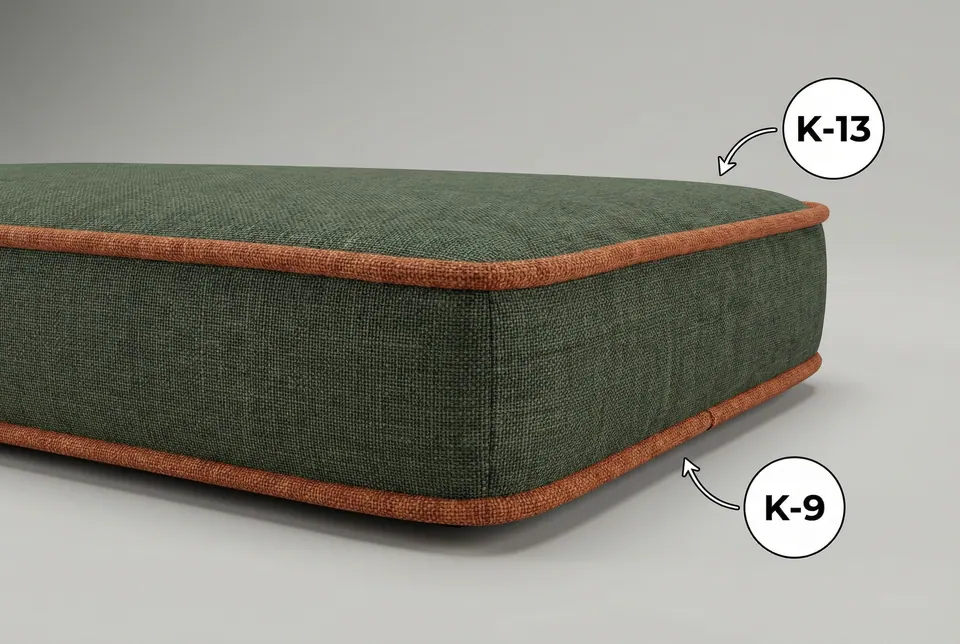
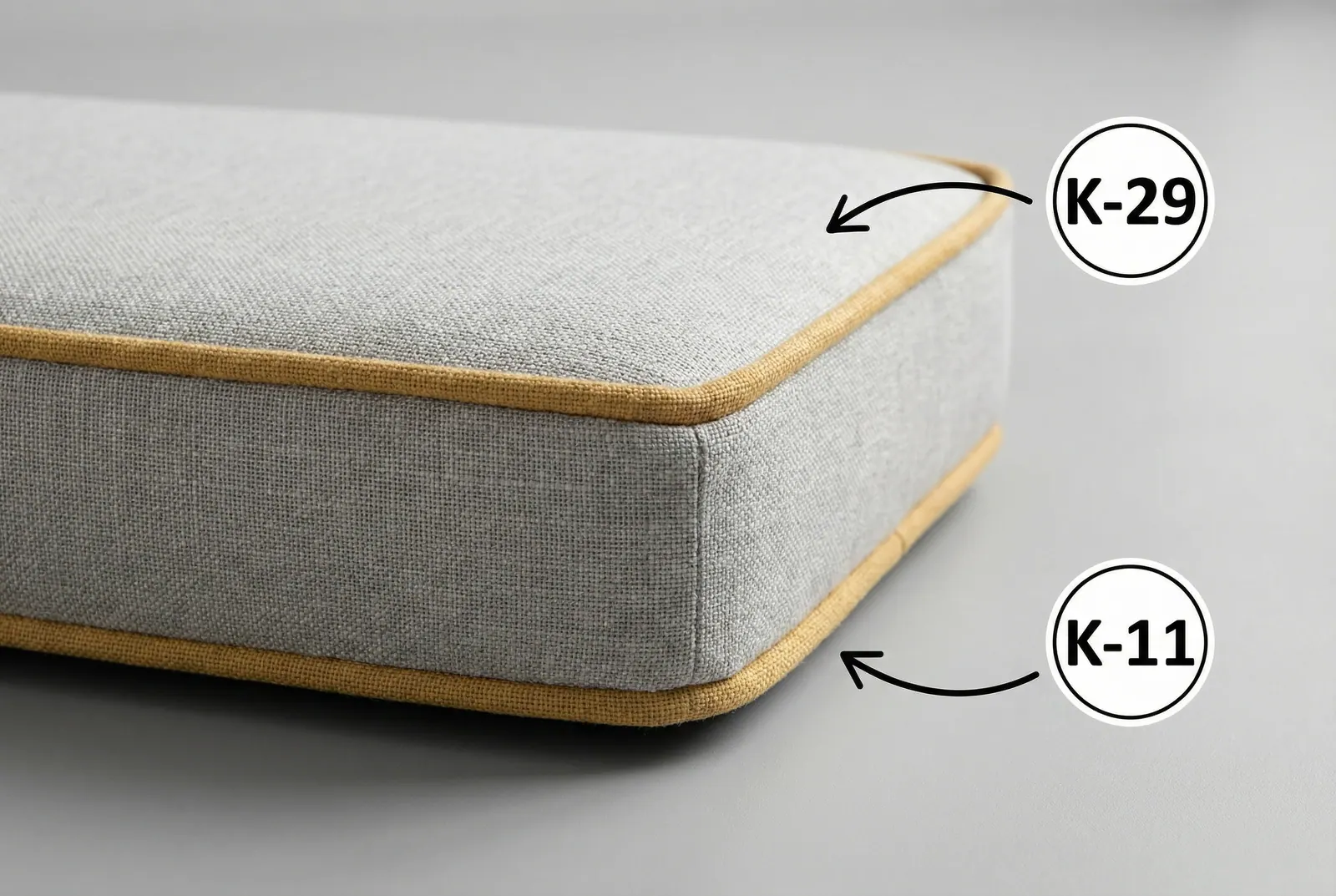
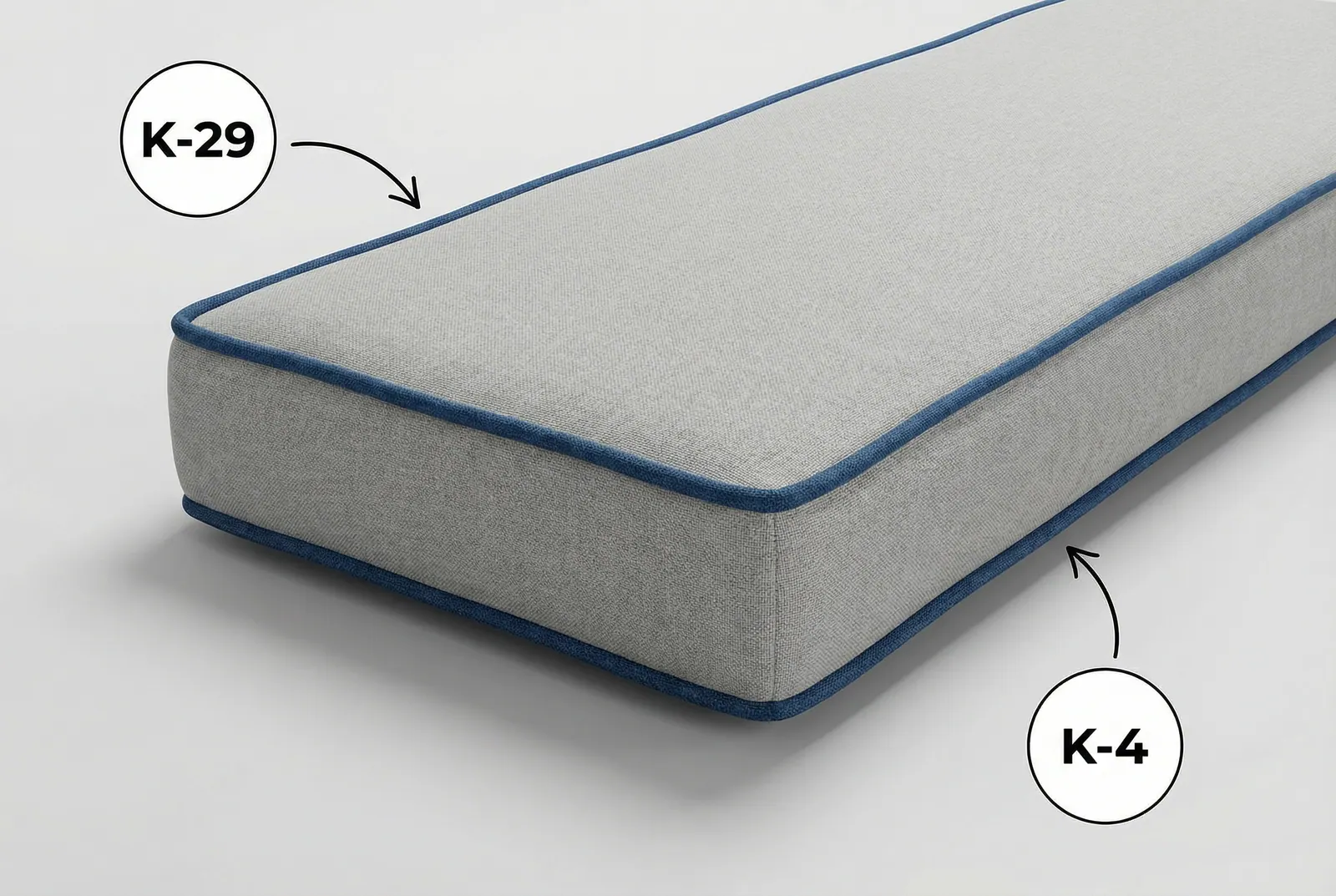
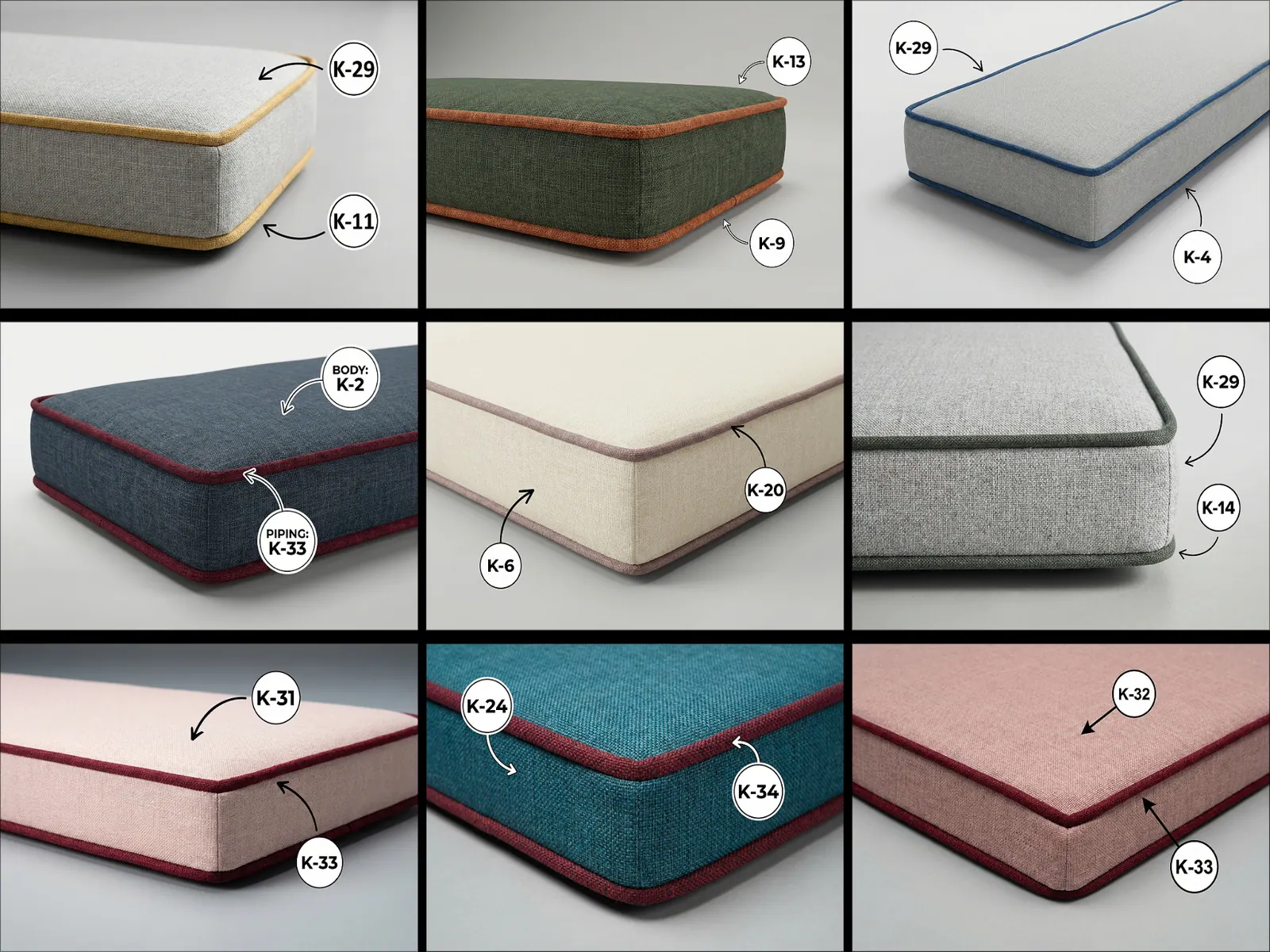
- Light gray top panel
The slub weave keeps a large plain gray surface from looking flat.
- Ochre piping corner
The cord turns the corner in one smooth curve, a sign the bias strip was eased in properly.
- Boxed side wall
A straight, unpuckered gusset means the foam is cut to the cover, not squeezed in.
- Lower piping seam
Piping on both seams frames the side wall and keeps the edge crisp after years of use.
Plate Box bench cushion · linen-look weave · ochre contrast piping
A warm ochre cord lifts a cool light gray body without turning the cushion into a statement piece.
A Reading by ÉlodieBench Cushions
One light gray bench cushion corner, and the mistakes it quietly avoids
A single corner, shot close on a pale studio backdrop. A corner is where a cushion tells the truth, my friends, and this one has nothing to hide.

The quick answer
Most custom bench cushion mistakes show at the corner: a piping cord that ripples, a side band that puckers, or a piping color picked on a screen. Take contrast piping from a wood or metal finish already in your room, give separate codes for the body and the piping, and check both colors in daylight before you order.
What one corner confesses
Pale pewter gray, a slubbed linen-look weave, and a cord of ochre at the top seam and the bottom seam. That is all the photograph holds, and it is enough.
Ochre is a warm earth yellow, the color of honeyed oak and old brass. The gray is cool, faintly silver, like a morning sky before the sun commits. A warm cord on a cool body is one of the oldest pairings in the trade, and it only works when the room agrees: somewhere nearby there must be oak, brass or honey-toned wood for the ochre to answer.
The slub matters too. A large plain gray top in a flat cloth can look like a sheet of paper. Those small irregular threads catch the top light and keep the surface alive.
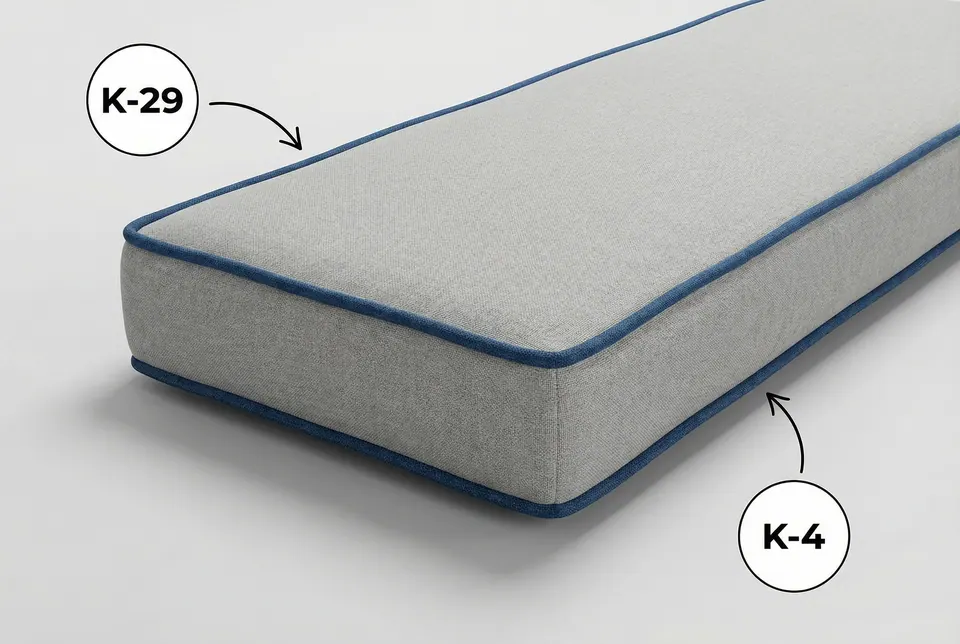
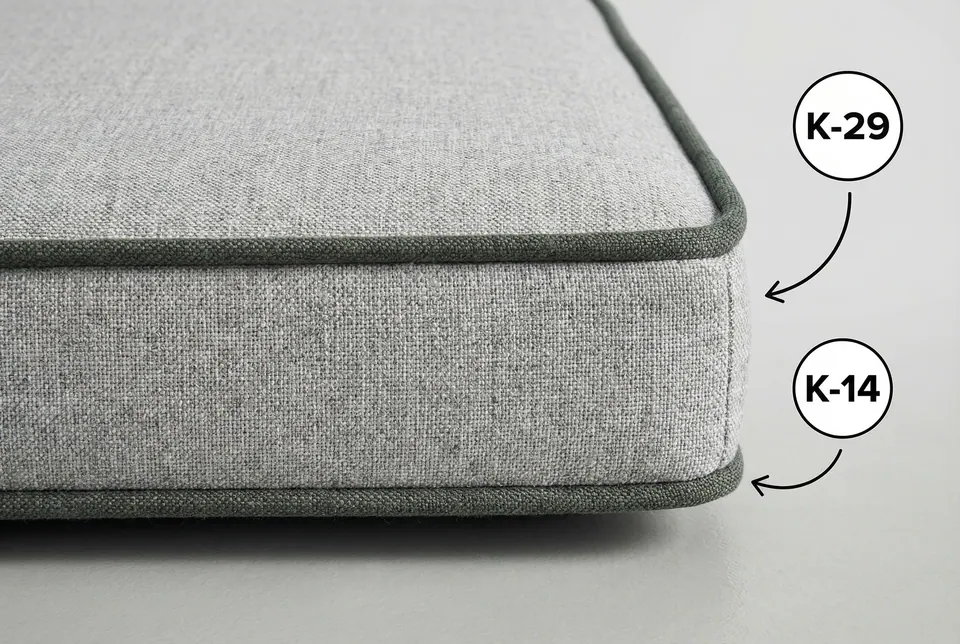
The numbered circles and arrows are the only props here. The studio asks you to look at four things. I will ask you to look at five. More on cord choices in matching, contrast or no piping.
Pinned by Élodie
Four numbered points on the studio print, and what each one proves.
The numbers match the pins on the plate.
- Light gray top panelThe slub weave keeps a large plain gray surface from looking flat.
- Ochre piping cornerThe cord turns the corner in one smooth curve, a sign the bias strip was eased in properly.
- Boxed side wallA straight, unpuckered gusset means the foam is cut to the cover, not squeezed in.
- Lower piping seamPiping on both seams frames the side wall and keeps the edge crisp after years of use.
Five mistakes this corner does not make
- Piping chosen on a screen. Daylight never lies; your screen sometimes does. Ask for daylight photos of body and cord side by side.
- Piping chosen from the swatch card. Take the cord color from the room, an oak floor or a brass lamp, not from the chip beside the gray.
- One code for two fabrics. Neighboring numbers on a chart can differ only in tone. Write one code for the body and another for the piping.
- A rippled corner. A cord that turns in one smooth curve, with no waves, shows the strip was eased in properly.
- A puckered side band. The side band (the gusset) should run straight, a sign the foam was cut to fit the cover.
The cedar chest that would not take ties
A buyer in the US wanted a cushion for a family cedar chest, an antique used as a seat. Ties were the first idea; the hinges ruled them out.
So the cushion was sized to the inside of the bevel on the lid, 42 x 18 in (107 x 46 cm), not the outer 44 1/4 x 19 in (112 x 48 cm). The workshop was honest about the rest: a non-slip base helps, but nothing keeps a cushion on a lid that lifts. She skipped the base to protect the old finish, asked for close-ups of three linens, one a herringbone, and chose a plain linen with self piping. Quiet, and right for old cedar.
- Sizes
- 42 x 18 in (107 x 46 cm) inside the bevel; outer 44 1/4 x 19 in
- Fabric
- Plain linen weave, self piping
The lesson: Size a lid cushion to the inner bevel, and expect it to come off when the lid opens.
Odd bay shapes, zippers and making time
- A common question
Our bay window seat isn't a rectangle, and it isn't symmetrical either. Can you still make a cushion?
The workshop's answerYes. The workshop makes any size and shape. The easiest way is to draw the seat outline on paper with every side measured and send a photo, or trace the seat onto a paper template. Expect a few extra measurement questions before the quote.
- A common question
Does the cover come off for washing, and where does the zipper sit?
The workshop's answerYes. Covers have a hidden zipper and come off easily. On bench cushions the zipper runs in an L along one long side and one short side, on the underside.
- A common question
How long does a custom bench or window seat cushion take to make and deliver?
The workshop's answerProduction and delivery are two separate clocks, and the workshop gives current times for both with your quote. Ask for them in writing before you plan around a date.
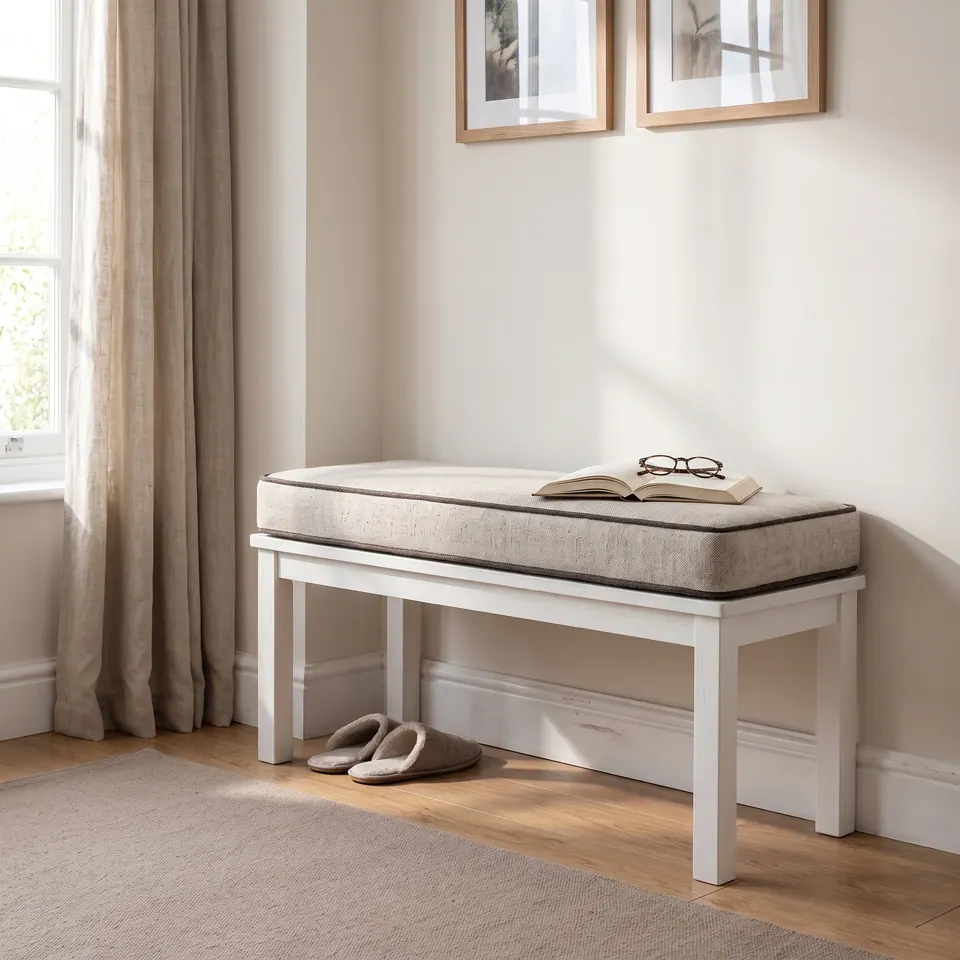
If a room has oak or brass in it, take the piping color from that finish. An ochre cord on a light gray bench cushion then looks planned, not picked.
Élodie
On the cutting table
| Cushion | Box-edge bench cushion, shown at the corner |
|---|---|
| Cloth | Linen-look slub weave, light gray |
| Piping | Contrast ochre cord on the top and bottom seams |
| Side band | Straight and unpuckered |
| Thickness | 4 in (10 cm) standard; 2, 3 and 5 in also offered |
| Foam | About 2.0 lb/ft³ (32 kg/m³), fiber-wrapped |
| Zipper | Hidden, L-shaped on the underside |
| Care | 86°F (30°C) gentle wash, air dry |
| Best for | Rooms with oak, brass or honey-toned wood |

Have it made
Have this made — ask Élodie’s workshop
Color is easier to settle in a conversation than on a screen. Tell the workshop about the room and the light it gets, and the fabric choice follows. — Élodie
Leave your details and the workshop will call you to confirm measurements, fabric, foam and piping. No prices, dates or payment on this page: it is a request, not an order.
Questions buyers ask next
Does contrast piping cost more than matching piping?
No. Piping is included at no extra charge, whether it matches the body or contrasts with it, and a cushion with no piping costs the same. Any code from any chart can be used for the cord.
Is piping on both the top and bottom seams standard?
Yes. Single piping on the top and bottom edges is standard. It frames the side band and keeps the edge crisp, and because the cord sits on the seam line, it does not change the size.
Can I have one color on top and another underneath?
It is not recommended, because the zipper shows on two-tone faces. A contrasting side band or a contrast cord gives a two-color look without that problem.
With color and care — Élodie
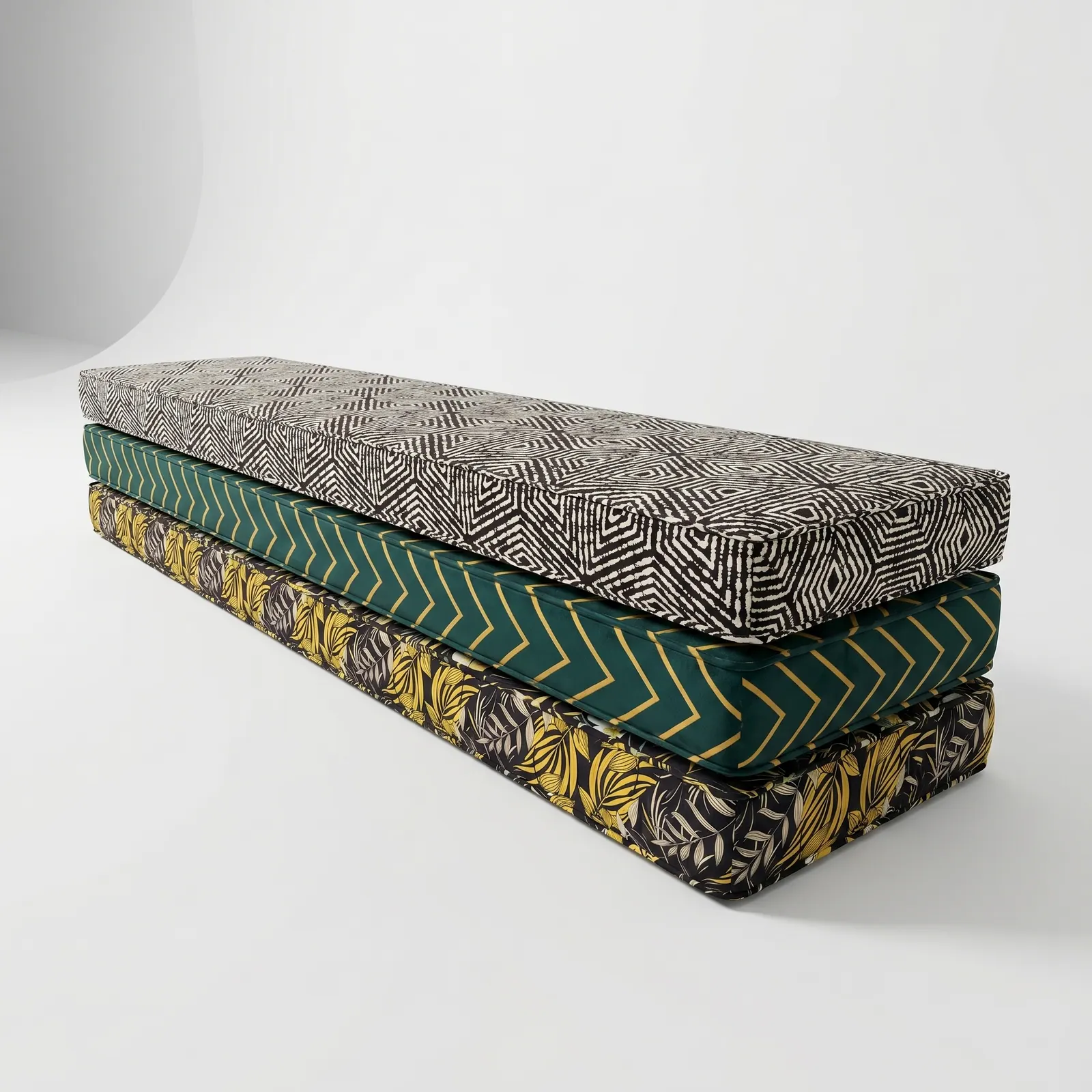
Piping, from quiet to outspoken
 Save
 Save
 Save
 Save
 Save
 Save