A Reading by HarlanCorner Floor Cushions & Poufs
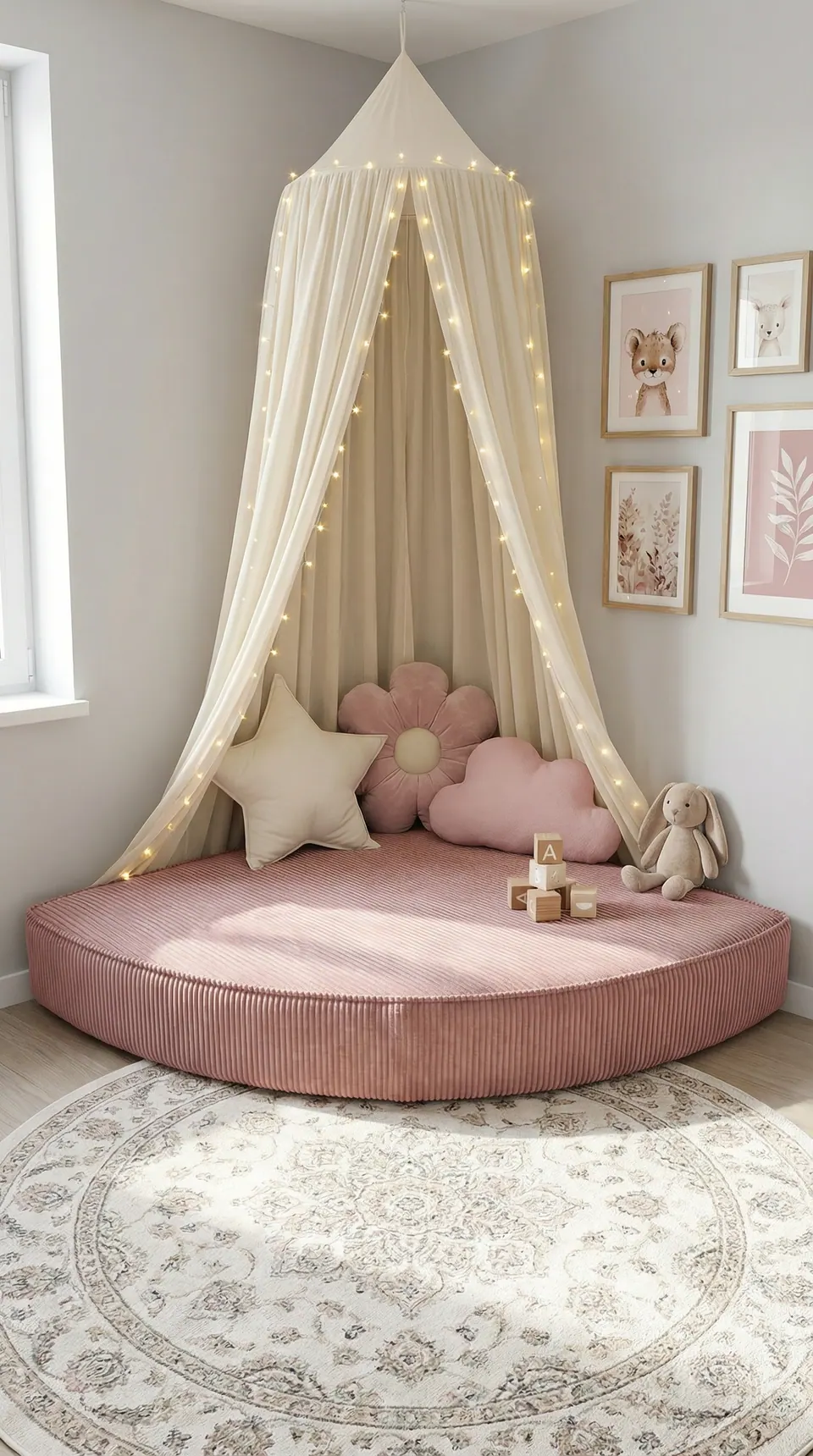
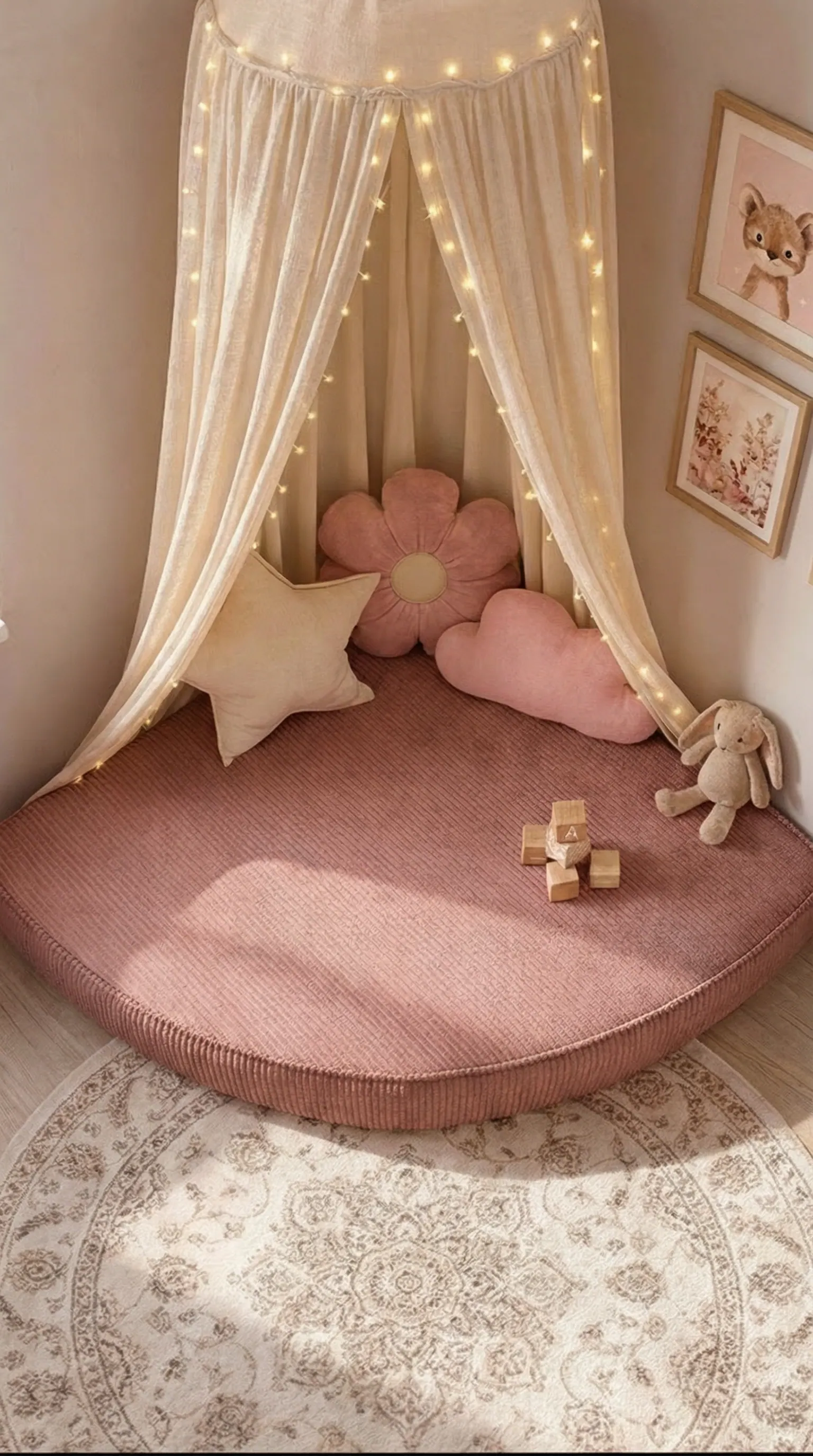
A dusty pink corduroy corner floor cushion seen from above, and why each pillow and toy sits where it does
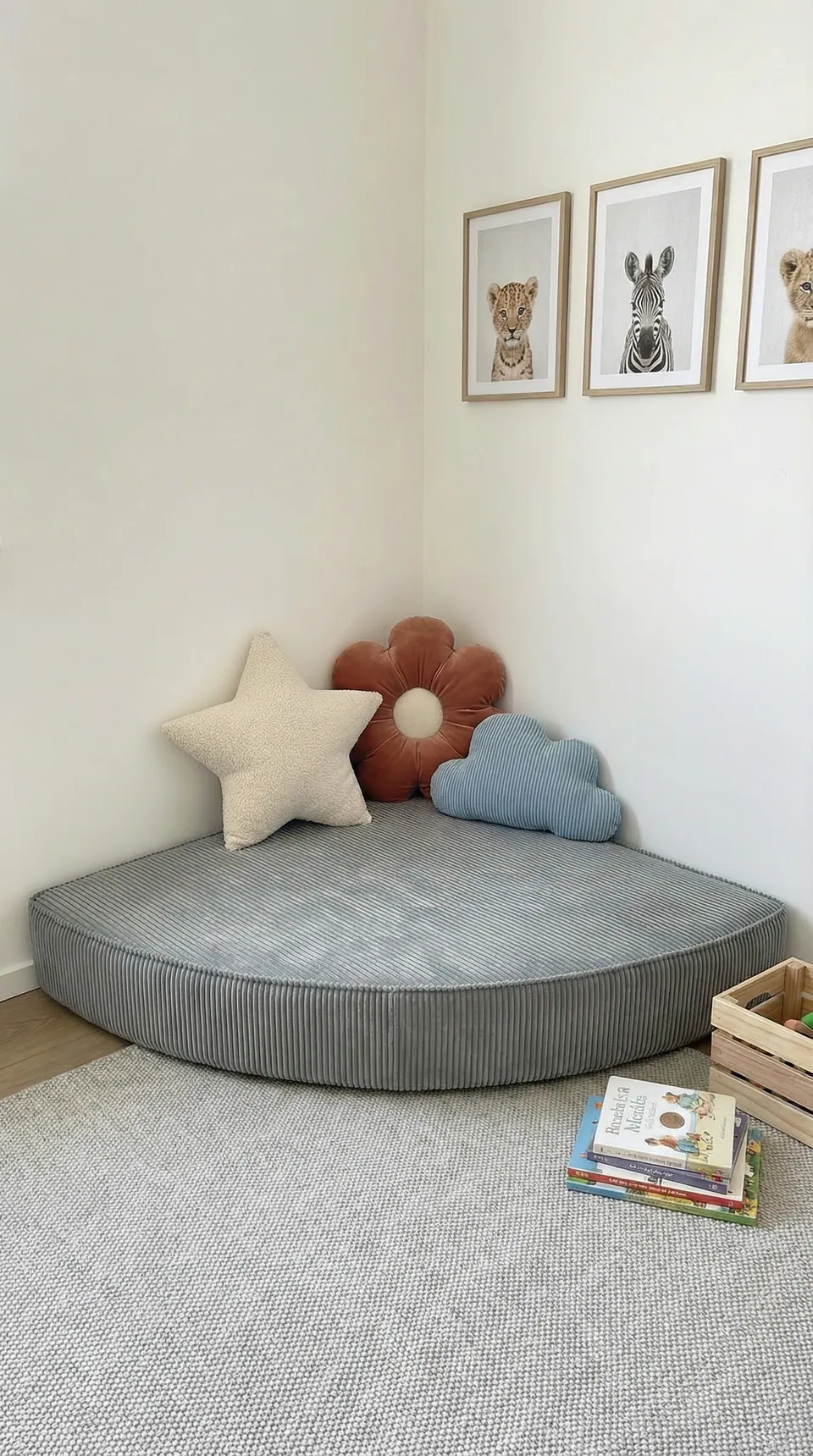
From a chair's height, a corner cushion turns out to be a quarter-circle and a handful of small decisions. Every prop in this one earned its place.
 Save
The quick answer
Style a corner floor cushion by putting the largest pillow deepest in the corner, stepping two smaller ones forward along the curve, and repeating the round shape with a rug below. Keep toys to a piece or two on the seat. Size the cushion by its two straight sides; the kids' corner version is 8 in (20 cm) thick with a removable cover.
High Point ·
To a parent kneeling in a corner with a tape measure,
A letter from above the corner
Stand on a chair and look down. That's the view in this photograph, and it's the most honest view of a corner floor cushion there is.
From up here the shape is plain: a true quarter-circle, its point tucked where the two walls meet and a smooth arc facing the room. The arc runs evenly from wall to wall, which tells me it was cut with care. The cloth is dusty pink corduroy with a box edge and no piping. Corduroy floor pieces are made that way on purpose.
Every prop has a job. The flower pillow is the biggest, so it sits deepest, right in the corner. The star and the cloud step forward on either side, following the curve. A plush bunny leans on the side wall to balance the star at the other end. Wooden alphabet blocks on the seat say this is a play mat as much as a chair.
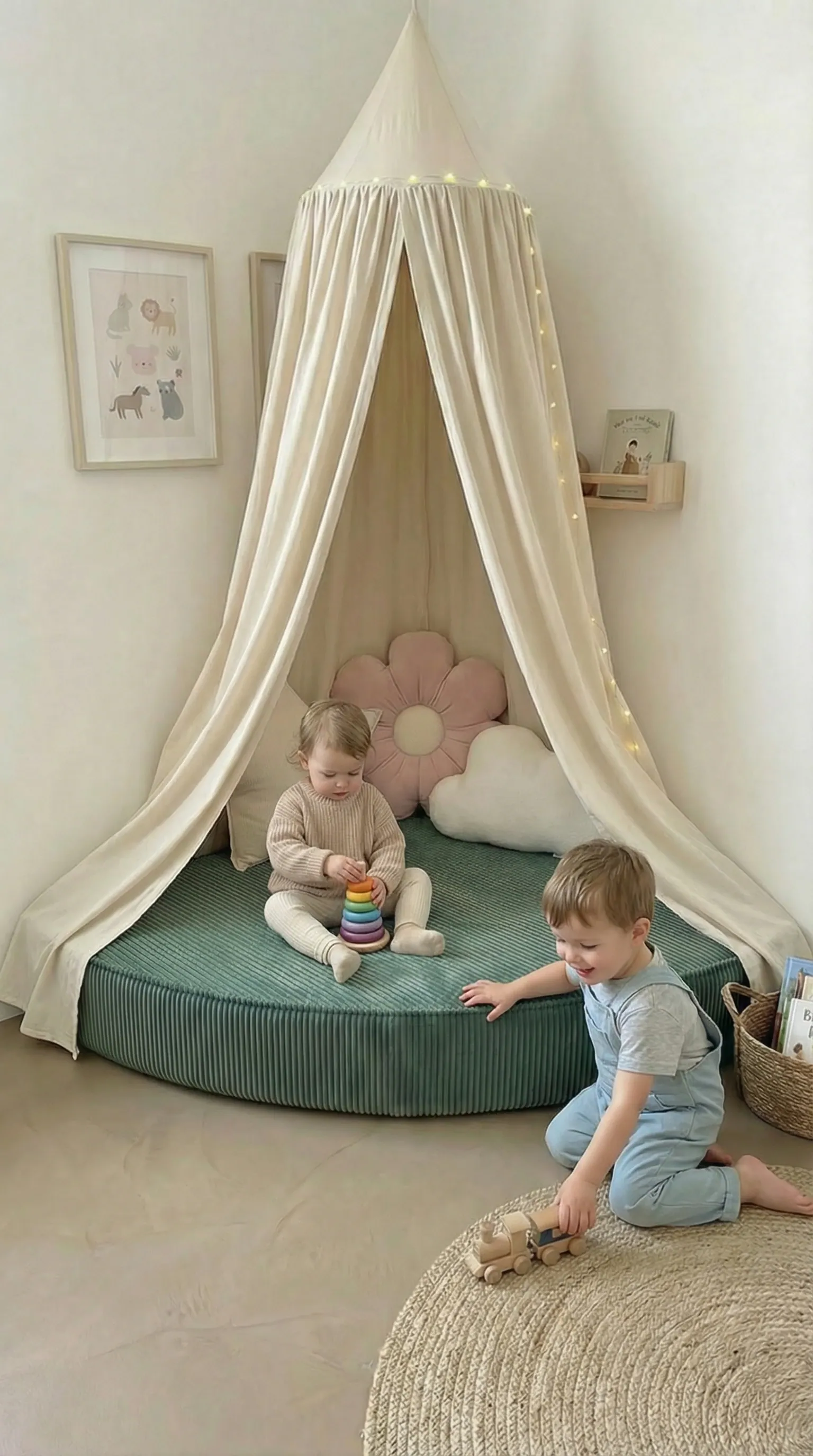
Up top, a cream canopy with fairy lights makes a ceiling for the nook, and the framed fox and floral prints set the colors the pillows repeat: pink, cream and nothing louder. Underneath, an ivory medallion rug is round, and a round rug under a curved edge makes the arc look intended rather than cut to fit.
Copy the order, my friend, not the objects. More corners like this one live under kids' room cushions and corner reading nook floor cushions.
Copying the corner, prop by prop
Seat the largest pillow deepest
Put your biggest pillow right where the walls meet. It fills the dead corner and becomes the backrest.
Step two smaller shapes forward
Set one on each side, a little forward of the first, so the group follows the arc instead of lining up against the wall.
Balance the two ends
A toy against one wall, a pillow at the other. Uneven ends make a small seat look lopsided.
Repeat the round below
A round or oval rug under the arc makes the curve look planned.
Let the wall carry the color
Pick pillow colors from the art above. Two colors are plenty, with the cushion as the calm third.
Pinned by Harlan: five marks seen from above
Five pins, from the even curve of the front edge to the round rug that makes it look intended.
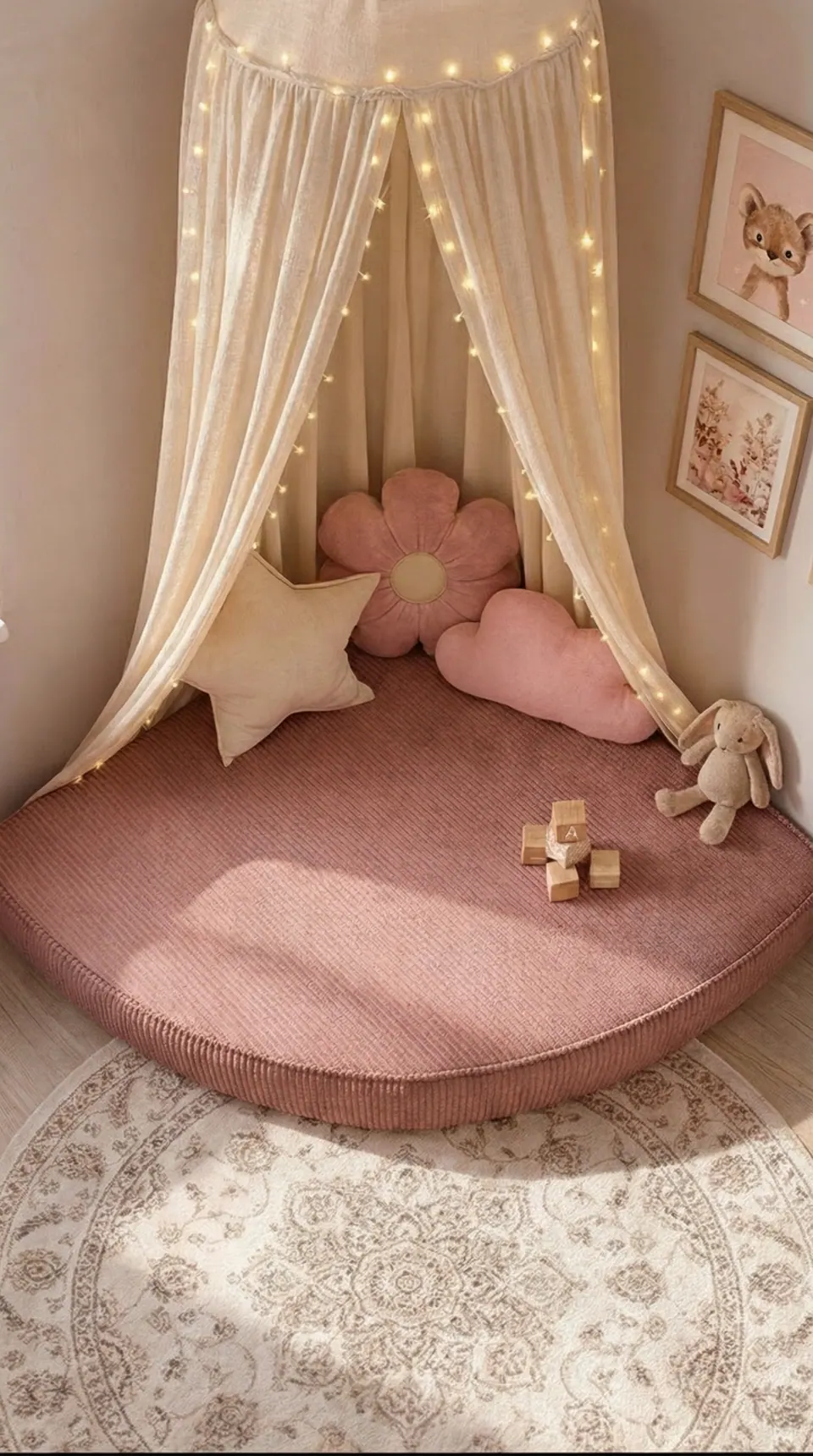
- Even curved front
From this angle you can see the arc runs evenly all the way round, a sign of careful cutting.
- Flower pillow in the corner
The largest pillow goes deepest, right where the two walls meet.
- Wooden blocks on the seat
Small toys on top show the seat doubles as a play mat.
- Bunny against the side wall
A toy at the wall end balances the star on the opposite side.
- Round medallion rug
A round rug under a curved cushion makes the arc feel intentional.
- Even curved frontFrom this angle you can see the arc runs evenly all the way round, a sign of careful cutting.
- Flower pillow in the cornerThe largest pillow goes deepest, right where the two walls meet.
- Wooden blocks on the seatSmall toys on top show the seat doubles as a play mat.
- Bunny against the side wallA toy at the wall end balances the star on the opposite side.
- Round medallion rugA round rug under a curved cushion makes the arc feel intentional.
A 50-inch floor sofa with almost no seat left
A buyer in the US ordered a floor sofa at a custom 50 in (127 cm) width for a narrow wall. It arrived with full-size L-shaped arms and backrests, and those took up nearly all of the seat.
Backrest height couldn't come down, because it's what holds the sitter up. So the workshop made thinner backrests, at about a quarter of the usual price for a set. The new backrests were slow to arrive, and the buyer asked about a refund while waiting.
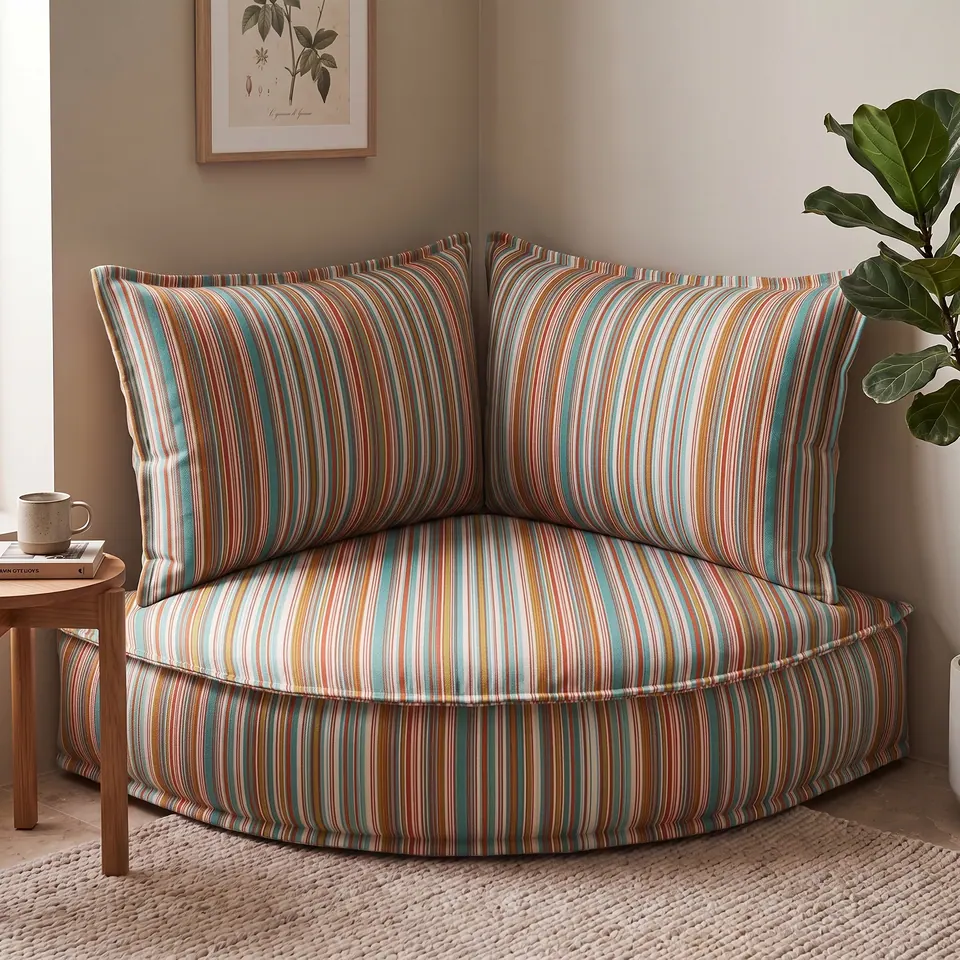
The lesson carries straight over to a corner cushion. When you narrow a seat, check what the arms and backs take from it. A corner piece has no arms at all; the walls do that work, and the pillows are the only backrest. Keep them few and the seat stays a seat. Buy the cushion once, cry once. Quarter-circle sizes explained has the numbers.
How far does your corner run along each wall?
- Sizes
- 50 in (127 cm) wide
- Fabric
- Corduroy
The lesson: When a sofa is narrowed, check that the arm and back thickness still leaves a usable seat.
On a corner floor cushion, put the largest pillow deepest where the two walls meet and step the smaller ones forward along the curve.
Harlan
Buyer questions: an unlisted color, a low seat and two soft fabrics
- A common question
I saw a color on the workshop's own website that isn't offered in the listing I'm ordering from. Can I still get it?
The workshop's answerYes. Place the order and write the color you want, with a phone number for delivery, in the personalization box, or send a message right after ordering.
- A common question
The seat height was supposed to be 14 in (36 cm), but my floor sofa measures only 12 in (30 cm). What can be done?
The workshop's answerFirst give the foam 36 to 48 hours or more to expand fully. If it still falls short, the workshop can send an extra foam layer, for example an 8 in (20 cm) mattress to pair with a 6 in (15 cm) one, plus a matching layer for the ottoman so the heights line up. Ask for the making time of custom layers in writing.
- A common question
What's the difference between your velvet and your soft fabric?
The workshop's answerThe soft fabric is the more durable of the two, and the easier to clean.
On the cutting table: the pink corner
| Piece | Quarter-circle corner floor cushion, box edge |
|---|---|
| Fabric | Dusty pink plush corduroy; indoor use |
| Piping | None; corduroy floor pieces are made without it by design |
| Sizes | Given by the two straight sides: 31 1/2, about 39 1/2 or 47 1/4 in (80, 100 or 120 cm), 39¼ in (100 cm) the favorite |
| Largest standard | 48 in (122 cm) per side, with an arc of about 75.4 in (192 cm) |
| Thickness | 8 in (20 cm) |
| Fill and cover | Foam, with a removable zippered cover |
| Styling | Three pillows, one toy per end, a round rug below |
Have it made
Have this made — ask Harlan’s workshop
Old upholsterers will tell you the real cutting happens in the conversation, long before the shears come out. Tell the workshop what you sit on, and they will talk it through with you. — Harlan
Leave your details and the workshop will call you to confirm measurements, fabric, foam and piping. No prices, dates or payment on this page: it is a request, not an order.
Questions buyers ask next
Do I measure the curved front of a corner floor cushion or the walls?
The walls. A quarter-circle corner cushion is sized by its two straight sides, measured from the corner point, and the curve follows from them. A 48 in (122 cm) corner, the standard maximum, has an arc of about 75.4 in (192 cm).
Why doesn't a dusty pink corduroy corner cushion have piping?
Corduroy floor pieces are made without piping by design. The ribs already mark the edge, and a plain box edge keeps the curved front soft, which suits a seat that small children climb over and sprawl on.
How many pillows belong on a quarter-circle floor cushion?
Three is enough: one large pillow in the corner and two smaller ones along the curve. Add more and the pillows start eating the seat, the same trouble a narrowed floor sofa has with full-size backrests.
Sit well. — Harlan
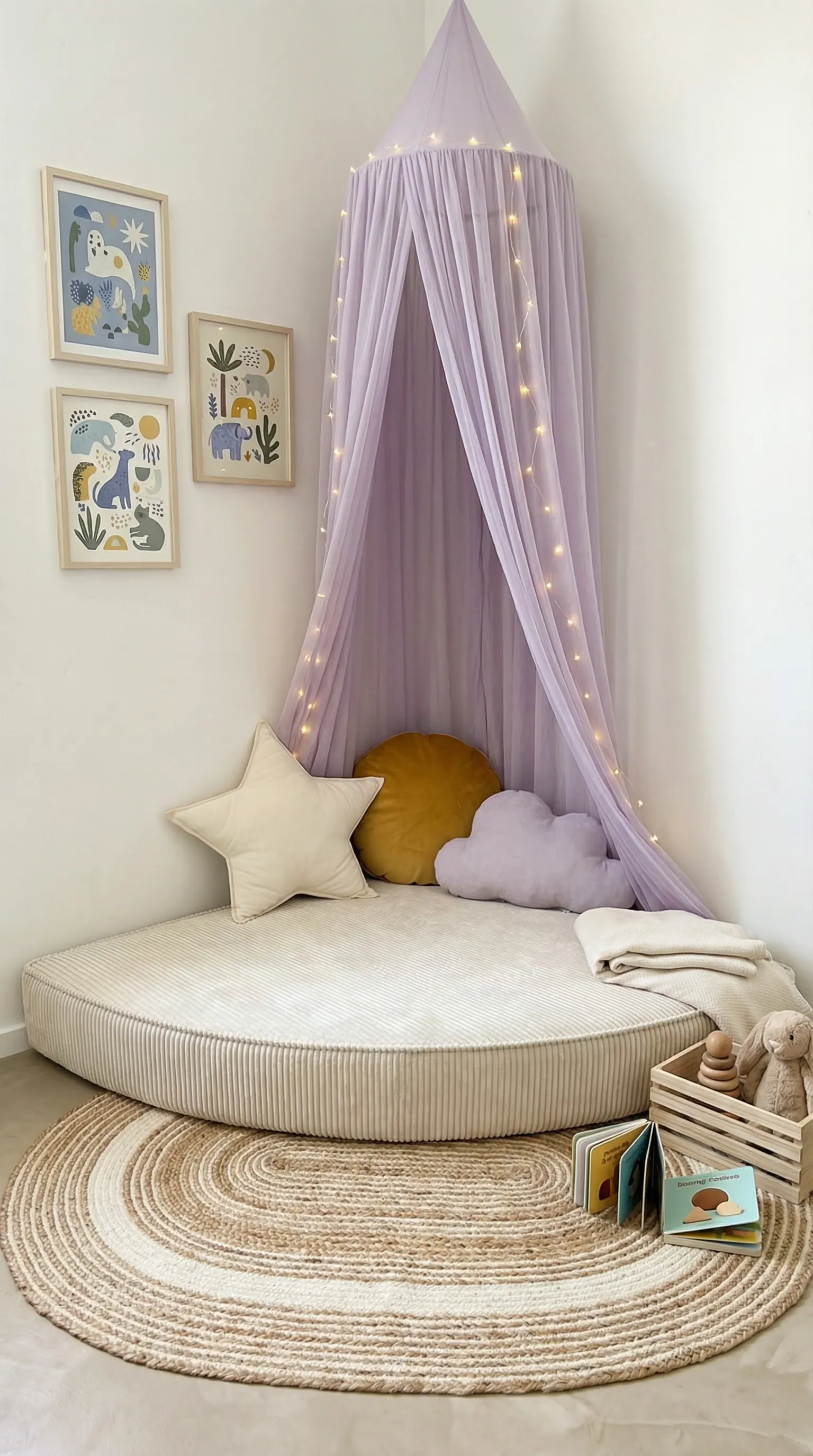
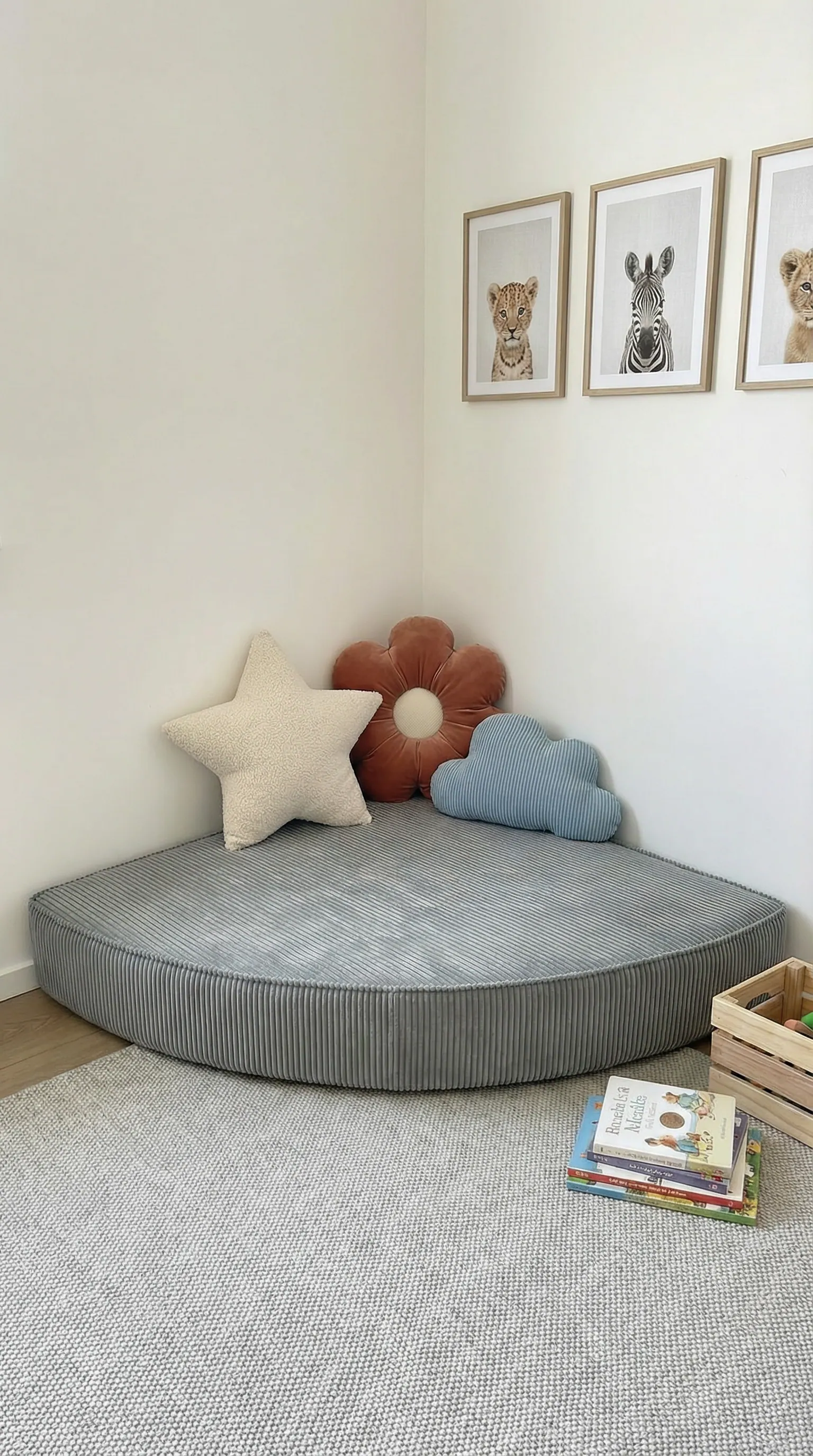
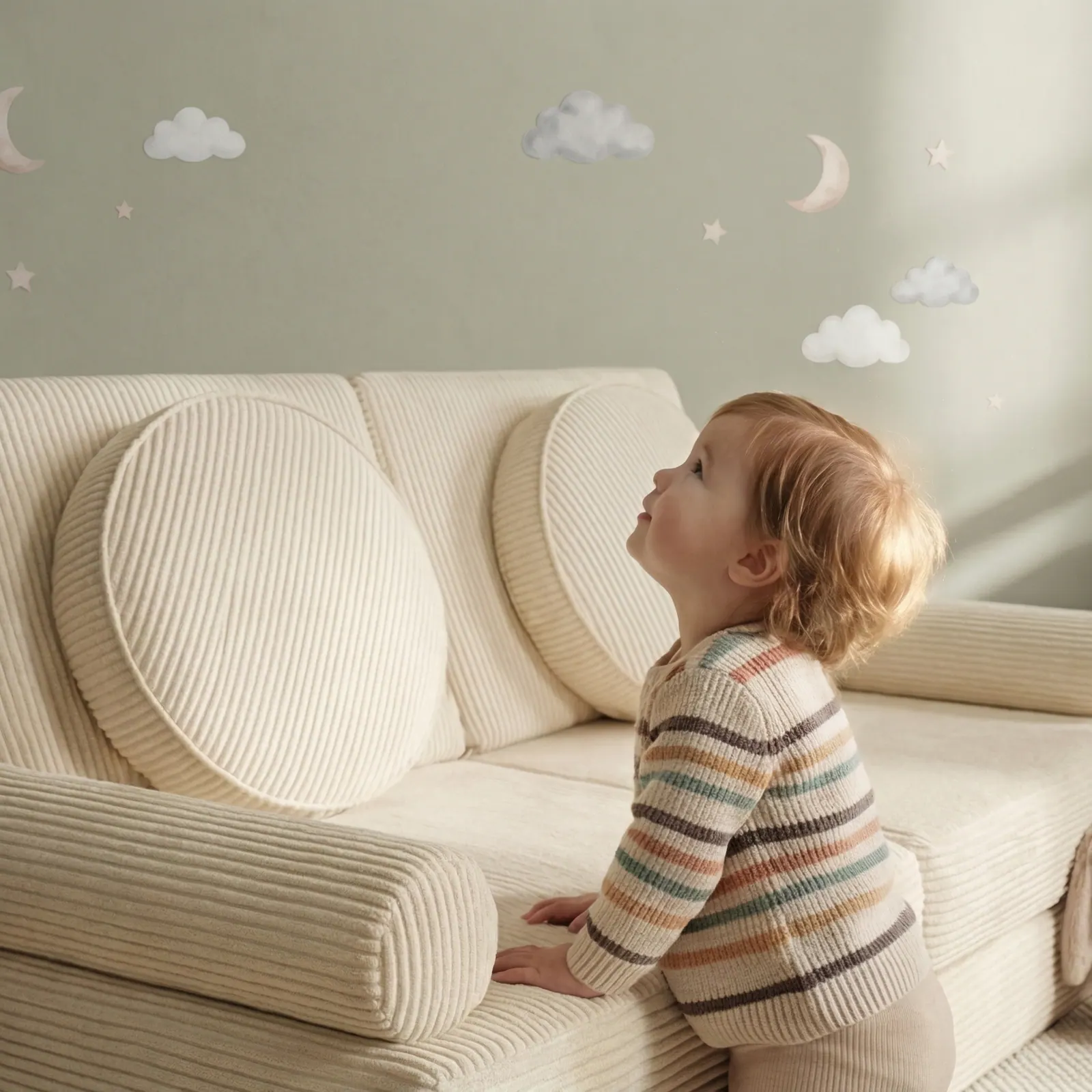
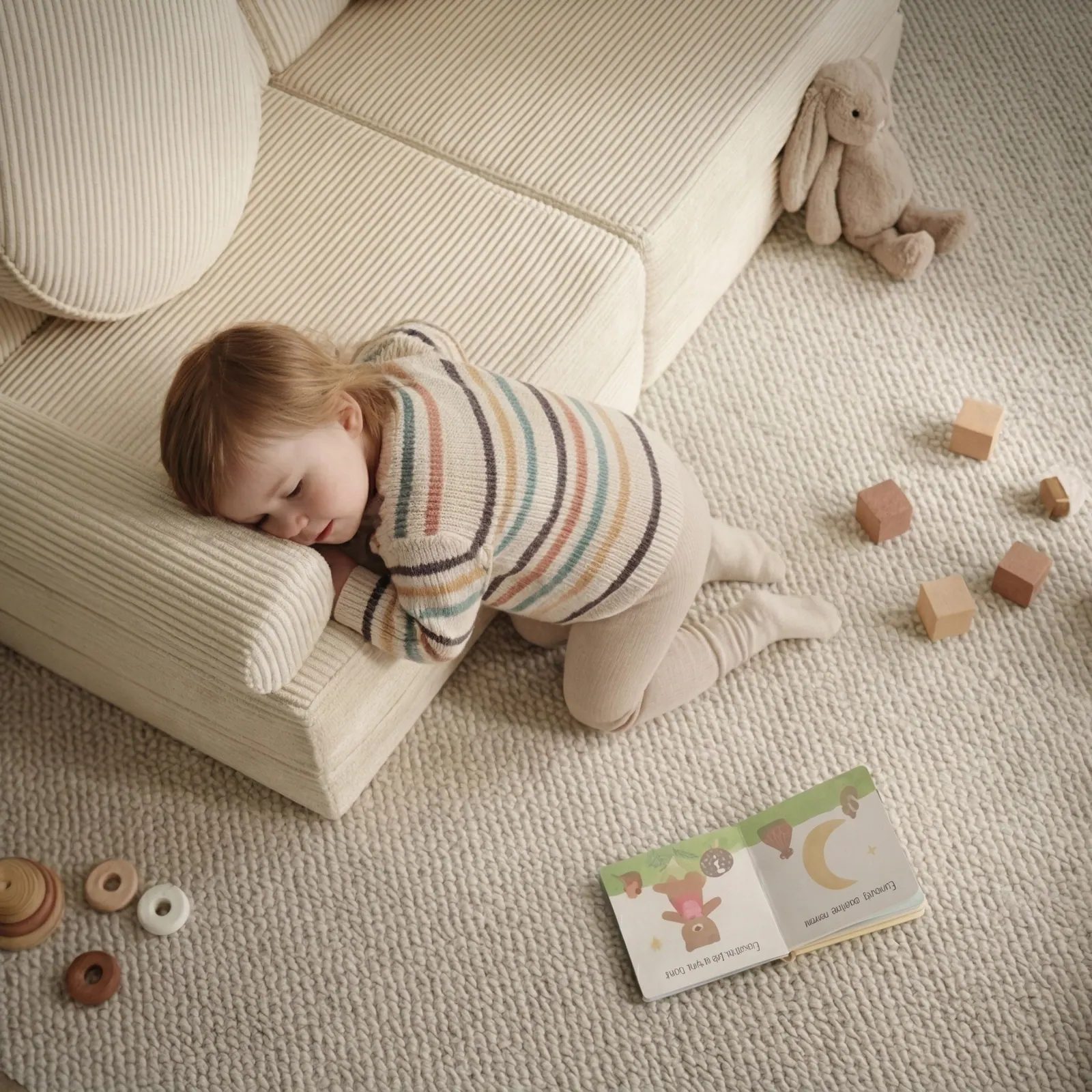
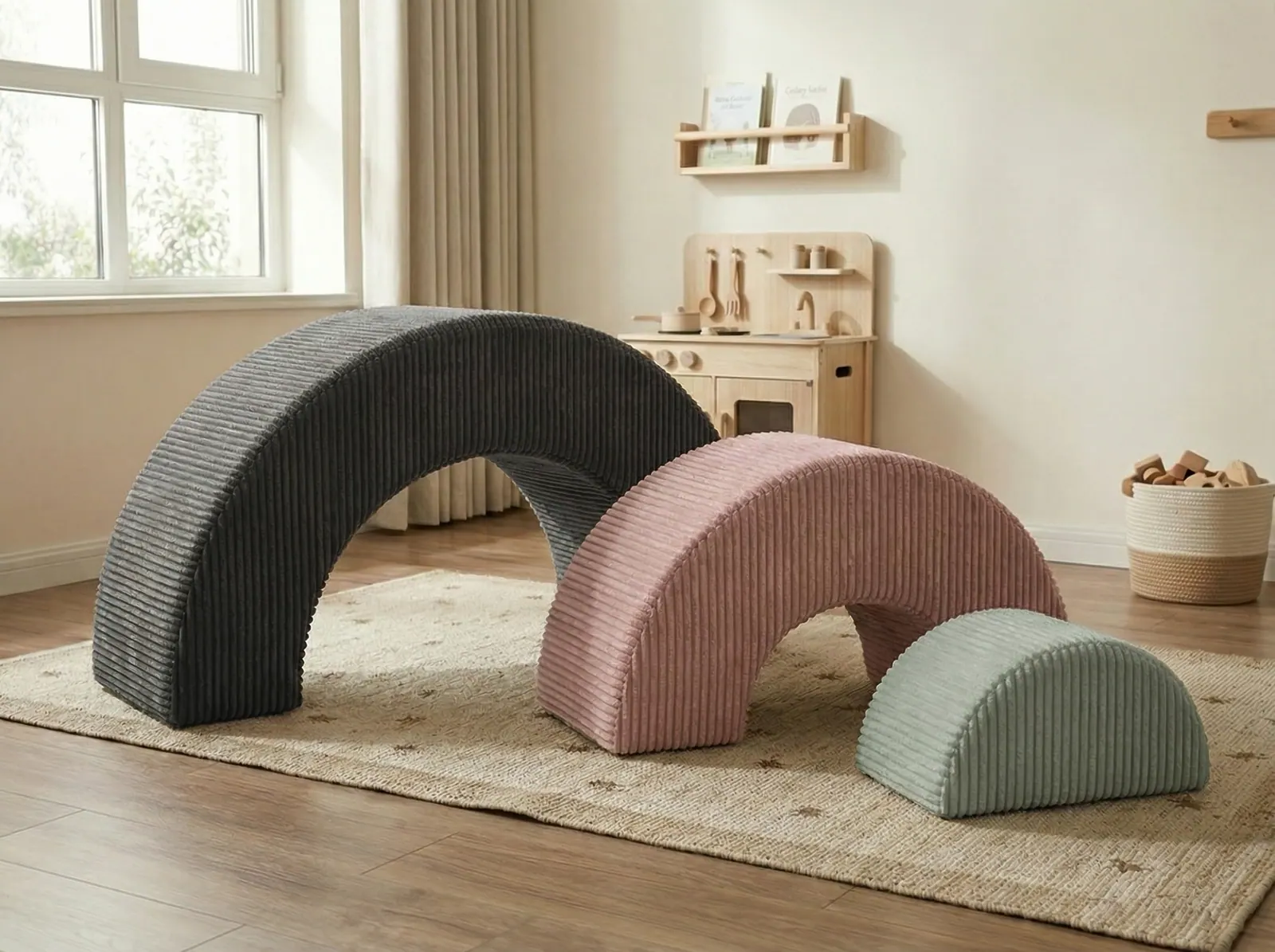
Corduroy corner cushions and play pieces in ivory, gray, sage, cream and charcoal
 Save
 Save
 Save
 Save
 Save
 Save