 Save
A Reading by MaggieBench Cushions
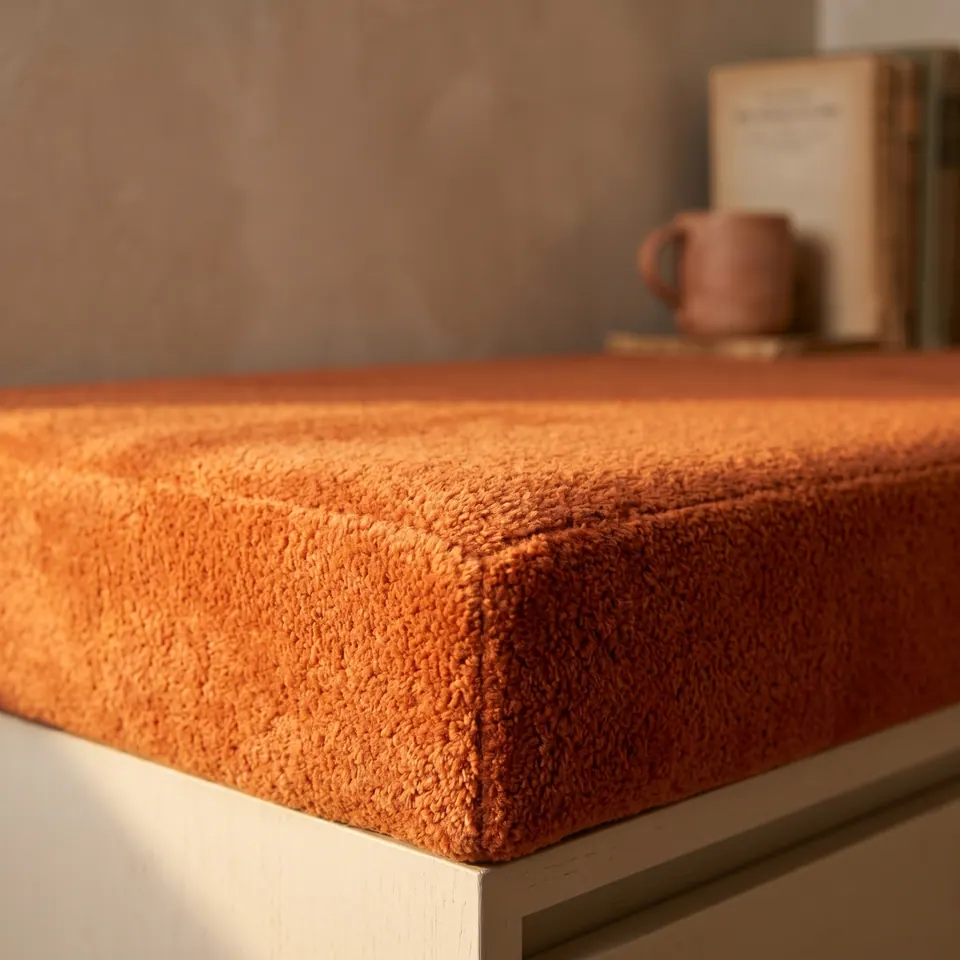
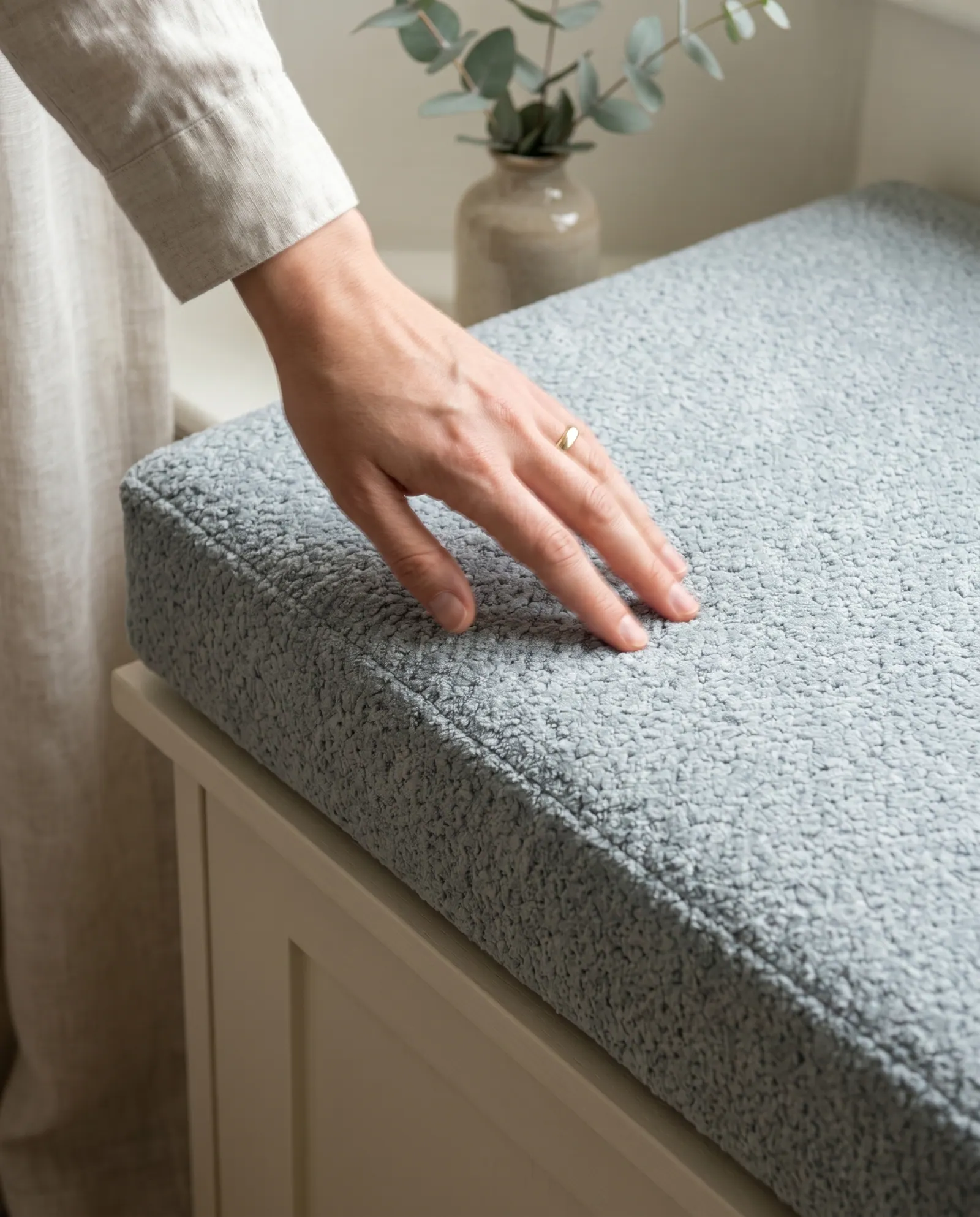
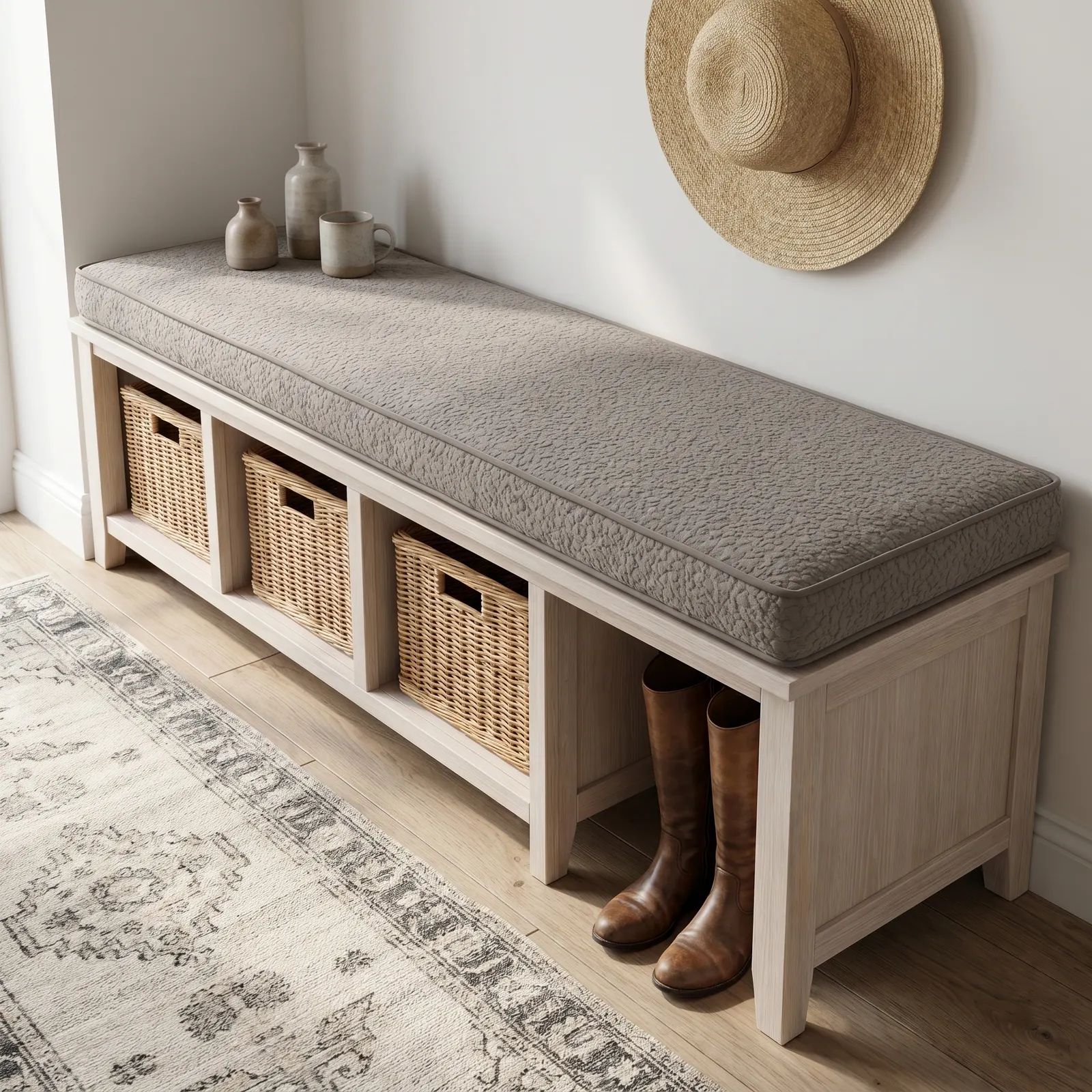
A caramel bouclé custom bench cushion, read corner first and ordered right the first time
Maggie inspects one piped corner the way she checks every delivery, then lists the codes, drawings and notes that get a bench cushion right on the first cut.
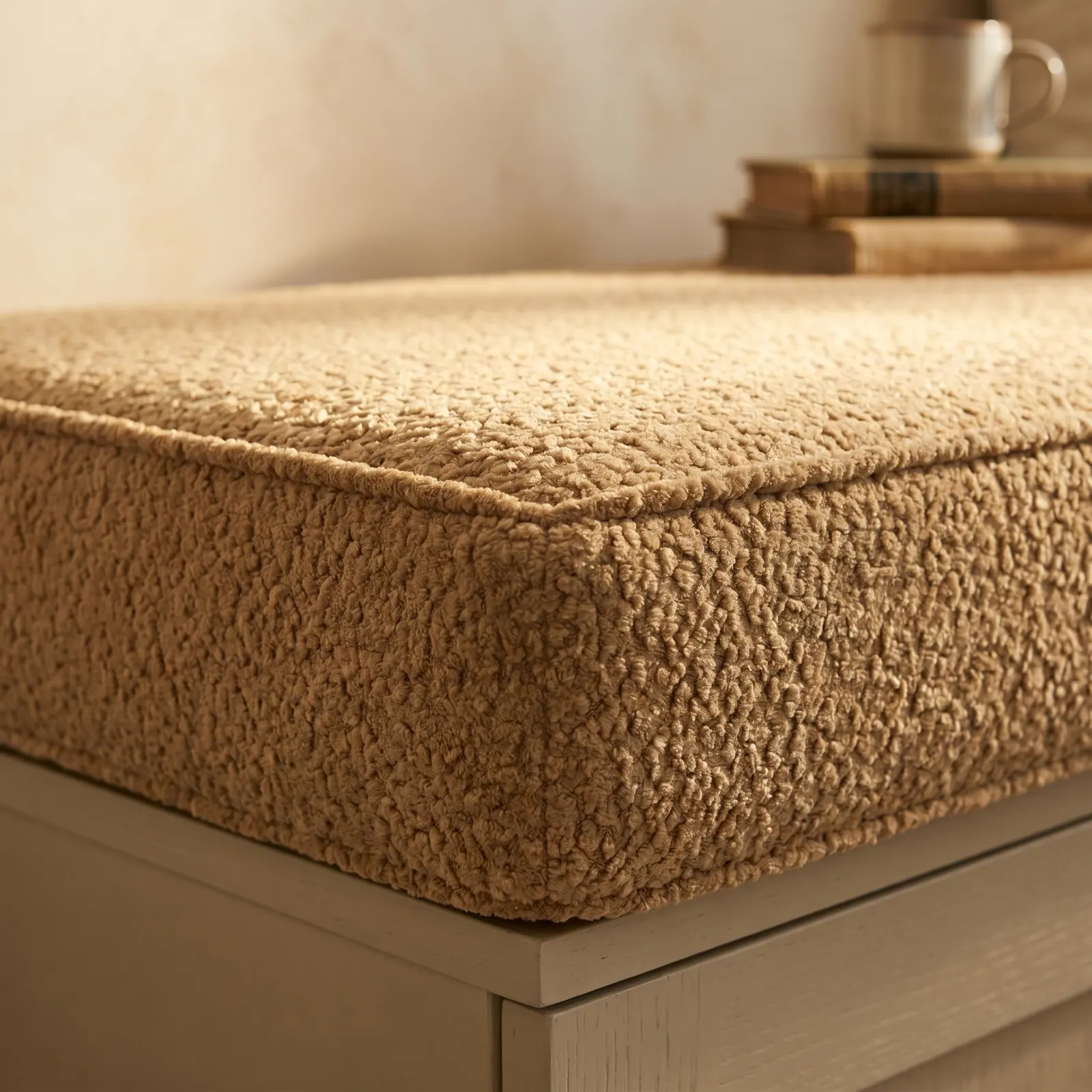
Up close, caramel self piping keeps the corner square without interrupting the curly bouclé texture.

The quick answer
To get a custom bench cushion right the first time, send exact dimensions, your fabric and piping codes, and a drawing for any curve or rounded end, and write tie placement in the personalization box. When it arrives, check a corner: piping on the seam, a straight box wall, and a filled-out corner. Caramel bouclé with self piping passes all three.
Start at the corner
Every delivery I've ever inspected, I started at a corner. Not the middle, not the fabric. The corner.
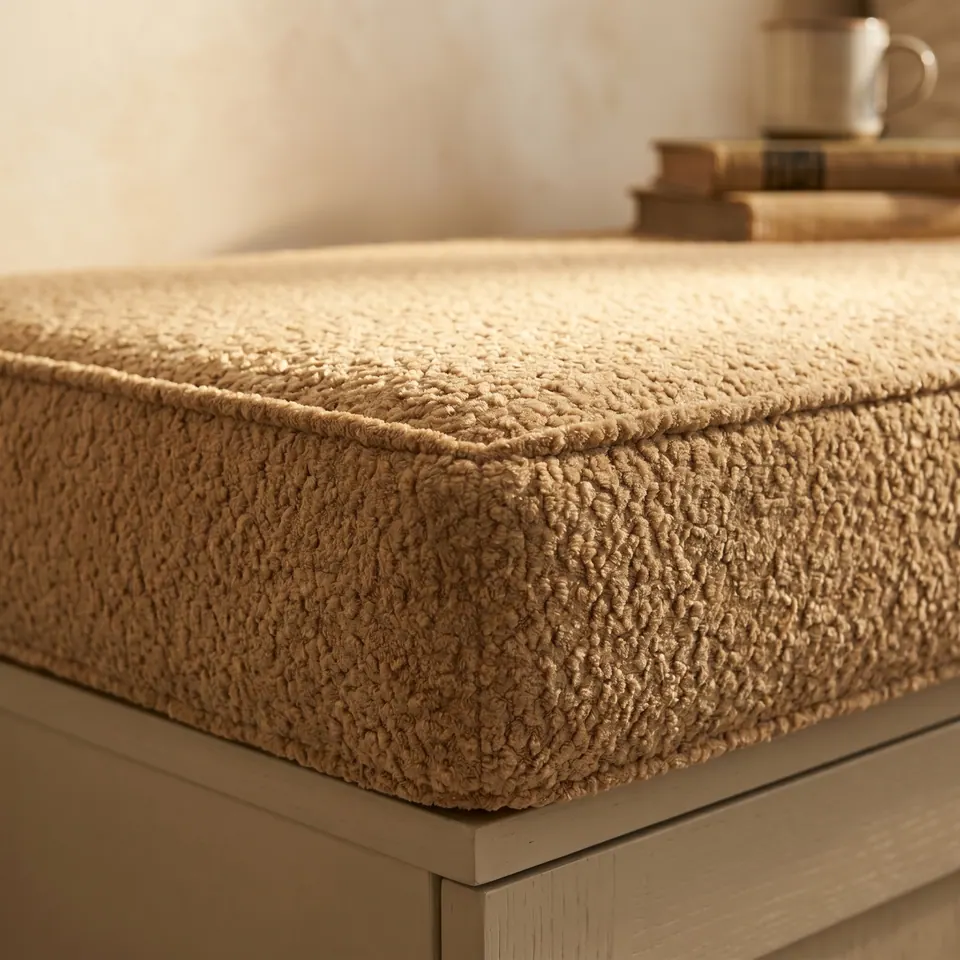
This one is caramel bouclé, a box cushion on a cream painted cabinet against a plaster wall. The camera sits at seat height, which is exactly where a tailor puts her eye. Three checks, all passed. The self piping lies right on the seam and turns the corner without a single pucker. The box wall stands upright instead of bulging, so the cover is cut snug to the foam. And the corner is filled out, not dimpled.
Why self piping on bouclé? A heavy looped cloth already has plenty to say. A contrast cord would fight the curls; a matching one simply sharpens the outline and lets the pile do the work. A straight welt is a kind of honesty, and on a textured fabric it is the only straight line you get. The bouclé and teddy library shows how the loops take light.
The stack of cloth-bound old books and the cream enamel mug are kept warm and soft behind, so the caramel reads as honey rather than orange. Soft side light helps too: no hard glare to bleach the loops. Notice also that the cushion stops flush with the cabinet edge. No overhang, no gap. That is what a measurement taken from the furniture, not from memory, looks like.
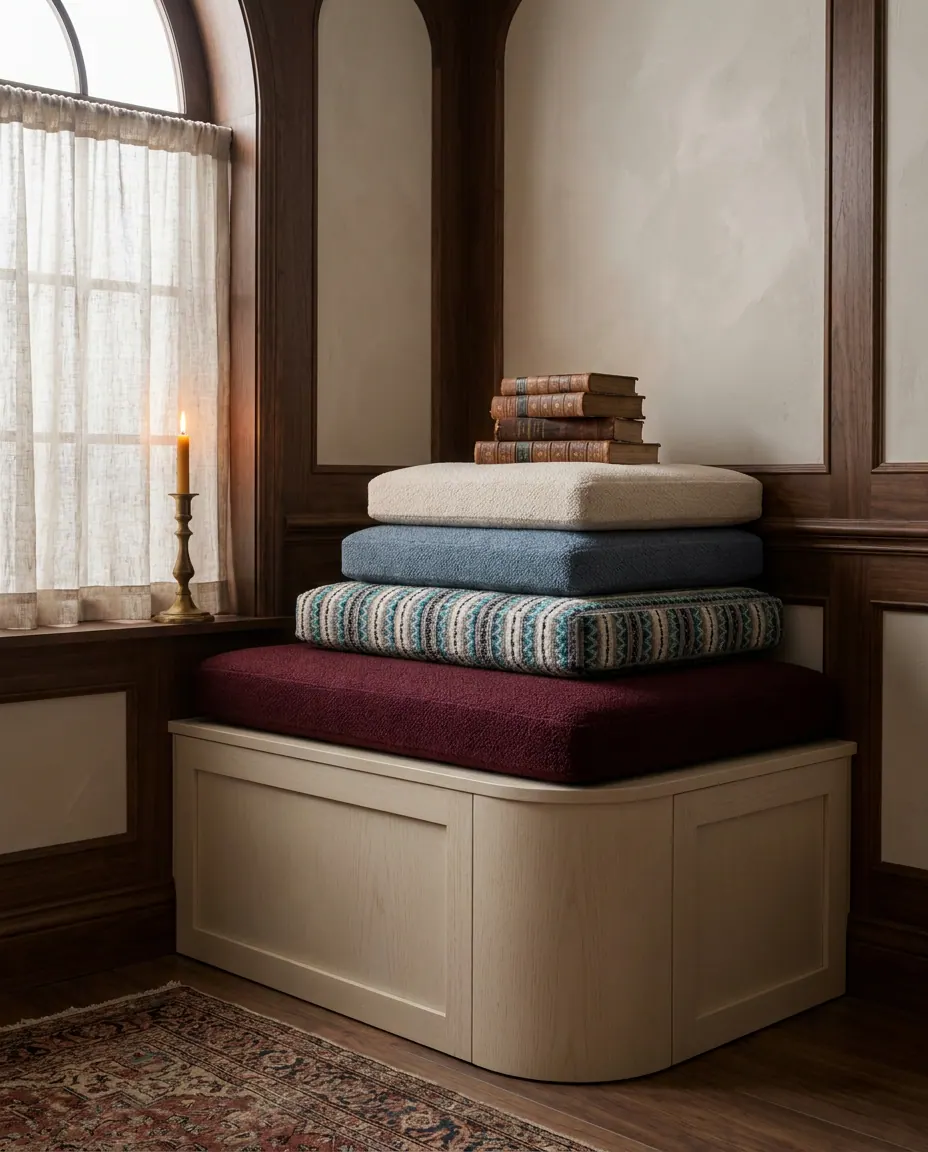
When your last cushion arrived, did you look at the corner first? More reading-nook seats sit among the bench cushions, and you can rough out your own in the bench cushion builder.
Pinned by Maggie: one corner, four checks
Four pins, from the piped corner to the cabinet edge where the cushion stops.
- Piped corner
The piping sits right on the seam and turns the corner without puckering, the first thing to check on any box cushion.
- Straight box wall
The side wall stays upright rather than bulging, a sign the cover is cut snug to the foam.
- Books and mug
Kept soft and warm in the background so the caramel reads as honey, not orange.
- Cabinet top
The cushion stops flush with the cabinet edge instead of overhanging it.
- Piped cornerThe piping sits right on the seam and turns the corner without puckering, the first thing to check on any box cushion.
- Straight box wallThe side wall stays upright rather than bulging, a sign the cover is cut snug to the foam.
- Books and mugKept soft and warm in the background so the caramel reads as honey, not orange.
- Cabinet topThe cushion stops flush with the cabinet edge instead of overhanging it.
The designer who asked for sideways stripes
An interior designer in the US ordered a bench cushion for a client: 32 x 57.5 x 4 in (81 x 146 x 10 cm), in a black-and-white stripe of 98% cotton, with piping. The note asked for the stripes to run side to side.
They arrived running front to back. The designer wrote to ask why, and the workshop explained: at that length, the width of the fabric roll would have forced seams across the top to turn the stripes sideways. Once the designer saw the trade, a seam across the seat against a clean top, they agreed the seamless version was better.
My lesson, and I have had to learn it myself: check stripe direction against roll width before anything long is cut. Put it in the note and ask for an answer before production. The personalization note Pattern lists the rest.
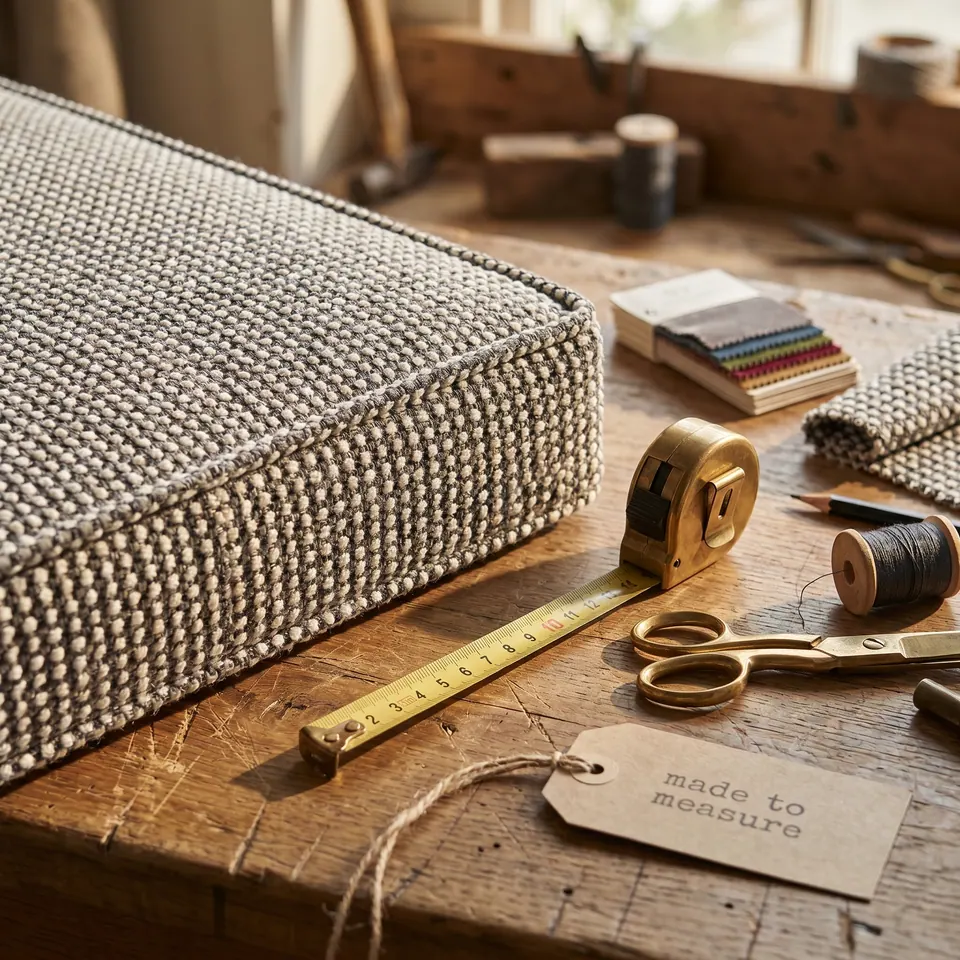
What goes in the order note
- Exact length, depth and thickness, taken from the furniture
- Fabric code and piping code, both in the personalization box
- A dimensioned drawing for any rounded end, curve or angle
- Tie count, side and distance from the ends, with a photo of the bench
- Stripe direction on long cushions, confirmed before production
- Zipper position, if it matters where the zipper sits
Buyer questions: ties, curves and couch-grade foam
- A common question
Can you put ties on my bench cushion, and where would they go?
The workshop's answerYes. One order had 4 ties per cushion, 2 on each side, set 2 in (5 cm) from the ends. The workshop asked for a sketch or photo of the bench to confirm placement. Ties can also go on the back of a trapezoid cushion. Write the tie details in the personalization box.
- A common question
My bench has a rounded end, and I also have a half-round window seat. Can you make both?
The workshop's answerYes. Send exact dimensions and a drawing. A 33 x 20 in (84 x 51 cm) bench cushion rounded at one end was quoted from the owner's own shop drawings. An arched window seat 67 in wide and 47 in deep (170 x 120 cm) was drawn as a 64.5 x 21 in (164 x 53 cm) rectangle plus an arc taken from a 64.5 in (164 cm) circle.
- A common question
Is your foam tough enough for a couch or everyday seating, or is there a stronger one?
The workshop's answerThe workshop uses 32-density foam, and it suits every kind of seating, couches included. Couches are the workshop's main line, and the same foam has held up in them for years across thousands of orders.
On the cutting table: the caramel corner
| Cushion | Box bench cushion |
|---|---|
| Fabric | Caramel bouclé |
| Piping | Self piping, laid on the seam |
| Box wall | Straight, cover cut snug to the foam |
| Foam | 32-density, the same foam used in couches |
| Fit | Flush with the cabinet edge, no overhang |
| Order notes | Codes, a drawing for curves, tie placement |
| Best for | Reading nooks and cabinet-top benches |

Have it made
Have this made — ask Maggie’s workshop
I once cut a lovely cushion two inches short, and I have not forgotten it. That is why the workshop goes over your measurements with you on the phone. — Maggie
Leave your details and the workshop will call you to confirm measurements, fabric, foam and piping. No prices, dates or payment on this page: it is a request, not an order.
On a bouclé box cushion, check a corner first: piping on the seam, a straight side wall, and a corner filled out rather than dimpled.
Maggie
Questions buyers ask next
What should I check first when a custom box cushion arrives?
A corner. The piping should sit on the seam and turn without puckering, the side wall should stand straight rather than bulge, and the corner should be filled out, not dimpled.
Should bouclé cushions have contrast or matching piping?
Matching, usually. The loops of bouclé already give plenty of texture, and a contrast cord competes with them. Self piping sharpens the outline and keeps attention on the pile.
What belongs in the personalization box for a custom bench cushion?
Exact dimensions, fabric and piping codes, tie count and placement, zipper position if it matters, and stripe direction for striped fabrics. For curves or rounded ends, upload a dimensioned drawing as well.
Stitch straight — Maggie
More photographs to read
 Save
 Save
 Save
 Save
 Save
 Save