A Reading by NateBench Cushions
Measuring an oak end-of-bed bench for a salt-and-pepper box cushion
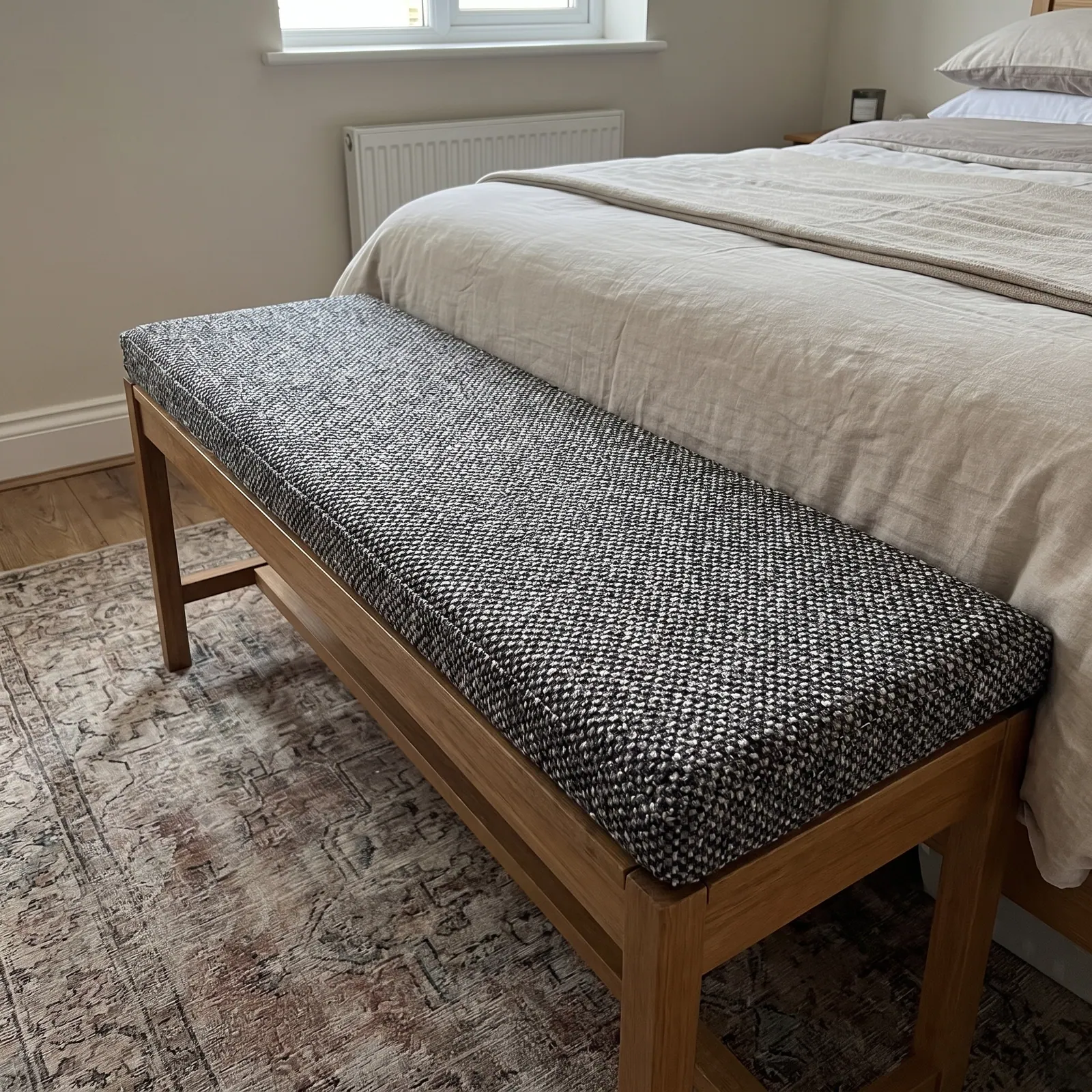
Nate reads a flecked black-and-white cushion at the foot of a linen bed, then walks through the measurements an end-of-bed bench needs, and the one people skip.

 Save
The quick answer
To measure an end-of-bed bench for a custom cushion, take the top's length along the front and back and its depth at both ends and the middle, note any legs, posts or cut-outs, and set thickness from the height you sit at to pull on socks. Order it flush, with no overhang.
The cushion, cut open
Cover fabric. A removable, zippered cover. Machine wash at 86°F (30°C) on a gentle cycle and air dry.
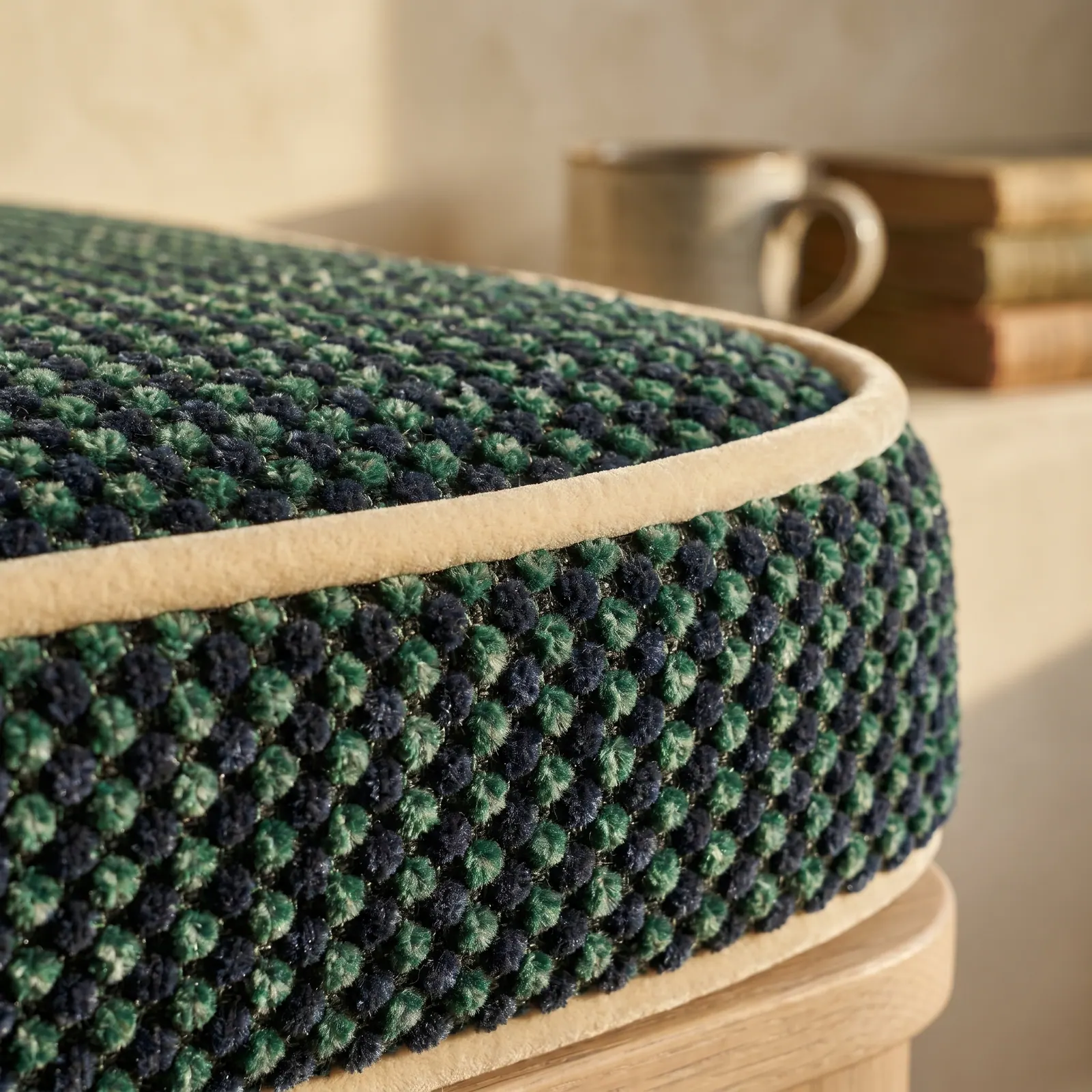
Piping. A fabric-covered cord sewn into the seams. It sits on the seam line, so it does not change the size.
Fiber wrap. Polyester fiber (Dacron) batting around the foam: it fills the cover out and softens the edges.
Foam core. About 2.0 lb/ft³ (32 kg/m³) high-resilience foam, firm to medium-firm, cut to the ordered size.
Zipper. Along the back band, as hidden as possible. The zipper side faces down or toward the wall.
Base panel. The underside of the cover. A non-slip fabric backing can cover the whole of it instead.
Pinned by Nate at the foot of the bed
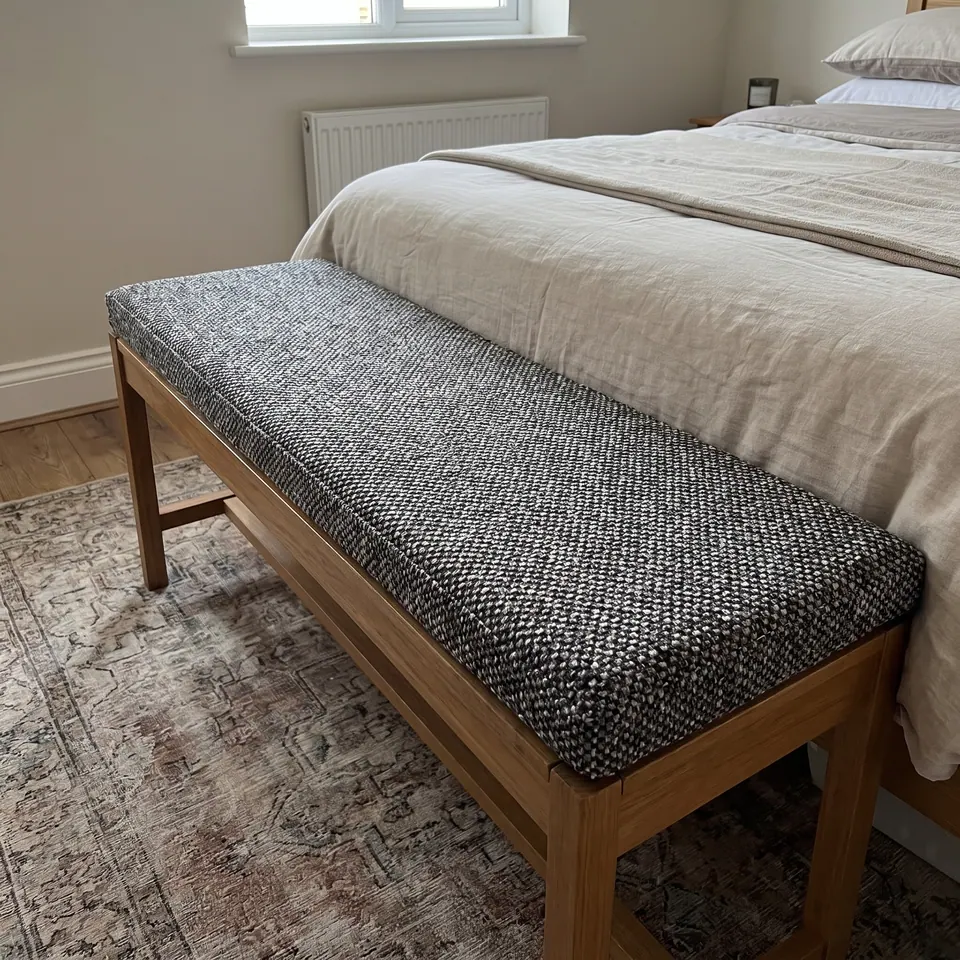
Five pins: the linen bedding, the plain box edge, the oak leg, the vintage rug and the radiator wall behind.
- Linen bedding
Natural linen and the salt-and-pepper weave are both textured neutrals, so they layer without clashing.
- Plain box edge
A clean edge without piping keeps the bench as calm as the bedding.
- Oak bench leg
The cushion sits on the oak top without overhang, leaving the frame visible from the side.
- Vintage rug
A faded rug softens a black-and-white cushion that could otherwise look stark.
- Radiator and window
A plain white wall behind lets the bench and bed read as one group.
- Linen beddingNatural linen and the salt-and-pepper weave are both textured neutrals, so they layer without clashing.
- Plain box edgeA clean edge without piping keeps the bench as calm as the bedding.
- Oak bench legThe cushion sits on the oak top without overhang, leaving the frame visible from the side.
- Vintage rugA faded rug softens a black-and-white cushion that could otherwise look stark.
- Radiator and windowA plain white wall behind lets the bench and bed read as one group.
What the photo tells a tape measure
This bench gets sat on for a minute at a time, every morning, to pull on socks. That short, daily sit is the design brief.
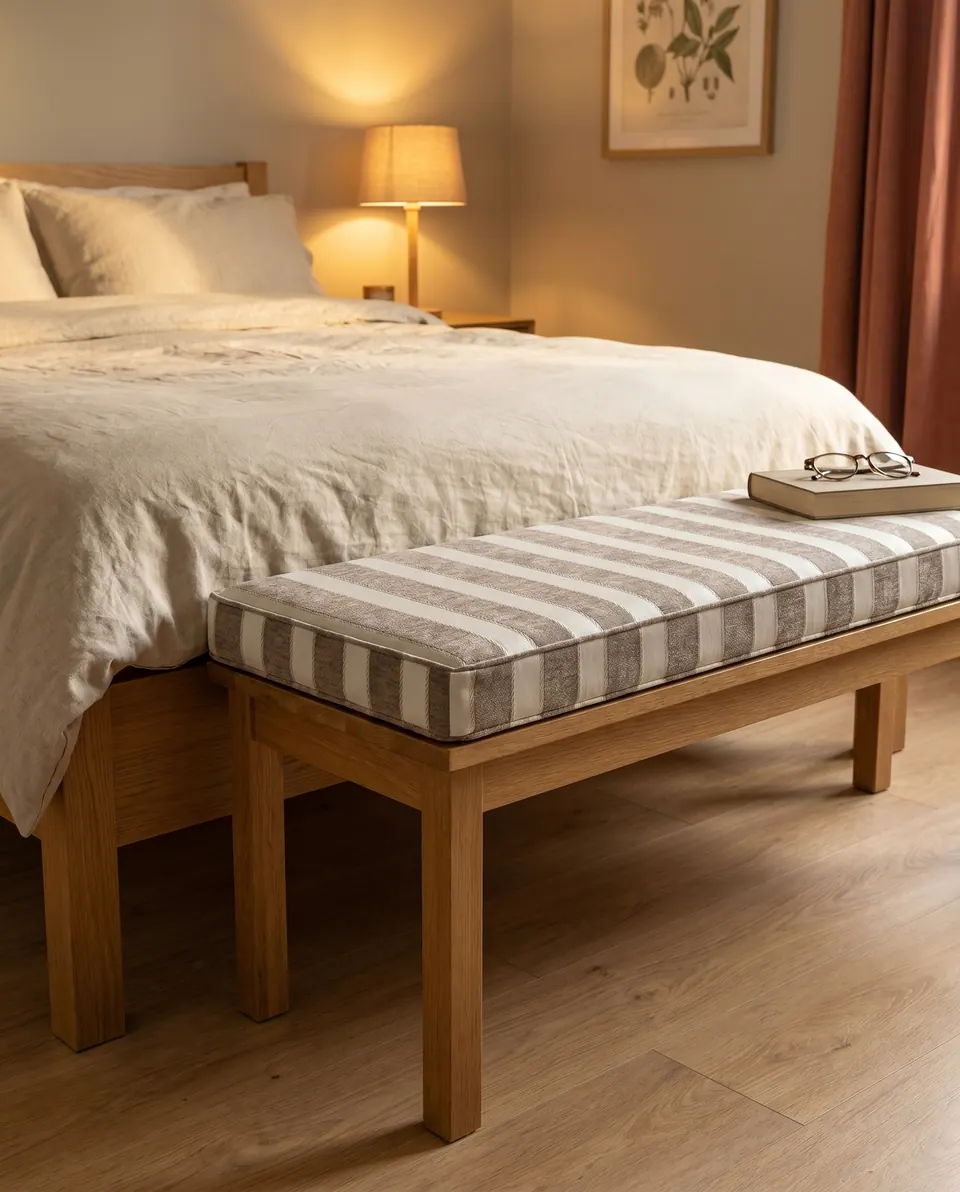
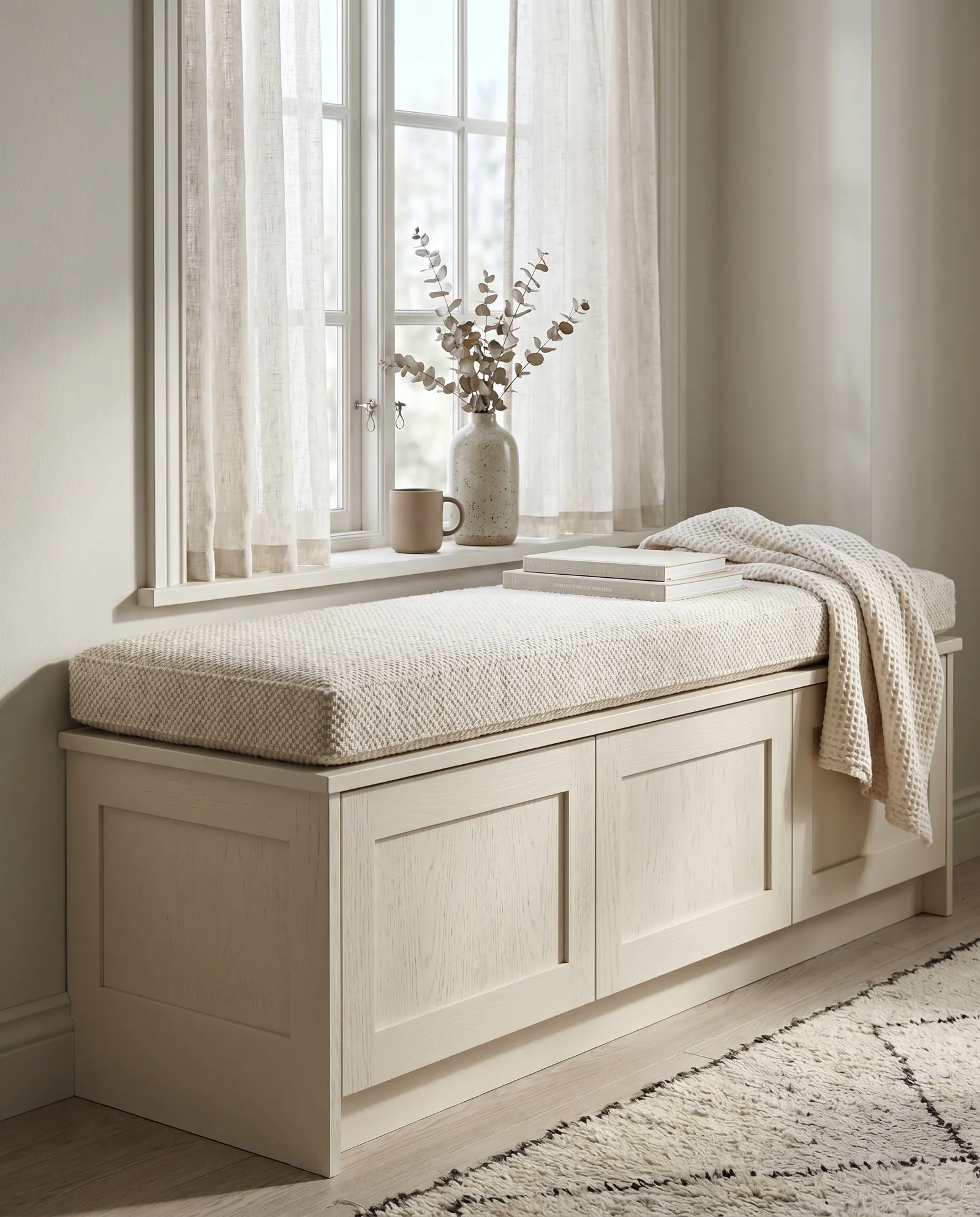
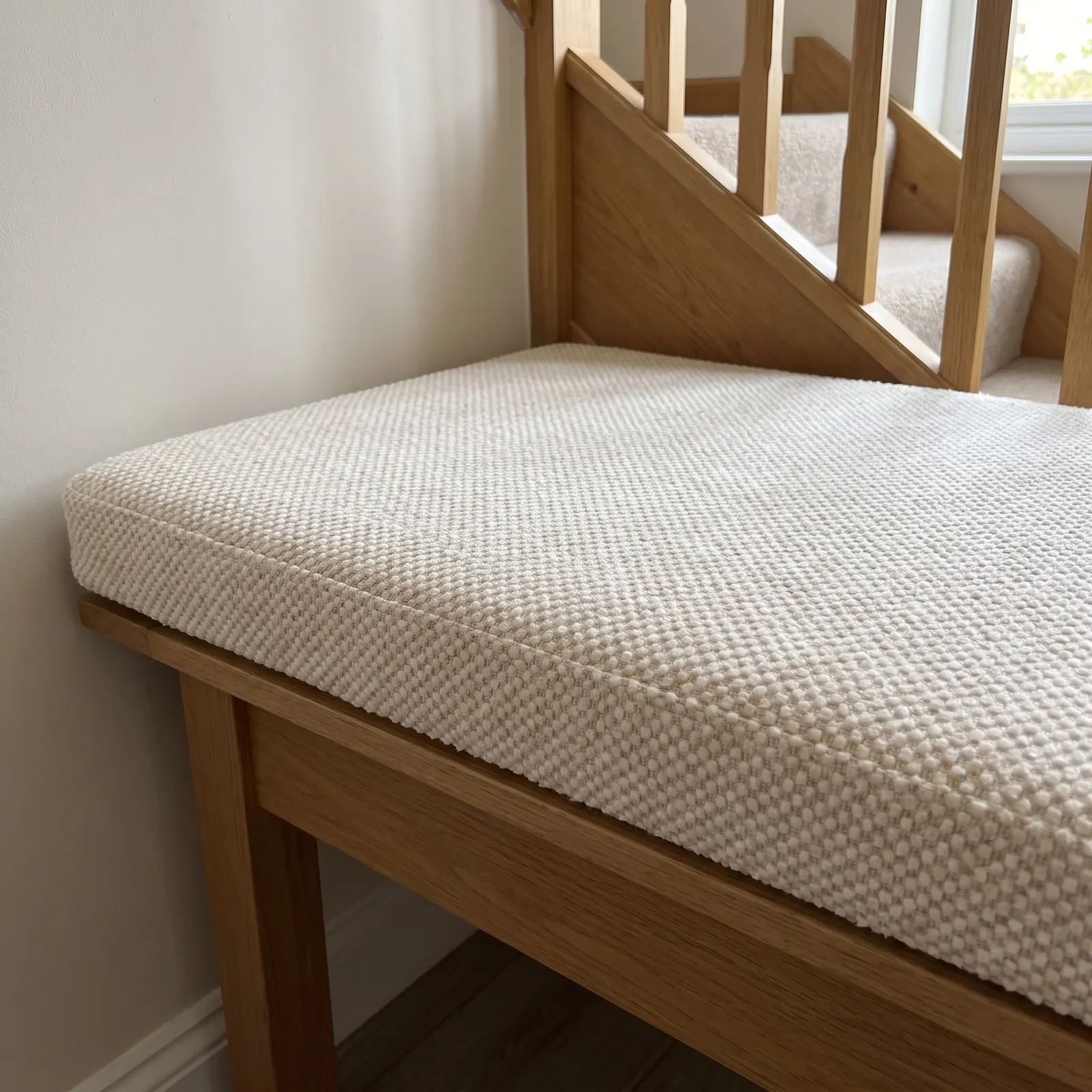
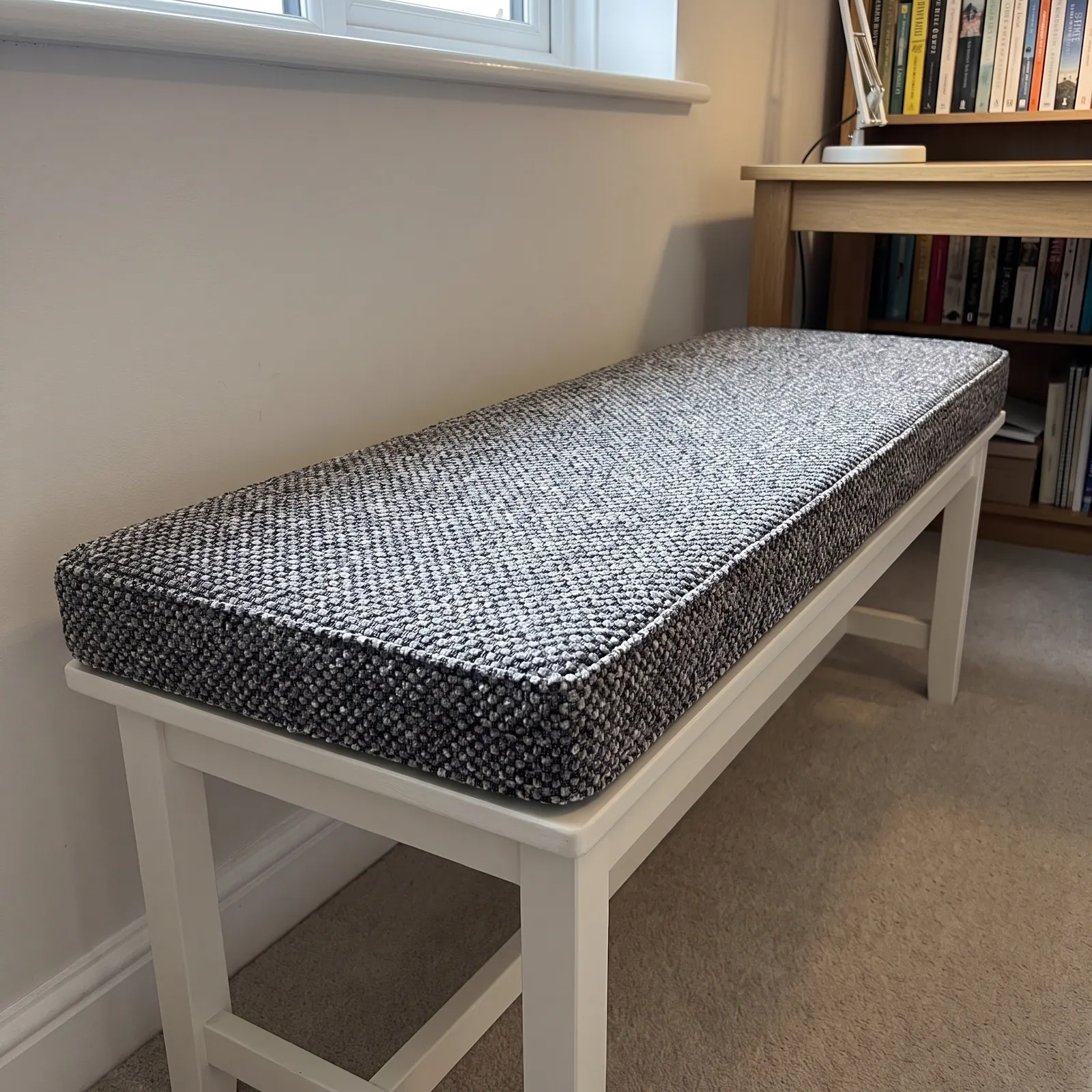
The cushion runs the full length of the oak top and stops there. No overhang, so from the side you still see the frame, and nothing hangs out to catch a knee. The box edge has no piping. That keeps it as calm as the bedding, and its straight sides repeat the straight lines of the bed frame.
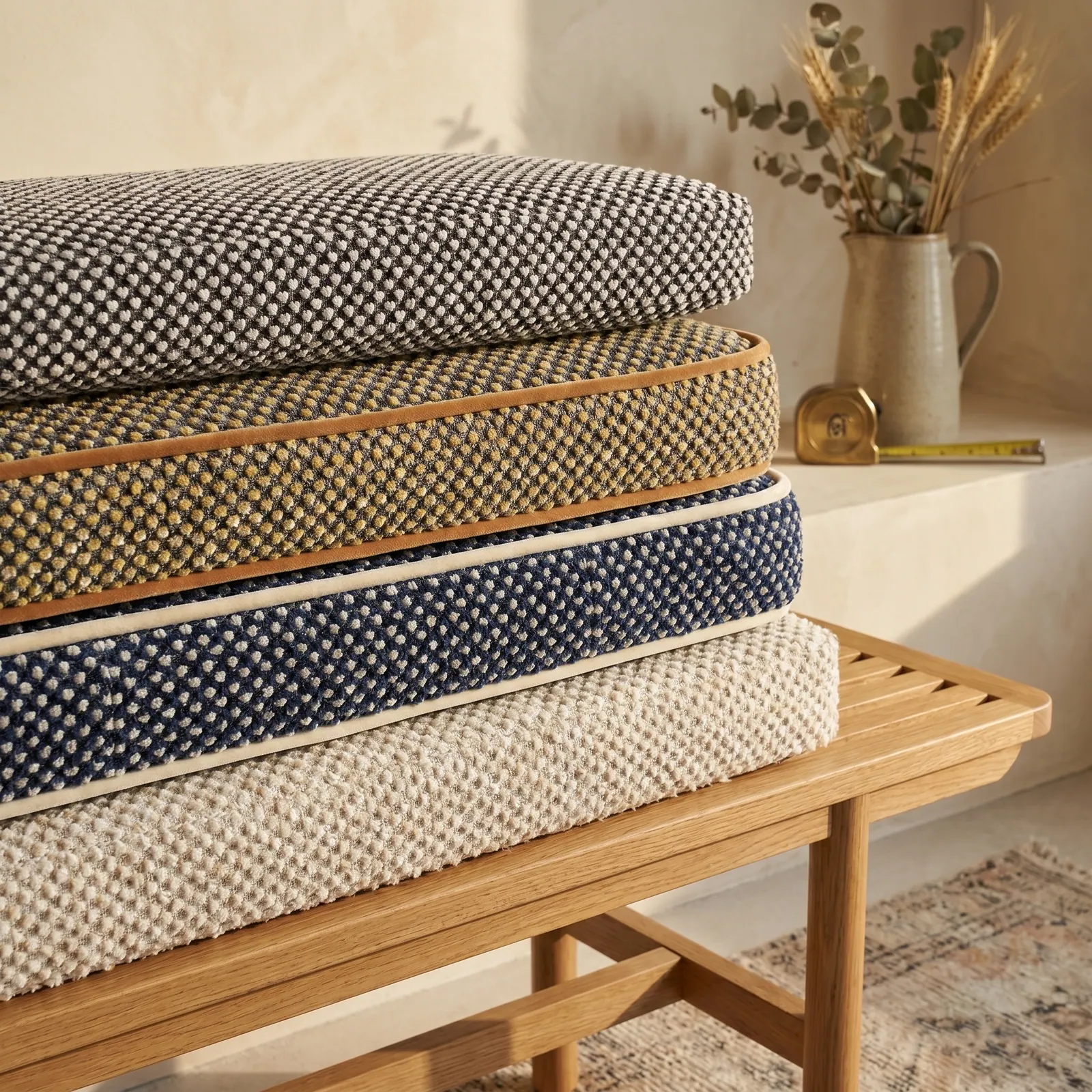
The fabric is a black-and-white salt-and-pepper weave, a cousin of the woven patterns in the jacquard and damask swatches. It sits between the pale linen above and the darker rug below, and the fleck hides the odd mark. Natural linen and a flecked weave are both textured neutrals, so they layer without a fight.
The faded rose-and-gray vintage rug softens what could look stark. The white panel radiator and the plain wall behind let bench and bed read as one group. A candle on the bedside table, soft morning light, a rumpled throw: lived in, not staged. For a bedroom bench cushion, this is the template: firm, flush, full length.
What does your bench measure from floor to top, partner?
Four measurements for an end-of-bed bench, and the one people skip
Length, front and back
Measure the top along the front edge and along the back edge. On an old or hand-built bench they can differ. Write both in inches, to the nearest 1/4 in.
Depth, three times
Front to back at the left end, the middle and the right end. If the numbers disagree, put all three on a sketch rather than picking one.
Anything in the way
Legs that rise above the top, posts, a footboard, cut-outs in an old cushion. Measure every indentation exactly; notched cushions shows how to draw them.
Thickness from sitting height
Measure floor to bench top, then decide how high you want to sit while dressing. The seat height calculator does the arithmetic.
The one people skip: the fabric's own numbers
Stripe width and ratio are measurements too. Ask for them in inches, or see them on a real sample, before you approve a patterned cover.
Two 86 in benches and a stripe that measured wrong
A buyer messaged the workshop about two cushions for long benches, 86 5/8 x 15 3/4 in and 86 5/8 x 13 3/4 in (220 x 40 cm and 220 x 35 cm), each 4 in thick, in a thin green stripe the workshop had confirmed from a photo.
The lengths were right. The stripe was not. The cushions arrived with equal-width green and white stripes, not the thin olive stripe in the image. The workshop offered new covers in any code from the charts and sent close-ups of nine candidates. The buyer chose a linen, and the remake went out by the fastest express service within about a week.
Measure twice; the fabric remembers. That includes the fabric's own numbers. The bench measuring pattern covers the wood, and the bench cushion builder takes the result.
- Sizes
- 86 5/8 x 15 3/4 in and 86 5/8 x 13 3/4 in (220 x 40 and 220 x 35 cm), 4 in thick
The lesson: With stripes, check stripe width and ratio on a real sample, not just the color in a photo.
Buyer questions: sleeping on a bench cushion, old cut-outs and stripe widths
- A common question
Could I use a corduroy bench cushion as a mattress on a cot?
The workshop's answerYes. Many customers sleep on cushions made from this corduroy and high-density foam and are happy with them, though comfort is a personal preference.
- A common question
My old cushions have cut-outs to fit around the furniture frame. Do I measure those too?
The workshop's answerYes. Measure the indentations exactly and send them, and confirm the backrest size for every piece as well.
- A common question
How wide are the stripes on N01 and N02?
The workshop's answerN01 has a bolder stripe, about 0.55 in (1.4 cm) wide; N02 has a finer one, about 0.28 in (0.7 cm).
On the cutting table: the end-of-bed bench
| Cushion | End-of-bed bench cushion, full length of the oak top |
|---|---|
| Fit | Flush, no overhang; frame visible from the side |
| Fabric | Black-and-white salt-and-pepper weave |
| Piping | None |
| Edge | Plain box edge |
| Firmness | Firm, for a short daily sit |
| Measure | Length front and back, depth at three points, obstacles, sitting height |
| Variant from a past order | Two 86 5/8 in bench cushions, 4 in thick |
| Best for | Bedroom benches used for dressing, beside textured neutral bedding |

Have it made
Have this made — ask Nate’s workshop
Every edge and both diagonals, to the nearest 1/4 in. If the numbers do not close, the workshop will say so on the call. — Nate
Leave your details and the workshop will call you to confirm measurements, fabric, foam and piping. No prices, dates or payment on this page: it is a request, not an order.
Measure an end-of-bed bench at both ends and the middle, and order the cushion flush with the top: no overhang, oak frame still showing.
Nate
Questions buyers ask next
Should an end-of-bed bench cushion overhang the bench?
Usually not. A flush cushion keeps the frame visible from the side, and nothing hangs out to catch a knee or a trailing blanket. Measure the top carefully and order the cushion to those numbers.
What fabric works on a bedroom bench cushion?
A textured neutral, such as a salt-and-pepper weave, layers with natural linen bedding without adding a new color, and its fleck hides the odd mark. A plain box edge without piping keeps the look calm.
How thick should an end-of-bed bench cushion be?
Start from the height of the bench top and the height you want to sit at while dressing. One buyer's long bench cushions were 4 in thick; a seat height calculator helps you check your own numbers.
Why measure a bench's depth in three places?
Hand-built and older benches are not always perfectly square. Measuring depth at both ends and the middle shows any difference before it becomes a cushion edge that hangs over or falls short.
± 1/4 in — Nate
More photographs to read
 Save
 Save
 Save
 Save
 Save
 Save