A Reading by CallumBench Cushions
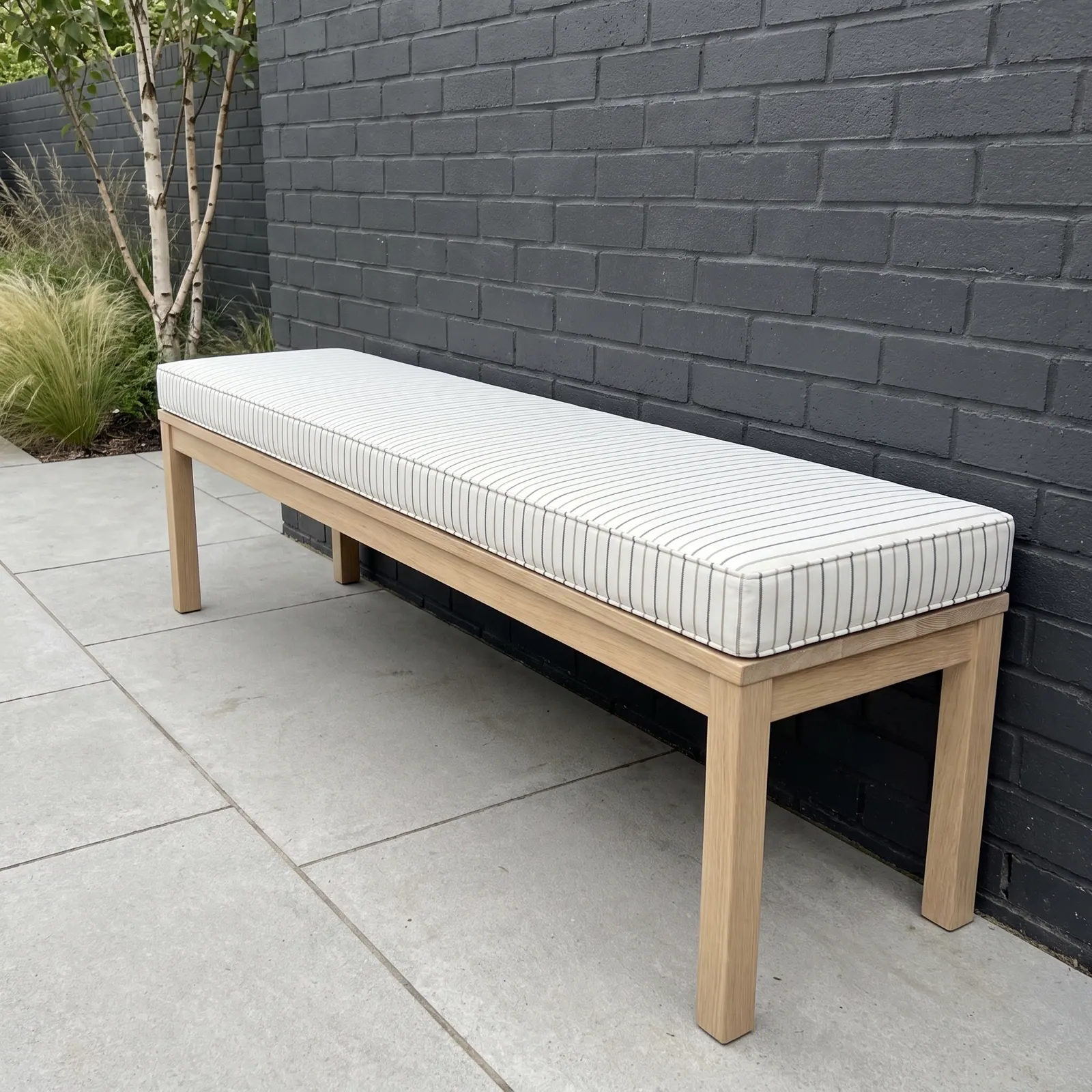
A black pinstripe bench cushion on light oak, and the mistakes it quietly avoids
Callum opens up a courtyard bench layer by layer, from the oak legs to the self-piped corner, and names the errors he sees on patios every season.

 Save
The quick answer
A custom bench cushion for an outdoor bench should cover the bench top edge to edge and stand tall enough to read as a real seat. Choose water-repellent fabric and bring it in for long rain, keep self piping on a busy stripe, remember piping needs at least 1 1/4 in (3 cm) of thickness, and add corner ties or a non-slip base.
The cushion, cut open
Cover fabric. A removable, zippered cover. Machine wash at 86°F (30°C) on a gentle cycle and air dry.
Piping. A fabric-covered cord sewn into the seams. It sits on the seam line, so it does not change the size.
Fiber wrap. Polyester fiber (Dacron) batting around the foam: it fills the cover out and softens the edges.
Foam core. About 2.0 lb/ft³ (32 kg/m³) high-resilience foam, firm to medium-firm, cut to the ordered size.
Zipper. Along the back band, as hidden as possible. The zipper side faces down or toward the wall.
Base panel. The underside of the cover. A non-slip fabric backing can cover the whole of it instead.
Pinned by Callum: five spots on a courtyard bench
Five pins, from the self-piped front corner to the silver birch that softens the charcoal brick.
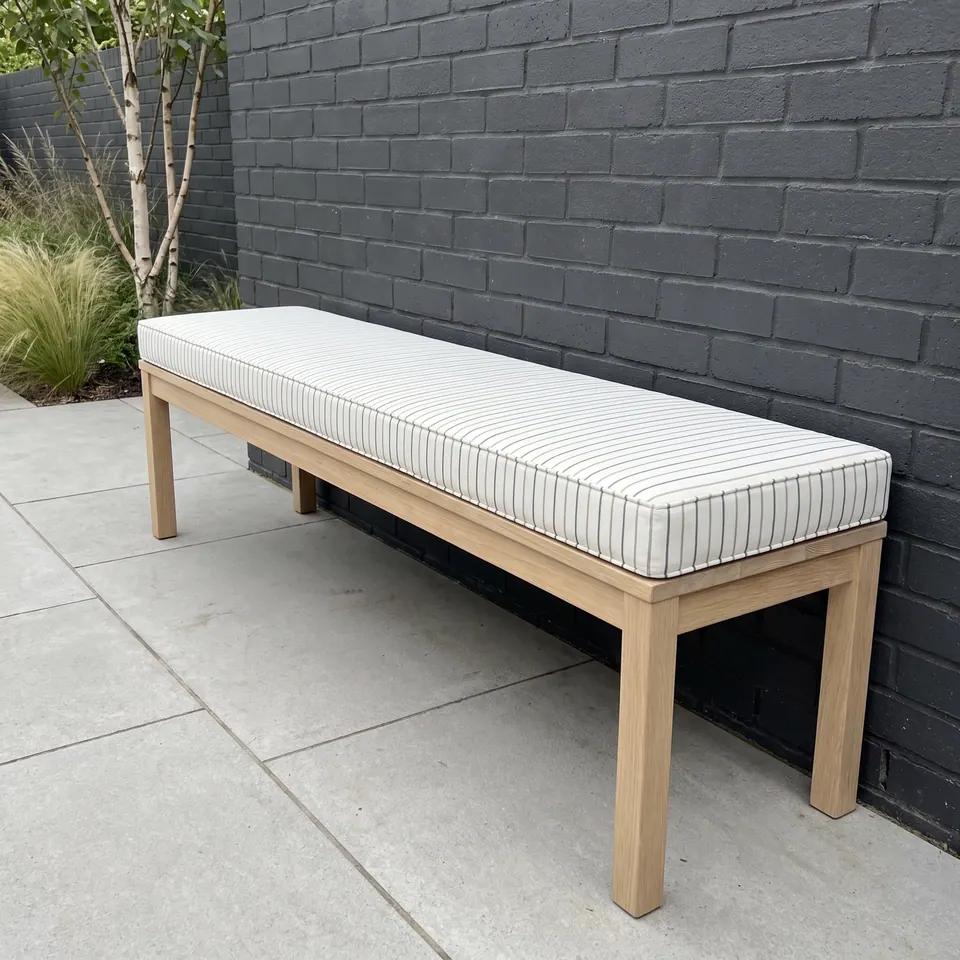
- Pinstripe box cushion
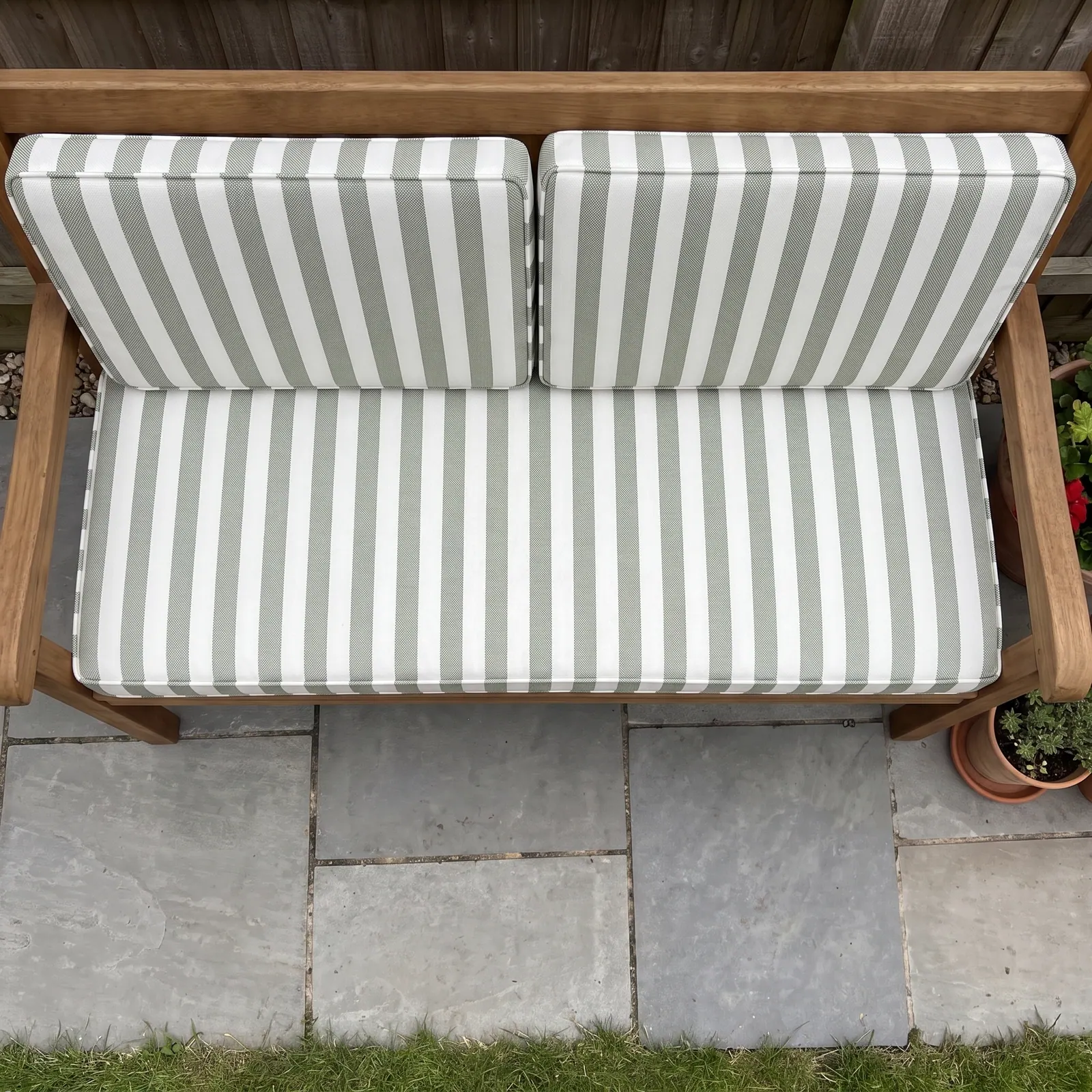
The cushion matches the oak top edge to edge and stands tall on a slim frame.
- Crisp front corner
Self piping keeps a sharp corner that suits the graphic courtyard.
- Oak leg
Pale oak links the bright cushion to the pale concrete pavers.
- Charcoal brick wall
Fine black pinstripes pick up the darkest color on the wall.
- Silver birch
A birch and grasses soften an otherwise hard, modern corner.
- Pinstripe box cushionThe cushion matches the oak top edge to edge and stands tall on a slim frame.
- Crisp front cornerSelf piping keeps a sharp corner that suits the graphic courtyard.
- Oak legPale oak links the bright cushion to the pale concrete pavers.
- Charcoal brick wallFine black pinstripes pick up the darkest color on the wall.
- Silver birchA birch and grasses soften an otherwise hard, modern corner.
Opening the bench up, layer by layer
Most outdoor bench cushions go wrong at the order form, long before the first storm. This one got the early calls right, so it makes a good specimen to open up, layer by layer.
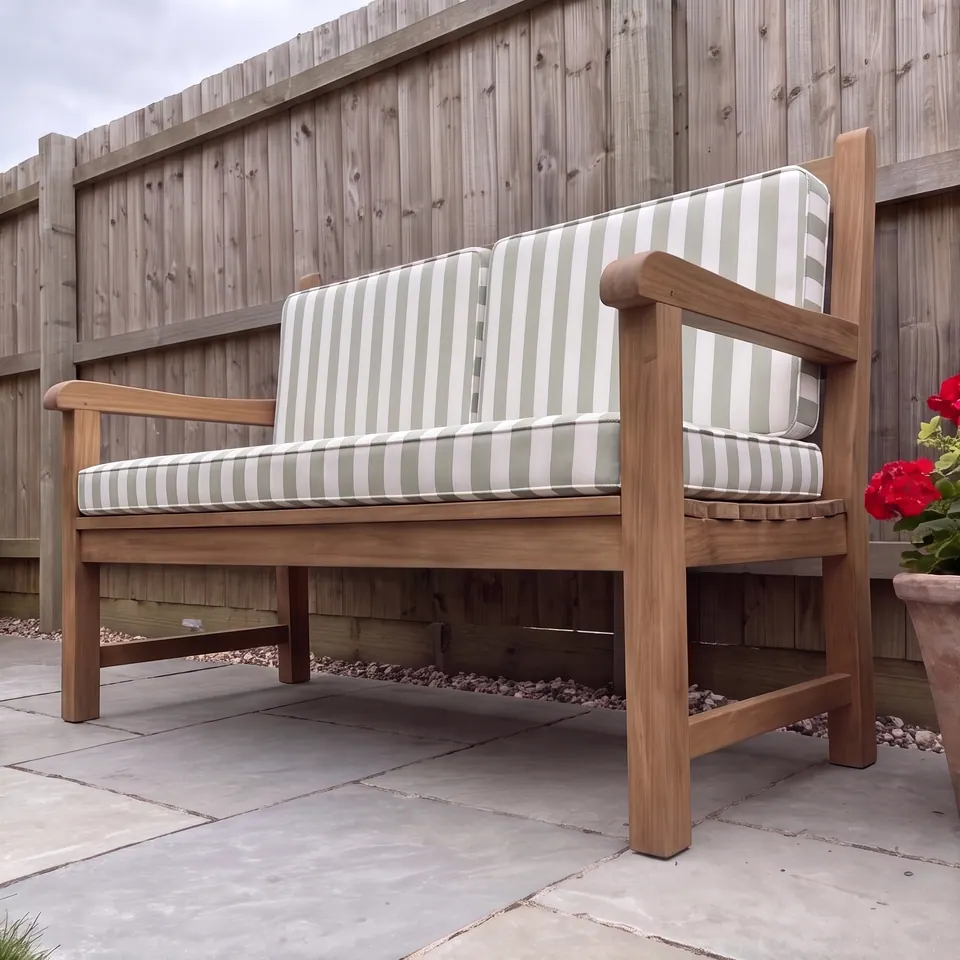
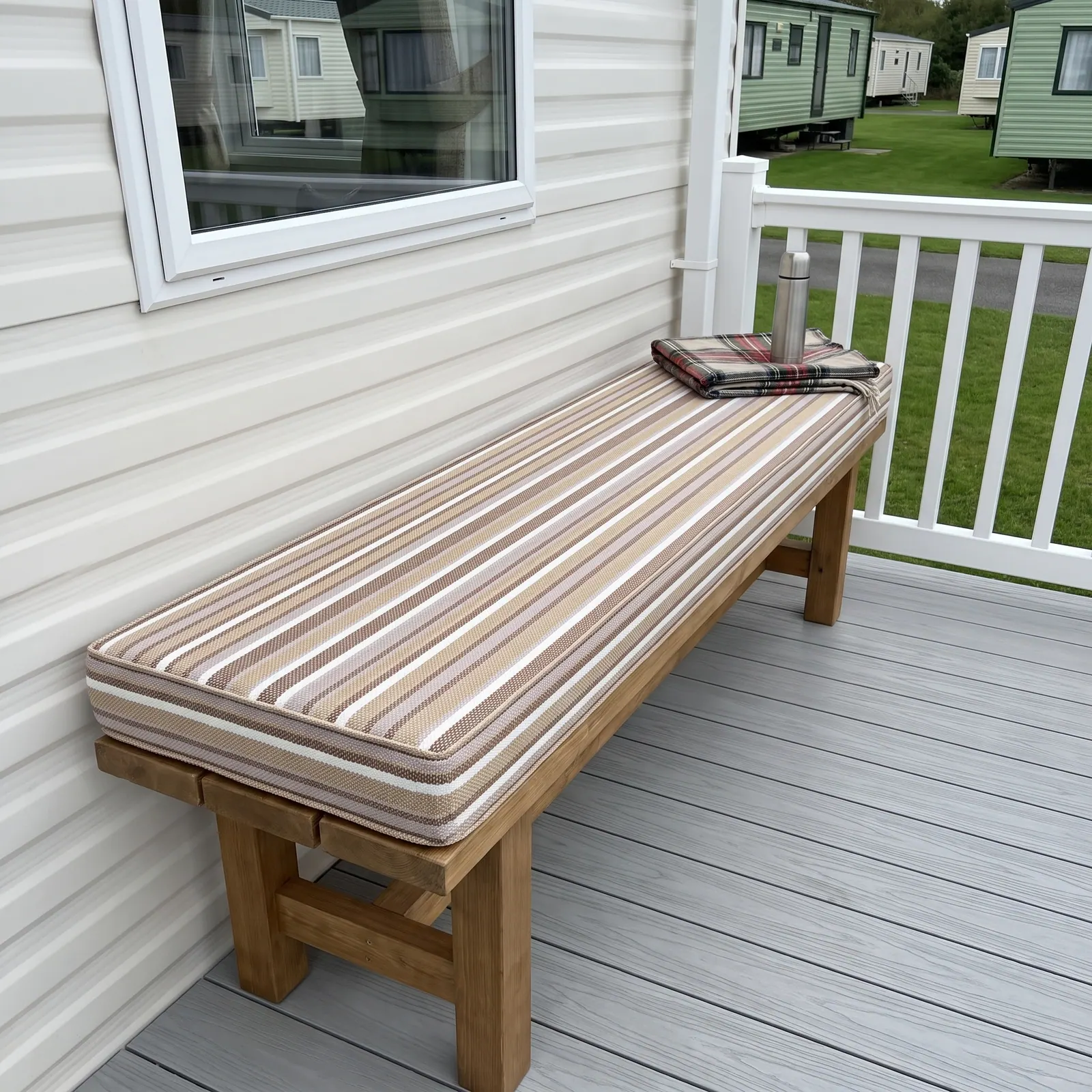
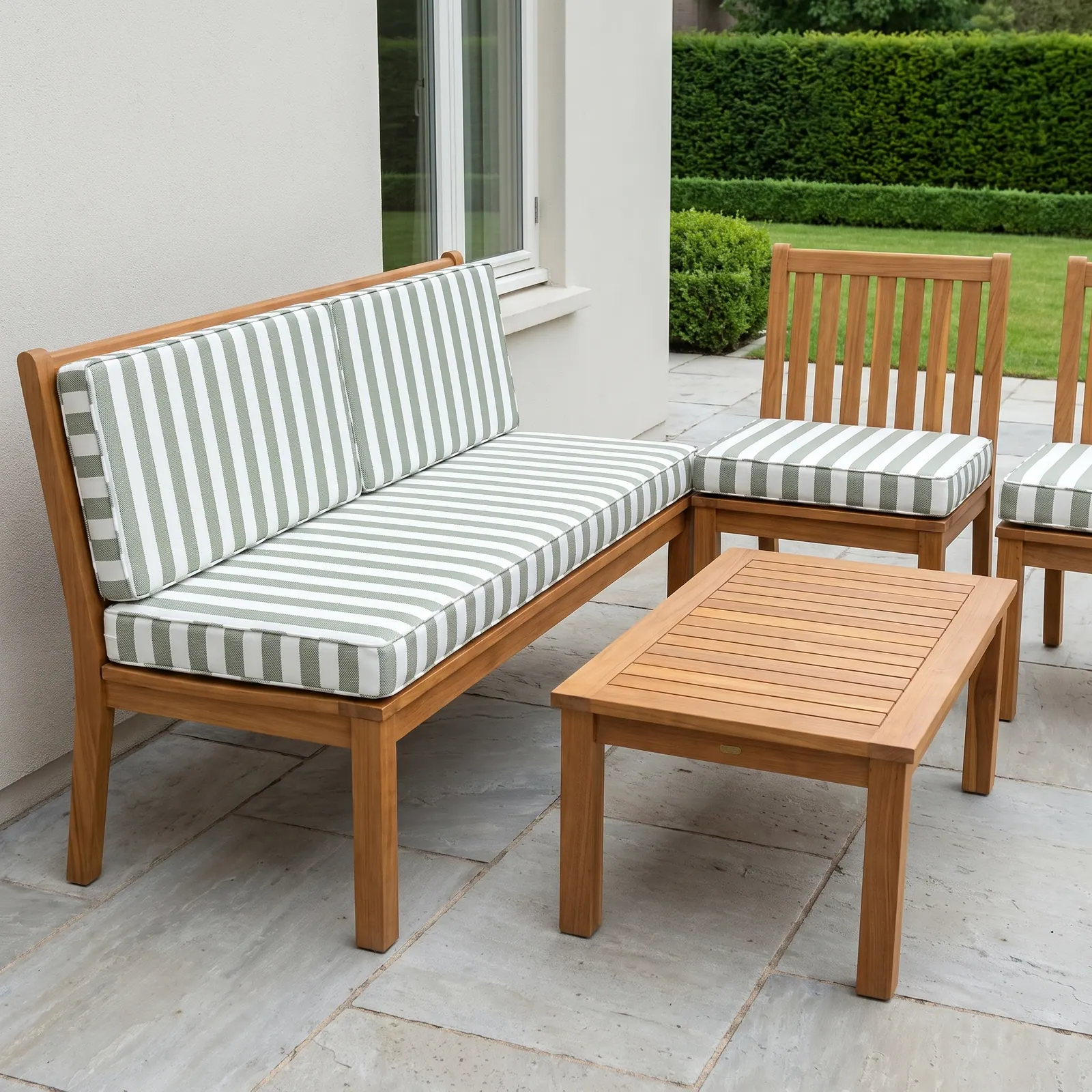
Start at the ground. Pale oak legs stand on large concrete pavers, and the oak ties the bright seat to the pale stone. Above them sits a slim parsons-style top, and on it a white box cushion with fine black pinstripes that stops exactly where the wood stops. No lip over the front, no bare strip of oak at the ends. Get the tape out, friend: how far does your old pad hang past the front edge?
Next layer, the edge. The box edge stands tall on that thin frame, so the bench reads as a proper seat instead of a plank with a mat on it. The front corner stays sharp because the piping is cut from the same striped cloth. A contrast cord would draw a second outline around a fabric that is already all lines.
Then the backdrop. The courtyard wall is brick painted charcoal, and the pinstripes borrow its darkest note while the white ground keeps the seat bright in flat daylight. A silver birch and a clump of ornamental grasses in the corner keep the whole place from feeling like a parking garage.
The cloth is a water-repellent membrane. Water-repellent is a promise; waterproof is a contract. It will shed a passing shower, but a week of rain soaking into the seat is another matter, so read water-repellent versus waterproof before you leave it out, and browse more bench cushions cut to this kind of fit.
Five courtyard mistakes this bench sidesteps
- Ordering to the size of the old pad instead of the bench top; measure the wood, edge to edge.
- Going so thin that a slim frame looks like a shelf; a box edge gives the seat real height.
- Adding contrast piping to a busy stripe; self piping keeps one clean outline.
- Picking a color that fights the wall; let one stripe borrow the darkest tone around it.
- Trusting a light pad to stay put in wind and daily use; ask for corner ties or a non-slip base.
Two storage benches that had to read as one
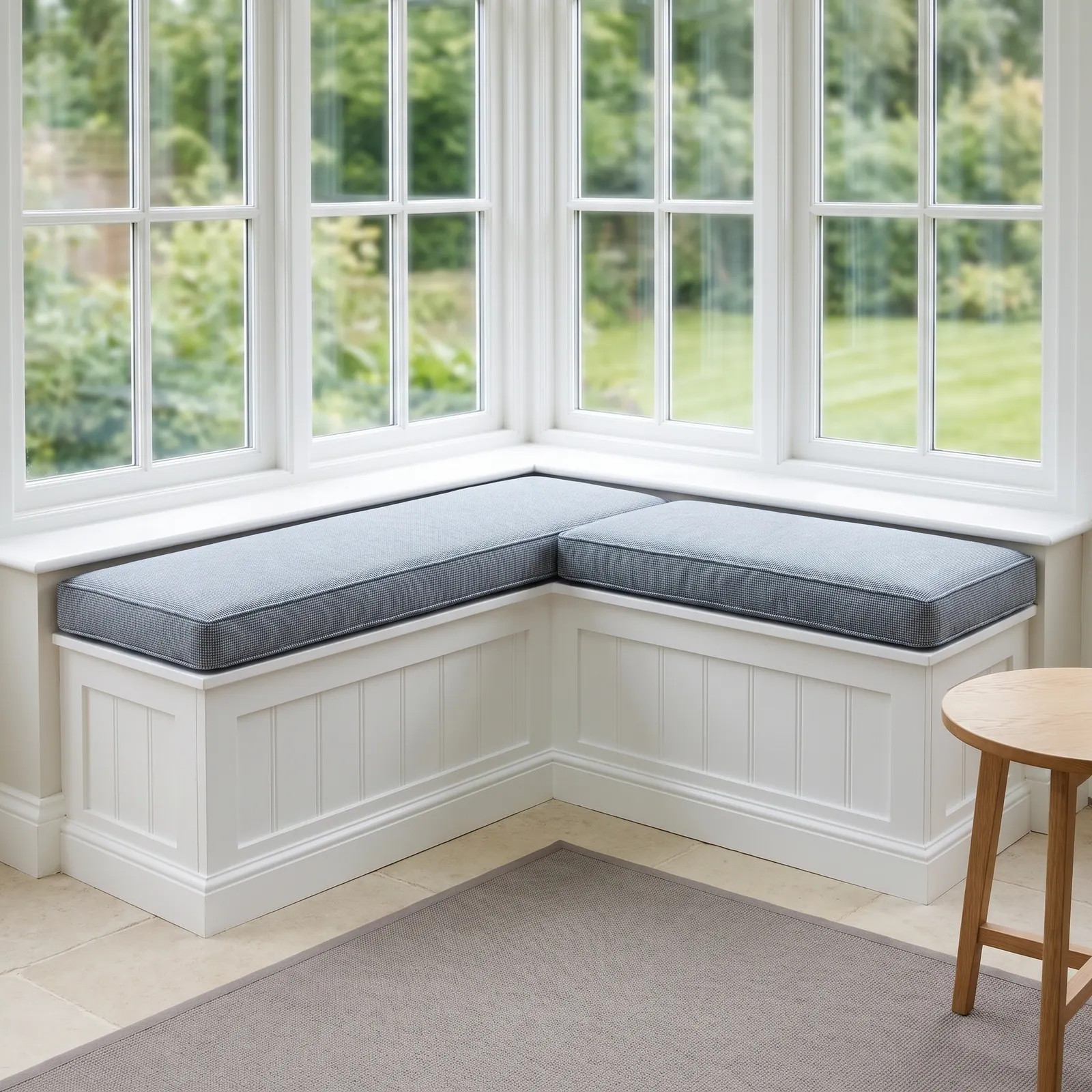
A buyer wrote in wanting matching cushions for two IKEA BESTA units used as benches: one 70 7/8 x 16 1/2 in (180 x 42 cm), the other 47 1/4 x 16 1/2 in (120 x 42 cm), both 2 3/4 in (7 cm) thick with piping. They weighed a maroon against a cream, either one with coffee-brown piping.
The choice that mattered was not the color. It was ordering both cushions at the same thickness with the same piping, so two separate cabinets read as one built-in seat along the wall. Put a thick cushion beside a thinner one and the eye finds the step every time.
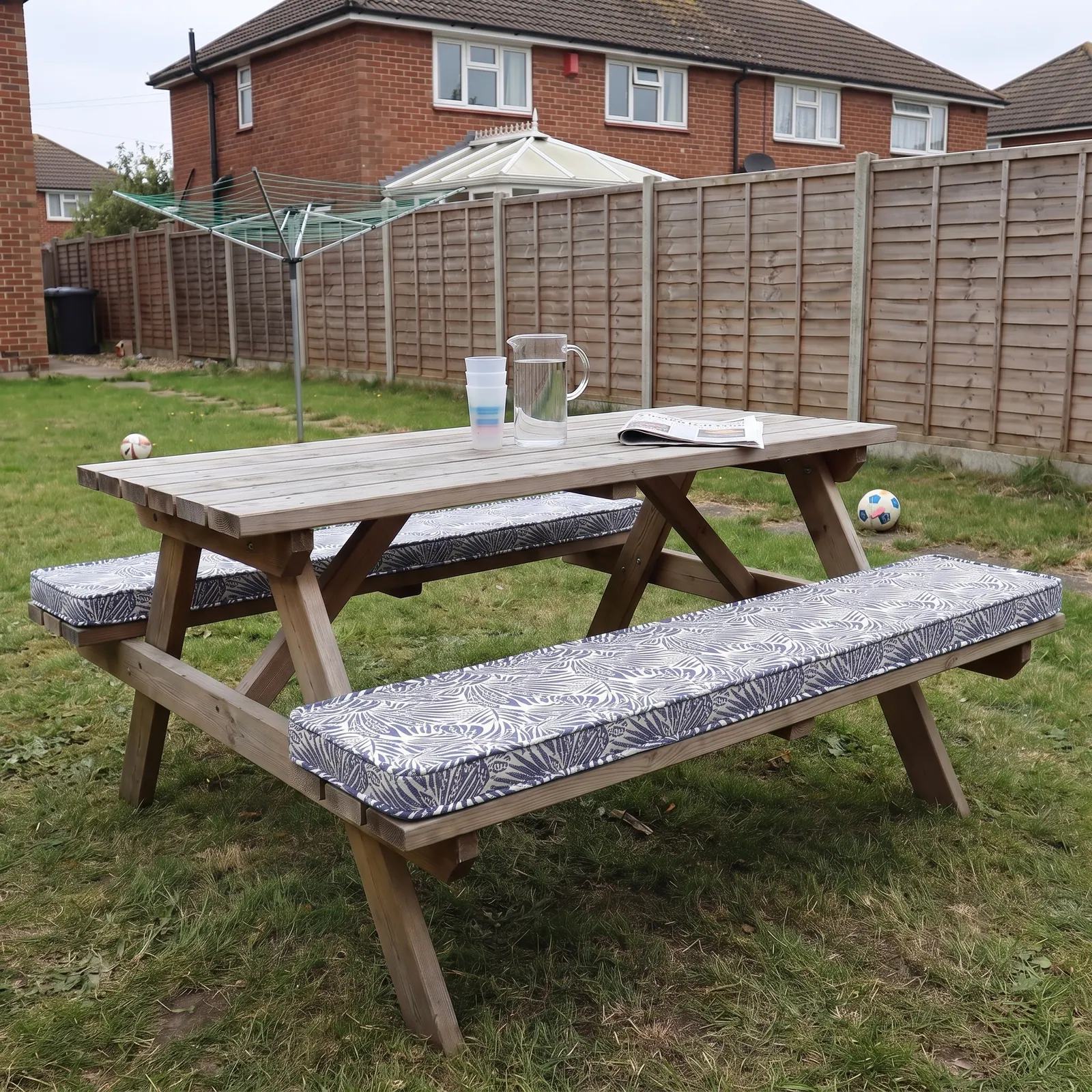
Same rule outside. If a courtyard or patio has two benches, order them together: same foam, same edge, same cord. The bench cushion builder lets you set both before you commit.
Buyer questions: colors for a sage bench, thin pads and sliding
- A common question
My bench is painted sage green. What neutral cushion color works with it?
The workshop's answerWarm neutrals are safest: cream, oatmeal or light beige, which are codes 910, 915 and 916 in the soft range. Terracotta or rust is the natural complement and hides stains well, and mustard or ochre is a sunnier choice. Skip pure white and cool grays with sage, and choose around the bench and walls rather than a table that may change.
- A common question
Is 2 in the thinnest cushion you make, or can a bench pad go thinner?
The workshop's answerTwo inches (5 cm) is the thinnest standard option, but thinner is possible. At 3/4 in (2 cm) or 1 in (2.5 cm) the cushion has to be made without piping; at about 1 1/4 in (3 cm) it can still be piped. The workshop can send photos of a 3/4 in and a 2 in cushion side by side so you can compare.
- A common question
What is the best way to stop a seat cushion from sliding around on a bench?
The workshop's answerTies can be sewn on the corners, you can choose an anti-slip bottom fabric, or you can lay a non-slip pad underneath. Tufted cushions generally stay where they are put, and the workshop has had no complaints about them sliding.
On the cutting table: the courtyard bench cushion
| Product | Outdoor box cushion for a parsons-style bench |
|---|---|
| Fabric | White water-repellent membrane with fine black pinstripes |
| Piping | Self piping cut from the same stripe |
| Edge | Box edge, tall enough to read as a seat |
| Fit | Edge to edge with the oak top, no overhang |
| Thinnest with piping | About 1 1/4 in (3 cm); thinner pads go unpiped |
| Staying put | Corner ties, anti-slip bottom fabric or a non-slip pad |
| Weather | Water-repellent, not waterproof; bring it in for long rain |
| Best for | Modern courtyards, patios and paired storage benches |

Have it made
Have this made — ask Callum’s workshop
Sun, rain, salt. Say which of them your cushion will meet, and the workshop will plan around it. — Callum
Leave your details and the workshop will call you to confirm measurements, fabric, foam and piping. No prices, dates or payment on this page: it is a request, not an order.
A bench cushion that stops exactly where the wood stops looks built in; one that hangs an inch over the front looks borrowed from another bench.
Callum
Questions buyers ask next
Should an outdoor bench cushion overhang the front edge of a slim bench?
On a slim modern bench, no. A cushion that ends exactly where the wood ends looks built in and keeps the corners crisp. Measure the bench top itself, edge to edge, rather than copying the size of an old pad.
Why choose self piping on a pinstriped outdoor cushion?
A stripe already draws many lines, so a contrast cord adds a second outline that competes with them. Self piping, cut from the same striped cloth, keeps one sharp edge and a clean front corner, which suits a graphic courtyard.
Can a water-repellent bench cushion stay out through a rainy week?
Water-repellent fabric sheds light rain, but it is not waterproof. During long wet spells, bring the cushion under cover, and store it indoors over winter so the filling is not left sitting damp.
Fair winds — Callum
More photographs to read
 Save
 Save
 Save
 Save
 Save
 Save