A Reading by RosaWindow Seat Cushions
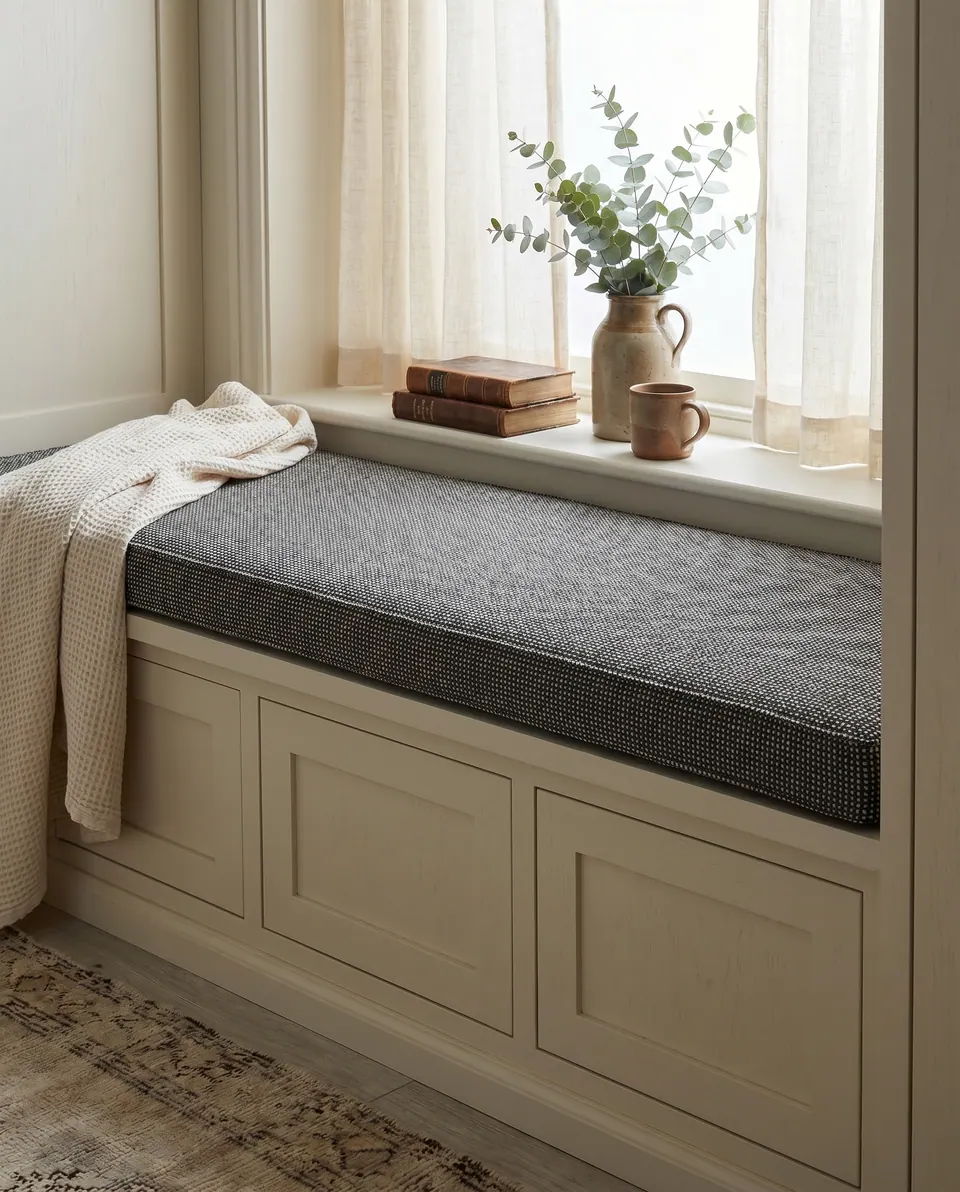
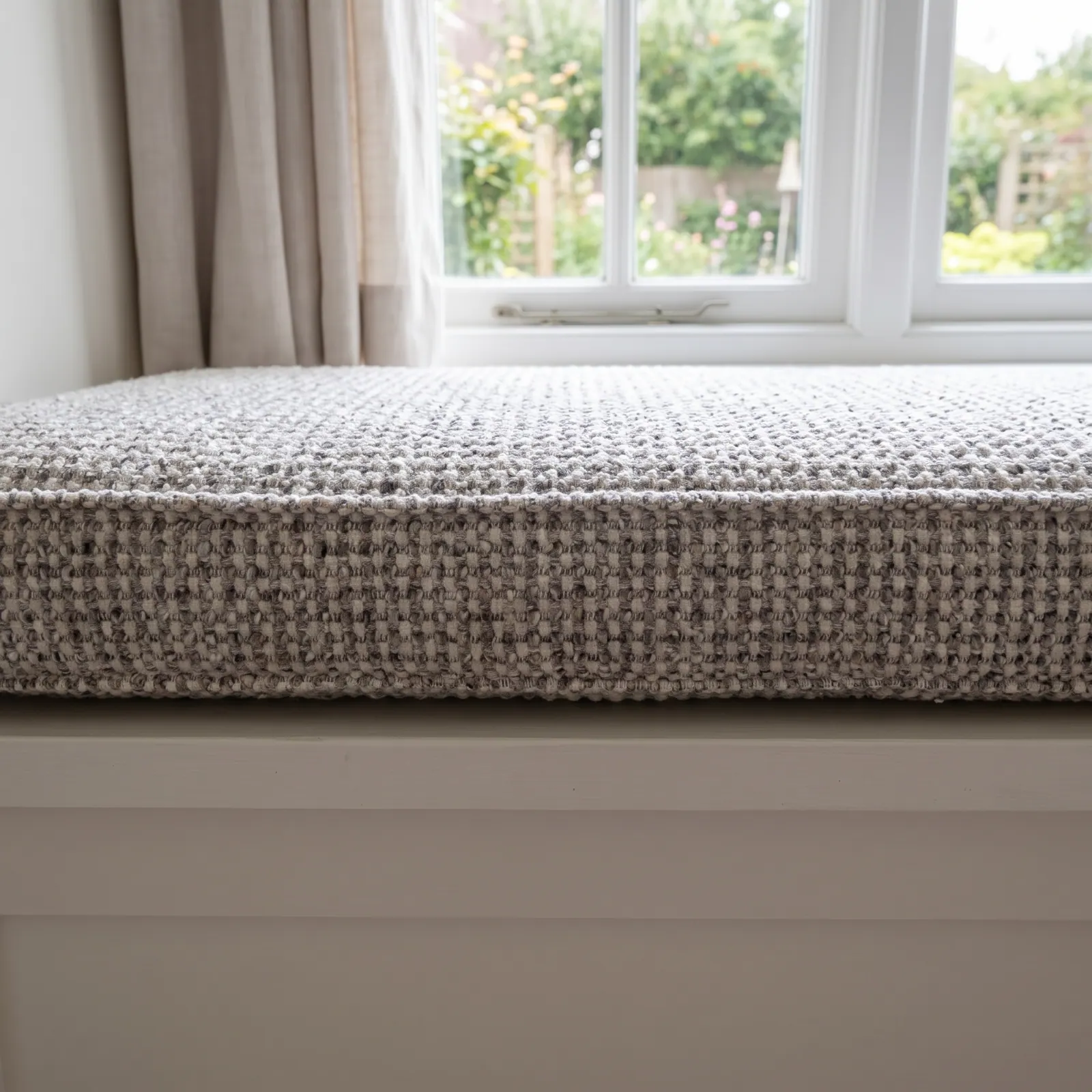
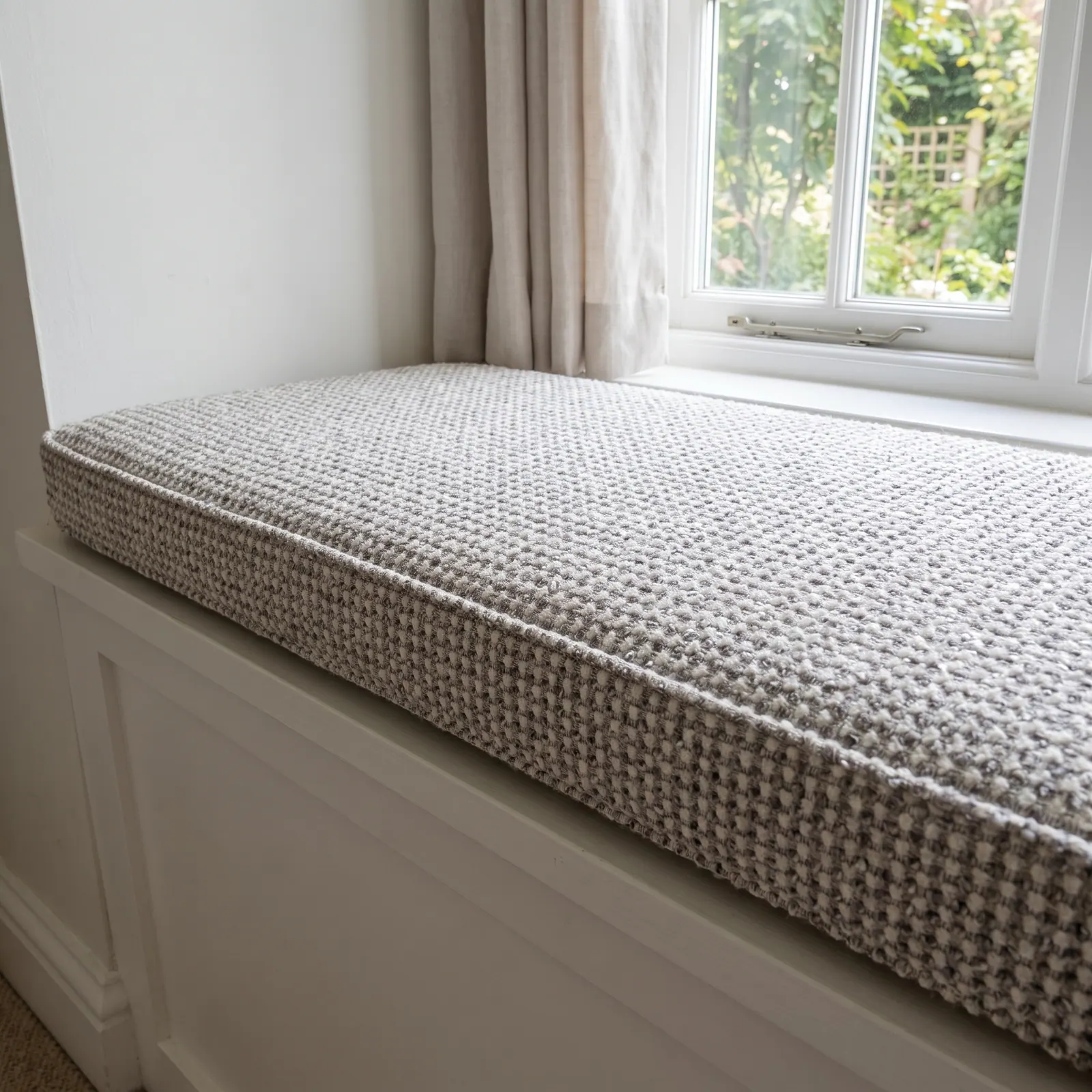
Measuring a window seat cushion like this one, front and top
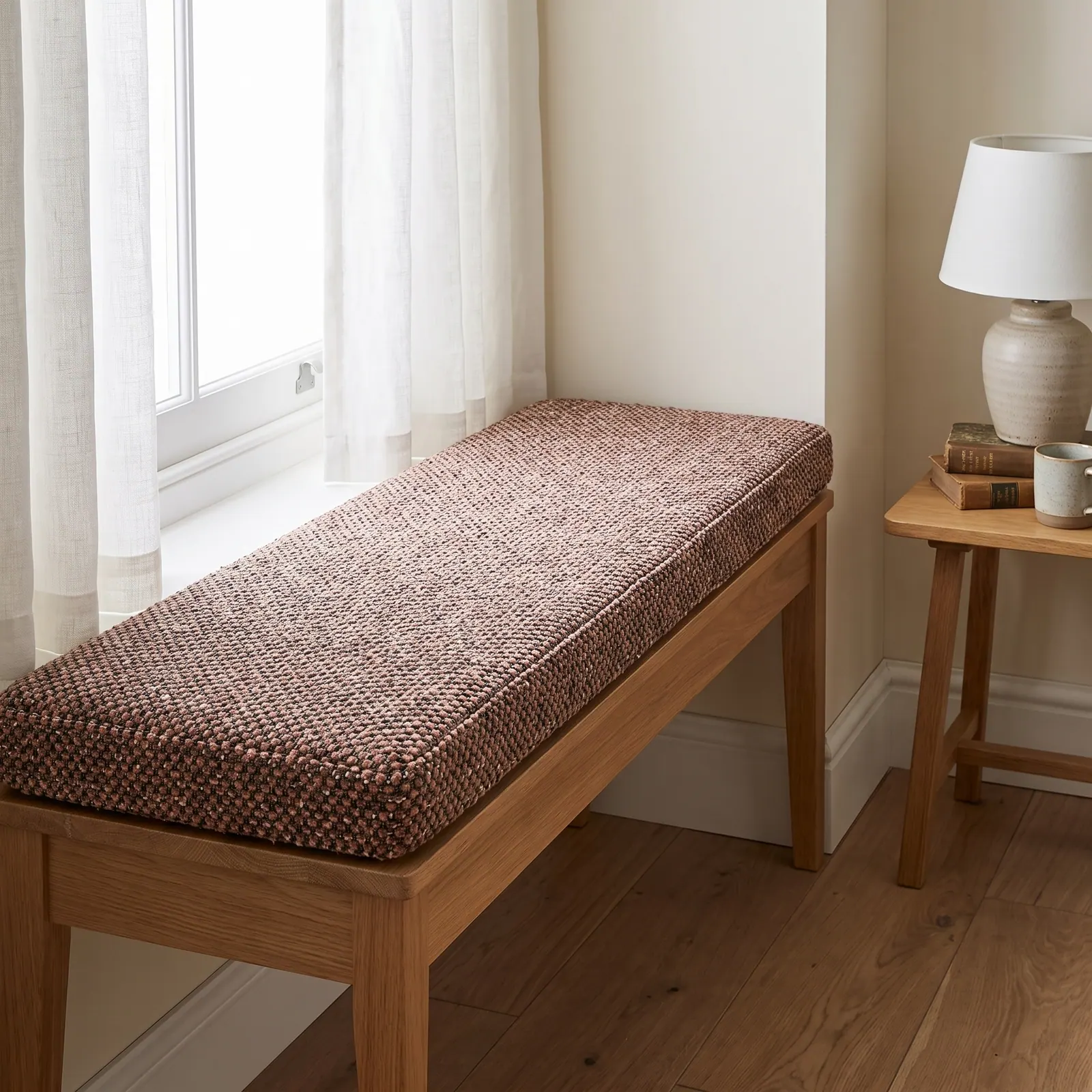
Pull up a chair, neighbor. A window seat photographed straight on, at eye level, sees exactly what your tape measure will, and that makes it the best measuring lesson I know.

 Save
The quick answer
To measure a window seat cushion, measure inside the seat wood to wood: the width at the front and at the back wall, the depth at both ends and in the middle, and order the smallest figures. Then measure from the seat top to the lowest part of the window, so the thickness you pick still lets it open.
Five pins at eye level
Five pins at the height a tape measure works, from the window stay down to the painted base.
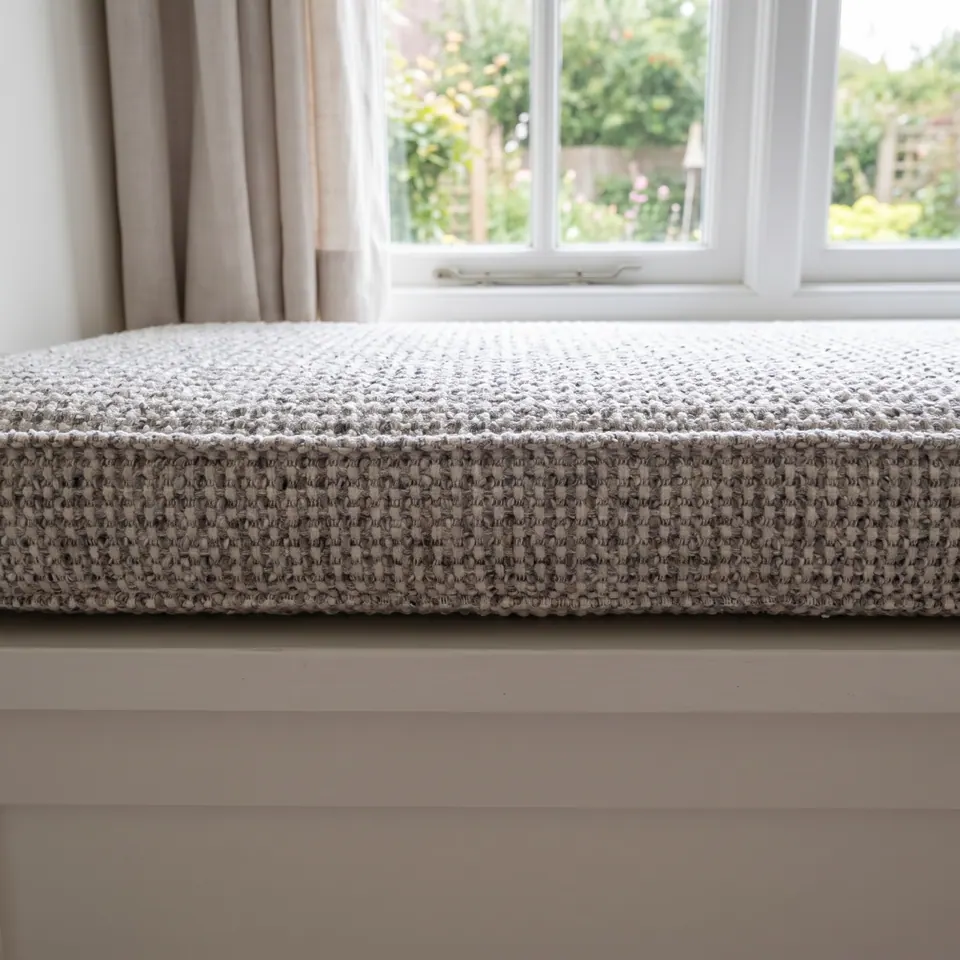
- Boxed front face
Seen at eye level, the deep front face shows exactly how thick the foam is.
- Level top edge
The top edge runs dead level, a sign the foam is cut square.
- Window stay
The casement opens above the cushion without catching it.
- Linen curtain
Curtain and cushion share a warm gray, framing the view on two sides.
- Painted seat base
White paint below lets the gray cushion sit like a band across the frame.
- Boxed front faceSeen at eye level, the deep front face shows exactly how thick the foam is.
- Level top edgeThe top edge runs dead level, a sign the foam is cut square.
- Window stayThe casement opens above the cushion without catching it.
- Linen curtainCurtain and cushion share a warm gray, framing the view on two sides.
- Painted seat baseWhite paint below lets the gray cushion sit like a band across the frame.
The measuring card for this seat
| Mark | What to measure | Where people go wrong |
|---|---|---|
| A | Width at the front, wall to wall | Measuring the outside of the frame |
| B | Width at the back wall | Assuming the walls are square |
| C, D, E | Depth at the left end, middle and right end | Saying depth when they mean thickness |
| F | Seat top to the lowest part of the window | Forgetting the latch and the stay |
| G | Thickness you want | Measuring new foam before it recovers |
Type the numbers out; photos of a tape get misread. Give the smallest width and the smallest depth.
What a front-on photo shows that a top view hides
Most window seat photos are taken from above, and they hide the two things a buyer needs: how thick the cushion is and how level its foam sits. The boxed front face shows the full depth of the foam, and the top edge runs dead level, a sign the foam was cut square.
The gray and ivory weave shows two faces. On the side band the yarns stand in vertical rows; on top they look pebbly, one plain color with two textures, both calm against the garden roses and fence beyond the glass. The taupe linen curtain shares the cushion's warm gray and frames the view, and the white painted base lets the cushion sit like a band across the frame.
Now look up at the casement stay. The window opens above the cushion without catching it, and that clearance is the measurement people forget. How far is it from your seat to the latch?
Where people go wrong on a seat like this
Measure inside the wood, side to side, and order those exact inside numbers, never the outside of the bench. In old houses a wall can run 1/2 in out over a few feet, so give the smallest width and depth and add a note about any crooked end.
Then mind your words. Buyers use depth for front to back and for thickness, and the workshop has to ask which you mean, so write seat depth and thickness separately. The window seat measuring Pattern walks through it, and the seat height calculator shows how each thickness changes where you sit.
A 154 1/2 inch run split in two, and piping that turns gold
A buyer in the US with warm beige walls and dark wood furniture had a long living-room window bench and a trapezoid side seat. The workshop suggested a dark olive velvet to match her sofa; she ordered samples and chose velvet P63 with P67 piping, after being warned that the same piping can look gold or yellow depending on the light.
The 154 1/2 in (392 cm) run was split into two equal sections, and the trapezoid measured 95 1/2 in (243 cm) at the base and 24 in (61 cm) deep, with a little off for ordering both together. Measure first, sample second, split what's too long to carry.
- Sizes
- 154 1/2 in run in two equal sections; trapezoid 95 1/2 in base x 24 in deep
- Fabric
- Velvet P63 with P67 piping
The lesson: Split very long window seats into sections, and choose color from samples, not screens.
Three window-seat cushion questions, from dogs to L-shapes
- A common question
I have dogs. Which lasts longer, the velvet or the leather-look fabric, and is the leather-look real leather?
The workshop's answerThe workshop shares a pet-friendly fabric chart, and velvet and the leather-look perform equally well. The leather-look has a leather-touch finish but isn't leather. Every fabric wipes clean; for real water resistance, choose the outdoor range. Indoors, choose by look and feel.
- A common question
Should I order the exact bench measurement or go a little smaller?
The workshop's answerIf the cushion sits inside a frame, measure the inside of the bench from wood to wood and order those exact numbers. Don't use the outside dimensions; the cushion is made to fit that inside space.
- A common question
Can you make an L-shaped window bench cushion, and does it come in one piece or two?
The workshop's answerTwo cushions that meet at the corner. Send the outside and inside L, for example 90 x 55 in outside with 72 3/4 x 39 in inside, or each piece's length and depth, and the workshop confirms the split.
Measure a window seat inside the wood, wall to wall, at the front and at the back, and order the smaller number. Walls in old houses are rarely square.
Rosa
On the cutting table: the garden window seat
| Cushion | Window seat box cushion, thick profile |
|---|---|
| Fabric | Dove gray and ivory woven chenille |
| Piping | Self piping, tone on tone |
| Measured | Inside wood to wood, smallest width and depth |
| Clearance | The casement opens above the cushion |
| Best for | Cottage window seats facing a garden |

Have it made
Have this made — ask Rosa’s workshop
Tell the workshop who sits there: grandkids, the dog, a cup of coffee at six. The right fabric and foam follow from the people. — Rosa
Leave your details and the workshop will call you to confirm measurements, fabric, foam and piping. No prices, dates or payment on this page: it is a request, not an order.
Questions buyers ask next
What thickness suits a window seat cushion?
Three to 4 in (7.5 to 10 cm) is the usual choice: 3 in for a neat, low profile under a sill, 4 in for plusher sitting. Every extra inch costs window height, so check the clearance first.
Do I measure a window seat from the glass or the trim?
From the face of the window trim, not the glass. Take the depth from the front edge of the seat back to the trim, at both ends and in the middle, and give the smallest.
What if my window seat isn't square?
Very few are. Measure the width at the front, middle and back and the depth at both ends, give the smallest figures, and add a sketch of the crooked side.
Porch light's on — Rosa
More photographs to read
 Save
 Save
 Save
 Save
 Save
 Save