 Save
A Reading by MaggieBench Cushions
A taupe bouclé bench cushion under a canal-house window, and the mistakes it quietly avoids
Oak, loops and overcast light, all in one tone. Right, then: here is what this bench gets right, and the three traps buyers fall into when they try to copy it.
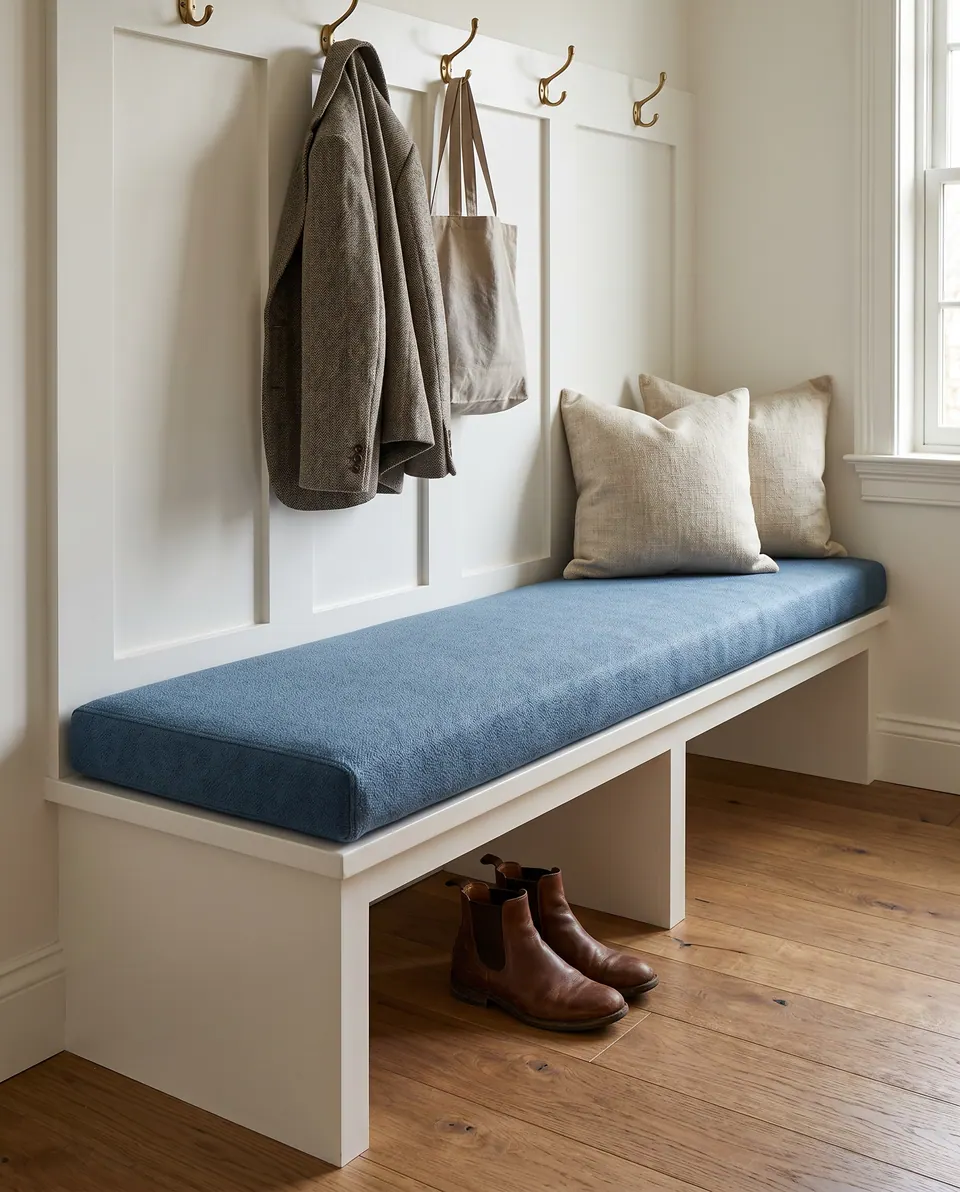
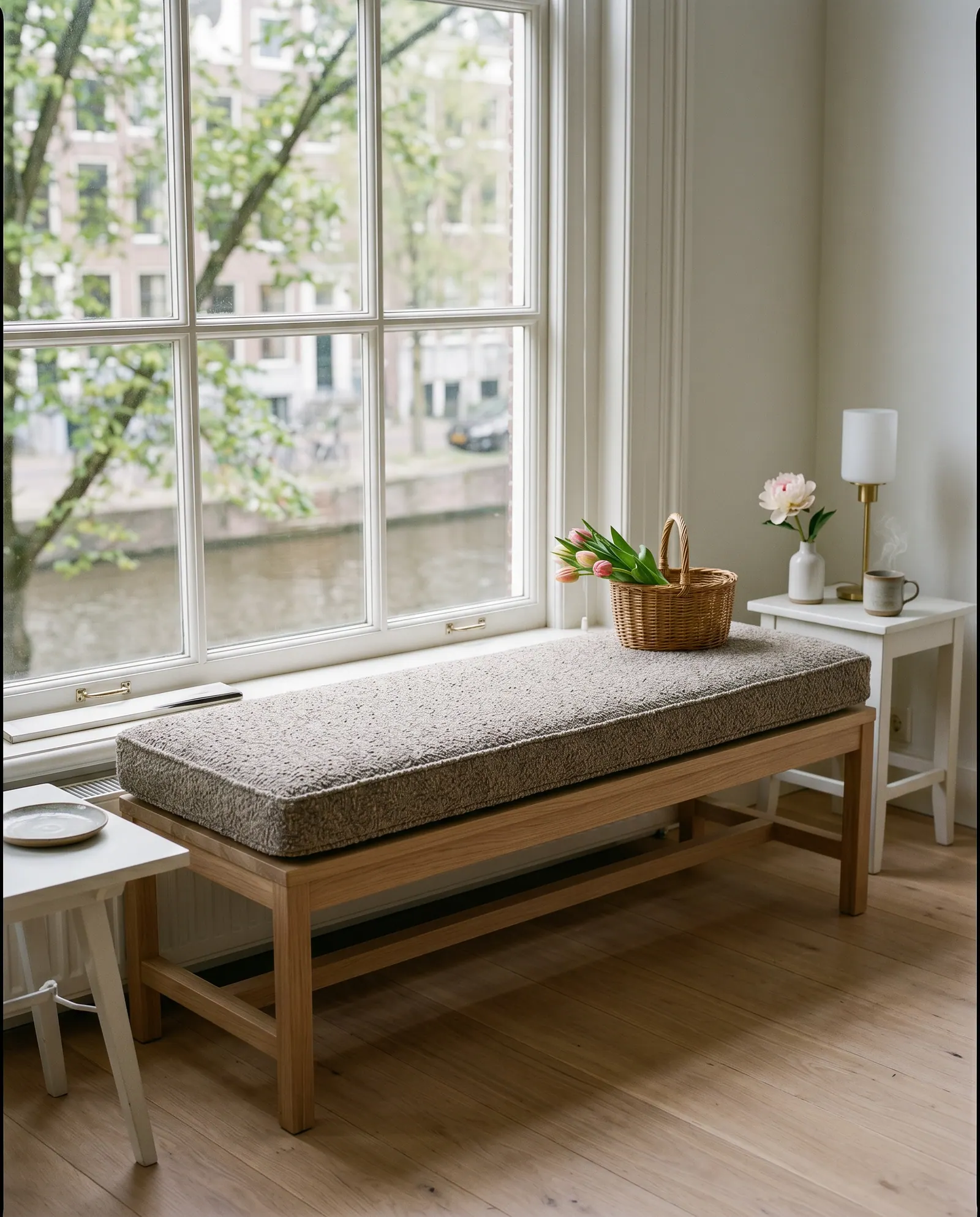
Taupe bouclé on pale oak, close enough in tone that the cushion looks like a soft extension of the bench.

The quick answer
For a custom bench cushion in bouclé, judge the color from a daylight swatch on the bench, not from a screen, and ask for a close-up of the loop size before ordering a long piece. Self piping suits bouclé because it sinks into the loops. Taupe close in tone to oak makes the cushion look like part of the bench.
What the window light does to taupe
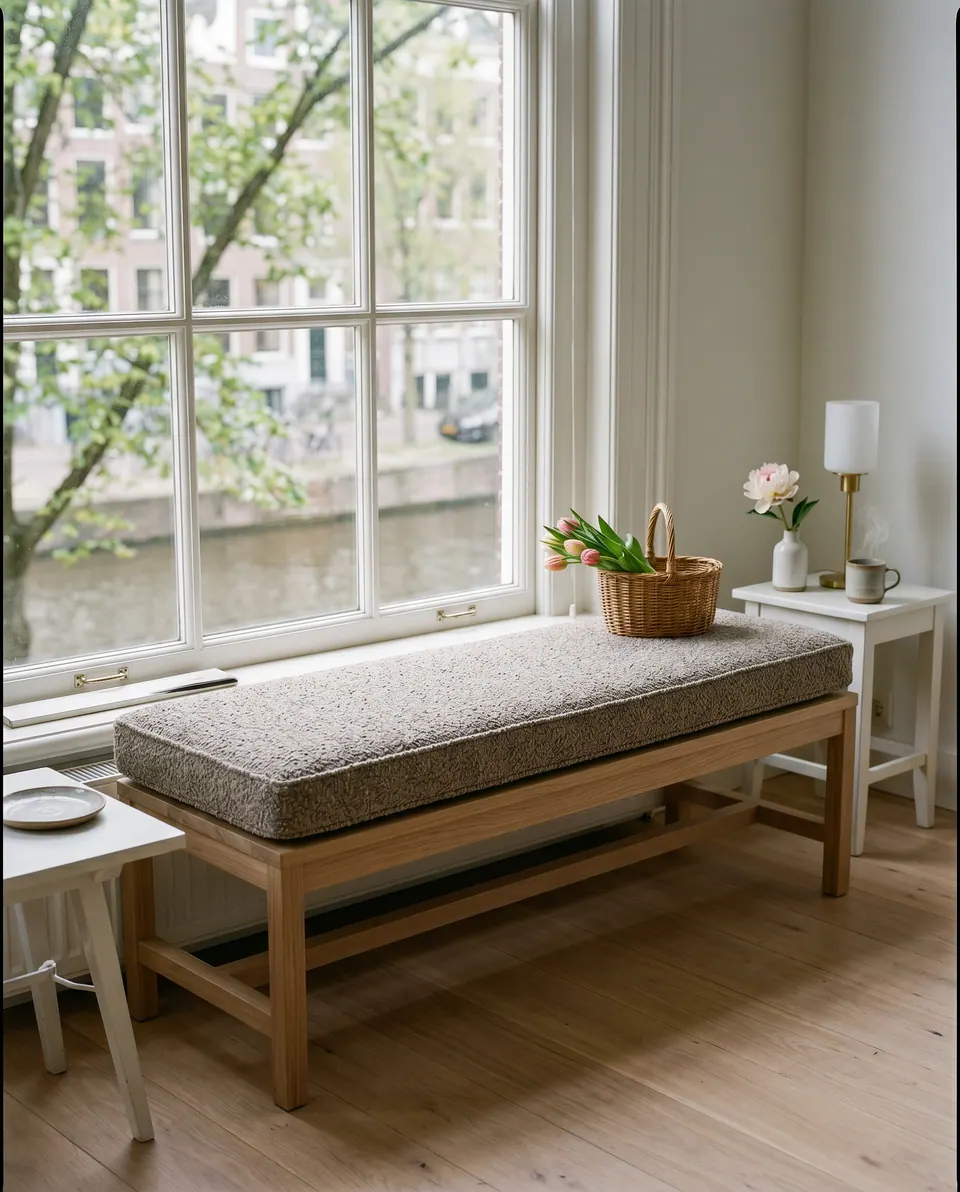
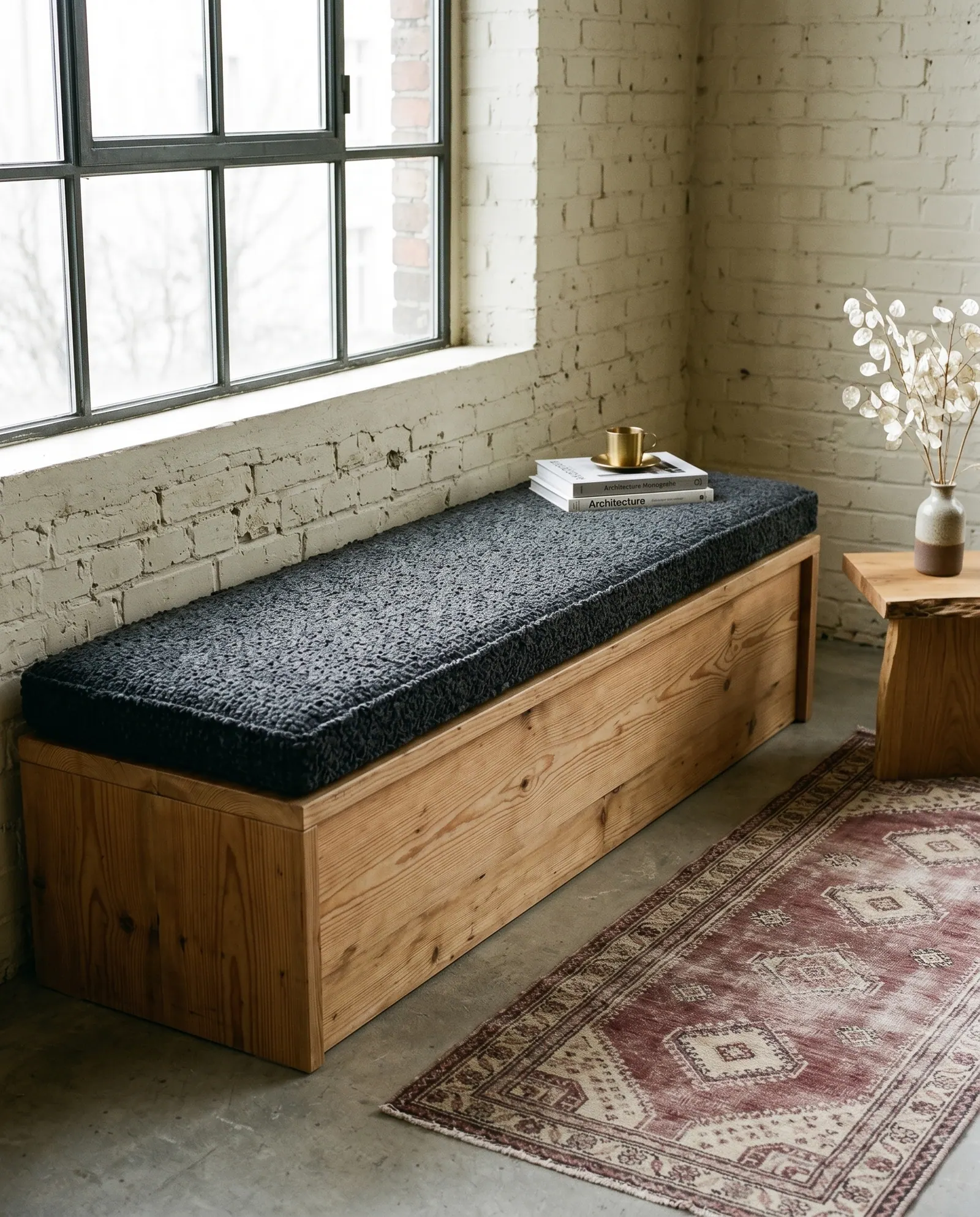
I nearly missed the cushion, and that is the compliment. Taupe bouclé on a pale oak trestle bench sits so close in tone to the wood that the seat reads as the soft top of the bench, not something laid on it. That is the whole trick of this custom bench cushion, and it is harder to pull off than it looks.
Look outside. The canal water is gray-brown and the brick opposite is the same family, so the overcast light is already taupe before it lands on the seat. Matte loops soak it up; nothing shines. The one bright note is the brass stem of the little lamp on the right, the only metal in the room, and it keeps all that texture from going flat.
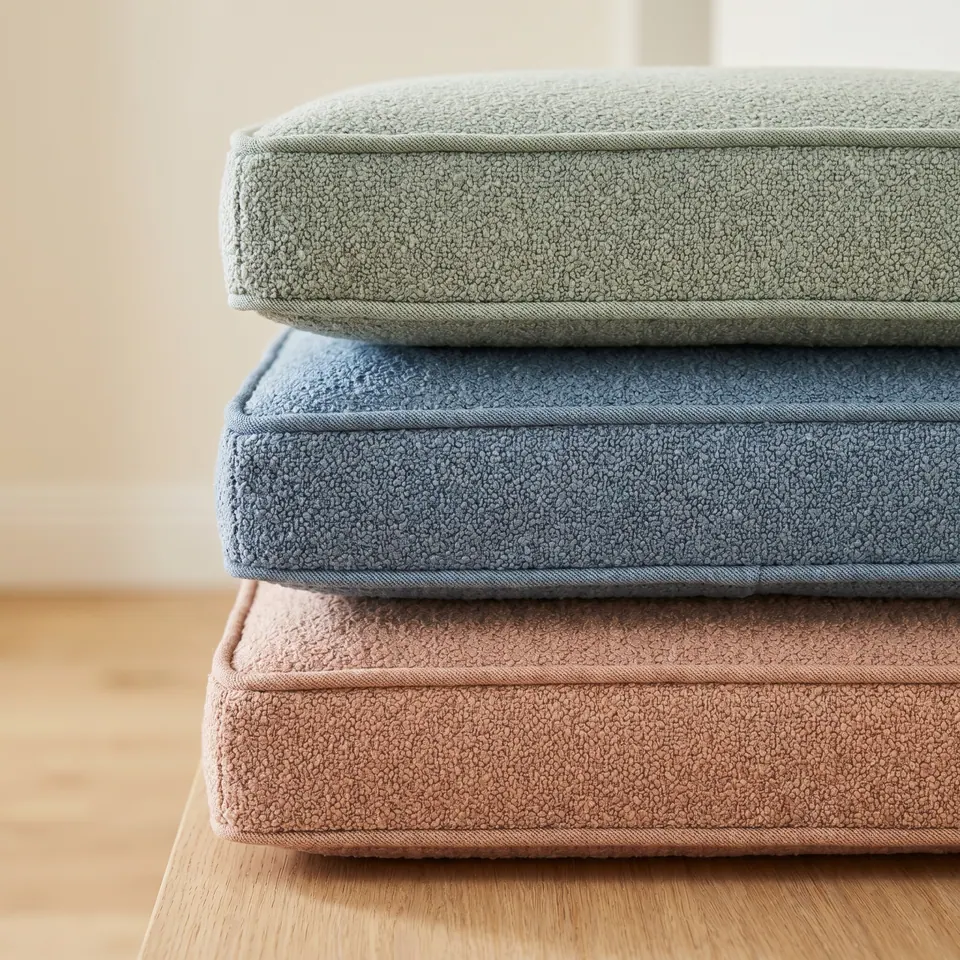
The proportion is honest: a box edge, square corners, a seat that stops where the bench stops. The piping is self piping, cut from the same bouclé, and it vanishes into the loops. On a textured cloth that is the right call. A contrast welt would draw a hard line through a soft thing.
The props earn their places. White side tables repeat the window frame. A stoneware mug and a small plate say someone actually sits here. A pale peony in a white vase echoes the tulips, and the tulips sit in a wicker basket on the seat itself, which brings me to the traps. First, though: what color is the wood your cushion will sit on?
Pinned by Maggie
Five pins, from the loops of the seat to the brass lamp and the canal behind the glass.
- Taupe bouclé seat
Close in tone to the oak, the cushion reads as a soft part of the bench.
- Tulip basket
A basket set on the seat shows the cushion doubles as a display surface when no one sits.
- Brass table lamp
A small brass lamp adds the only metal, balancing the matt bouclé.
- Canal view
The gray-brown water and brick facades share the cushion's color.
- Oak trestle base
A plain trestle frame keeps the eye on the textured seat.
- Taupe bouclé seatClose in tone to the oak, the cushion reads as a soft part of the bench.
- Tulip basketA basket set on the seat shows the cushion doubles as a display surface when no one sits.
- Brass table lampA small brass lamp adds the only metal, balancing the matt bouclé.
- Canal viewThe gray-brown water and brick facades share the cushion's color.
- Oak trestle baseA plain trestle frame keeps the eye on the textured seat.
Three traps when you copy this bench
- Choosing a warm shade from a phone. Warm pinks and oranges shift the most between a screen and daylight, and any warm neutral deserves the same caution. Judge a palm-size swatch, about 4 to 6 in (10 to 15 cm), on the bench itself, and read up on screen versus daylight.
- Ordering a long bouclé seat from a photo of someone else's. Loop size varies widely from one bouclé to the next, so ask for a close-up of the exact code before you commit to a long piece.
- Leaving a wicker basket straight on the loops. Rough wicker can catch bouclé. Slide a folded napkin or a small tray under anything that lives on the seat; more in bouclé loops and snags.
The pink cushion that arrived orange
A buyer wrote in about a dining room bench cushion in a pinkish shade, picked to match the room. It arrived reading strongly orange. The workshop checked, confirmed the ordered fabric had been used, and explained the uncomfortable truth: orange and pink tones shift the most between a screen and real life.
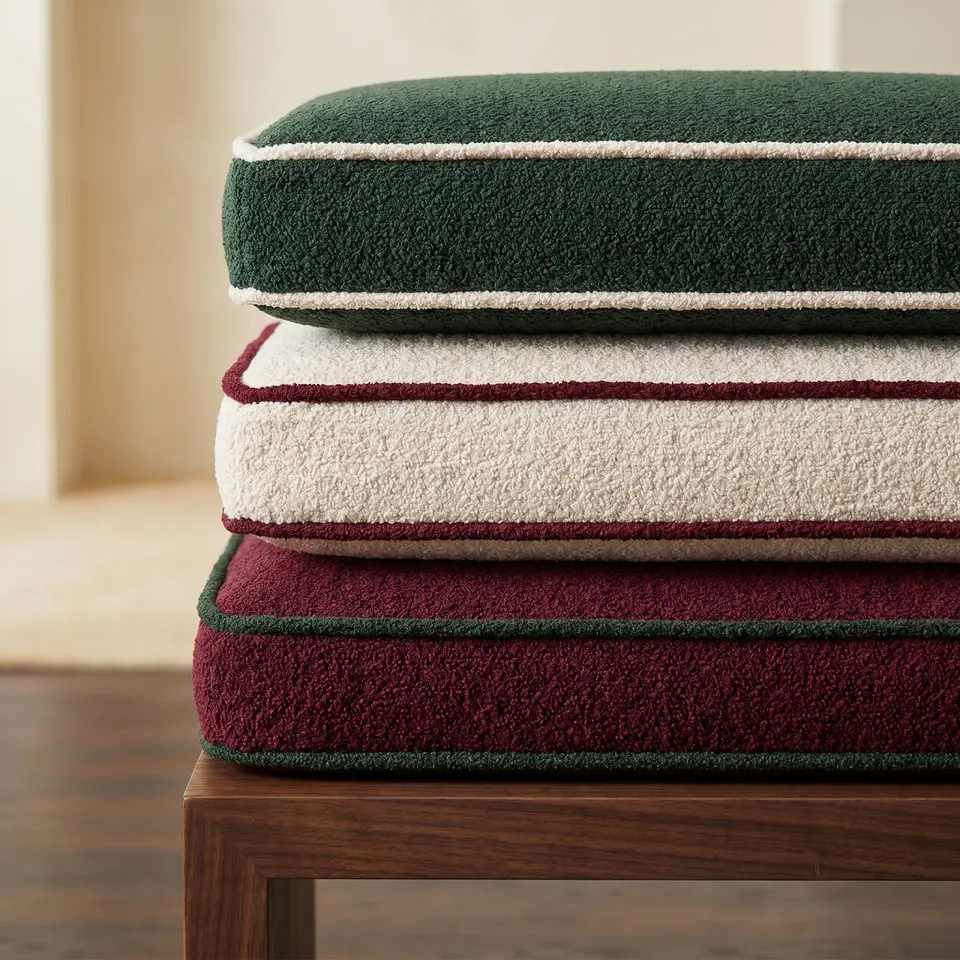
Words only go so far, so they sent side-by-side photos of the fabric as shown on the order page and the fabric actually used. Seeing the two together, the buyer chose a completely different color, this time with contrast piping. The new cover was made without asking for the first one back.
- Fabric
- A pinkish shade first; the new cover in a different color with contrast piping
The lesson: Warm pinks and oranges are the hardest tones to judge on screen, so order a swatch before committing.
Buyer questions: covers, fillings and one very large L
- A common question
How big is the closed-corner L-shaped floor sofa overall? In the photos it looks wider than 78 inches.
The workshop's answerThe whole closed-corner L measures 79 x 118 in (200 x 300 cm) overall.
- A common question
If I unzip the cover, is there an inner cover holding the filling in?
The workshop's answerAn inner cover can be made if you want one. With a solid foam insert it isn't needed, so the workshop wraps the foam in its own protective layer instead.
- A common question
My parcel came with the covers but no cushions. Are the inserts shipping separately?
The workshop's answerCheck the package again first. Foam inserts are usually vacuum-compressed straight into their covers, so the parcel can look like covers only. If the foam really is missing, the workshop looks into it.
Warm pinks and oranges are the hardest cushion colors to judge on a phone screen. Order a 4 to 6 in swatch and look at it on the bench in daylight.
Maggie
On the cutting table
| Cushion | Rectangular box cushion for an oak trestle bench |
|---|---|
| Fabric | Taupe bouclé with an oatmeal undertone |
| Piping | Self piping, cut from the same bouclé |
| Thickness | 4 in (10 cm) for everyday seating; 3 in (7.5 cm) for a lower profile |
| Cover | Zippered and removable, zipper on the back edge or the underside |
| Foam | Fiber-wrapped, with a protective layer instead of a separate inner cover |
| Delivery | Vacuum-compressed inside the cover; most cushions recover within 24 to 72 hours |
| Before you order | A daylight swatch plus a close-up of the loop size |
| Best for | Indoor window benches and living rooms |

Have it made
Have this made — ask Maggie’s workshop
Have the tape measure handy when they call. Old cushions shrink and sag; the seat underneath does not. — Maggie
Leave your details and the workshop will call you to confirm measurements, fabric, foam and piping. No prices, dates or payment on this page: it is a request, not an order.
Questions buyers ask next
Should a bouclé cushion have self piping or contrast piping?
Self piping usually suits bouclé better. Cut from the same cloth, it sinks into the loops and reads as a soft edge. A contrast welt draws a hard line around a textured seat, which works on smooth fabrics but tends to fight a heavy loop weave.
Why can a pink cushion fabric look orange once it arrives?
Warm pinks and oranges shift more than other colors between a phone screen and daylight. The cloth can be exactly the code you ordered and still read differently at home, so order swatches of warm shades and judge them where the cushion will live.
How thick should an indoor bench cushion be?
Four inches (10 cm) is the standard for everyday bench seating and what most buyers keep. Three inches (7.5 cm) gives a neater, lower profile on window seats and benches. The thinnest standard foam cushion is 2 in (5 cm).
Does contrast piping cost more than matching piping?
No. Piping is included whether it matches the body fabric or contrasts with it, and choosing no piping costs the same. Any code from any chart can be used for the welt, so write the piping code beside the body code in your order note.
Stitch straight — Maggie
Six more bouclé benches, from taupe to mustard to black
 Save
 Save
 Save
 Save
 Save
 Save