A Reading by HarlanStar Poufs & Giant Star Floor Cushions
A sand corduroy star floor cushion under fairy lights, and how ribs, plains and stripes share one corner
Corduroy is a stripe you can feel with your eyes closed. Harlan reads a close-cropped playroom star for how texture, plain pillows and stripes get along.
The quick answer
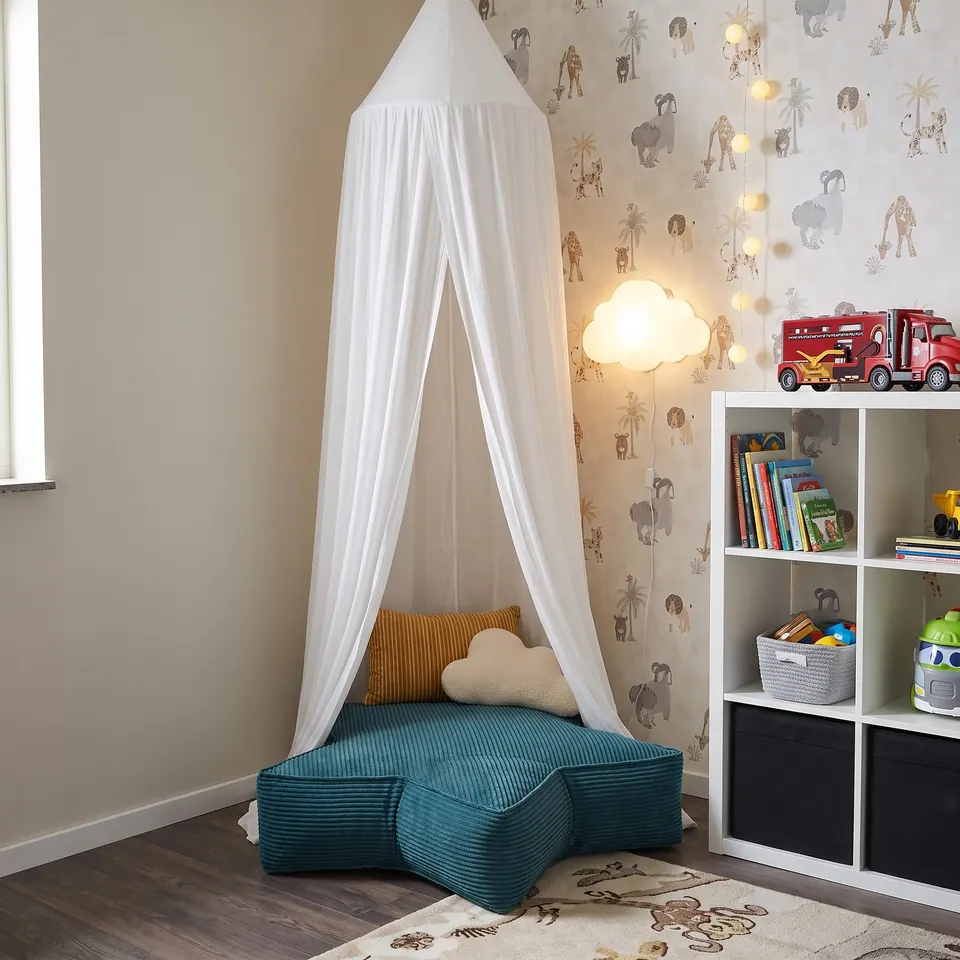
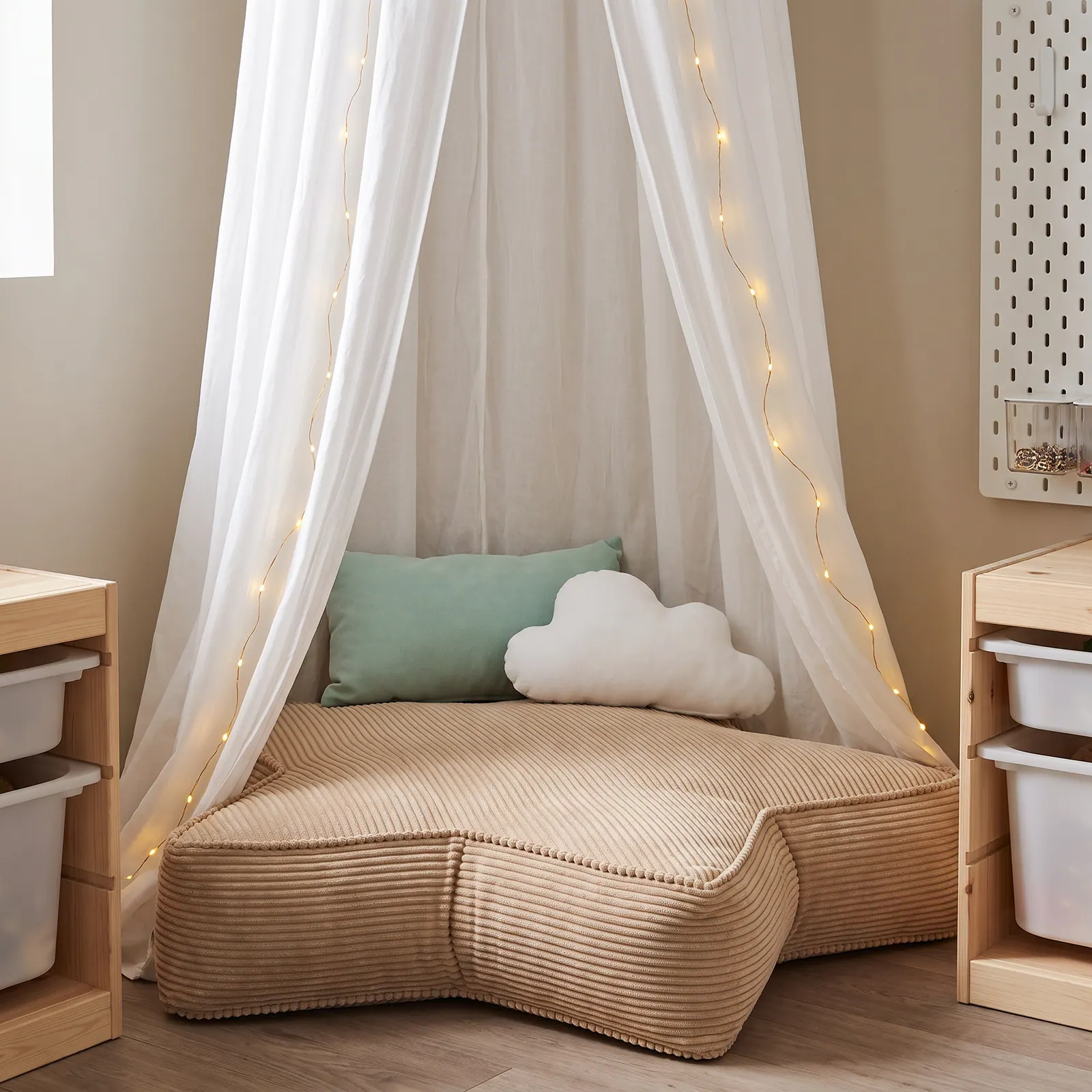
A sand corduroy star floor cushion mixes easily with other patterns because corduroy's ribs already act like a quiet stripe. Pair it with plain pillows, here a cool sage lumbar and a white cloud, and give any bold stripe to just one other piece. Self piping finishes the star's edge cleanly, and sand sits between gray and white as a forgiving playroom neutral.
 Save
 Save
 Save
 Save
 Save
 Save
 Save
Pinned by Harlan: ribs, lights and pine
Five pins, from the sand corduroy and its piped base seam up to the fairy-light strand that shows off every rib.
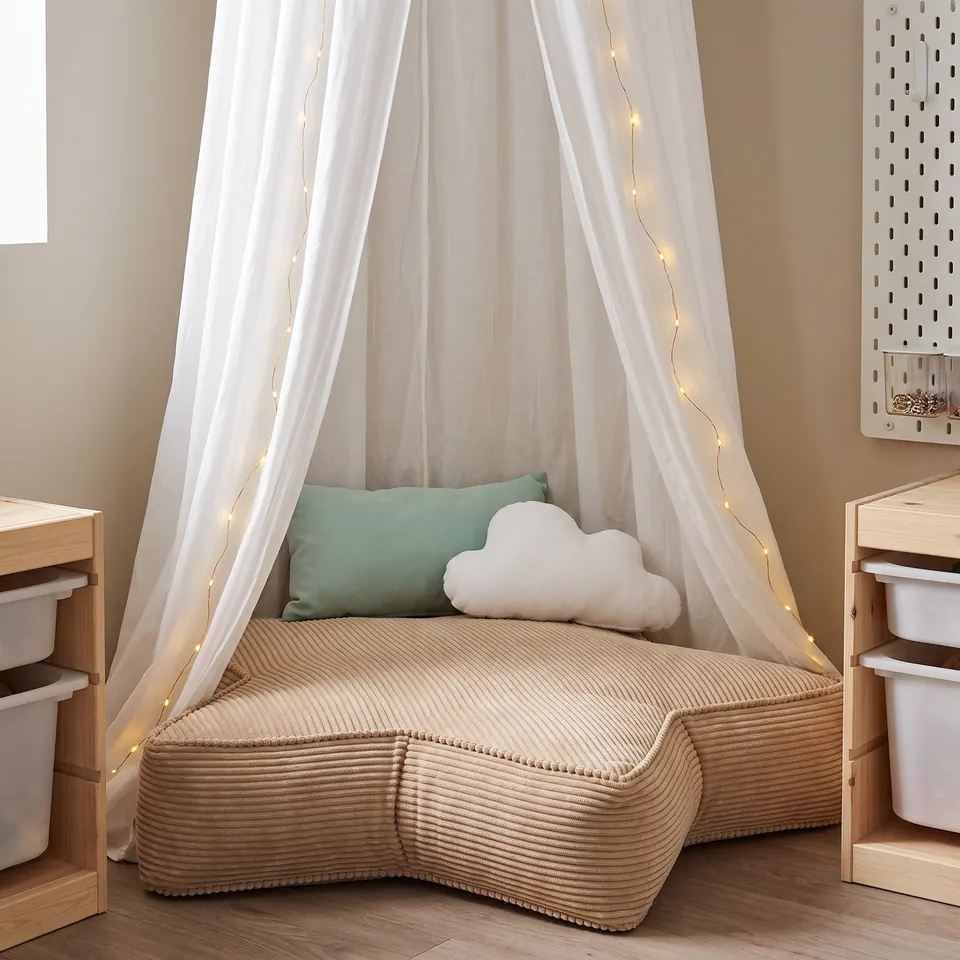
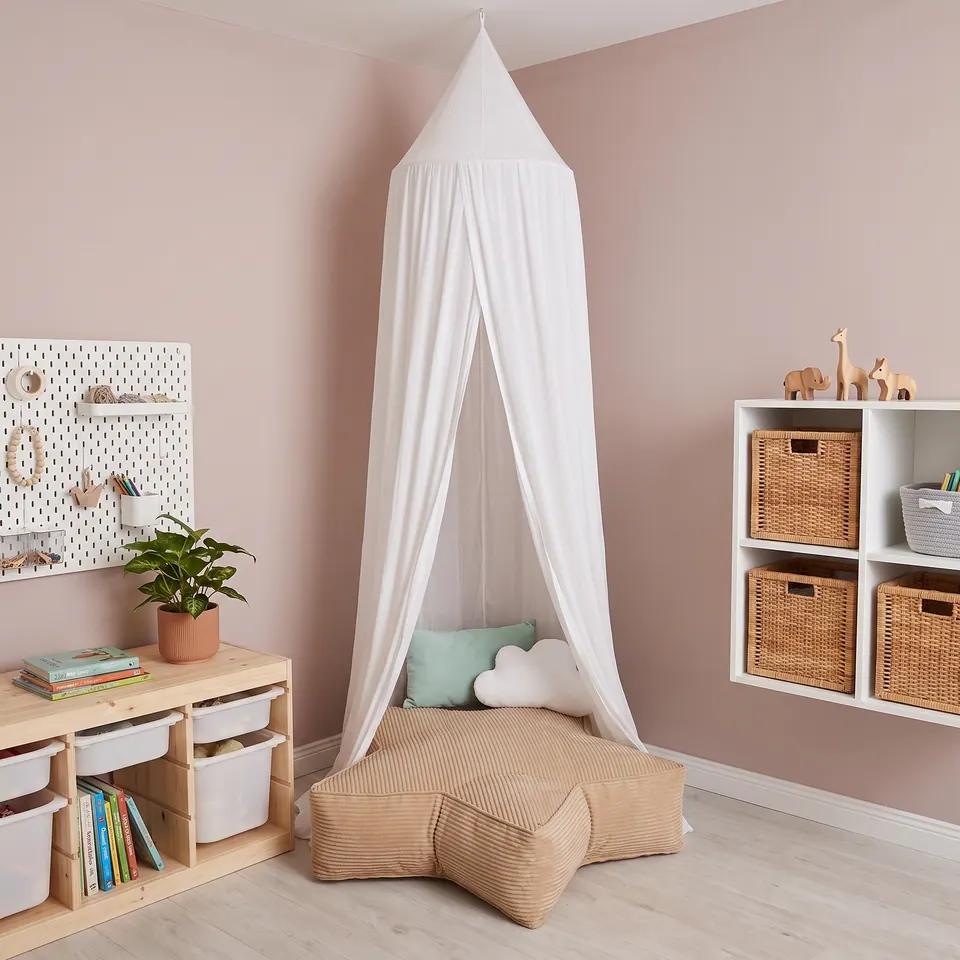
- Sand corduroy star
Sand is lighter than gray and warmer than white, a forgiving playroom neutral.
- Self-piped base edge
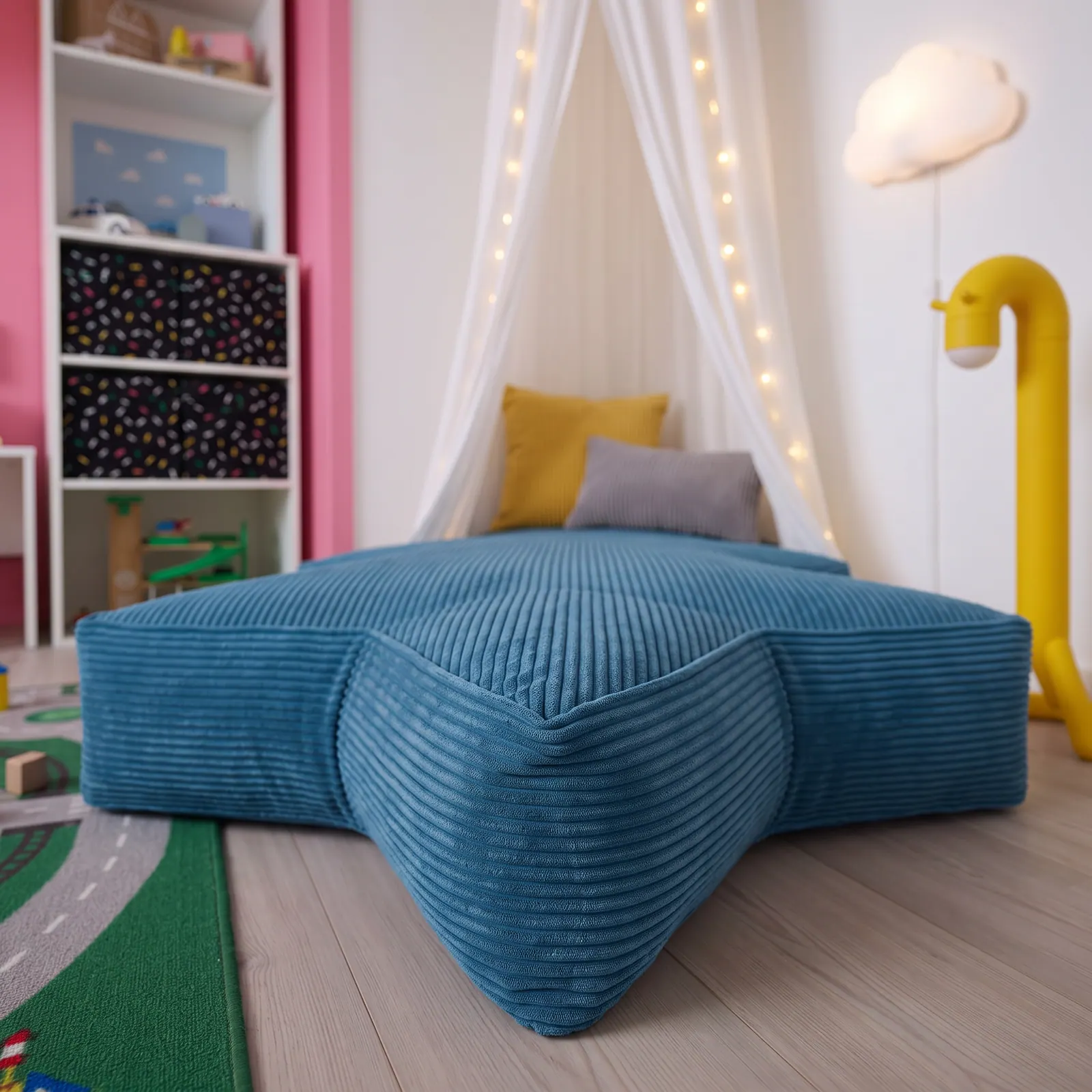
The piped bottom seam shows how cleanly the points are finished.
- Sage lumbar
A cool sage against warm sand keeps the nook from feeling beige-on-beige.
- Fairy-light strand
Little lights pick out the corduroy ribs in the evening.
- Pine storage with bins
Natural pine matches the sand tone of the star.
- Sand corduroy starSand is lighter than gray and warmer than white, a forgiving playroom neutral.
- Self-piped base edgeThe piped bottom seam shows how cleanly the points are finished.
- Sage lumbarA cool sage against warm sand keeps the nook from feeling beige-on-beige.
- Fairy-light strandLittle lights pick out the corduroy ribs in the evening.
- Pine storage with binsNatural pine matches the sand tone of the star.
Corduroy is already a stripe
Run your hand across corduroy and you'll feel what the eye sees in this photograph: a stripe, raised instead of printed.
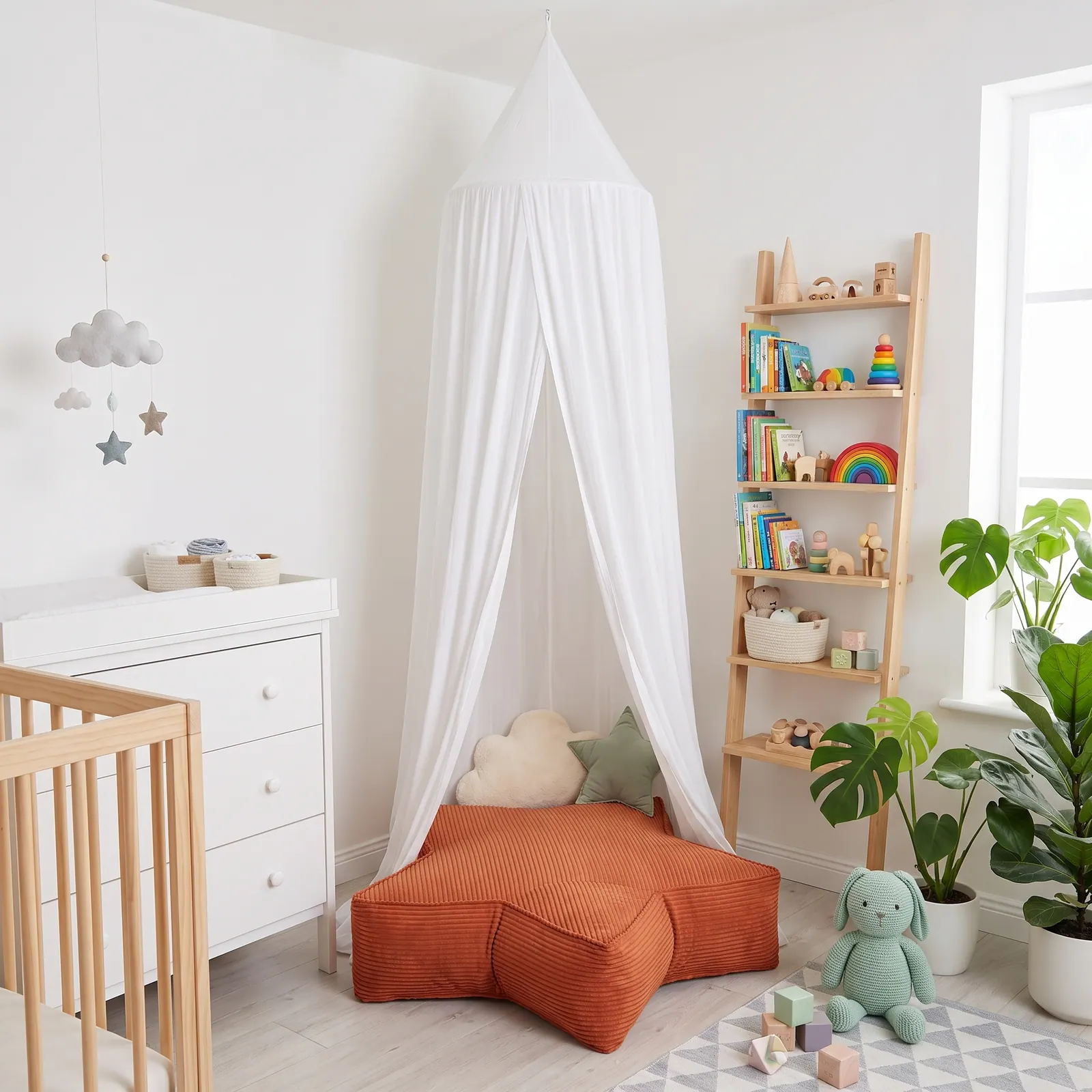
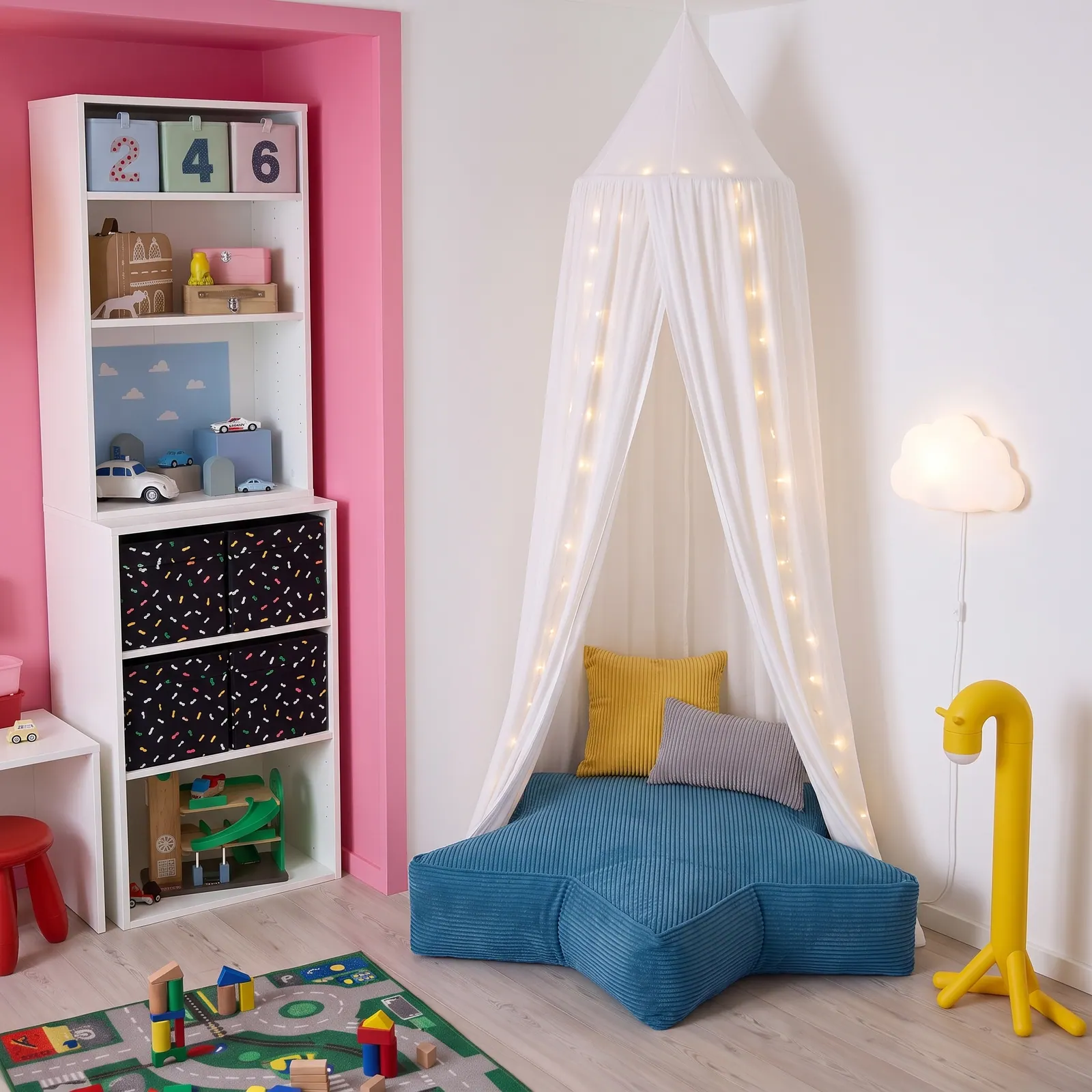
That's why this sand star floor cushion gets along with everything around it. The ribs give the pattern; the color stays plain. The fairy-light strands overhead pick out every wale in the evening, so the star reads textured without a single printed line.
Here's how I'd mix around a corduroy piece, my friend, the way it was taught to me on the shop floor:
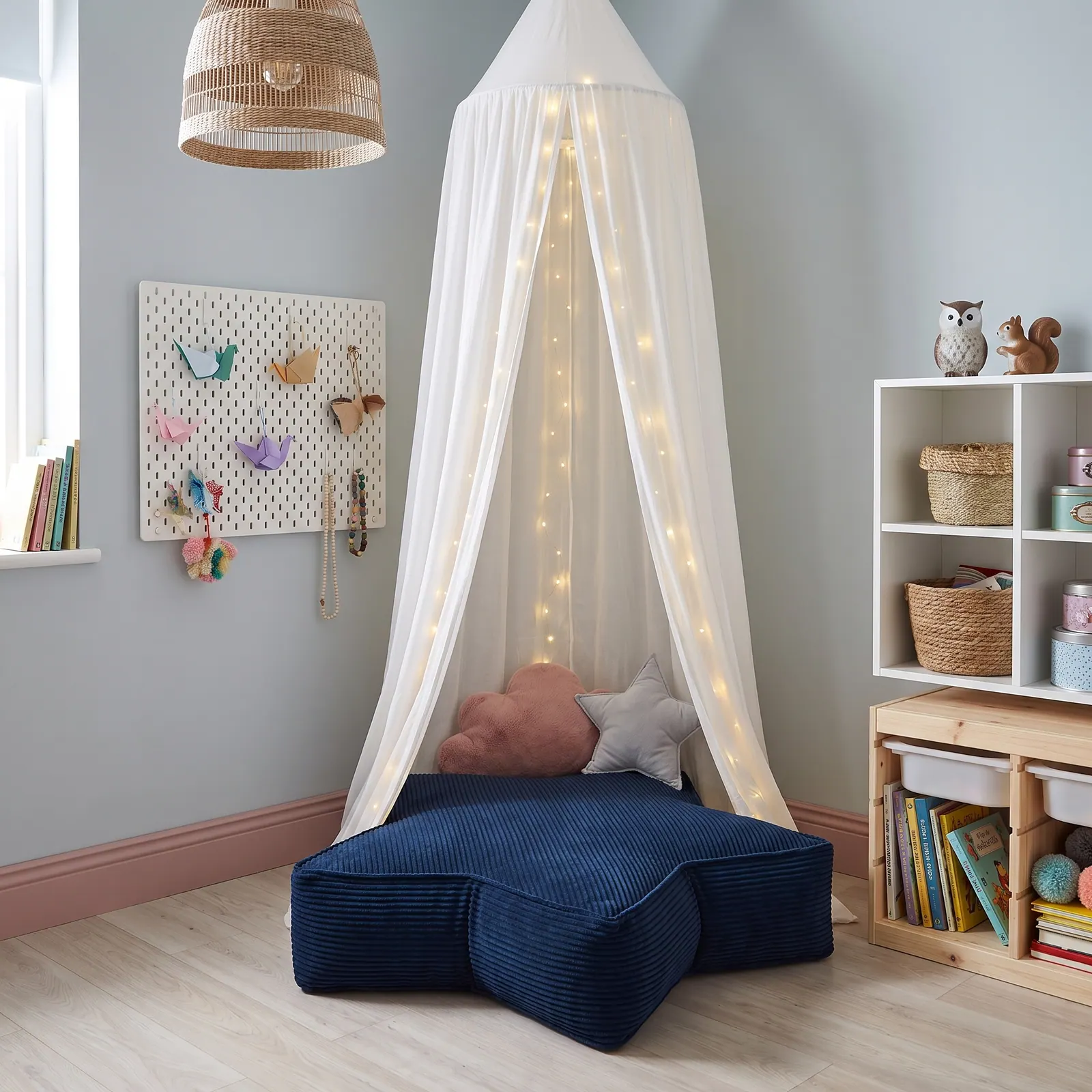
- One texture, then plains. The sage green lumbar and the white cloud pillow are both plain. Against ribbed sand, plain fabric rests the eye. A second textured pillow would start an argument.
- Warm against cool. Sand is warm and sage is cool. The pair keeps the nook from going beige on beige, and the white cloud sits between them.
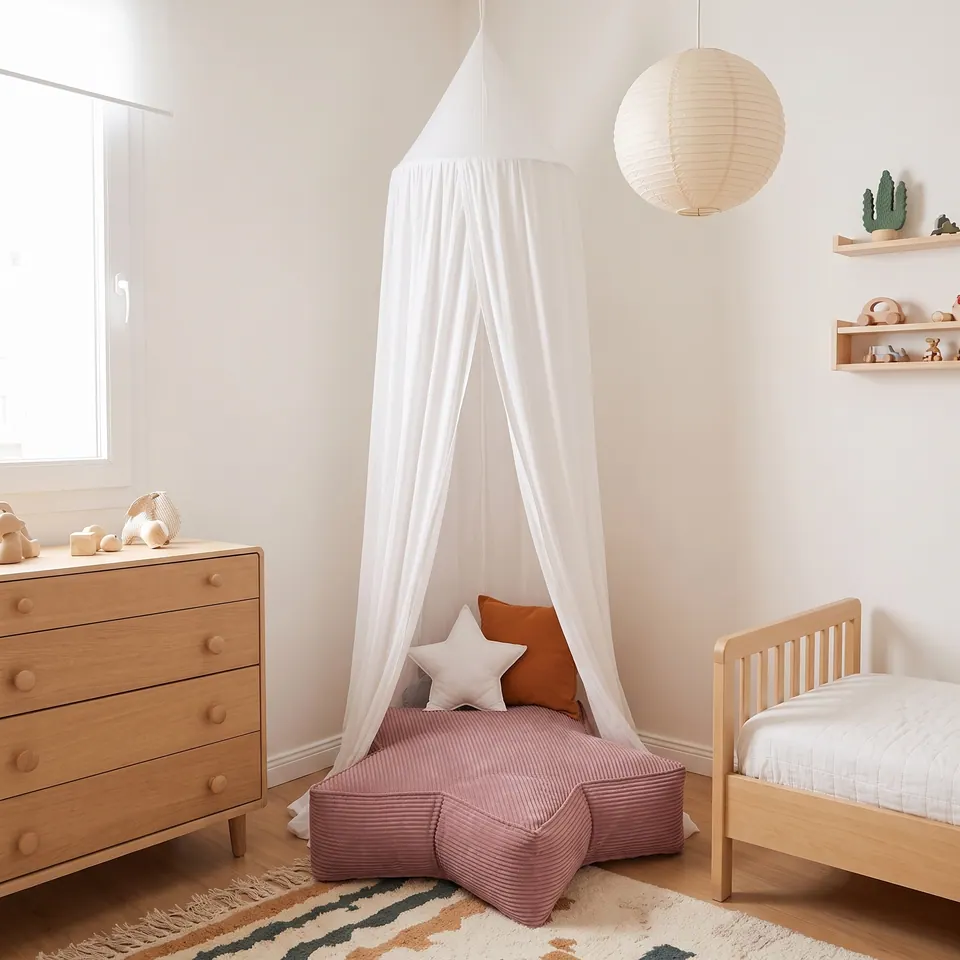
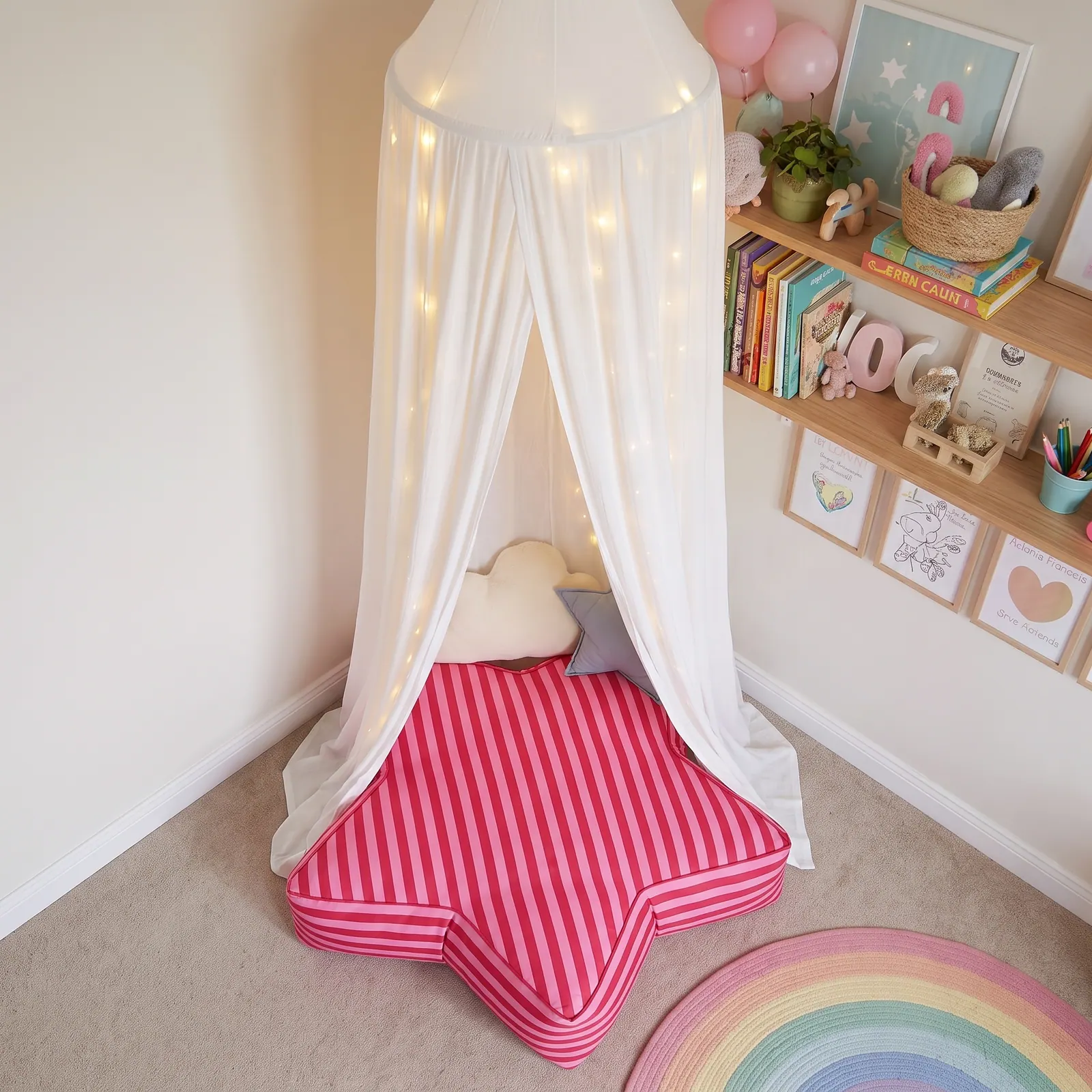
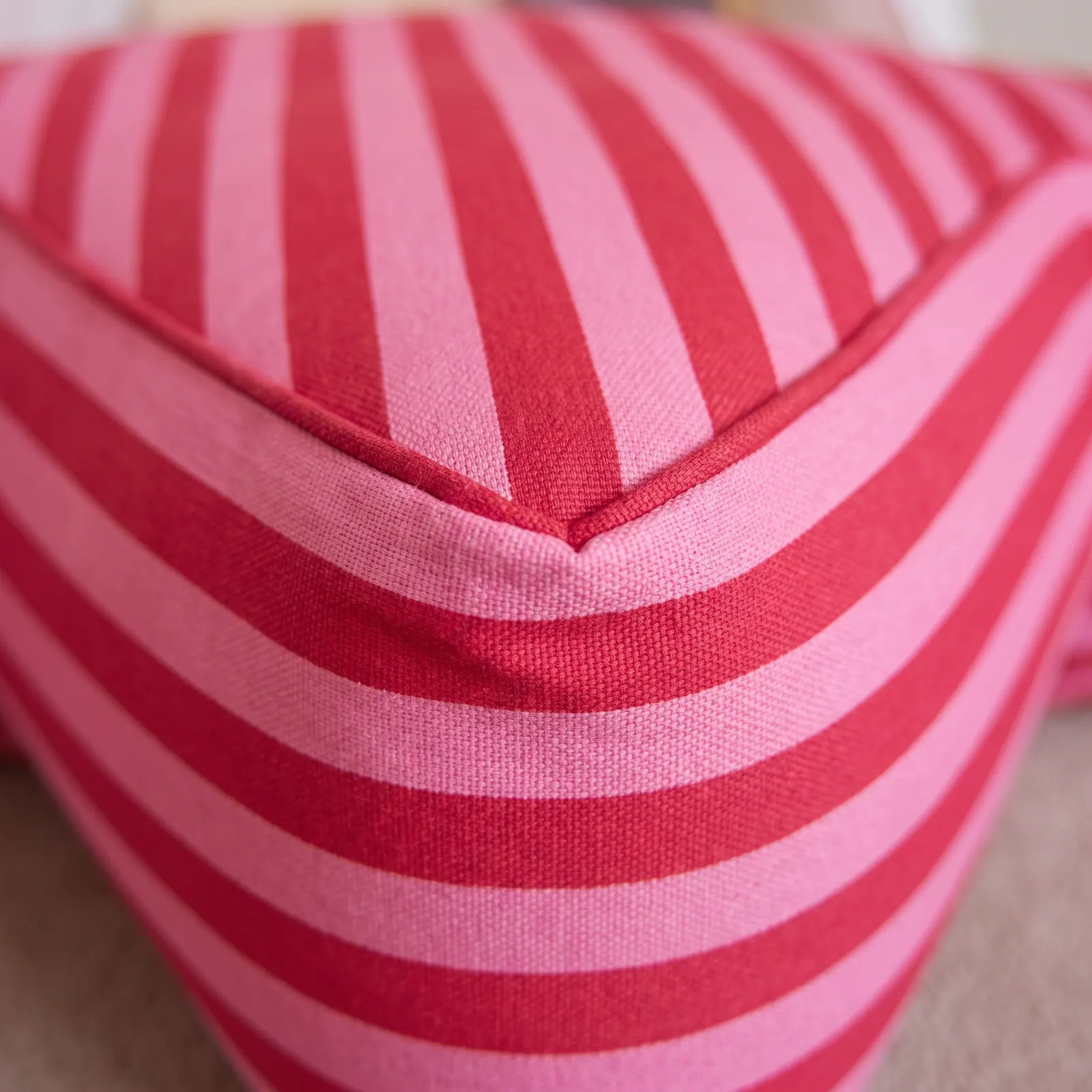
- Stripes on one piece only. Want a printed stripe in the room? Give it to one other cushion, like the striped star in the gallery, and keep its colors inside the sand, sage and white family. Where a stripe meets piping, match them; one gallery star shows stripe-matched piping on a pink canvas tip.
- Wood counts as pattern. The pine storage on both sides has its own grain, close to the sand tone, so the corner feels built around the star.
Now the edge. The self-piped bottom seam is the line this close crop was made to show. A star has more corners than any cushion in the shop, and every point has to be turned clean. A seam is a promise, and on a star you make it over and over.
The white pegboard with its small tray keeps the wall busy with a child's things instead of more fabric. See the corduroy shelf for colors, the star poufs for shapes, kids' room cushions for the rest of the room, and our kid-friendly fabric Pattern. Stars can be made in outdoor fabric too, for a covered porch.
What's already the loudest pattern in your child's room?
Swatch strip: five tones in the crop
- Sand corduroy#CDB894The star. Lighter than gray, warmer than white.
- Sage lumbar#9CAF88The cool plain that keeps sand from going flat.
- Cloud white#F4F1EAA plain shape sitting between warm and cool.
- Pine storage#D8B98AWood grain close to the sand tone of the star.
- Fairy-light gold#F2D38AEvening light that picks out every rib.
Have it made
Have this made — ask Harlan’s workshop
Fabric has a temper and foam has a memory. Better to settle both in a conversation than to guess at them alone. — Harlan
Leave your details and the workshop will call you to confirm measurements, fabric, foam and piping. No prices, dates or payment on this page: it is a request, not an order.
Sit well. — Harlan