 Save
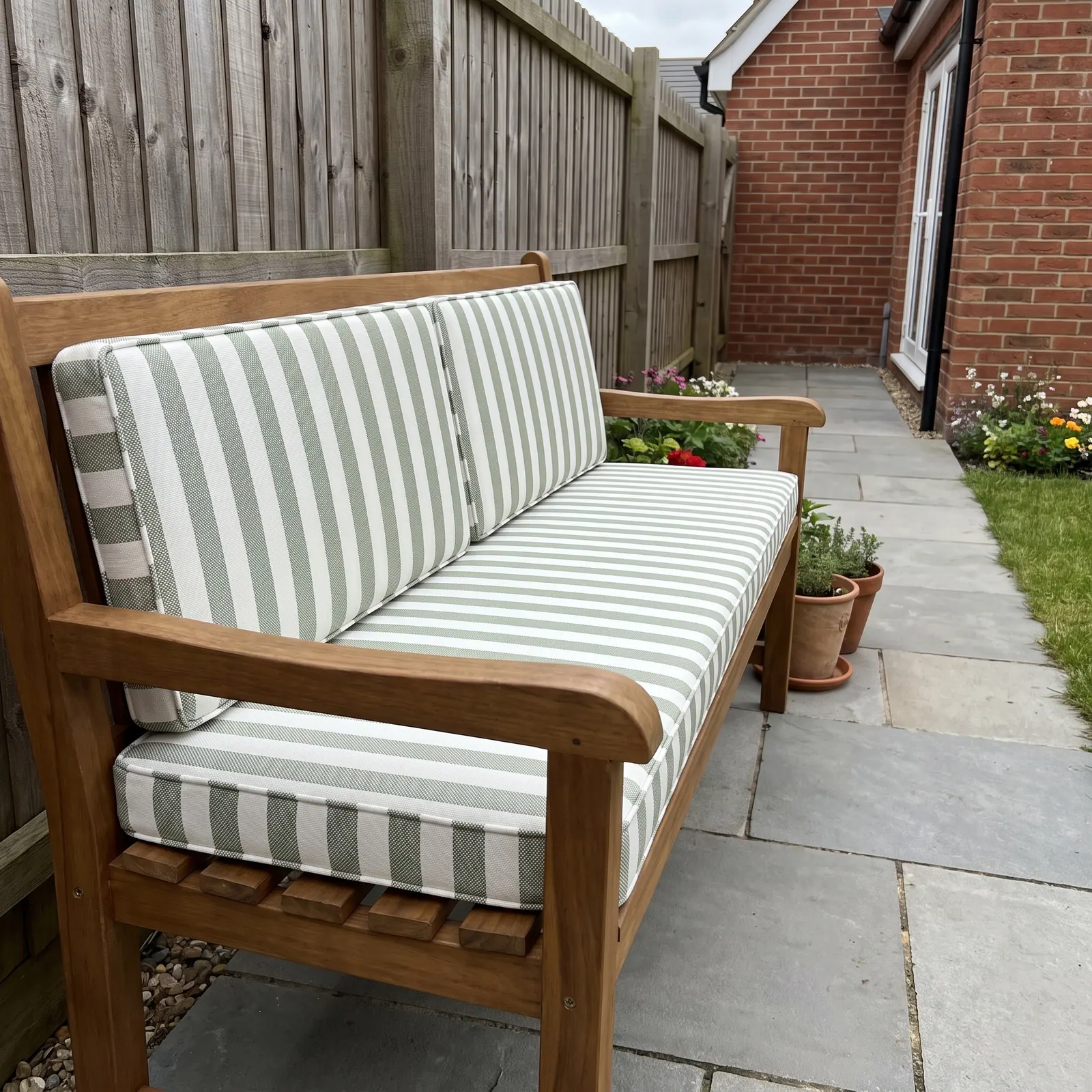
- Seat cushion front
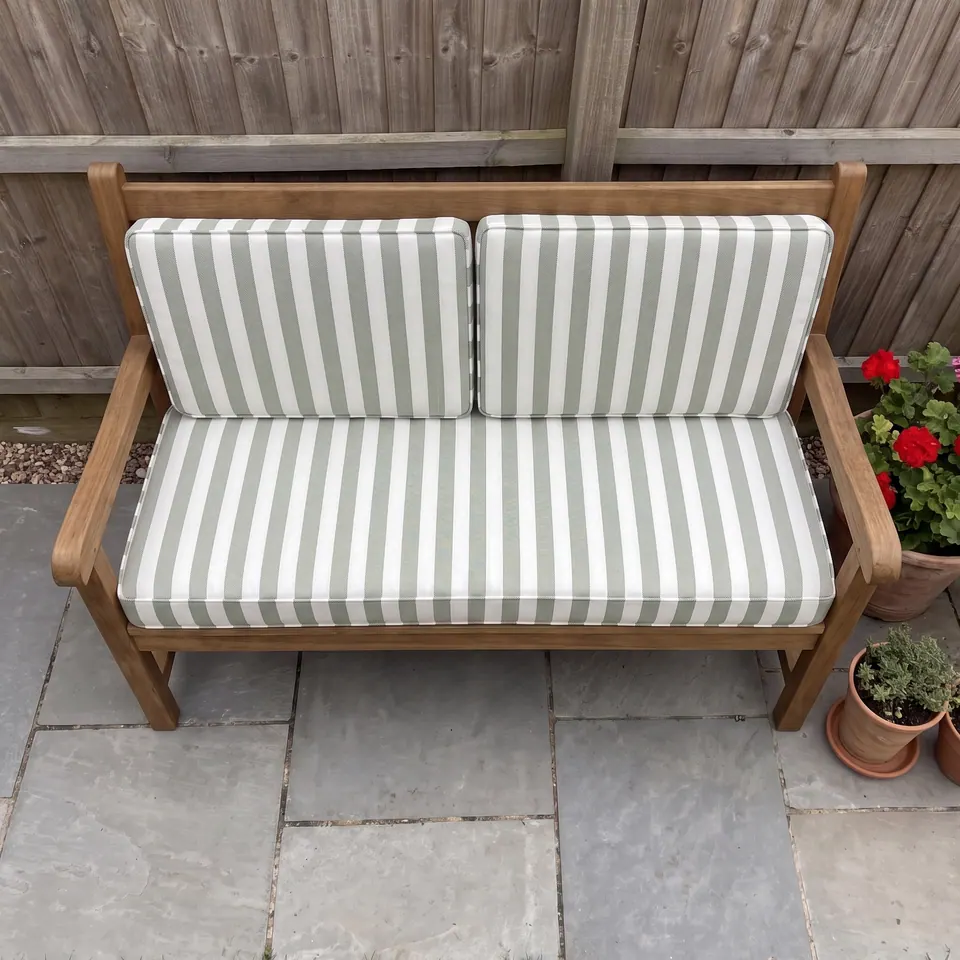
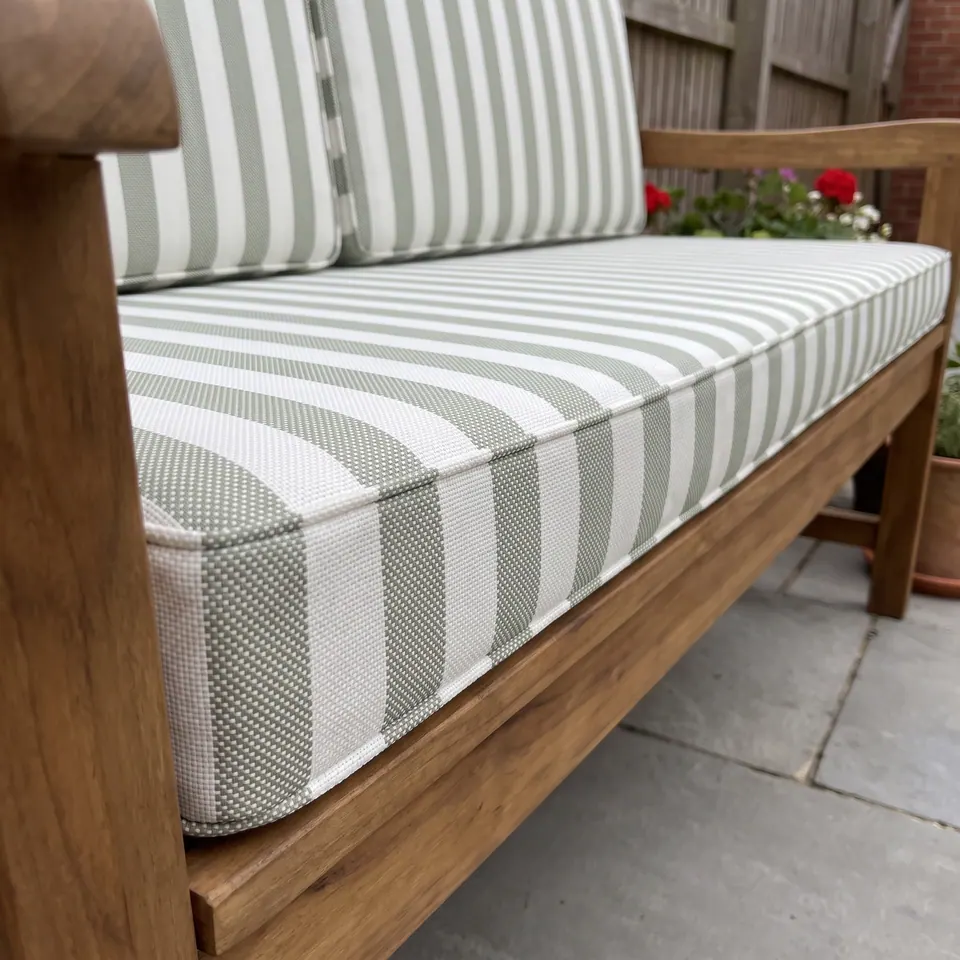
The seat stops at the arms, so nothing hangs over the narrow path.
- Back cushion
Back cushions lean on the top rail and turn the bench into a garden sofa.
- Teak armrest
Honey teak and sage stripes cool the warm red brick behind.
- Flower bed
Mixed blooms along the fence add scattered color to the side return.
- Brick house and path
Placing the bench parallel to the fence keeps the path clear.
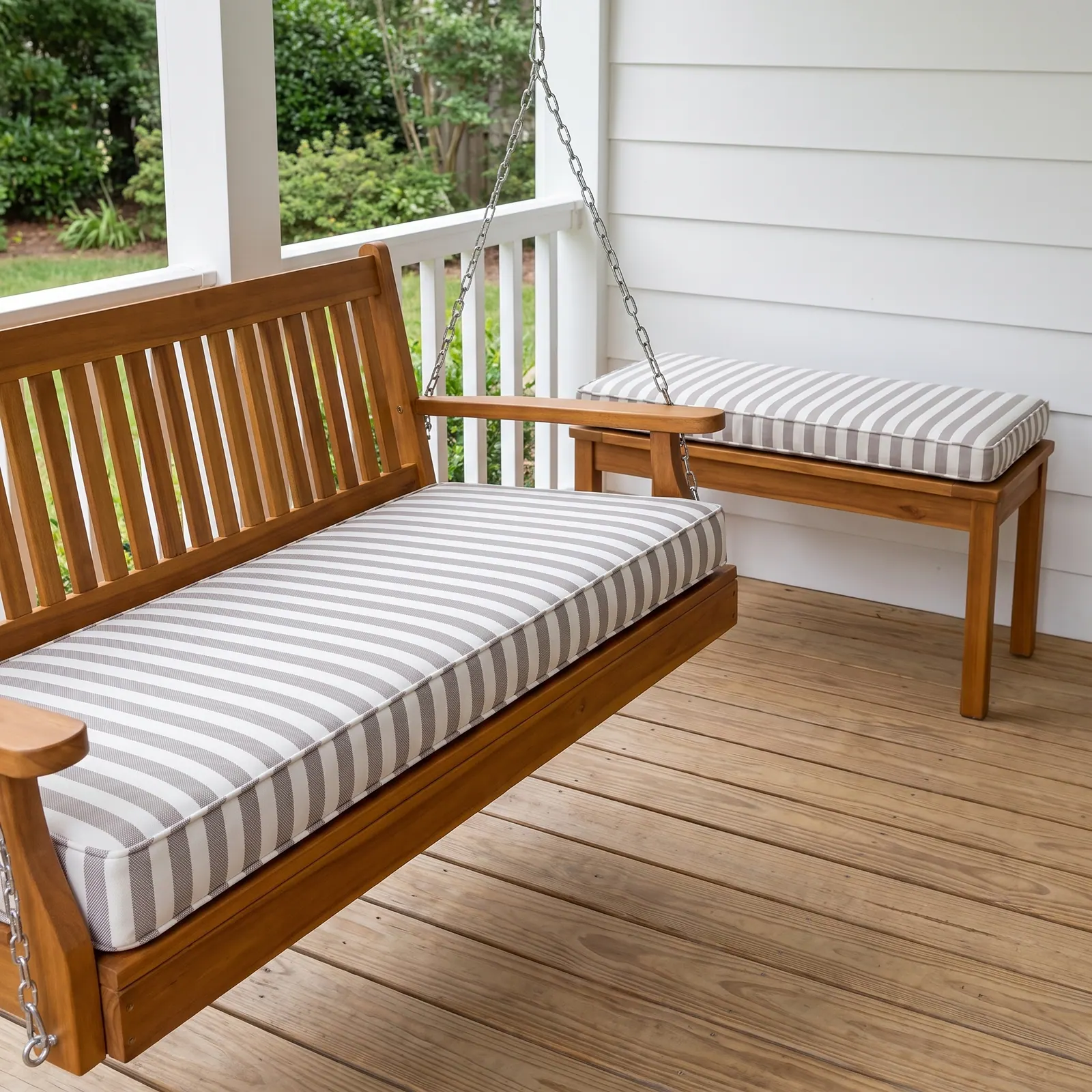
Plate Striped Teak Bench in a Narrow Garden Side Return
In a slim side garden, a teak bench with sage striped cushions turns a path along the fence into a place to sit.
A Reading by MaggieBench Cushions
A sage striped garden bench cushion that turns a narrow side path into a sitting room
Maggie reads a teak bench along a fence in a slim side garden as a before-and-after: the path it was, the garden sofa it became, and the checklist in between.

The quick answer
A custom bench cushion can turn a narrow garden side path into a place to sit if the bench runs parallel to the fence and the cushions stay inside its frame. Stop the seat cushion at the arms, lean back cushions on the top rail, and choose a cool stripe, like sage, against warm brick.
Pinned by Maggie: bench, back, brick and path
Five pins from the front of the seat to the brick house: note how nothing crosses the edge of the path.
The numbers match the pins on the plate.
- Seat cushion frontThe seat stops at the arms, so nothing hangs over the narrow path.
- Back cushionBack cushions lean on the top rail and turn the bench into a garden sofa.
- Teak armrestHoney teak and sage stripes cool the warm red brick behind.
- Flower bedMixed blooms along the fence add scattered color to the side return.
- Brick house and pathPlacing the bench parallel to the fence keeps the path clear.
Before and after: the same strip of side garden
| Before | After | |
|---|---|---|
| Use | A way through to the back | A place to sit with morning coffee |
| Bench | Bare teak slats | Seat and back cushions: a garden sofa |
| Color | Red brick and honey teak, all warm | Sage stripe cools the warm brick |
| Path | Clear | Still clear: bench parallel to the fence, seat stops at the arms |
| Planting | Flower bed along the fence | Herbs in terracotta pots at the bench end |
Why the seat cushion stops at the arms
I have one rule for narrow gardens, dear, and this photo keeps it: nothing hangs over the path.
The seat cushion ends neatly at the teak arms. The back cushions lean on the top rail instead of sitting forward on the seat, so they add softness without adding depth. The bench runs parallel to the fence and takes up no more width than it did bare. That is the whole before-and-after: same bench, same footprint, a completely different use.
The stripe does the cooling. Red brick and honey teak are both warm, and a side return full of warm tones can feel close on a July afternoon. Sage and white stripes bring the temperature down, at least to the eye.
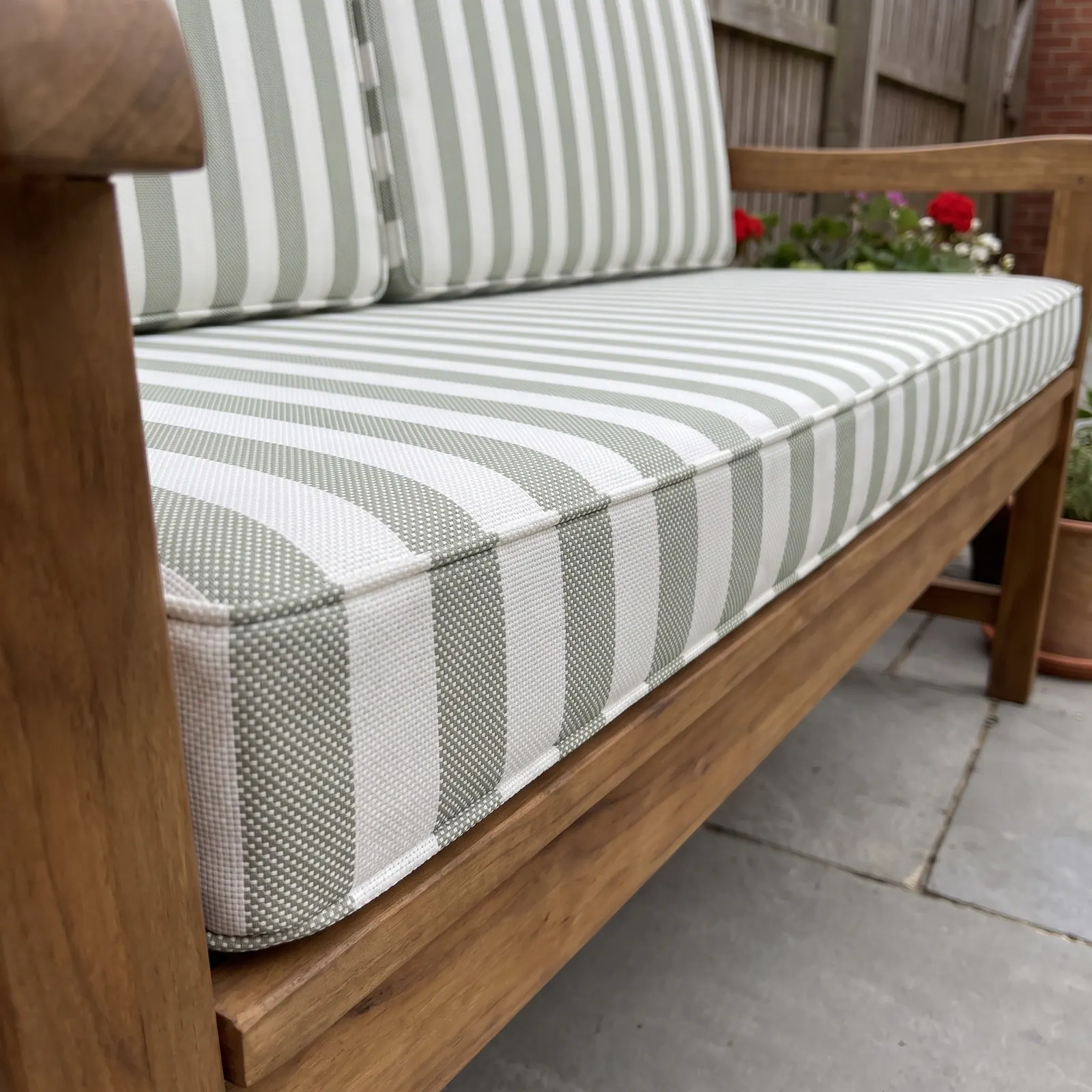
Self piping keeps the edges crisp against all that planting. A straight welt is a kind of honesty, and in a garden this busy the cushion should be the one tidy thing.
The cloth is a water-repellent membrane, so a passing shower beads off, though the cushions still come indoors for winter. See the water-repellent membrane shelf, or draw your own set in the bench cushion builder.
What is the narrowest spot in your yard that nobody sits in yet?
As close to white as possible, and a listing that needed fixing
A buyer in the US wanted a linen bench cushion as close to white as the range allowed. The workshop pointed them to color 19, a cream so near white that it matches the lightest photos, and quoted a 68 x 21½ in (173 x 55 cm) cushion.
Then the checkout showed a higher figure than the quote. The buyer asked, and the workshop corrected the listing before the order went through.
Two lessons, and I have learned both the expensive way. First, stark white is rarely what a bench needs; a near-white cream still reads white in daylight. Second, if the checkout price and the quote disagree, stop and ask the maker to fix the listing before you pay. Nobody minds the question. More shapes and sizes wait among the bench cushions.
On the cutting table: the side-path bench
| Piece | Three-seater bench seat cushion with back cushions |
|---|---|
| Fabric | Sage and white stripe, water-repellent membrane |
| Piping | Self piping |
| Edge | Box edge |
| Seat length | Arm to arm, nothing over the path |
| Backs | Leaning on the top rail |
| Placement | Parallel to the fence |
| Best for | Side returns, narrow patios and fence-line paths |

Have it made
Have this made — ask Maggie’s workshop
I once cut a lovely cushion two inches short, and I have not forgotten it. That is why the workshop goes over your measurements with you on the phone. — Maggie
Leave your details and the workshop will call you to confirm measurements, fabric, foam and piping. No prices, dates or payment on this page: it is a request, not an order.
Buyer questions: foam feel, tufted backs and awkward shapes
- A common question
Is foam density the same thing as firmness? Can I have high-density foam that is only medium firm?
The workshop's answerThey are different. Density is the foam's quality and weight, which drives how long it lasts; firmness is how it feels when you sit. The workshop can supply high-density foam in a medium firmness.
- A common question
On the French-style tufted bench cushion, how big is the back cushion, and do the backrest and arms come off?
The workshop's answerThe backrest and armrests come with the seat. For a 24 x 48 in (61 x 122 cm) seat, the backrest is 16 x 48 in (41 x 122 cm). They are separate pieces, not attached to each other or the base, so the backrest can lie flat and the arms move like pillows. Because they are tufted, the covers do not zip off.
- A common question
My bay window seat is irregular. Can you work from photos and measurements, or do I need a paper template?
The workshop's answerPhotos plus measurements are enough; a paper template is welcome but not required, and there is no surcharge for templates or shapes. The workshop checks that the numbers agree: a 106 in front, a 56 in back and two 35 in diagonals give a seat depth of about 24½ in (62 cm). The price covers the foam, the removable zippered cover and the angled cutting.
In a narrow garden, a bench cushion should stop at the arms and the back cushions should lean on the top rail, so nothing crosses the edge of the path.
Maggie
Questions buyers ask next
How do I fit a cushioned bench into a narrow side garden?
Set the bench parallel to the fence so it takes no extra width, stop the seat cushion at the arms, and let back cushions lean on the top rail rather than sit forward. The cushions add comfort without adding depth to the path.
Why pair sage stripes with a red brick house wall?
Red brick and honey teak are both warm tones. A cool sage and white stripe balances them, so the corner feels fresher, and stripes add order beside a loose, mixed flower bed. A red or orange cushion would push the whole side return warmer.
Is a near-white cream a better choice than stark white for a bench cushion?
Often. A cream close to white still reads as white in daylight and matches pale photos, while looking softer beside wood and stone. Ask for the lightest cream in the range and check a swatch outdoors before ordering.
Stitch straight — Maggie
More photographs to read
 Save
 Save
 Save
 Save
 Save
 Save