 Save
A Reading by MaggieBench Cushions
An ivory bench cushion with mauve piping, built for the long sit
Maggie takes a close look at one corner of an ivory box cushion and asks what makes a bench comfortable after the first hour, and washable after the first spill.
A muted mauve cord gives an ivory cushion a finished edge without the hard contrast of black or navy.

The quick answer
For long sitting on a bench, choose a box cushion about 3 in thick in firm foam, with a zippered cover if the fabric is pale. Three inches is the middle ground: fuller than a 2 in pad, neater than 4 in. Decide early between tufting and washability, because a tufted French cushion cannot have a zipper.
The first hour and the second hour
Any bench cushion feels fine for five minutes. The second hour is where you find out what you bought: the front edge sags, the cover shifts, and the pale fabric has quietly collected a thumbprint from everyone who ever sat down with coffee.
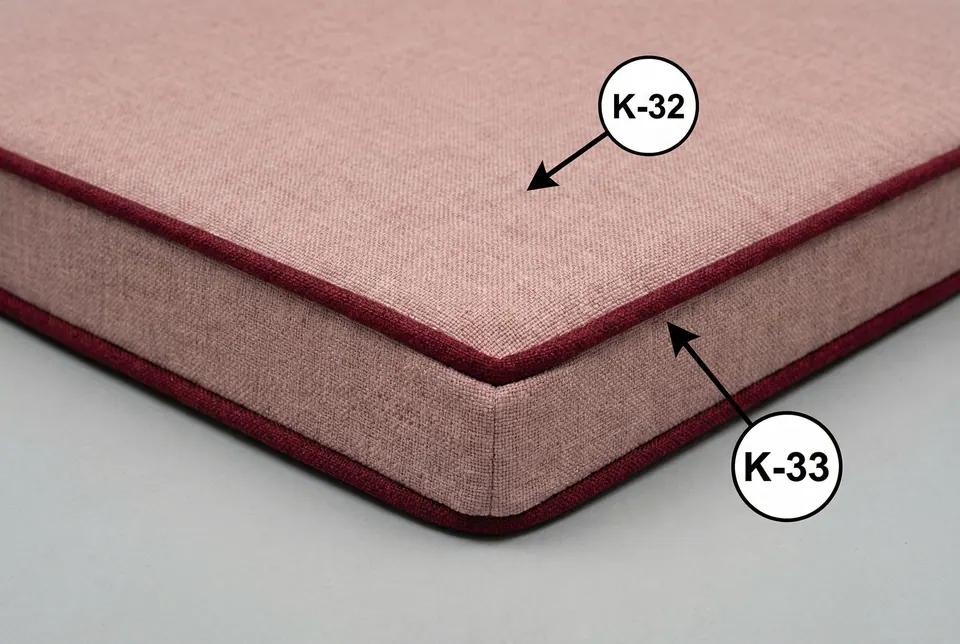
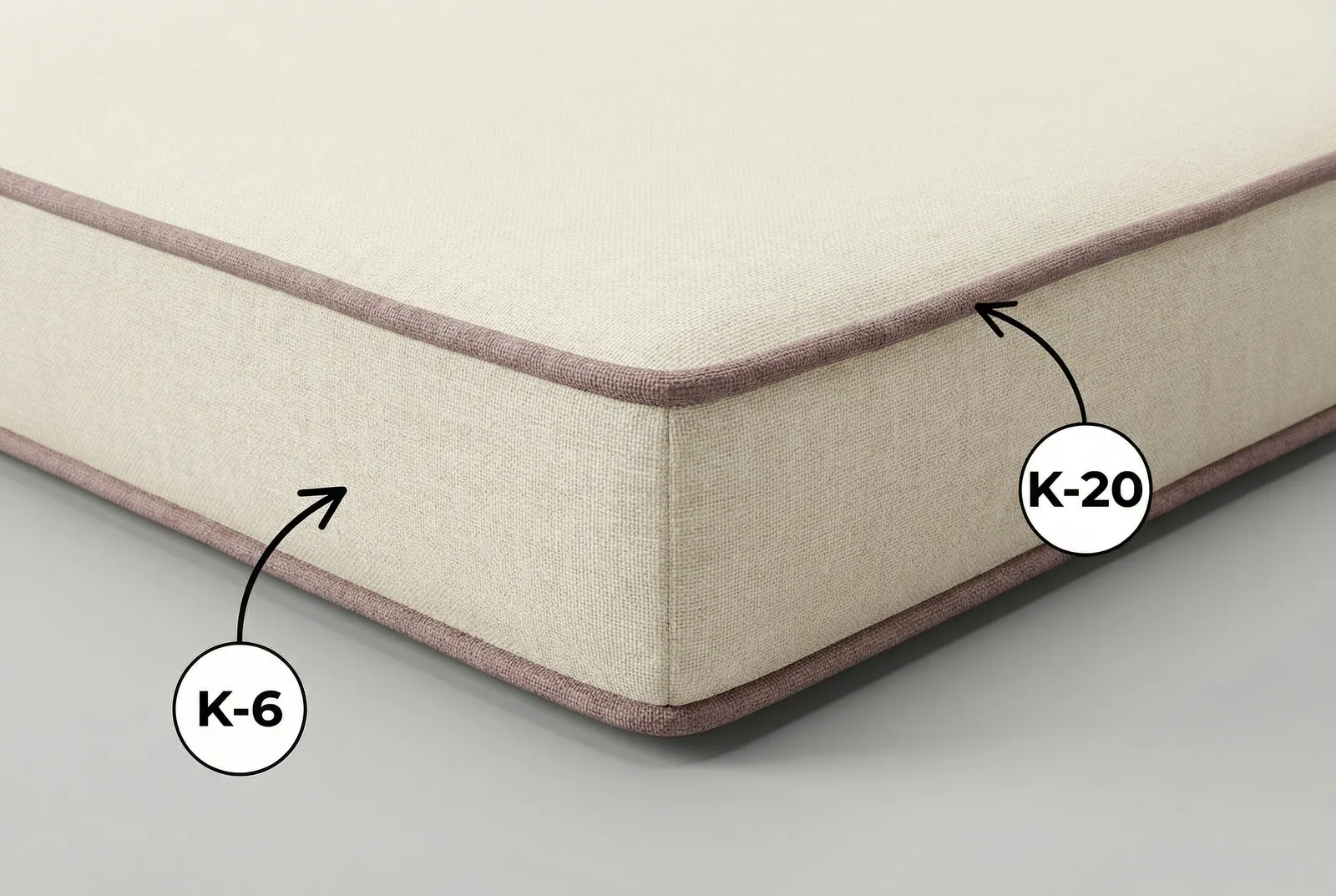
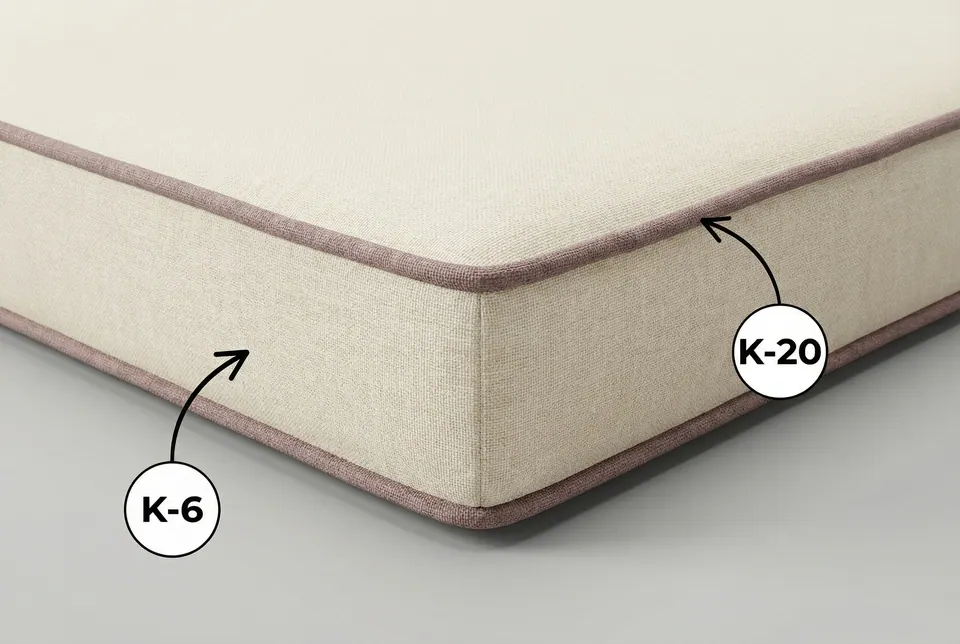
This photograph is a close-up of one corner, and I like it because it shows the parts that decide the second hour. An ivory weave with visible slubs on top. A side gusset cut on the same grain, so the weave lines up around the corner. A mauve-taupe cord on the top seam and a second one at the base.
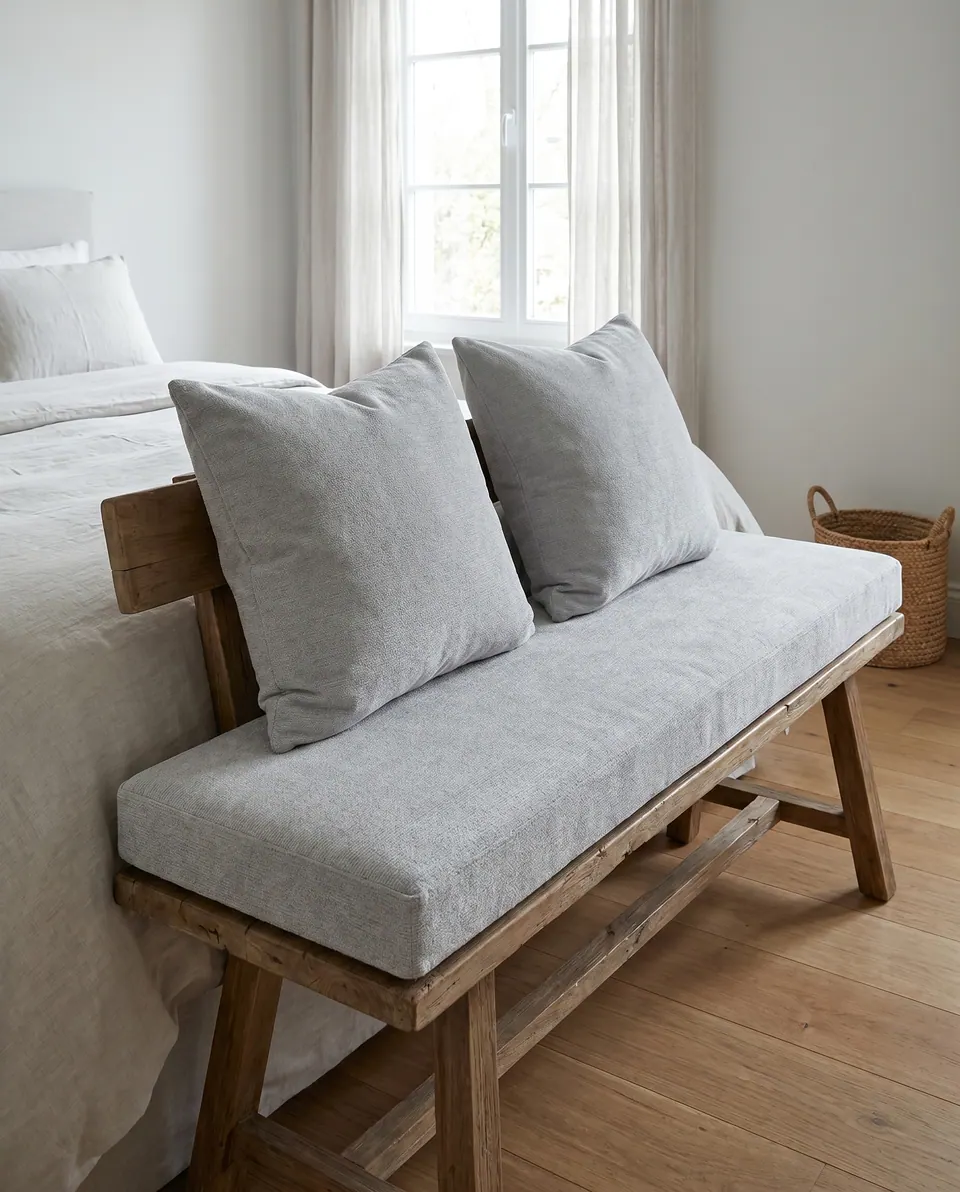
The box edge is the comfort part. A straight side wall keeps the foam full out to the front, so your thighs rest on support instead of rolling off a soft lip. For reading, working or lingering, a custom bench cushion about 3 in (7.5 cm) thick is my usual advice: fuller than a slim pad, still neat on a bench. If you sit longer than most, the foam firmness finder will help you choose. How long do you usually stay on yours?
Pinned by Maggie: four points on one corner
Four pins on a single corner: the weave, the piping turn, the gusset and the base cord.
- Ivory slub weave
Visible slubs keep a big pale surface from looking like plain canvas.
- Mauve piping turn
A muted cord finishes the edge without the hard contrast of black or navy.
- Ivory side gusset
The side panel is cut on the same grain as the top, so the weave lines up.
- Base cord
A darker cord at the base hides the light marks that pale cushions pick up.
- Ivory slub weaveVisible slubs keep a big pale surface from looking like plain canvas.
- Mauve piping turnA muted cord finishes the edge without the hard contrast of black or navy.
- Ivory side gussetThe side panel is cut on the same grain as the top, so the weave lines up.
- Base cordA darker cord at the base hides the light marks that pale cushions pick up.
Why mauve, and not navy
Right, then: the piping. Ivory with self piping tends to look unfinished, as if someone forgot the last step. Ivory with black or navy cord looks like a legal pad. Dusty mauve sits between the two. It finishes the edge without shouting, and it belongs in rooms with warm whites, pink-toned plaster or aged brass.
There is a practical reason too, and I learned it the hard way on an all-ivory window seat years ago. The base seam is where shoes, bags and vacuum cleaners meet a cushion. A darker cord there hides those light marks far better than ivory ever will.
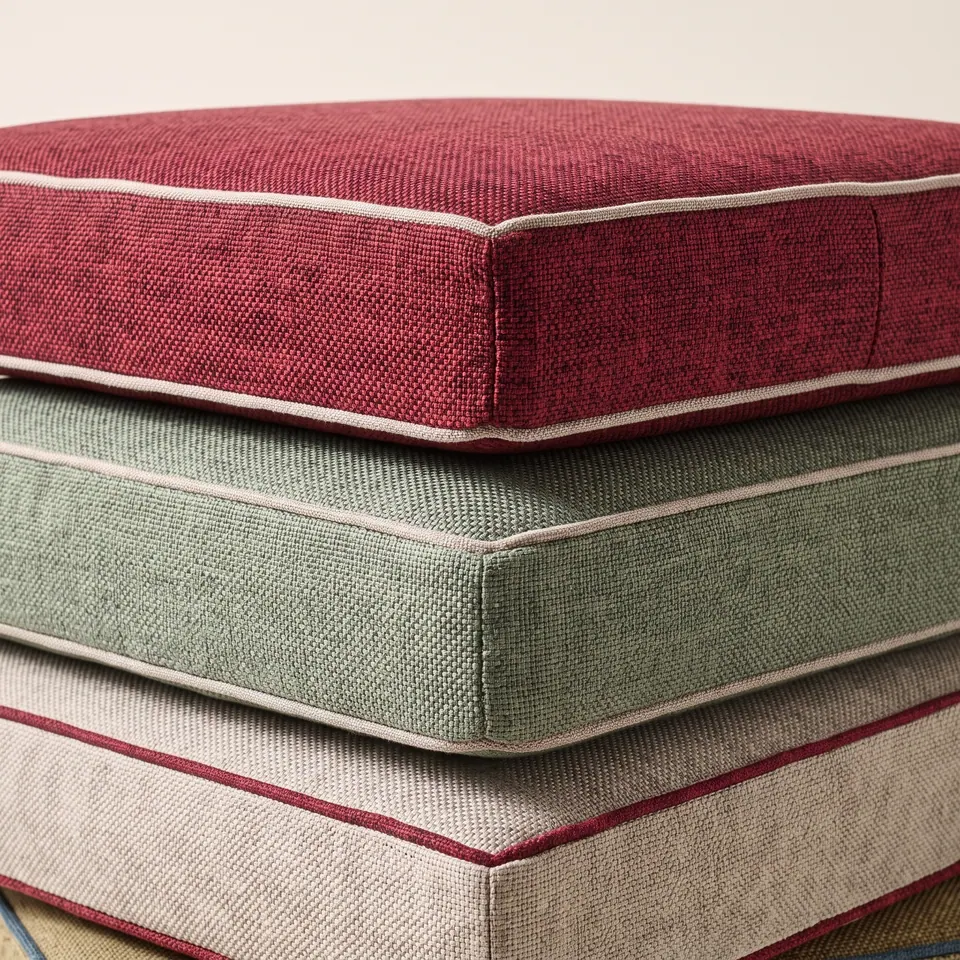
The slub matters as well. A big pale top in a flat weave reads like canvas; small irregular slubs give the eye something to rest on. To copy the look, choose a piping one or two shades darker than the plaster, grout or rug in your room. More pale weaves are in linen-look fabrics, and the case for and against cord is in piping: matching, contrast or none.
Three cushions, one washing machine, one decision
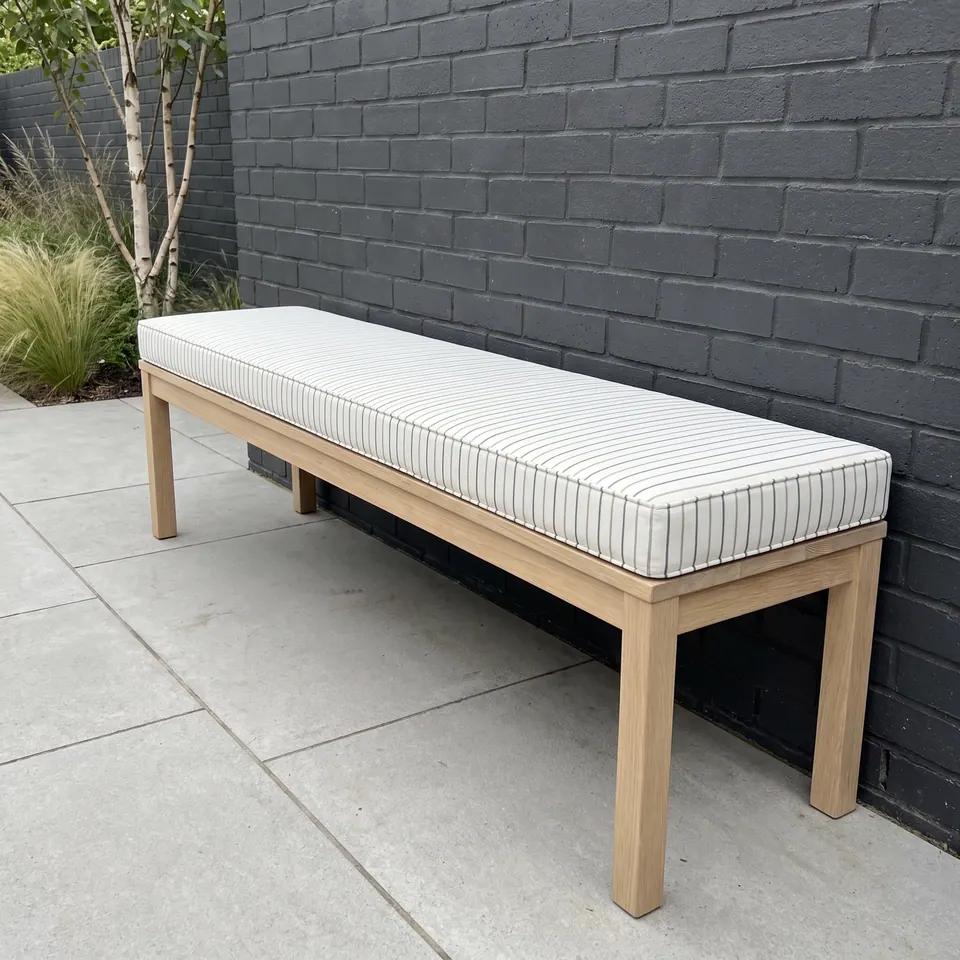
A buyer in the US wrote to the workshop about a bench 54 in (137 cm) long and 19 in (48 cm) deep. The plan was three cushions of 18 x 19 in (46 x 48 cm) each, in beige linen, tufted, with zippers so the covers could go in the washer.
The shop had to say the unwelcome thing: a tufted French cushion cannot have a zipper. The choice was tufted without zippers, or plain cushions with zippered, washable covers.
For a pale cushion people will sit on for hours, I would take the zipper, dear. Tufting is lovely, but ivory and beige are the colors most likely to want a wash. Decide which matters more before you order, not after the first spill. The trade-off is laid out in tufted vs plain cushions.
A tufted French cushion cannot have a zipper, so a pale bench cushion that must go in the washer should be plain, with a zippered cover.
Maggie
Buyer questions: pricing by size, bay shapes and thickness
- A common question
How is a custom-size window seat cushion priced?
The workshop's answerBy size. Quoted examples have ranged from a roughly 24 x 55 in (60 x 140 cm) cushion in navy and a window seat with angled ends to a 63 x 25 x 8 in cushion in anthracite, the priciest of the lot for its length and thickness. A 13.5 x 49 in tufted cushion was priced from the nearest listed option, 14 x 48 in.
- A common question
My bay window is a trapezoid. Can you make a cushion for it, and what do you need from me?
The workshop's answerYes. Send a drawing with every side measured and a photo of the space, using the shop's size chart as a guide. Measure each angled side on its own rather than assuming it matches another edge, and include length, width and thickness.
- A common question
What is the real difference between a 2, 3 and 4 in cushion?
The workshop's answer2 in is a slim, low-profile pad. 3 in adds cushioning and a fuller look while still sitting neatly. 4 in is noticeably plumper, and 5 in is offered too. Every thickness uses the same firm, long-lasting 32-density foam, and 3 in is a solid middle ground for benches and window seats.
On the cutting table: ivory and mauve
| Cushion | Rectangular box cushion for a bench or window seat |
|---|---|
| Top fabric | Ivory linen-look weave with visible slubs |
| Piping | Muted mauve-taupe contrast cord on the top and base seams |
| Gusset | Ivory, cut on the same grain as the top |
| Thickness for long sitting | About 3 in; 2, 4 and 5 in also made |
| Foam | Firm 32-density foam in every thickness |
| Cover | Zippered and washable if plain; tufted covers stay on |
| Best for | Reading benches and window seats in warm-white rooms |

Have it made
Have this made — ask Maggie’s workshop
Have the tape measure handy when they call. Old cushions shrink and sag; the seat underneath does not. — Maggie
Leave your details and the workshop will call you to confirm measurements, fabric, foam and piping. No prices, dates or payment on this page: it is a request, not an order.
Questions buyers ask next
What cushion thickness is comfortable for reading on a bench for an hour or more?
About 3 in of firm foam suits most benches: enough to keep you off the wood, not so tall that the seat feels perched. Go to 4 in if the bench is low or you like to sit cross-legged, and keep 2 in for occasional perching.
Why does the piping color on a pale cushion matter for wear?
The edges take the knocks. A cord a shade or two darker than the fabric hides the light scuffs from shoes, bags and cleaning that show quickly on ivory, especially along the base seam, while still looking soft rather than stark.
Should a 54 in bench have one cushion or three?
Either works. Three 18 x 19 in cushions let you lift and wash one at a time, while a single piece looks cleaner and never gaps. For long reading sessions, a single cushion keeps seams out from under your hips.
Stitch straight — Maggie
More photographs to read
 Save
 Save
 Save
 Save
 Save
 Save