A Reading by ÉlodieCustom Throw Pillows
A black and cream jacquard throw pillow up close, and how to measure one right
At this distance a pillow stops being a color and becomes a construction: yarn, cord, seam, corner. Each one tells you whether somebody measured it right.
The quick answer
To size a custom pillow cover, measure the insert flat from seam to seam, not the old cover, and leave the piping out, because the cord sits on the seam and adds nothing. A full corner with no dog-ear shows the insert fills the cover. Tufted cushions need a new cushion, not a new cover.

 Save
 Save
 Save
 Save
 Save
 Save
 Save
What the macro shows that a room shot cannot
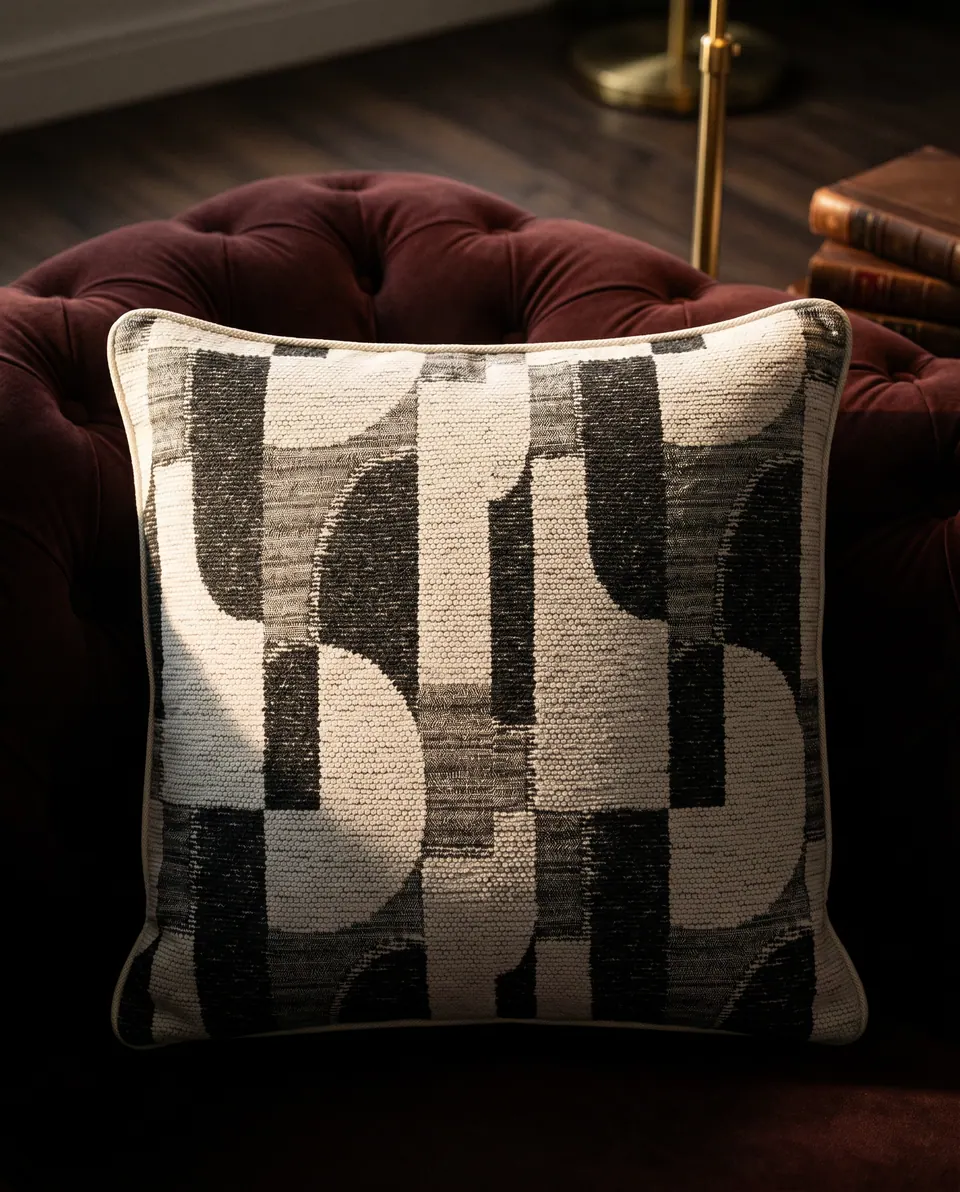
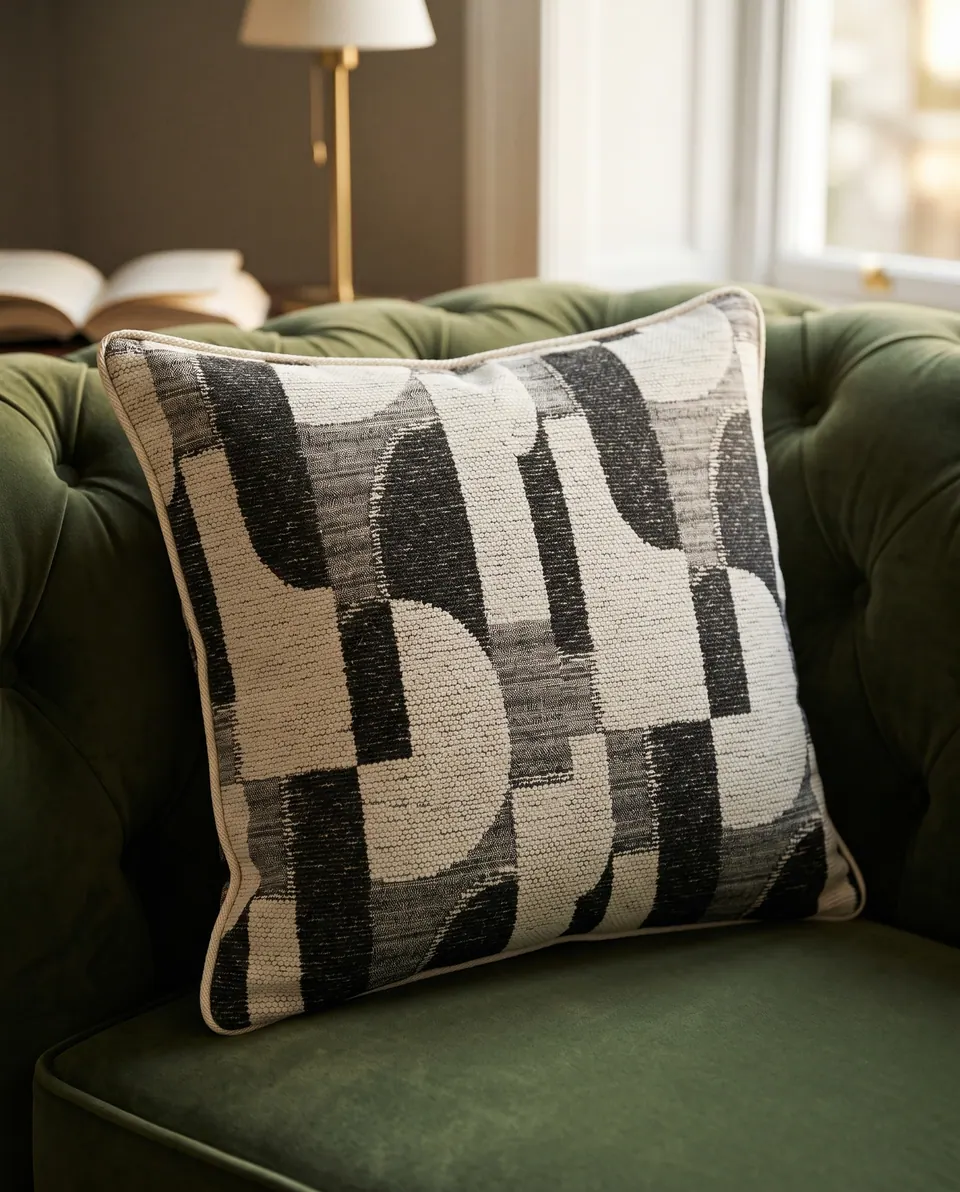
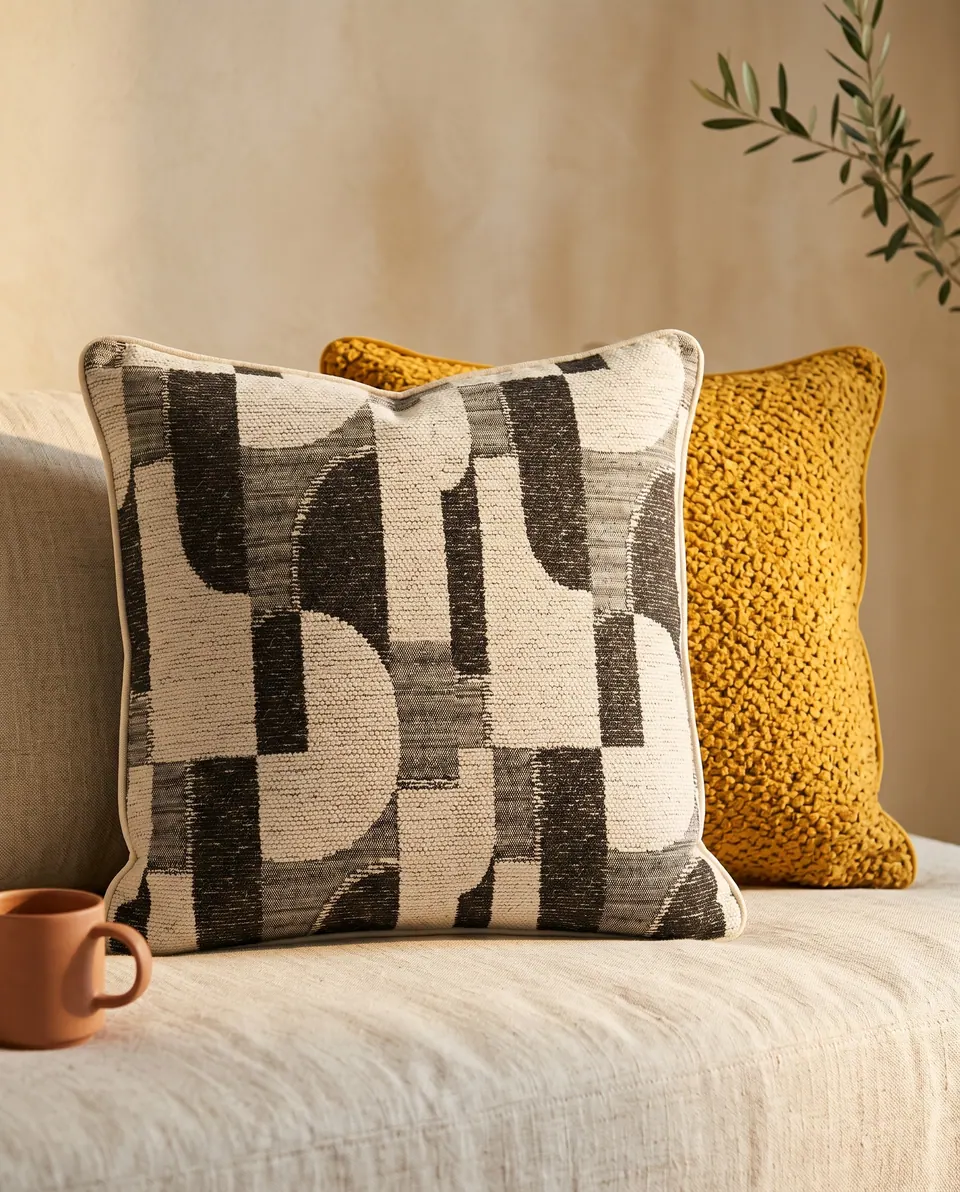
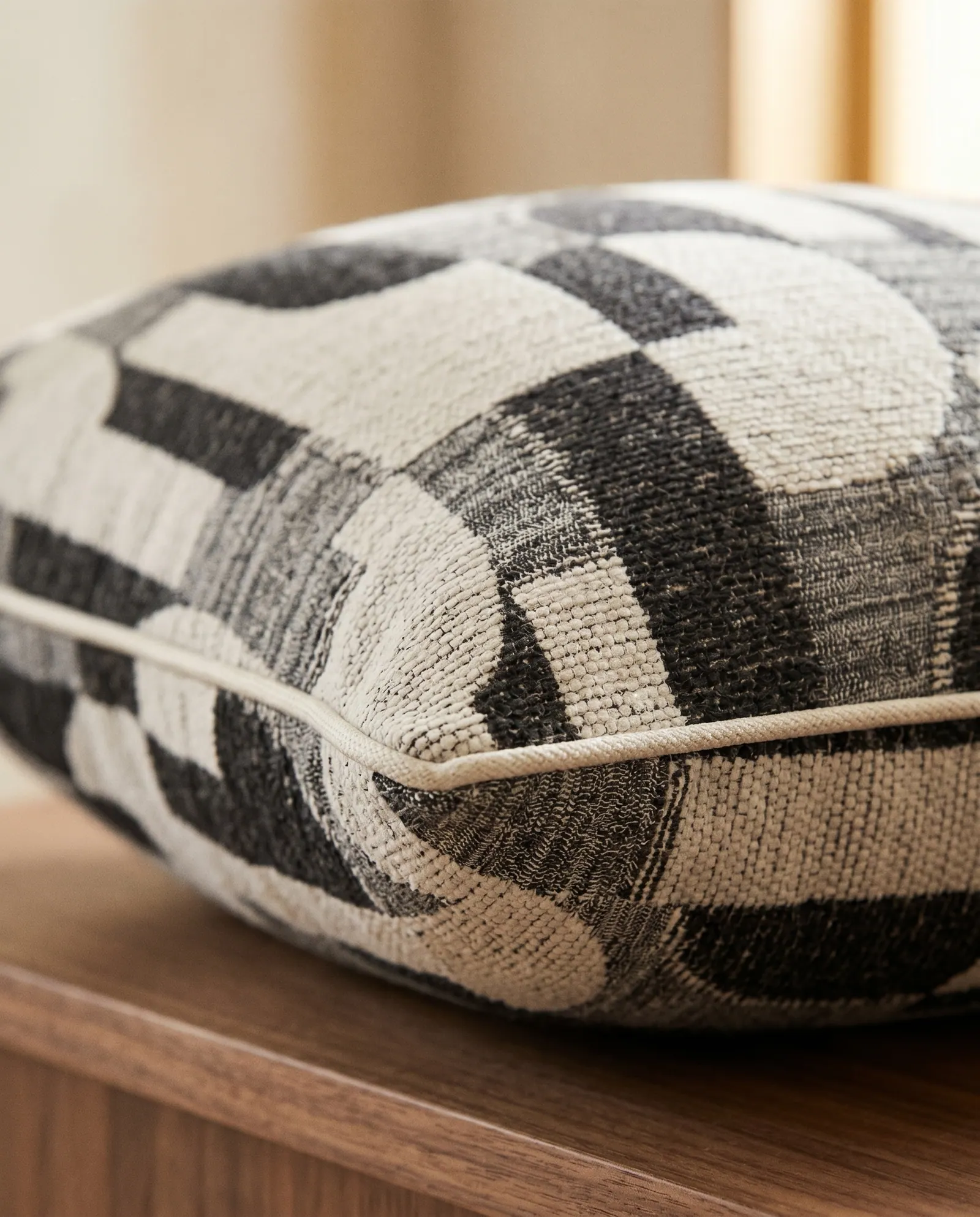
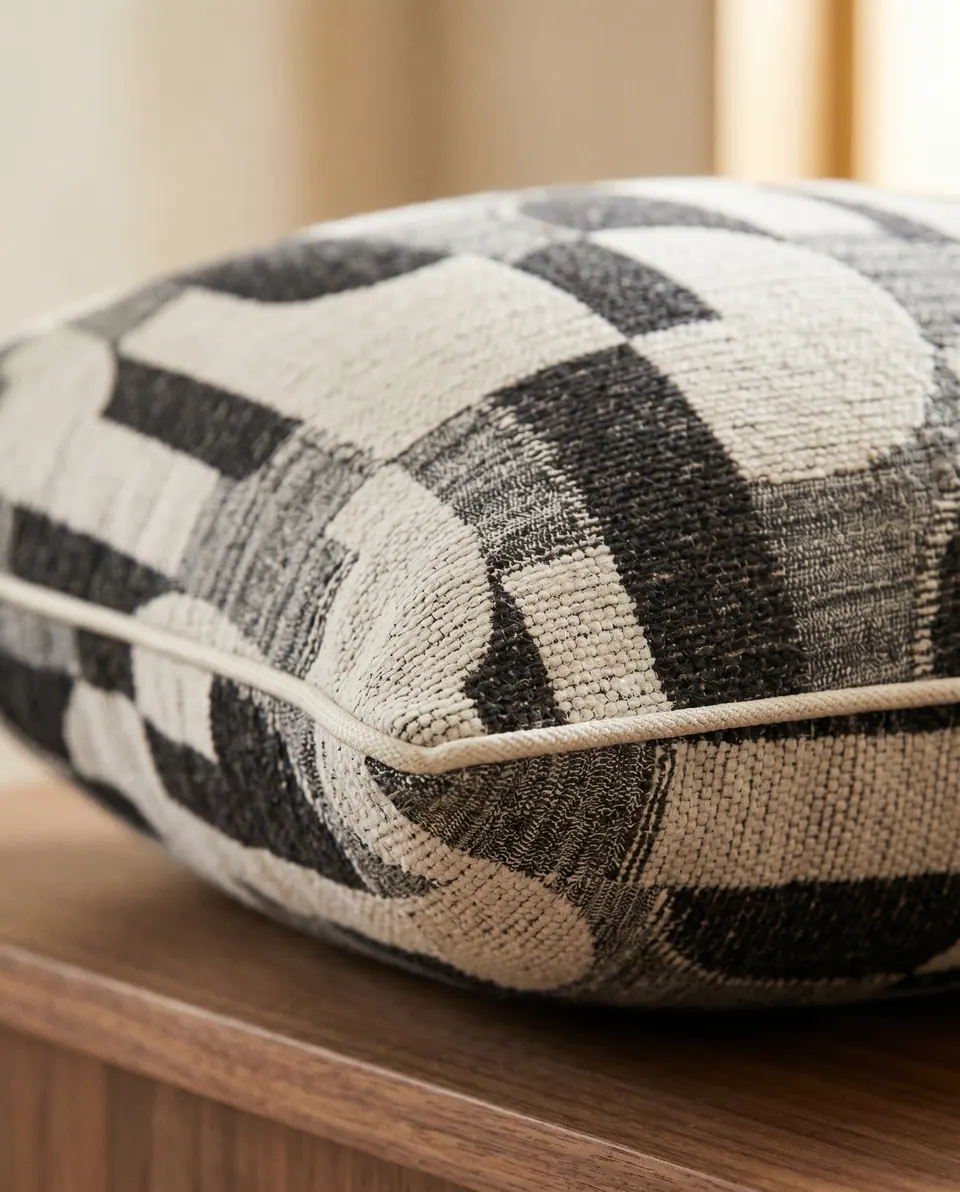
Warm window light slides across the edge of a pillow resting on a walnut shelf. The fabric is a jacquard in ink black, bone cream and a soft pewter gray, woven in a geometric arch. Woven, not printed: the cream stands up from the ground because the design lives in the yarn itself. Run a thumbnail across it and you feel the pattern.
The piping is a cream cord, and it sits exactly on the seam line all the way along, never riding up onto the face or slipping below. That is the signature of a careful hand at the machine.
The gray matters more than it looks. Those mid-gray streaks soften the jump from black to cream, so from across a room the pattern reads calm instead of loud. Let one color speak and the others listen: here the cream speaks, once in the weave and again in the cord.
Walnut underneath is the only warm note in the frame. Without it, black and cream would feel cool, almost clinical; with it, the whole picture warms by a few degrees.
Now look closely, my friends, at the corner on the far left. It is full. No dog-ear, no limp point. That corner is the measurement report, and it says the insert fills the cover to the seams. The same reading works on every custom throw pillow on your sofa.
Pinned at close range
Five pins across the macro: the cord, the raised weave, the corner, the gray streaks and the walnut.
- Cream piping cord
The cord sits exactly on the seam line all the way along.
- Raised cream weave
The design is woven into the yarn rather than printed on top.
- Pillow corner
A full corner with no dog-ear shows a well-sized insert.
- Gray tonal streaks
Mid-gray yarns soften the jump between black and cream.
- Walnut surface
Warm wood balances a cool monochrome palette.
- Cream piping cordThe cord sits exactly on the seam line all the way along.
- Raised cream weaveThe design is woven into the yarn rather than printed on top.
- Pillow cornerA full corner with no dog-ear shows a well-sized insert.
- Gray tonal streaksMid-gray yarns soften the jump between black and cream.
- Walnut surfaceWarm wood balances a cool monochrome palette.
Where the tape goes, and where people go wrong
Measure the insert, not the old cover
Covers stretch or shrink with washing and use. The insert, or the foam, is the true size.
Lay it flat, edge to edge
Measure the insert flat on a table, from seam to seam, in both directions.
Leave the piping out
The cord sits on the seam line. Add it to your numbers and the cover comes out too big.
Name the fabric, then see it in daylight
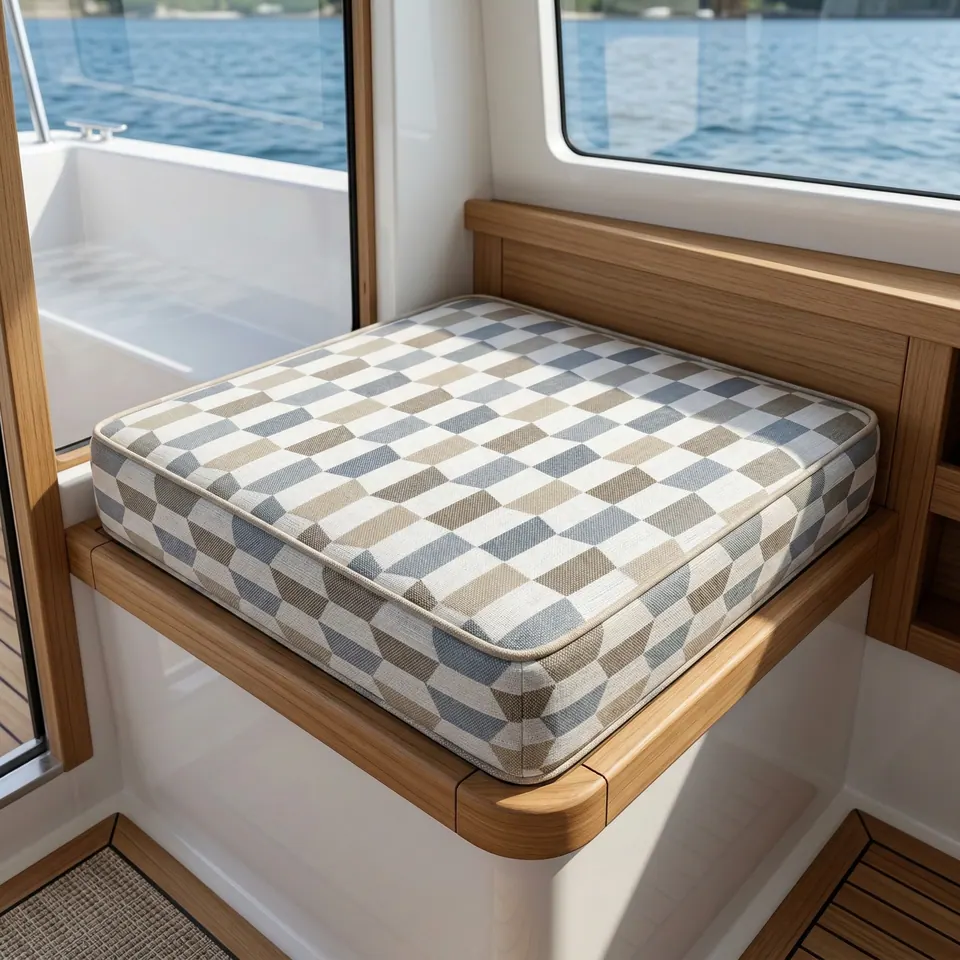
Corduroy and velvet can look alike in a photo. Ask for a close-up of the real cloth before you order.
Stop if it is tufted
A new cover will not sit properly over a buttoned cushion. Order a full new cushion in the exact shape instead; the tufted or plain notes explain why.

Have it made
Have this made — ask Élodie’s workshop
Describe the room at four in the afternoon: the floor, the wall, the one color you love. That is where a good fabric choice begins. — Élodie
Leave your details and the workshop will call you to confirm measurements, fabric, foam and piping. No prices, dates or payment on this page: it is a request, not an order.
With color and care — Élodie