A Reading by MaggieBench Cushions
A cream bouclé corner, and the order note that gets a custom bench cushion right the first time
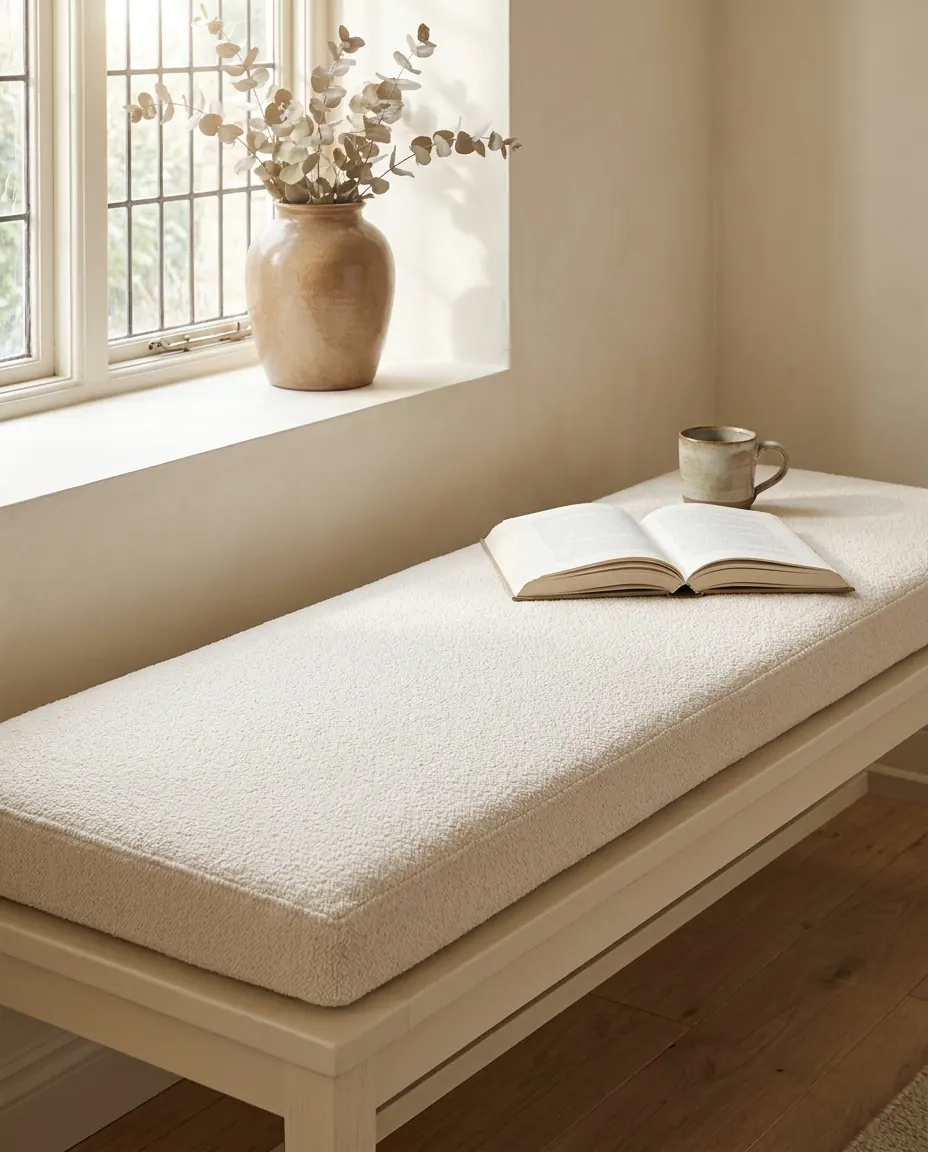
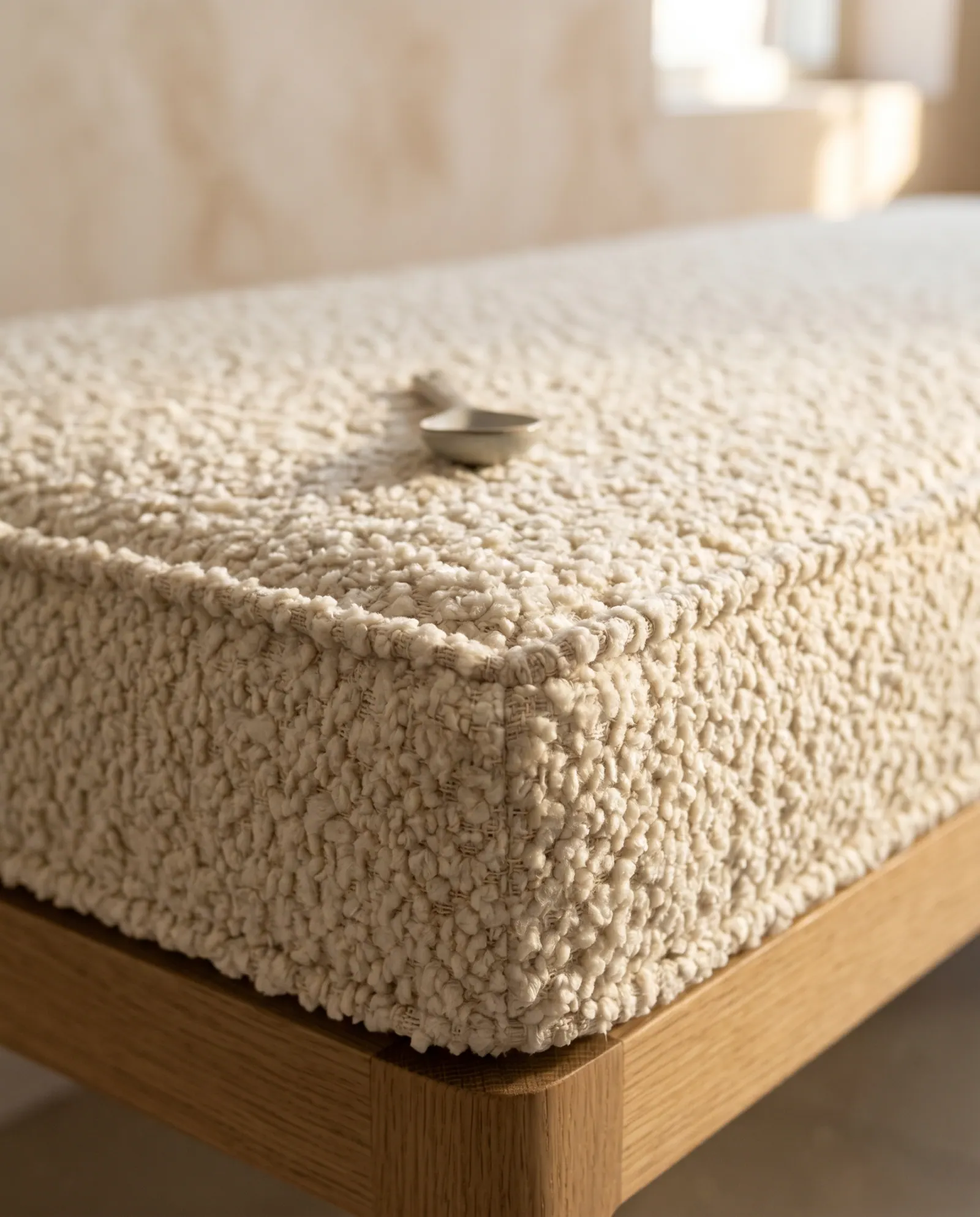
Maggie keeps a notebook of every order that ever went sideways. This macro of a self-piped bouclé corner opens a clean page: codes, swatches and the exact words to type.

 Save
The quick answer
To order a custom bench cushion right the first time, pick the size range your measurements fall into, then type the exact size, thickness and fabric code in the personalization box. The dropdown only sets the price. Confirm color from a daylight swatch or a written description of the code, and send a drawing for any shape that isn't a plain rectangle.
Notebook, page one: what a macro of a corner tells you
You could count the loops on this corner if you had the patience, and that is exactly why I like a macro better than a room shot when someone is deciding on a bouclé custom bench cushion.
The cushion is a box, and the piping is self piping: a cord covered in the same cream cloth. No contrast stripe, so the corner reads as one soft block. The boxing strip carries the loops around the turn at the same density as the top. If the side panel had come from a different run of cloth, you would see it here first.
The spoon isn't breakfast. It is a ruler you don't have to read, there so you can judge the size of the loops. The oak under it is sanded round on every edge, which matters: bouclé loops catch on raw timber. And the low gold side light is the harshest test a textured cream can get. If your bench sits by a west window, this is roughly how it will look at the end of the day.
I once approved an ivory from a phone photo. It arrived the color of weak tea. Right, then: I have kept an ordering notebook ever since, and page one says codes, not adjectives. A fabric code plus a written description of its undertone beats any screen, and a daylight swatch beats both. Read fabric swatches before ordering and what to write in the personalization note, then sketch your size in the bench cushion builder. What does your bench measure, to the quarter inch?
Pinned by Maggie: five marks on one corner
Five pins, from the self-piped corner to the rounded oak edge that keeps the loops from catching.
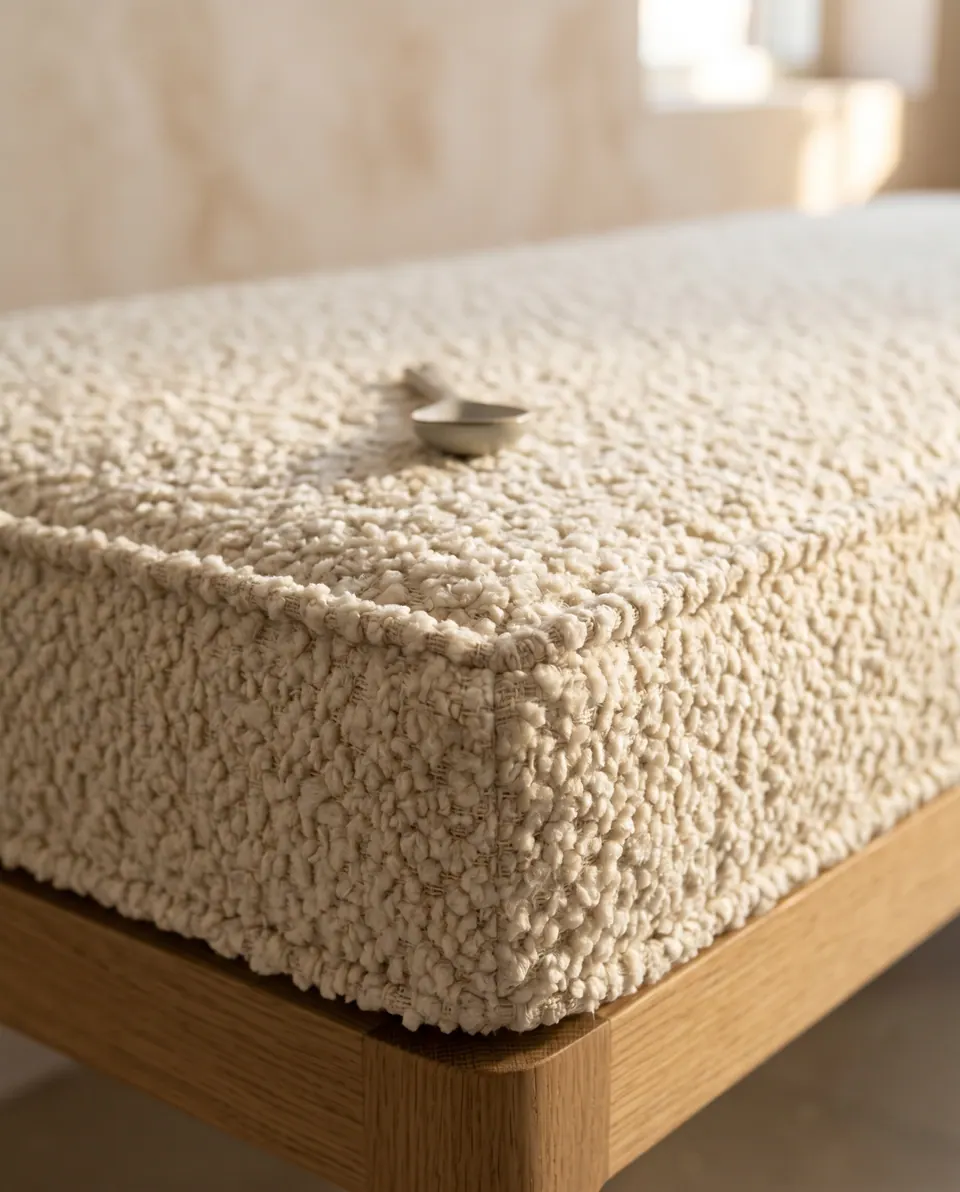
- Self-piped corner
A fabric-covered cord keeps the corner square without a contrasting stripe.
- Bouclé boxing strip
The side panel matches the top's loop density, so the box reads as one piece.
- Brushed steel spoon
A small object gives scale to the size of the loops.
- Rounded oak frame
Sanded, rounded edges avoid snagging bouclé loops.
- Side-lit texture
Low sun shows how the fabric will look in a west-facing room.
- Self-piped cornerA fabric-covered cord keeps the corner square without a contrasting stripe.
- Bouclé boxing stripThe side panel matches the top's loop density, so the box reads as one piece.
- Brushed steel spoonA small object gives scale to the size of the loops.
- Rounded oak frameSanded, rounded edges avoid snagging bouclé loops.
- Side-lit textureLow sun shows how the fabric will look in a west-facing room.
Fourteen feet of bay, and why it became two cushions
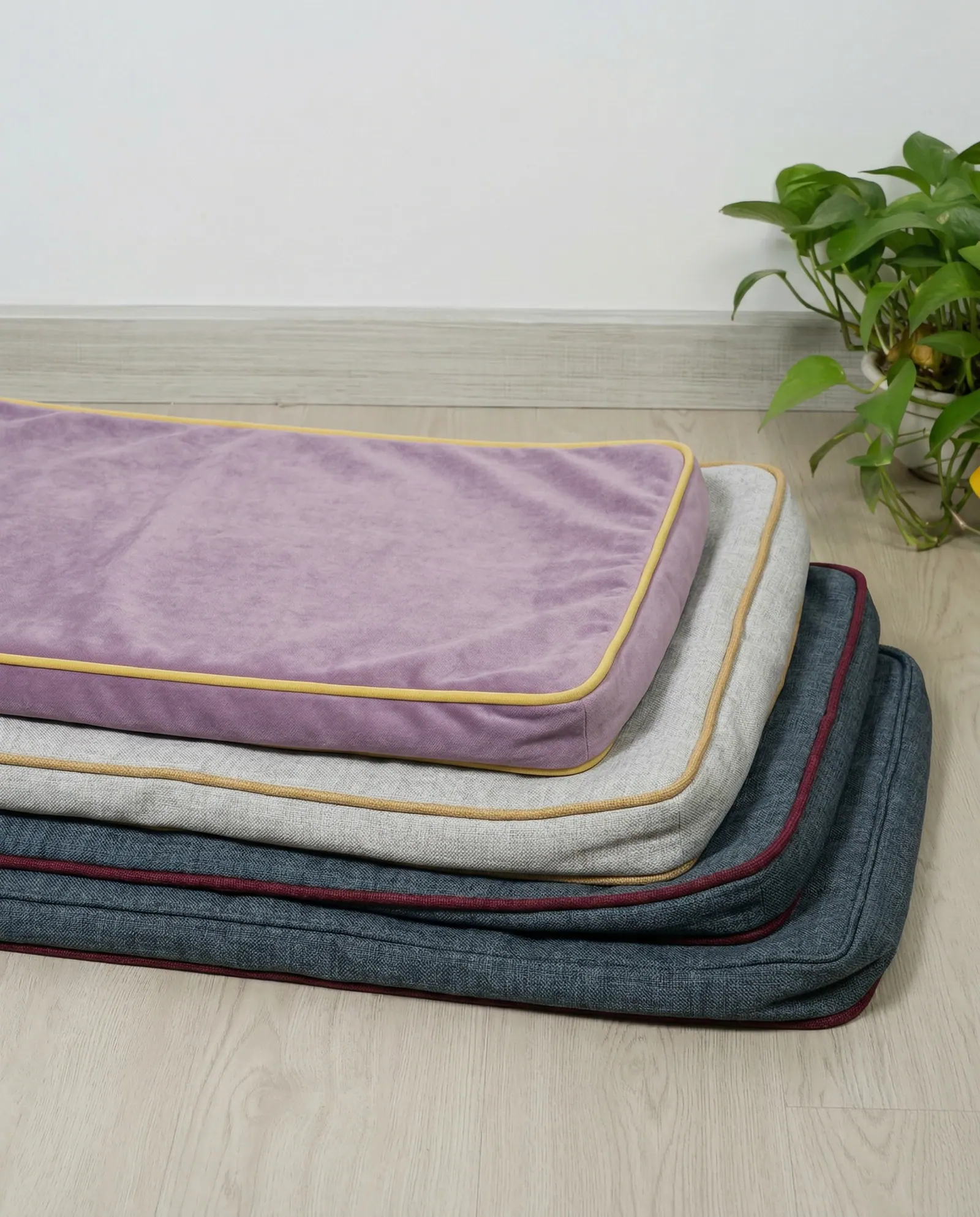
A buyer ordering for a relative sent a trapezoid that made me reach for a second cup of coffee: 8 ft 7 in (262 cm) along the top, 14 ft 10 1/2 in (453 cm) along the bottom, 29 in (74 cm) deep, 2 ft 6 in (76 cm) sides, and two angled corners of 11 in (28 cm) and 5 1/2 in (14 cm). Five inches (13 cm) thick, in linen 07, with matching or contrast piping.
The workshop's answer was two pieces, not one. At that length, two sections are more durable and far more practical to lift, turn and live with. The shop also asked for a sketch or a photo to confirm the angles before anyone unrolled the fabric.
The rule I copied into my notebook: split any bay cushion longer than about 90 in (230 cm), and decide whether the join falls at a corner or the midpoint before you order, not after. More long seats live in bench cushions, and the one piece or two pattern shows where joins work best.
The order note, line by line
- Exact size, length first, then depth: 67 1/2 x 20 in, not 'about 68 by 20'.
- Thickness in inches, even when it matches the default.
- Fabric code as printed on the chart, then the piping: self, a contrast code, or none.
- Shape: 'rectangle', or 'see drawing' with every edge labeled on the drawing.
- Number of pieces, and where any join falls on a long bay.
- One line about your light if color is critical: north window, west window, lamp-lit evenings.
On the cutting table: the cream corner
| Product | Box-edge bench cushion, rectangle |
|---|---|
| Fabric | Cream bouclé with dense, even loops |
| Piping | Self piping, cord covered in the same cream |
| Edge | Box, boxing strip matched to the top's loop density |
| Frame | Solid oak, every edge sanded round |
| Light test | Low west sun, the hardest light for a textured cream |
| Order note | Exact size, thickness, fabric code, piping choice |
| Best for | Entry benches, dining benches, calm Japandi rooms |

Have it made
Have this made — ask Maggie’s workshop
Have the tape measure handy when they call. Old cushions shrink and sag; the seat underneath does not. — Maggie
Leave your details and the workshop will call you to confirm measurements, fabric, foam and piping. No prices, dates or payment on this page: it is a request, not an order.
Buyer questions
- A common question
My bench needs 67 1/2 x 20 in and that isn't in the size menu. How do I order it?
The workshop's answerPick the size range your measurements fall into, because the dropdown only sets the price. Then write the exact size, thickness and fabric code in the Add Personalization box, and the cushion is made to exactly that. If you're unsure which range to choose, message your measurements and the shop will tell you.
- A common question
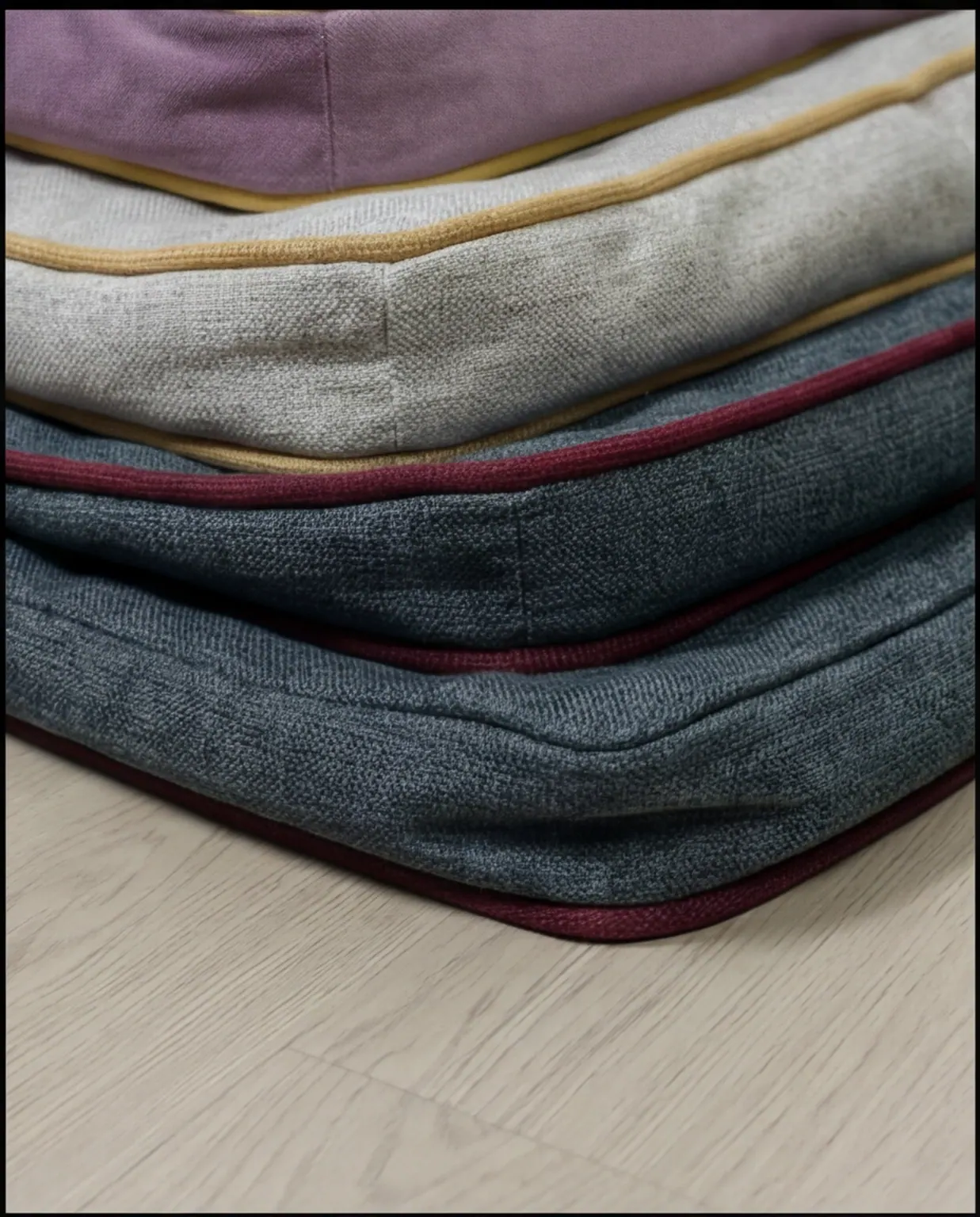
Is fabric T36 a gray-black, or does it lean blue?
The workshop's answerT36 is a charcoal mixed weave of black and gray yarns, with no blue undertone. In daylight it reads as a dark charcoal with a slightly textured, salt-and-pepper look.
- A common question
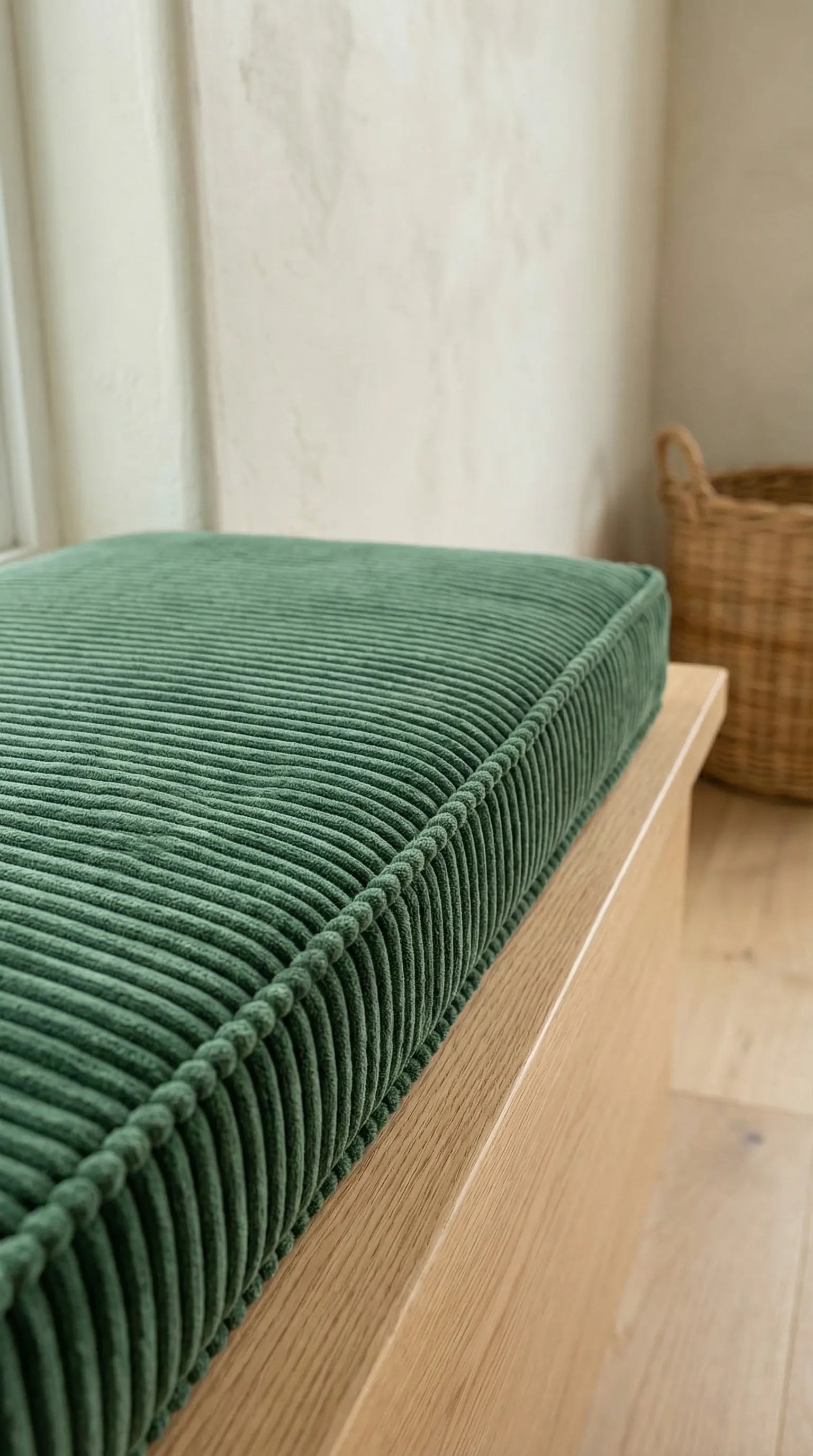
Could you make a floor cushion without tufting and a long bay window cushion, both in water-green corduroy?
The workshop's answerYes. Both can be made plain, without tufting, in water-green corduroy: for example about 24 3/8 x 117 3/4 in (62 x 299 cm) for the bay window and 39 3/8 x 39 3/8 in (100 x 100 cm) for the floor cushion.
On a bouclé box cushion, self piping keeps the corner square without a stripe, so the whole cushion reads as one soft cream block.
Maggie
Questions buyers ask next
Does bouclé hold a sharp corner on a box cushion?
It can, when the piping cord is covered in the same bouclé and the boxing strip matches the top's loop density. The cord gives the corner a firm line, and matching loops make the side and top read as one piece.
Why does a bouclé cushion need a smooth bench frame?
Bouclé is made of small loops, and loops catch on rough or splintered timber. A frame with sanded, rounded edges, like the oak in this photo, lets the cushion slide on and off without pulling threads.
Should a bay cushion longer than 90 inches be made in one piece?
Usually not. Past about 90 in (230 cm), two sections joined at a corner or the midpoint are more durable and much easier to lift, turn and cover. Decide where the join sits before ordering.
How can I judge a fabric color without holding a swatch?
Ask for the fabric code and a written description of its undertone, then check it in daylight. A code such as T36, described as charcoal with no blue, tells you more than a photo on a phone screen.
Stitch straight — Maggie
More photographs to read
 Save
 Save
 Save
 Save
 Save
 Save