CushionGuide

A Reading by NateWindow Seat Cushions

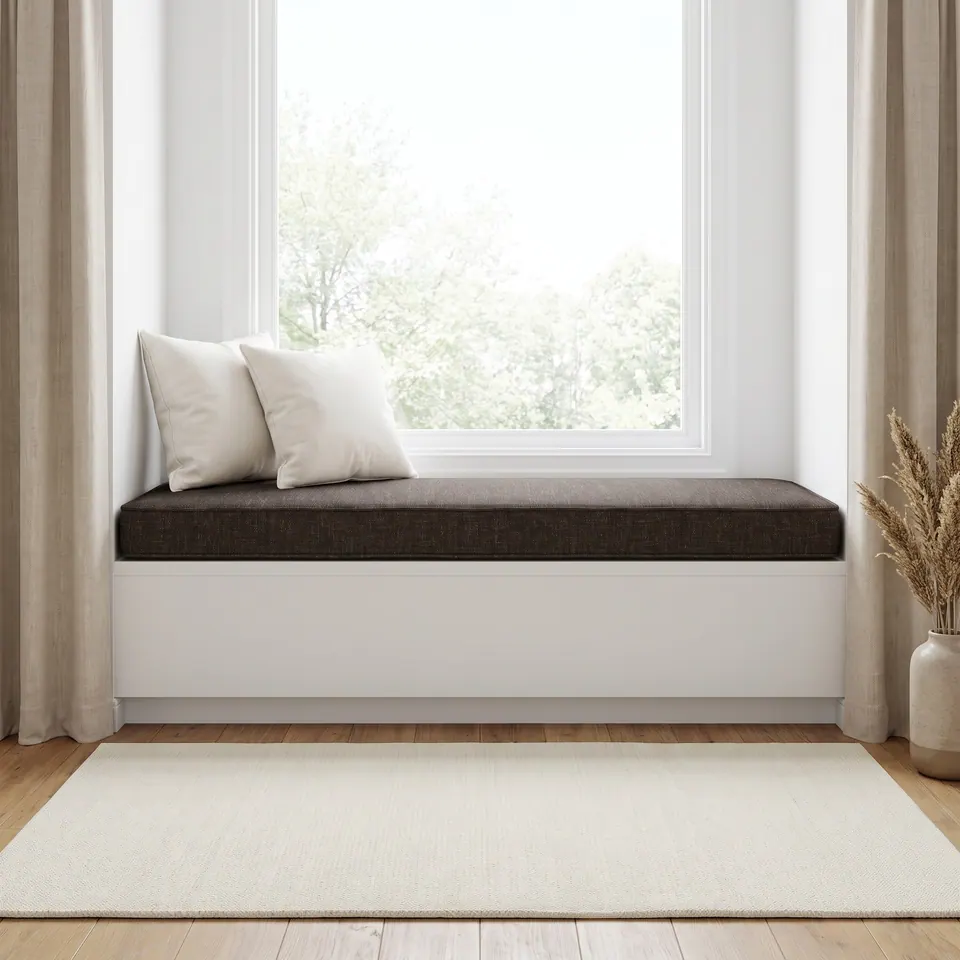
An antique gold window seat cushion, cut around a plaster pier for long days of sitting

Office notes, partner. One window wall, one plaster pier in the middle of it, and a cushion that turns a split bench into a single long seat for reading between calls.

The quick answer

A window seat cushion for long sitting should run the full bench, be notched around any pier or post, and stay near desk-chair height rather than sofa-soft. Thickness comes in 2, 3, 4 or 5 in (5 to 12.5 cm). For a bench that doubles as a work seat, pair a tight, nubby weave with 32 kg/m³ high-density foam.

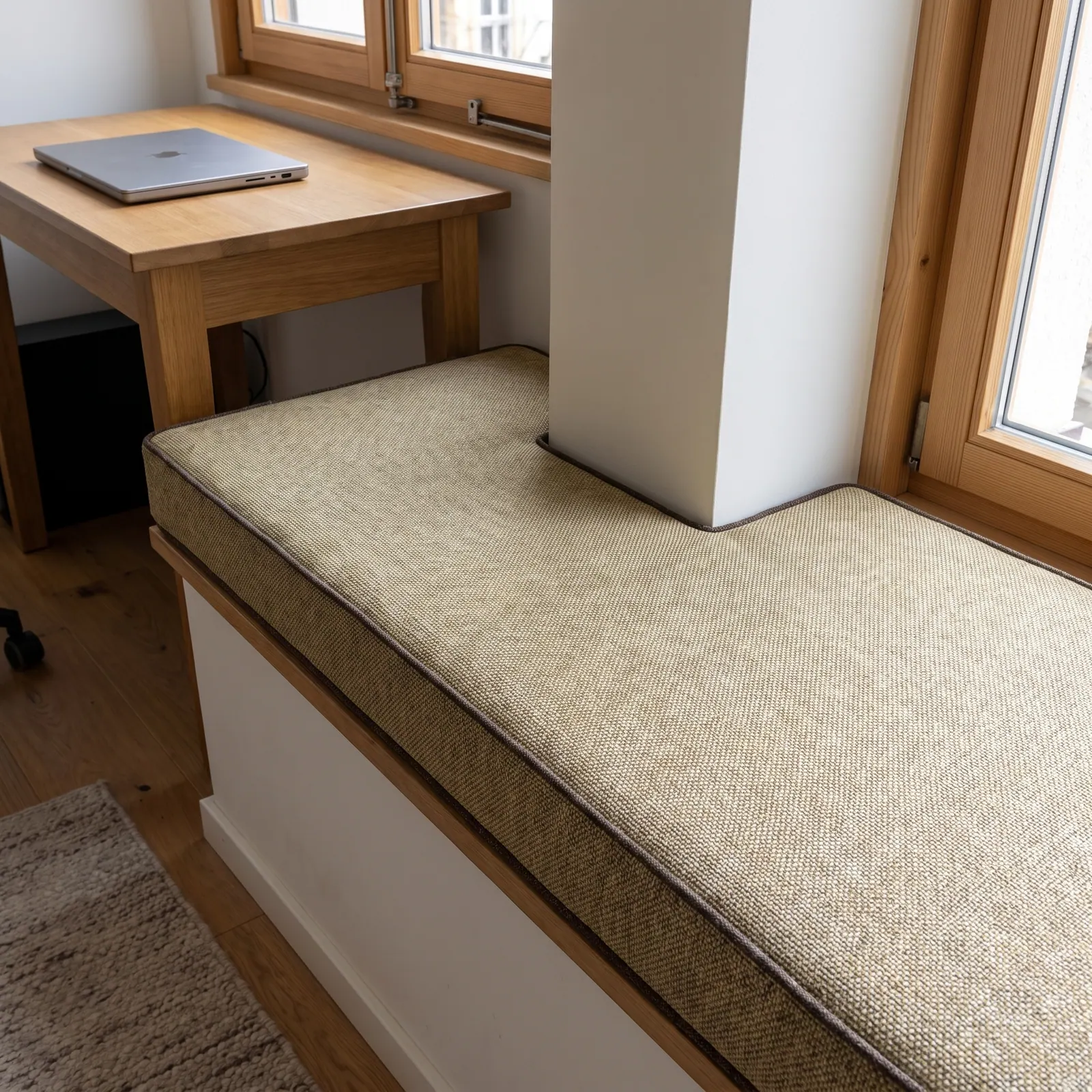
Antique gold basket-weave window bench cushion with chocolate piping, notched around a plaster pier in a home officeSave
In a home office, an antique gold cushion wraps a plaster pier so the window bench works as one long seat.
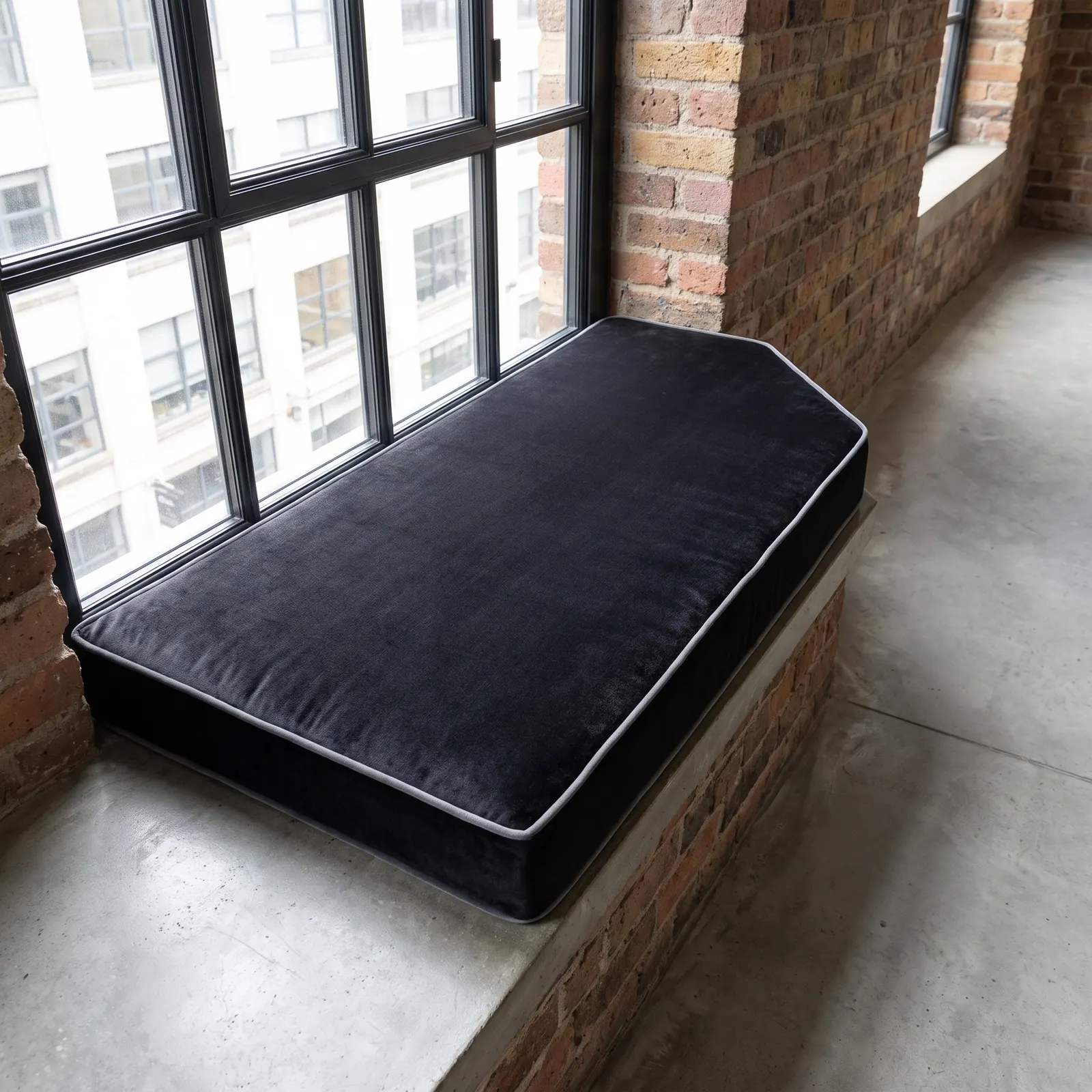
Black velvet box cushion with cool gray piping and a clipped corner on a concrete window ledge in an exposed brick loftSave
Black velvet and gray piping against steel windows and raw brick: a seat that suits an industrial loft.
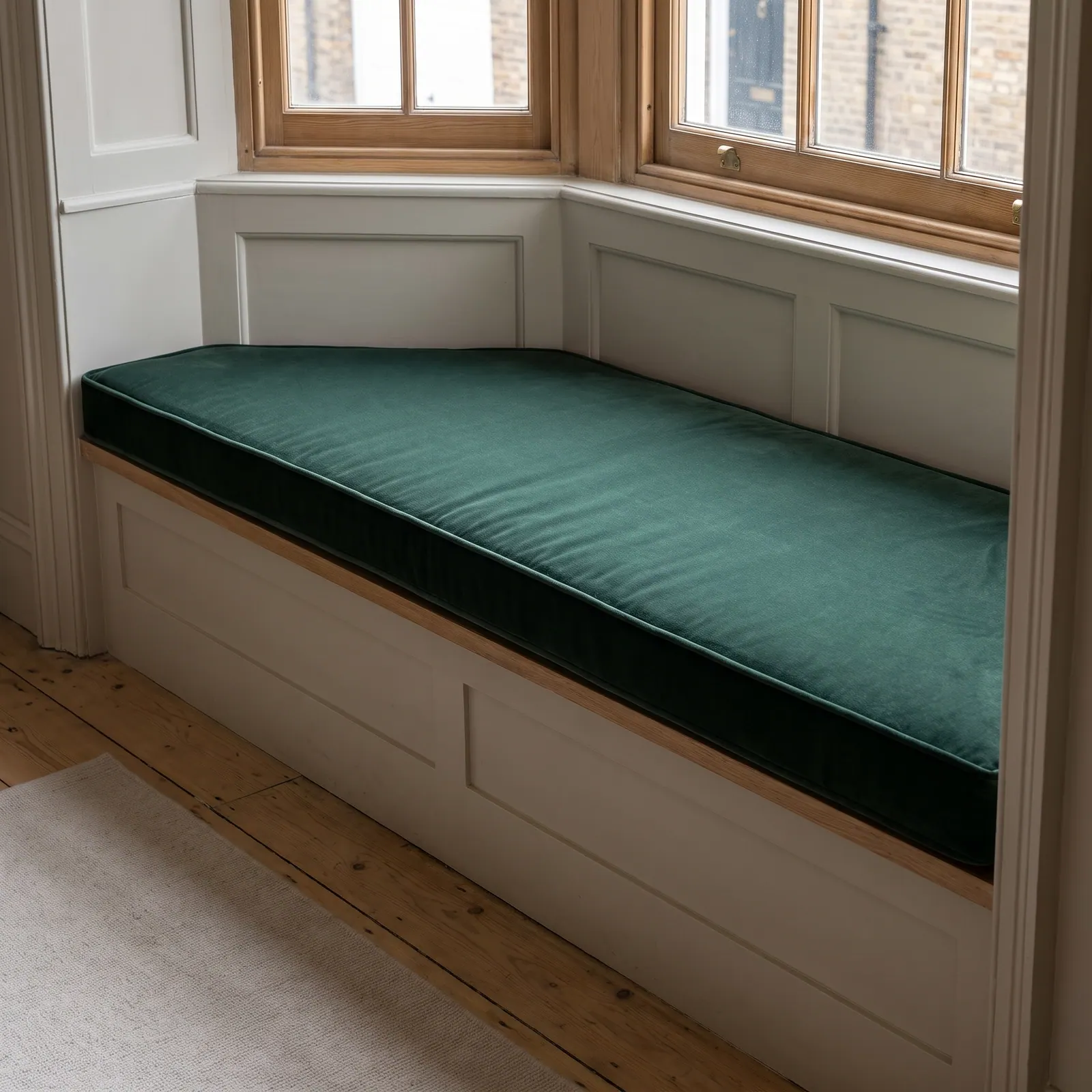
Forest green velvet window seat cushion with self piping and an angled end on a paneled bay seat with oak sash windowsSave
Self-piped green velvet keeps the look monochrome and quiet against oak window frames and painted paneling.
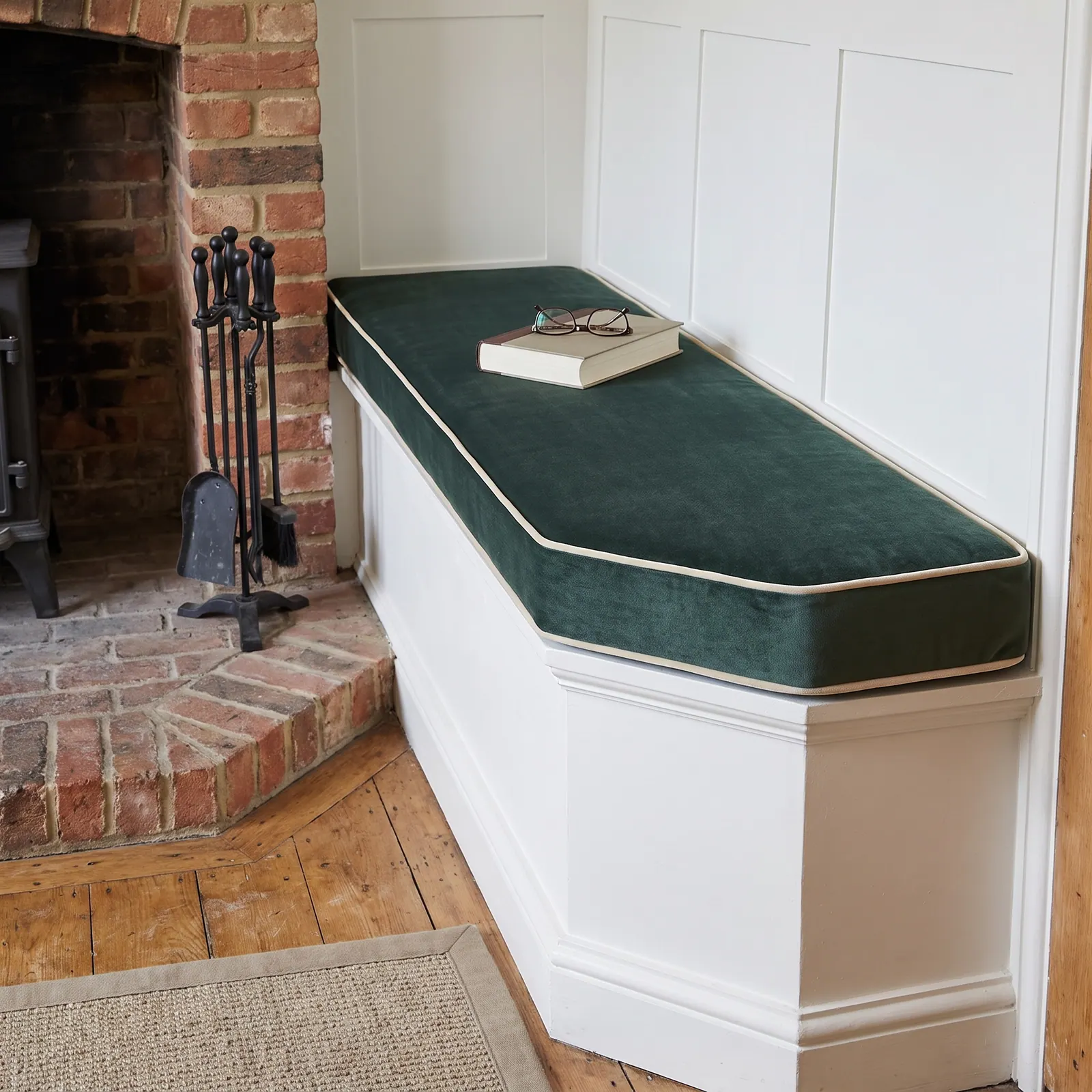
Forest green velvet bench cushion with cream piping and an angled end on a paneled seat beside a brick inglenookSave
A fireside seat cut with a slanted end to follow the angled joinery, with a book and glasses waiting.
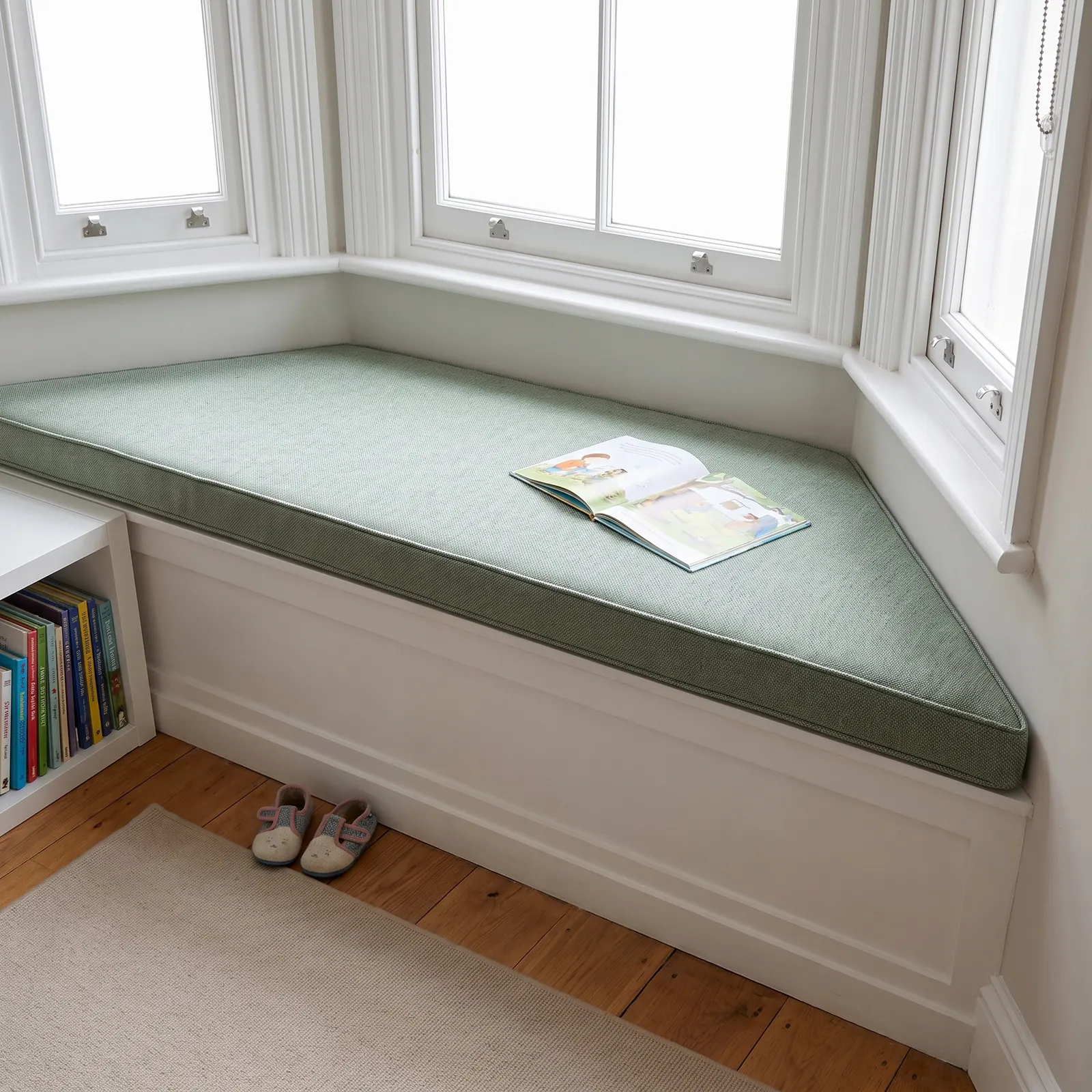
Sage green linen-look angled window seat cushion with self piping in a child's bay window, open picture book and slippersSave
A sage cushion cut to the bay angle makes a reading perch in a child's room, with books kept low and within reach.
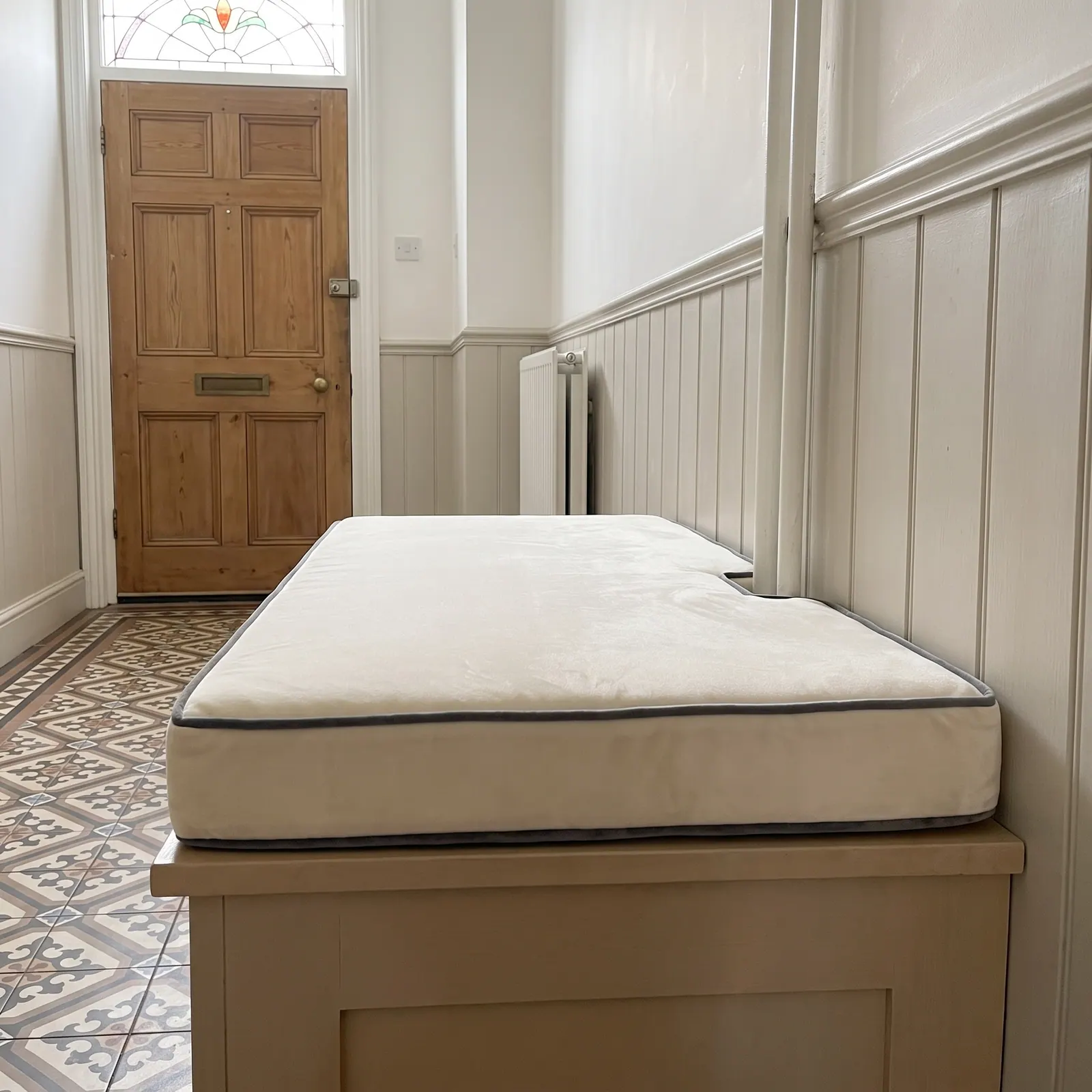
Cream velvet hallway bench cushion with graphite piping, notched for a pipe box above a Victorian tiled floorSave
In a tiled Victorian hall, a cream velvet cushion is cut around a boxed-in pipe so it sits tight to the wall. Graphite piping picks up the gray in the floor tiles.
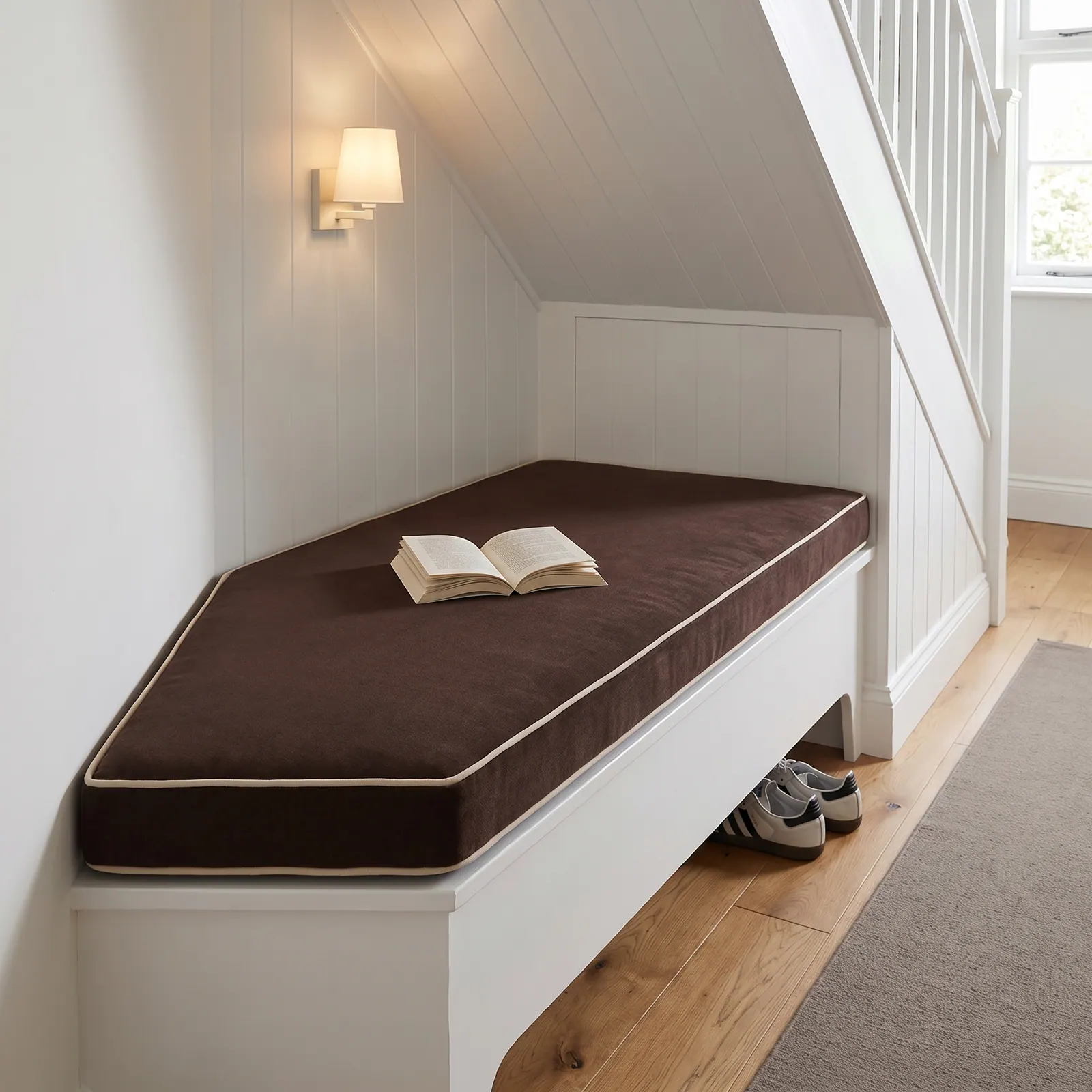
Chocolate brown angled bench cushion with ivory piping on a white understairs seat with a wall lamp and open bookSave
An angled end follows the shape of the bench under the stairs, turning a dead corner into a lit reading spot.

One piece past the pier, not two short seats

The window wall has a plaster pier in the middle. Most benches under a wall like that end up as two short seats, each too short to stretch out on. This one runs through. The cushion is notched where the pier meets the bench, so a single piece carries on past it on both sides.

That notch is the whole reading. A notch is three numbers: width, depth, and where it starts along the edge. Get all three right and the cushion sits tight to the plaster, with no gap to swallow pens. The notched cushion Pattern takes each one in turn, and notched window seats shows more walls like this.

Next, height. The desk shares the window wall, so the bench is the second place to work. A pad as thick as a sofa seat would put you too high for the desk. This one is slim and boxed, which keeps your knees near desk-chair height. Check your numbers in the seat height calculator before you pick a thickness.

The color is antique gold, set between oak frames and white plaster. The chocolate contrast piping picks up the oak and keeps a light weave from looking washed out in flat office daylight. The basket-weave face is tight and nubby. When a bench also takes bags and paper stacks, a flat, dense weave shrugs off the traffic.

The props are working props: a laptop on the oak desk, a chair castor on the oatmeal rug. Nothing sits on the seat, because the seat is for sitting.

What stands in the middle of your window wall?

Pinned by Nate: five readings off one photo

Five pins, from the notch at the pier to the oak frames that set the palette.
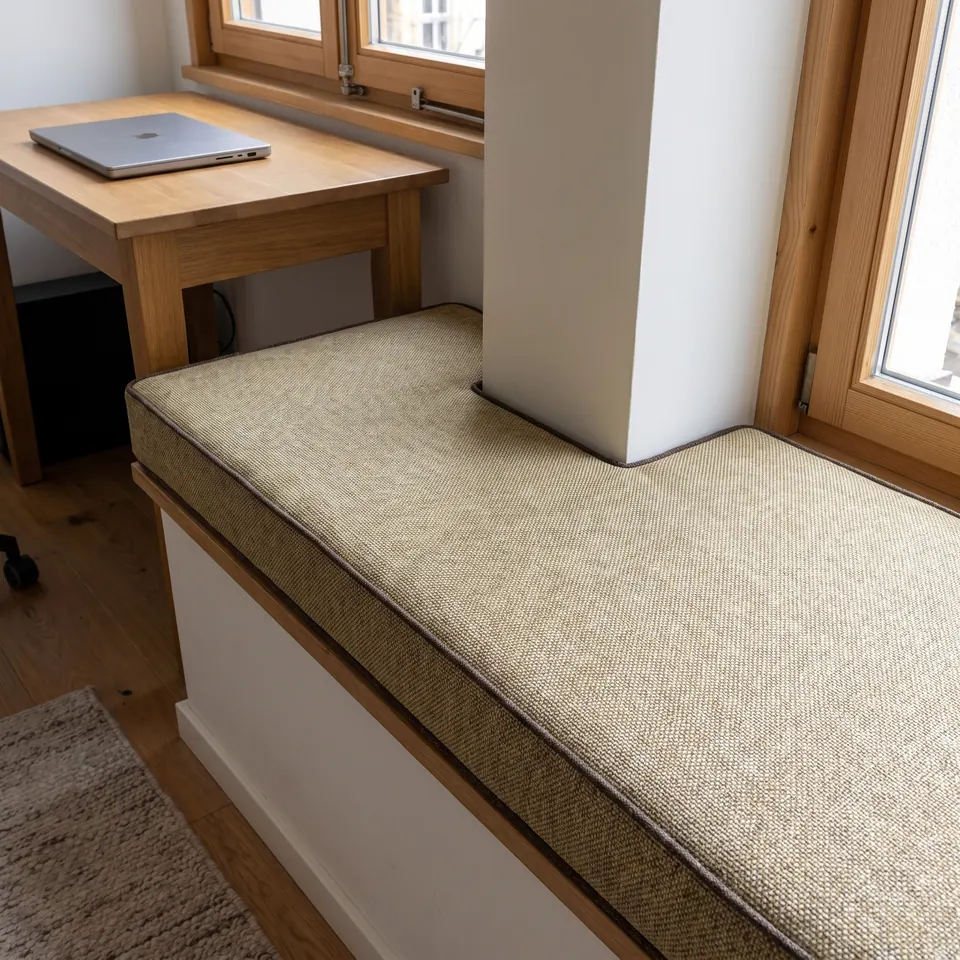
Pinned: Antique gold basket-weave window bench cushion with chocolate piping, notched around a plaster pier in a home office
  1. Cut-out around pier

    The cushion is notched where the plaster pier meets the bench, so one piece runs on both sides.

  2. Chocolate piping

    Dark welt matches the oak window frames and keeps a light gold weave from looking washed out.

  3. Basket-weave texture

    A tight, nubby weave copes with daily use as an overflow seat in a work room.

  4. Laptop on oak desk

    The desk shares the window wall, so the bench becomes a second place to work or read.

  5. Oak window frames

    Warm frames set the palette; the gold cushion sits between them and the white walls.

  1. Cut-out around pierThe cushion is notched where the plaster pier meets the bench, so one piece runs on both sides.
  2. Chocolate pipingDark welt matches the oak window frames and keeps a light gold weave from looking washed out.
  3. Basket-weave textureA tight, nubby weave copes with daily use as an overflow seat in a work room.
  4. Laptop on oak deskThe desk shares the window wall, so the bench becomes a second place to work or read.
  5. Oak window framesWarm frames set the palette; the gold cushion sits between them and the white walls.

The long-sitting checklist, in order

  1. Measure the bench, then every notch: width, depth, and position along the edge.
  2. Draw the shape on paper with each edge labeled. The workshop sends back its own diagram to confirm before cutting.
  3. Pick thickness from 2, 3, 4 or 5 in (5 to 12.5 cm) against your desk height, not against your sofa.
  4. For a daily work seat, choose a tight weave over a pile, and keep the standard about 2.0 lb/ft³ (32 kg/m³) high-density foam.
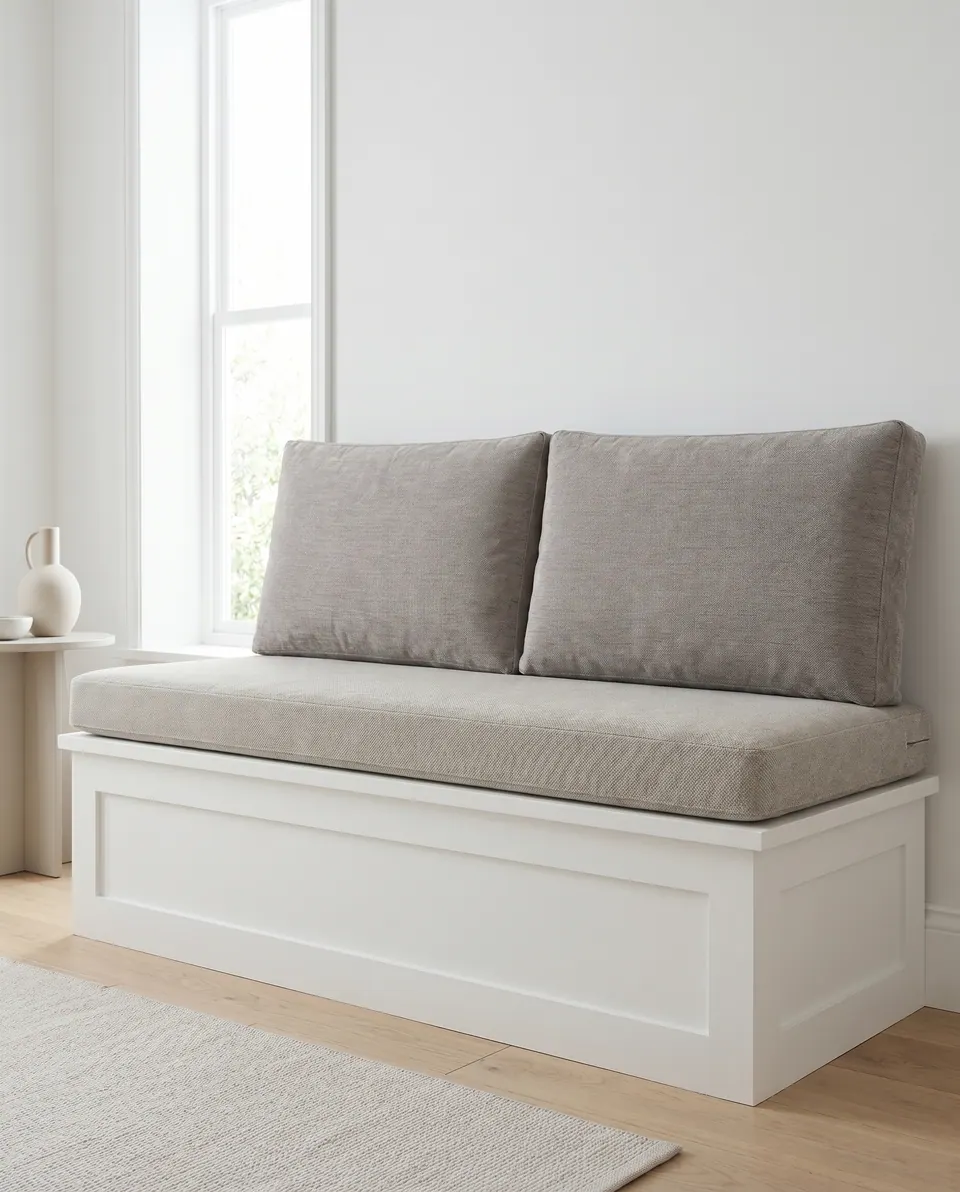
  5. Want something to lean on? A back cushion hangs on the wall with hook-and-loop, one side sewn on, the other fixed to the wall.

A real project

Two rental benches and a fabric swap

A buyer got in touch about two big bench seats in a rental: 27½ x 63 in and 27½ x 69 in (70 x 160 cm and 70 x 175 cm), in a corduroy with piping. When the boxes were opened, the fabric had split along the ribs, and the cushions looked flatter than in the photos.

Two separate problems. Flat was the packing: compressed cushions need time to fill out. The split was the cloth. The workshop asked whether the parcel might have been cut open by accident, then remade the covers free in linen, which the buyer preferred for a rental anyway.

Corduroy is lovely under a hand and less lovely under a string of tenants. For hard-use seats, start from linen or a performance weave.

Sizes
27½ x 63 in and 27½ x 69 in (70 x 160 cm and 70 x 175 cm)

The lesson: For hard-use or rental settings, pick linen or another performance fabric over corduroy.

Buyer questions: notches, backrests and contract specs

  1. A common question

    Can you make cushions for a commercial space with 28 kg/m³ foam and 40,000 Martindale fabric?

    The workshop's answer

    Yes. Contract-grade fabrics rated 40,000 Martindale are available for heavy commercial use, and the standard foam already beats the request: 32 kg/m³ high-density foam at the same price, which holds its shape longer under constant daily use. For a proposal, send the number of cushions, their sizes and the kind of space.

  2. A common question

    How do I fix a cushion to the wall so it works as a backrest?

    The workshop's answer

    With hook-and-loop fastener. The workshop sews one side onto the back of the cushion, and you fix the matching side to the wall with strong adhesive, or with screws for a firmer hold. The cushion presses on and peels off for cleaning.

  3. A common question

    My window seat has small notches at the ends. How should I send the measurements?

    The workshop's answer

    Draw the cushion shape on paper and measure every edge, including each notch's width, depth and position along the edge. The workshop then draws its own diagram for you to confirm before cutting. One seat came out as 87 in along the window edge, 84.5 in on the opposite edge, 1.25 x 2 in notches at both ends, and the depth dropping to 16 in at the ends.

A window seat cushion notched around a pier needs three numbers per notch: how wide, how deep, and where the notch starts along the edge.

Nate

On the cutting table: the office window bench

CushionWindow seat cushion, one piece, notched around a plaster pier
FabricAntique gold linen-look basket weave, tight and nubby
PipingContrast, chocolate brown, matched to the oak window frames
EdgeBoxed
ThicknessSlim; 2, 3, 4 or 5 in (5 to 12.5 cm), chosen against desk height
FoamHigh-density, about 2.0 lb/ft³ (32 kg/m³), standard
NotchWidth, depth and position along the edge, confirmed on a diagram
Backrest optionWall-hung back cushion on hook-and-loop
Best forA home office bench that doubles as a reading seat

Order this cushion

Have it made

Have this made — ask Nate’s workshop

Send the numbers in inches: length × depth × thickness, plus any angle. The workshop checks them with you, because foam has no undo button. — Nate

Leave your details and the workshop will call you to confirm measurements, fabric, foam and piping. No prices, dates or payment on this page: it is a request, not an order.

Fabric · Foam · Pipingwhat the workshop will confirm with you

Fabric
Antique gold linen-look basket weave, tight and nubby
Foam
High-density, about 2.0 lb/ft³ (32 kg/m³), standard
Piping
Contrast, chocolate brown, matched to the oak window frames
Only for this request: no marketing calls or texts. Outside the US, add the country code.
In inches: length × depth × thickness, plus any angles or cut corners.

* Required. A member of the workshop team will call you to talk it through; nothing is charged and nothing is made until you have agreed on every detail with them.

We use these details only to answer this request and make your cushion: your name and contact details, the cushion details and photos you send, the page you came from and the ad or link that brought you, if any. The workshop that makes the cushions receives them. We don't sell them or share them for advertising, and we delete requests after 24 months. Privacy notice for requests.

Nothing is made or charged until you approve the details.

Want to pick the shape and add photos? Use the full quote form

Questions buyers ask next

How thick should a window seat cushion be for reading and working?

Thinner than a sofa seat. Thickness comes in 2, 3, 4 and 5 in (5 to 12.5 cm). If the bench shares a wall with a desk, choose the thickness that keeps your seat near desk-chair height; the seat height calculator does the arithmetic for you.

Can one cushion wrap around a pier or post?

Yes. The cushion is cut with a notch where the pier meets the bench, so one piece runs on both sides. Measure the notch's width, depth and position along the edge, then confirm the workshop's diagram before anything is cut.

Is corduroy a good choice for a window seat in a rental?

It is soft, but for hard-use or rental seating the workshop steers buyers toward linen or performance fabrics. In one real case, corduroy covers on two large bench seats were remade in linen, which the buyer preferred for durability.

What foam goes into a window seat cushion that gets used every day?

The standard is about 2.0 lb/ft³ (32 kg/m³) high-density foam, which holds its shape longer under constant daily use. Commercial buyers who asked for 28 kg/m³ foam were given the denser 32 kg/m³ at no extra cost.

± 1/4 in — Nate