The Cutting Table · a question, worked through
Does the back cushion stand up on its own, or does it need a wall?
A backrest is a cushion that leans. What it leans on is the question to settle before you order.
Pinned by Harlan
The quick answer
A standard back cushion needs something solid behind it: it leans against a wall or the back of a cabinet, so it is sized to your wall or floor plan. For floor cushion sets with no wall behind, the workshop can include metal frames free of charge so the backrest stands on its own, or build a wooden back frame on request.
Get a quote for a floor cushion
Key facts
- Standard backrests are not freestanding.
- Backrests lean against a wall or the back of a cabinet.
- Backrests are sized to your wall or floor plan.
- A back cushion can rest directly on the wall above a backless bench.
- Metal frames can be included free so a floor-cushion backrest stands on its own.
- A wooden back-frame version is available on request.
Have it made
Have Harlan’s workshop cut this for you
Fabric has a temper and foam has a memory. Better to settle both in a conversation than to guess at them alone. — Harlan
Leave your details and the workshop will call you to confirm measurements, fabric, foam and piping. No prices, dates or payment on this page: it is a request, not an order.
"So it just leans?"
It does, my friend. A standard backrest is foam or soft fill in a sewn cover, not a piece of furniture. Set one on a floor cushion in the middle of a room and it tips, slowly, the way a tired man leans on a doorframe.
That's why the shop asks where your wall is and sizes the back to your wall or floor plan. Against a wall or the back of a cabinet, a backrest cushion sits straight and stays put.
"My bench has no back. Can the cushion lean on the wall?"
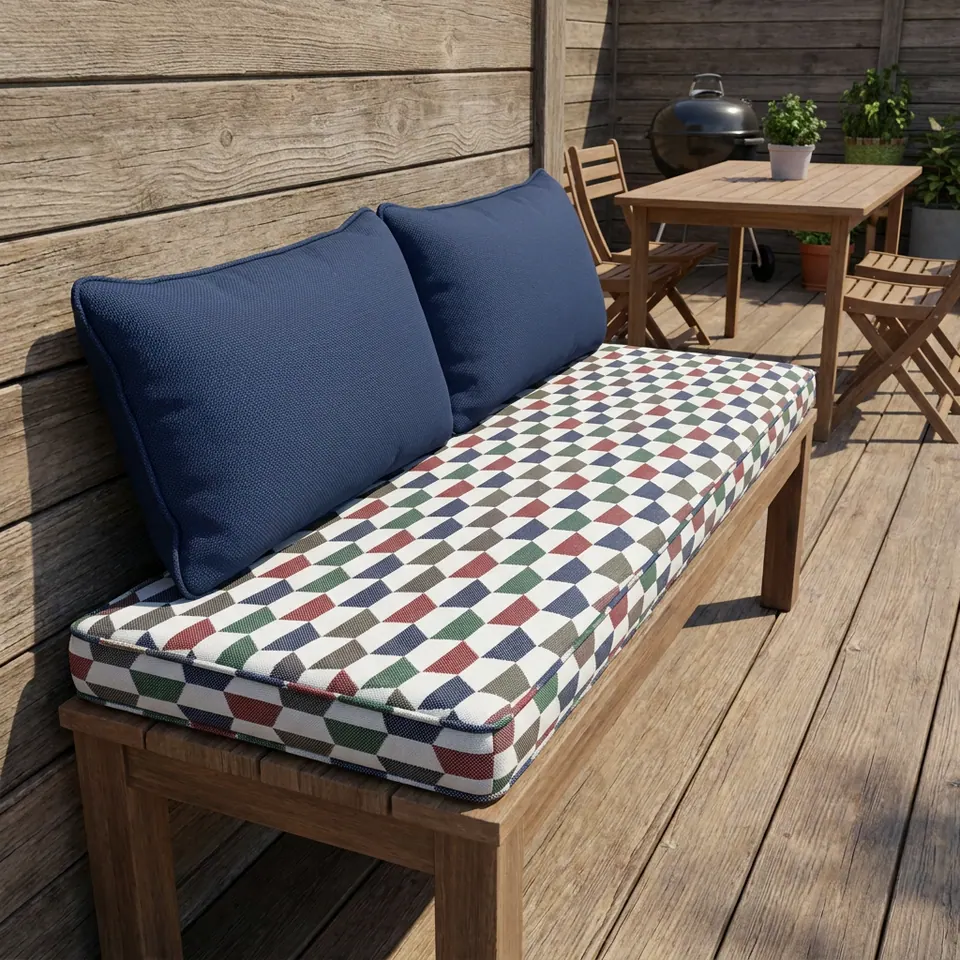
Yes, and that is the simplest arrangement there is. A buyer in the US had a bench in the corner of a room, 25 x 74 in (64 x 188 cm), with no backrest of its own. The shop made the seat, a back cushion and arm pillows, and the back cushion rests directly on the wall.
If you want it fixed in place, hook-and-loop tape does it: one side sewn to the cushion, the other fixed to the wall with adhesive or screws.
"And a floor set in the middle of the room?"
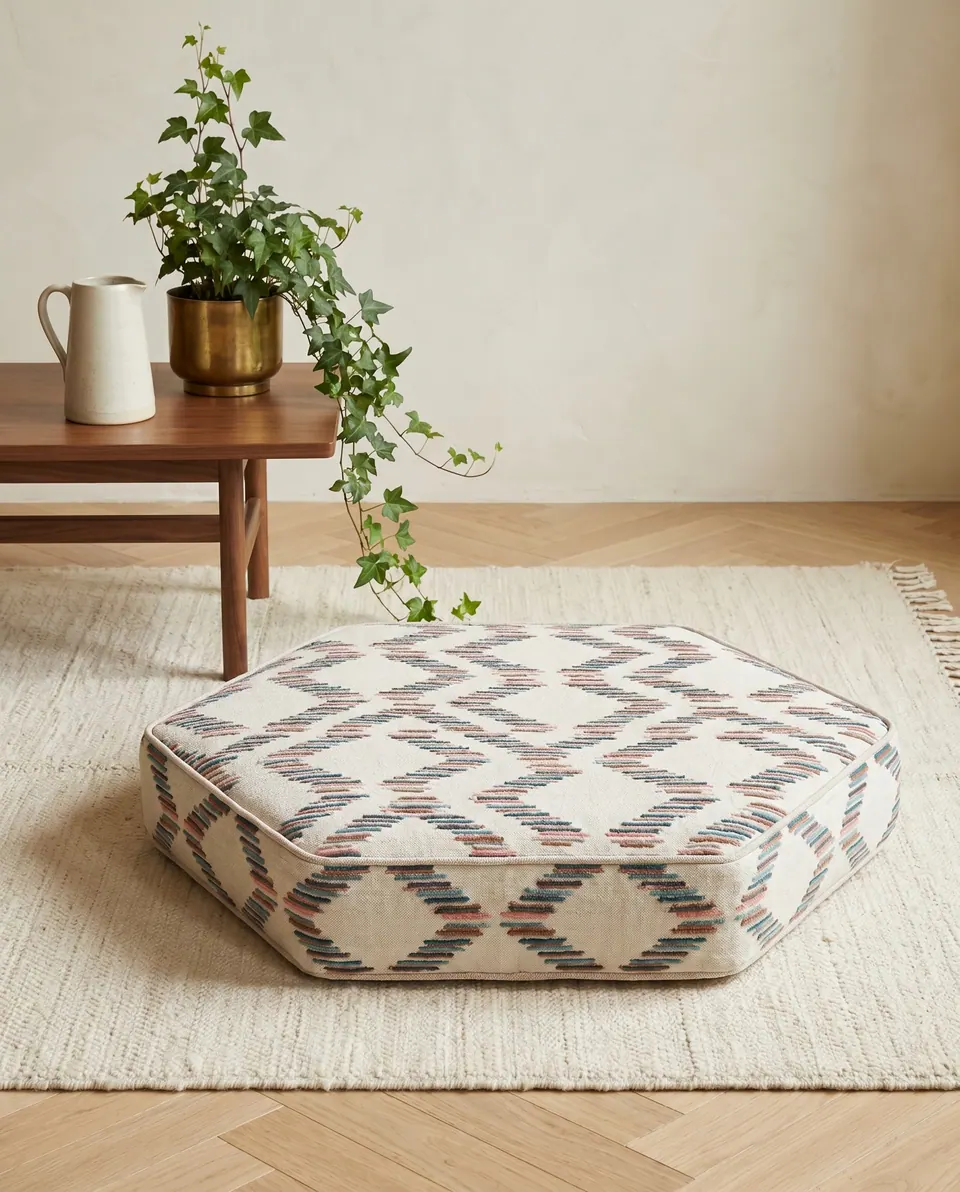
Then it needs a backbone of its own. For floor cushion sets with no wall behind them, the shop can include metal frames with the order, free of charge, so the backrest stands up by itself. For something sturdier to look at, a back-supported version with a wooden back frame can be made on request.
Modular floor sofas are a different animal; they come with their own metal bars. Buy the cushion once, cry once: settle the wall question first. The upright backs Pattern has more. What's behind your seat, a wall or open floor?
Four ways a backrest gets held up
| Setup | What holds the back up | Notes |
|---|---|---|
| Bench or floor set against a wall | The wall or a cabinet back | Sized to your wall; hook-and-loop can fix it in place |
| Floor cushion set with no wall | Metal frames | Included free of charge on request |
| Floor set wanting a firmer look | A wooden back frame | Made on request |
| Modular floor sofa | Its own metal bars | Part of the sofa |
A standard back cushion isn't freestanding: it leans on a wall or cabinet, and a floor set with no wall behind it needs a metal or wooden frame.
Harlan
Buyer questions
- A common question
How does the backrest of a tufted floor cushion stay up with no wall behind it?
The workshop's answerThe workshop can include metal frames with the order, free of charge, so the backrest stands on its own.
- A common question
Is the floor sofa set freestanding, or does it need a wall?
The workshop's answerStandard floor cushion sets have no back-support system, so the backrest leans on a wall or something solid. A back-supported version, such as one with a wooden back frame, can be made on request.
- A common question
How do I fix a back cushion to the wall?
The workshop's answerWith hook-and-loop: the workshop sews one side to the cushion and you fix the other to the wall with adhesive or screws. Cushions can also hang from a rod on sewn-on fabric loops.
- A common question
Should the back cushion be foam or pillow-soft?
The workshop's answerEither. Foam backs hold their shape better, suit outdoor use and stay put when wedge-shaped; pillow backs are softer, cheaper and more relaxed. A firm foam seat pairs well with a softer pillow back.
Questions buyers ask next
How tall are back cushions on a built-in bench?
One breakfast-nook build used separate back rectangles 18 in (46 cm) tall and 3 in (7.6 cm) deep, split into pieces along long walls. Send each back section's size and the workshop cuts the pieces to match the seat runs.
Can a back cushion work as a soft headboard?
Yes, as a soft one. The workshop makes foam-filled backrests about 4 in (10 cm) thick that attach with hook-and-loop, adhesive, rod loops or corner ties. A rigid board inside or a French cleat usually isn't offered.
Do metal frames cost extra with a floor cushion set?
No. For floor cushion sets with no wall behind them, the workshop has offered to include metal frames free of charge so the backrest stands on its own. Say in your order note that there's no wall, so the frames go in the box.