A Reading by CallumBench Cushions
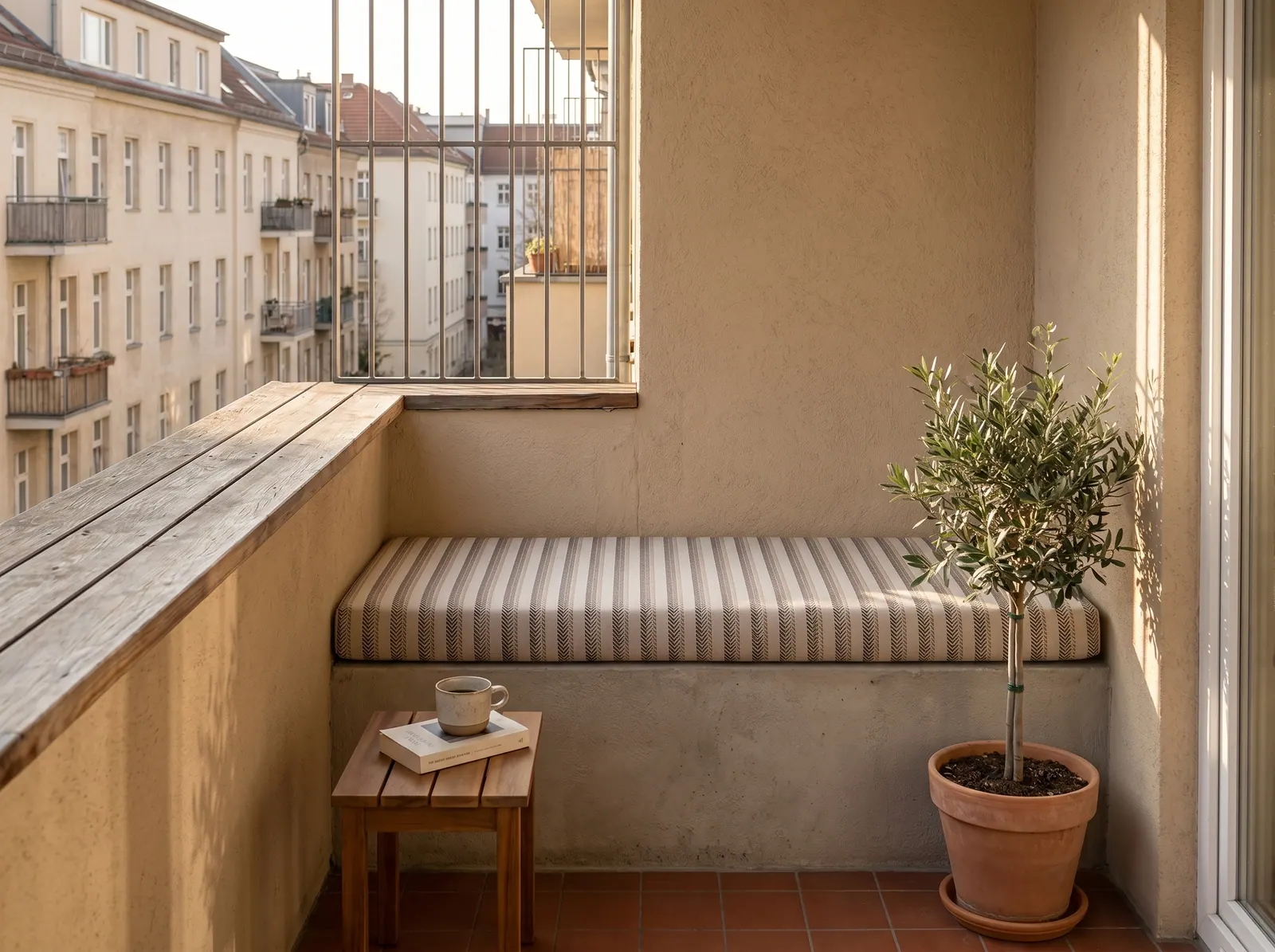
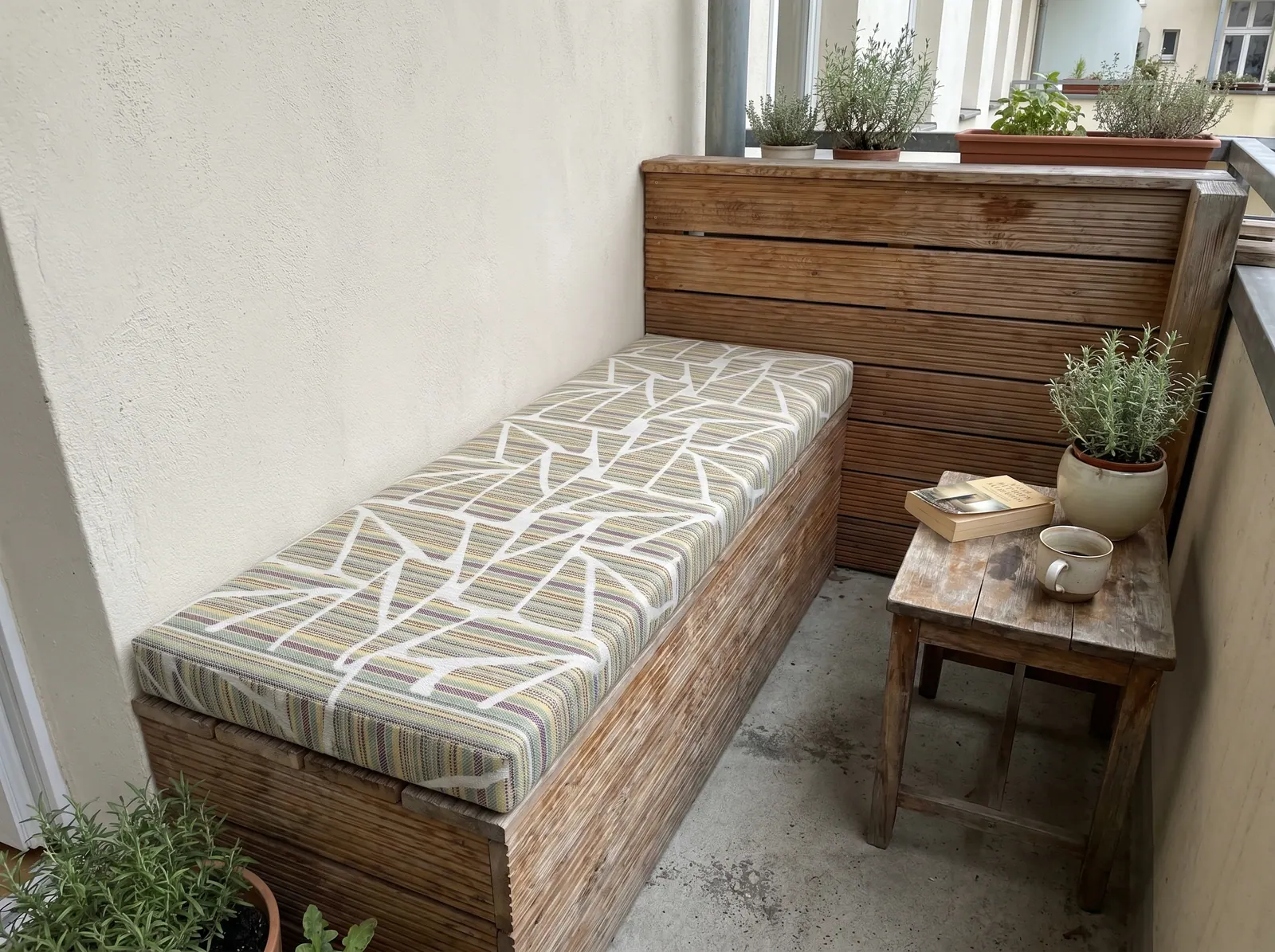
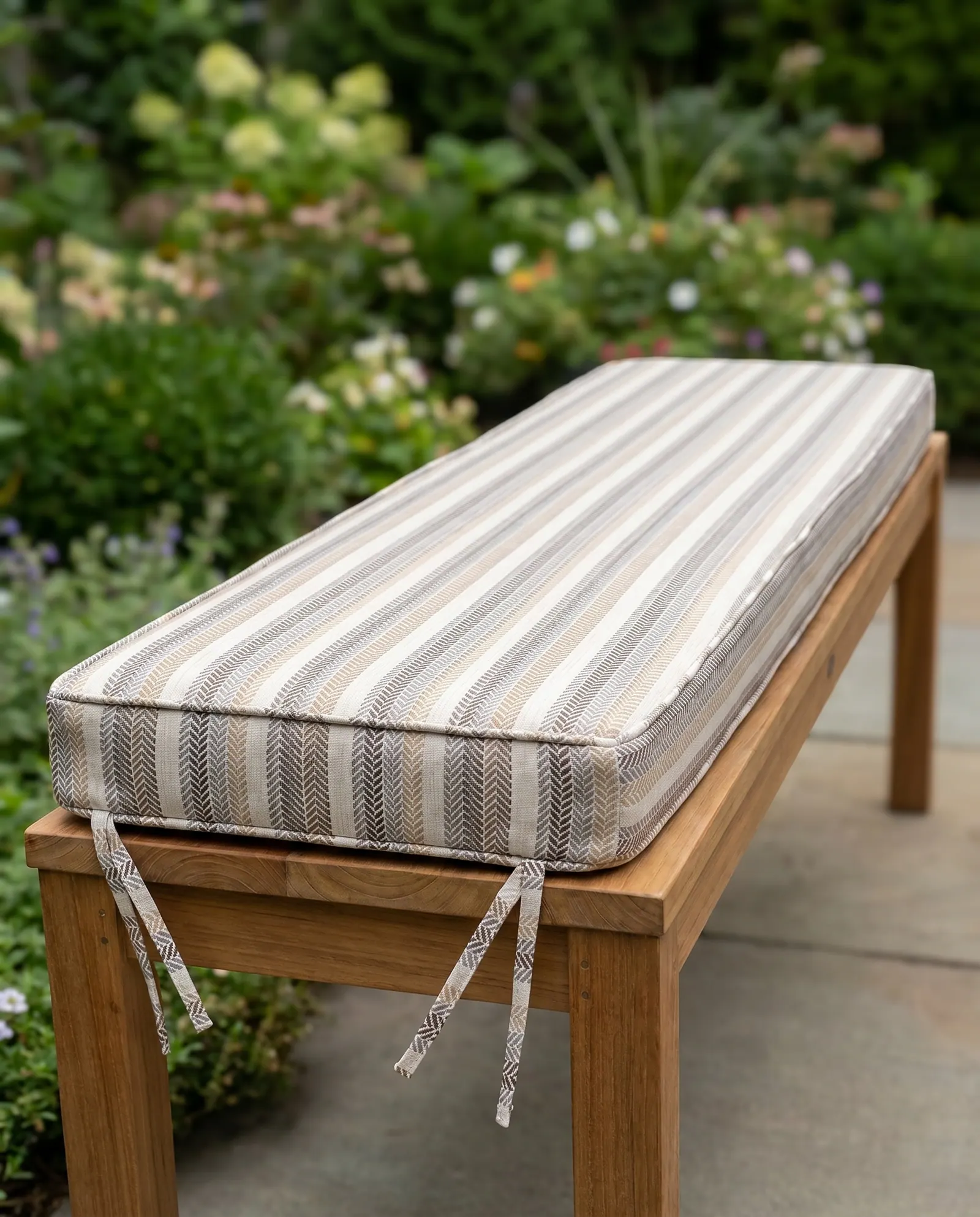
A striped custom bench cushion, square-cornered and wall to wall in a city loggia
Between two walls there is no room for guesswork. The cushion touches both ends or it doesn't, and the corners decide whether the bench looks built or borrowed.

 Save
The quick answer
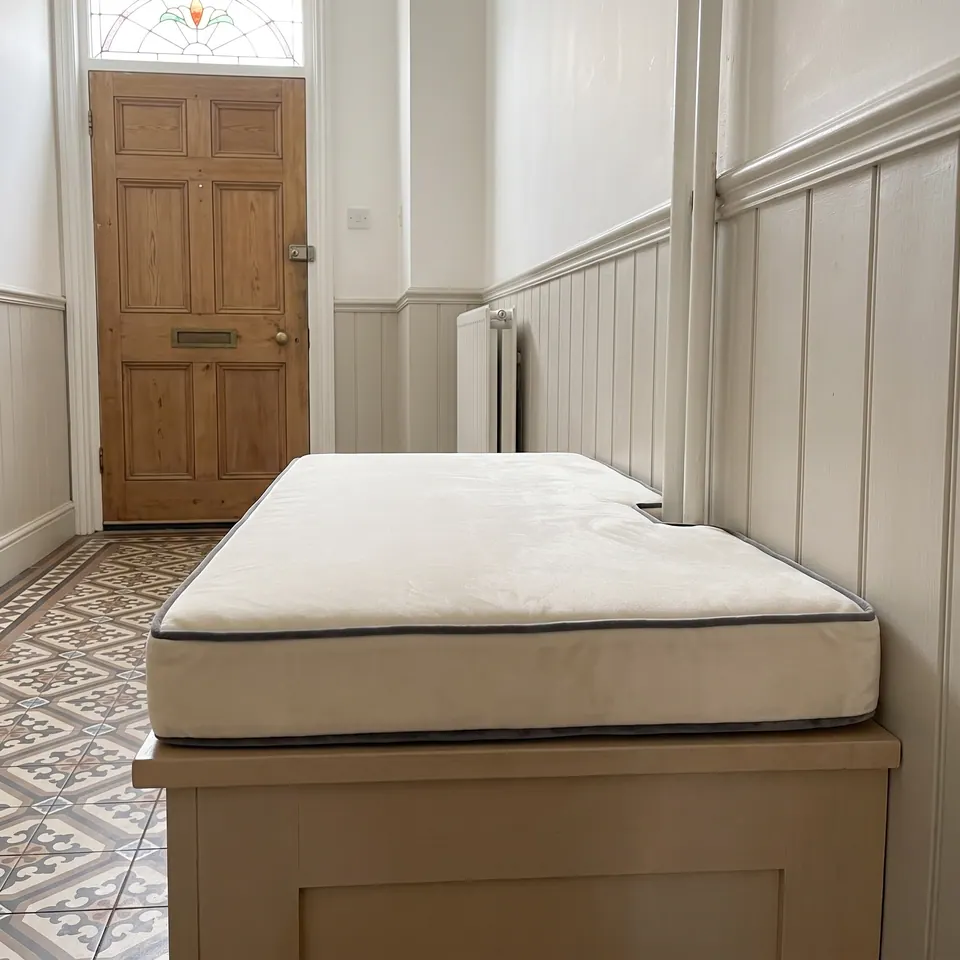
A cushion for a built-in bench between two walls should have a box edge and square corners, cut to the length between the walls so it meets both ends. Measure that length at the back and at the front, since old walls are rarely square, and give the workshop a maximum length. Knife edges and rounded corners suit free-standing seats instead.
Buyer questions first: a corner bay, a charcoal that isn't blue, a plain corduroy pair
- A common question
Could you make a reading cushion for the corner bay window in my daughter's room?
The workshop's answerYes. Send the measurements and a photo of the space, and the workshop will make a cushion to fit the corner.
- A common question
Is the dark charcoal fabric a gray-black, or does it lean blue?
The workshop's answerIt is a charcoal mixed weave of black and gray yarns with no blue undertone. In daylight it reads as a dark charcoal with a slightly textured, salt-and-pepper look.
- A common question
Can a floor cushion and a long bay window cushion both be made plain, without tufting, in water-green corduroy?
The workshop's answerYes. Both can be made without tufting in water-green corduroy, for example a bay window cushion of 24 3/8 x 117 3/4 in (62 x 299 cm) and a floor cushion of 39 3/8 x 39 3/8 in (100 x 100 cm).
Now, the reading
A 98.5-inch order that was really 68 inches
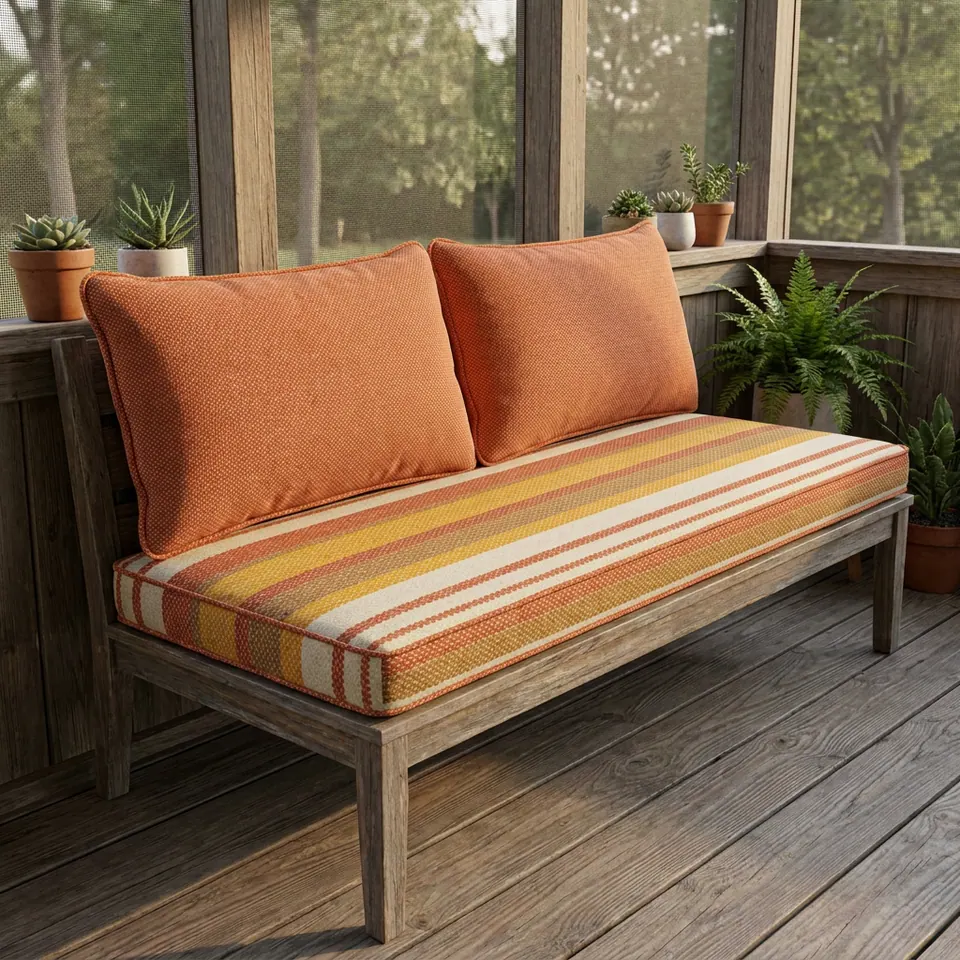
A buyer in the US ordered a bench set: a 98.5 in (250 cm) seat with 24 in (61 cm) tall backrests, in burnt orange velvet. A handsome order. Then they went back out with the tape.
The bench was actually 68 x 22.5 in (173 x 57 cm), with a back of 68.5 x 20 in (174 x 51 cm). Thirty inches of difference, friend. That is a whole extra seat with nowhere to go.
They asked for a fresh quote and got one. The workshop kept the length within 68 to 68.5 in (173 to 174 cm), made the seat and back the same length so they line up between the walls, and added two side pillows for the ends.
The lesson is short. Measure twice, and when a cushion has to fit between walls, give a maximum length, not a hopeful one. Our bench measuring notes show where to hold the tape.
Pinned by Callum: one cushion, two walls, an olive and a stool
Five pins cover the wall-to-wall seat, the stool and mug, the olive, the barred window and the gray parapet, and why each earns its spot in a small loggia.
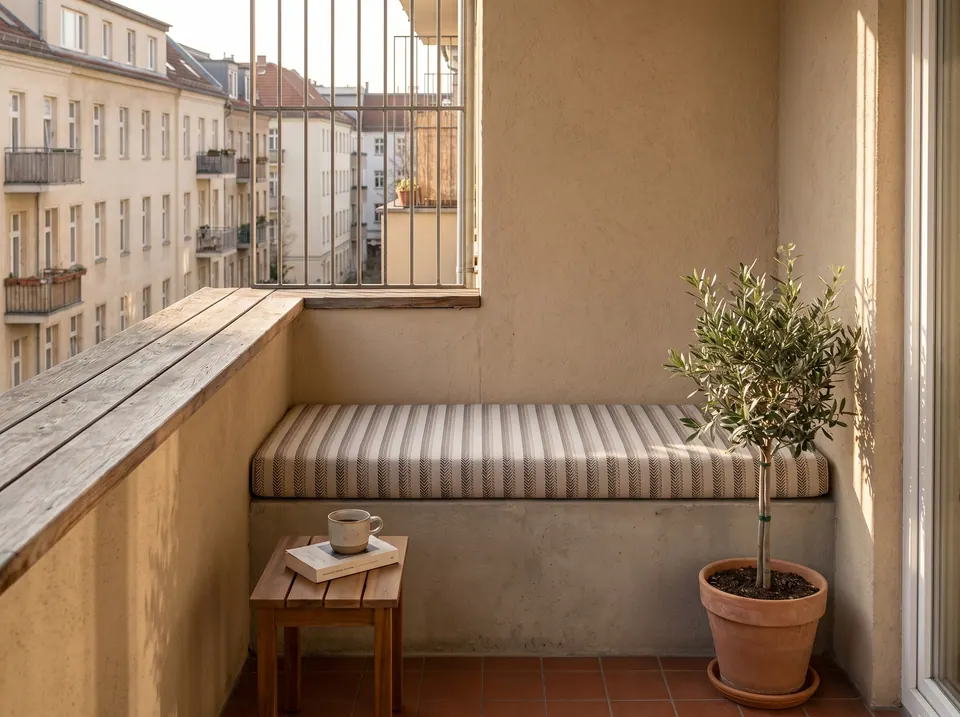
- Wall-to-wall cushion
Square corners that meet both walls make a built-in bench look finished.
- Stool with mug
A low stool stands in for a table without crowding the loggia.
- Potted olive tree
A single tree adds height and green against warm plaster.
- Barred window
The opening frames the city and lets side light skim the stripe.
- Timber parapet
Gray timber repeats the darker stripe in the fabric.
- Wall-to-wall cushionSquare corners that meet both walls make a built-in bench look finished.
- Stool with mugA low stool stands in for a table without crowding the loggia.
- Potted olive treeA single tree adds height and green against warm plaster.
- Barred windowThe opening frames the city and lets side light skim the stripe.
- Timber parapetGray timber repeats the darker stripe in the fabric.
Square corners are what make a built-in look built
Read the photo like a chart. A recessed city loggia, warm plaster on three sides, terracotta tile underfoot, clear winter sun coming in low through a barred window. The bench is part of the wall, so the cushion has to look as if it was always there.
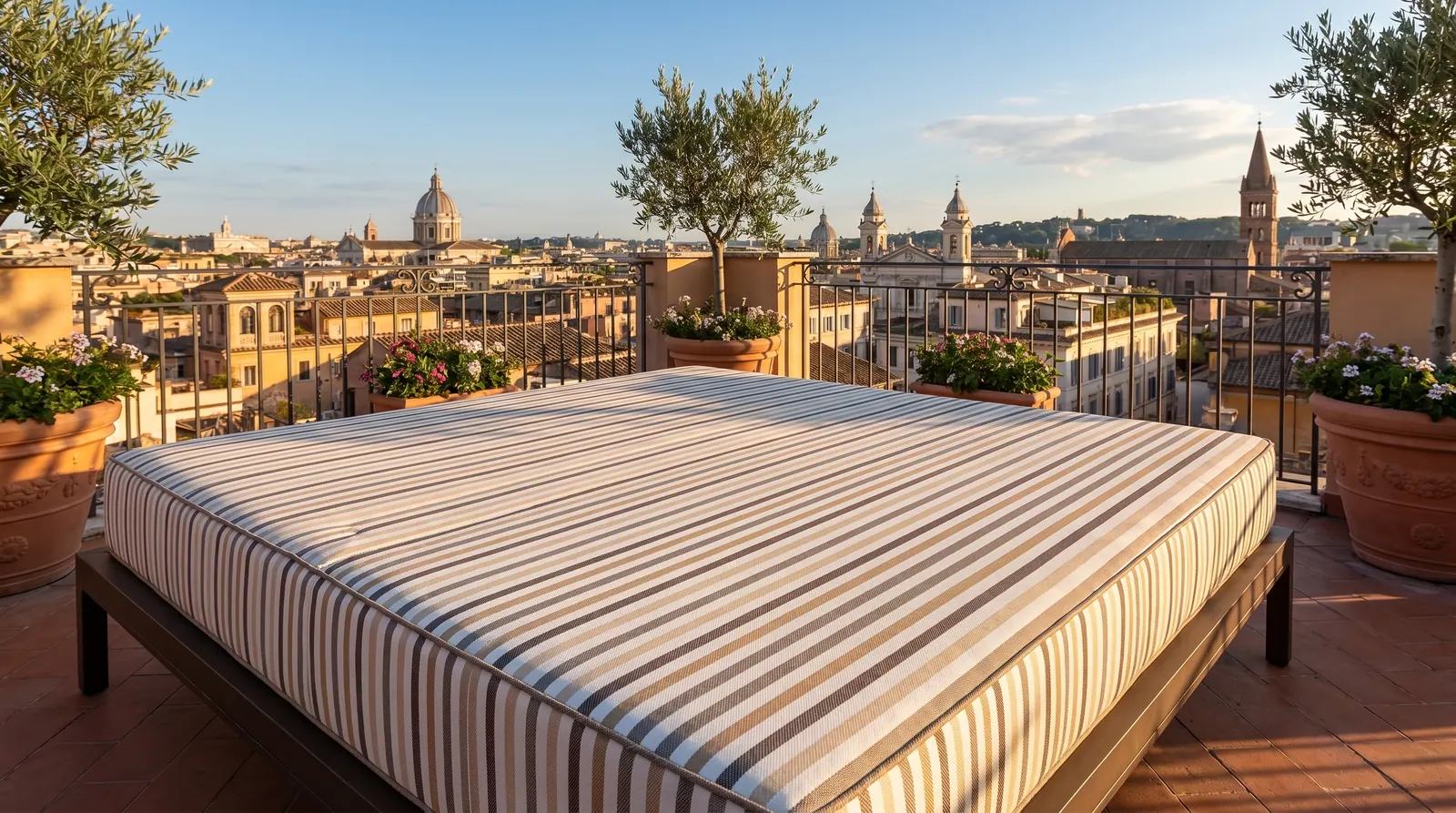
That is the work of the box edge and the square corners. The cushion runs the full length between the two walls and meets both ends flush. No gap for leaves and grit, no rounded corner leaving a dark triangle of plaster. Rounded and clipped corners have their places, just not between two square walls.
The stripe is fine and warm, taupe and cream with a thin brown line, so the seat matches the sandy plaster and the clay floor. Low side light skims across it and shows the weave. A bold stripe would have fought the architecture.
The props are spare. A low wooden stool stands in for a table and holds a mug on a book. One olive in a clay pot gives height and green. The gray timber parapet repeats the darkest line in the stripe.
Old walls are rarely square, so measure the bench at the back and again at the front edge. How far apart are the two numbers on yours? The outdoor acrylic swatches suit a covered spot like this, and the Atlas has more bench cushions built wall to wall.
Box, knife, rounded or clipped: which edge for which seat
| Edge or corner | What it looks like | Where it earns its place |
|---|---|---|
| Box edge, square corners | Flat top, straight side wall, crisp right-angle corners | Built-in benches that run wall to wall, like this loggia |
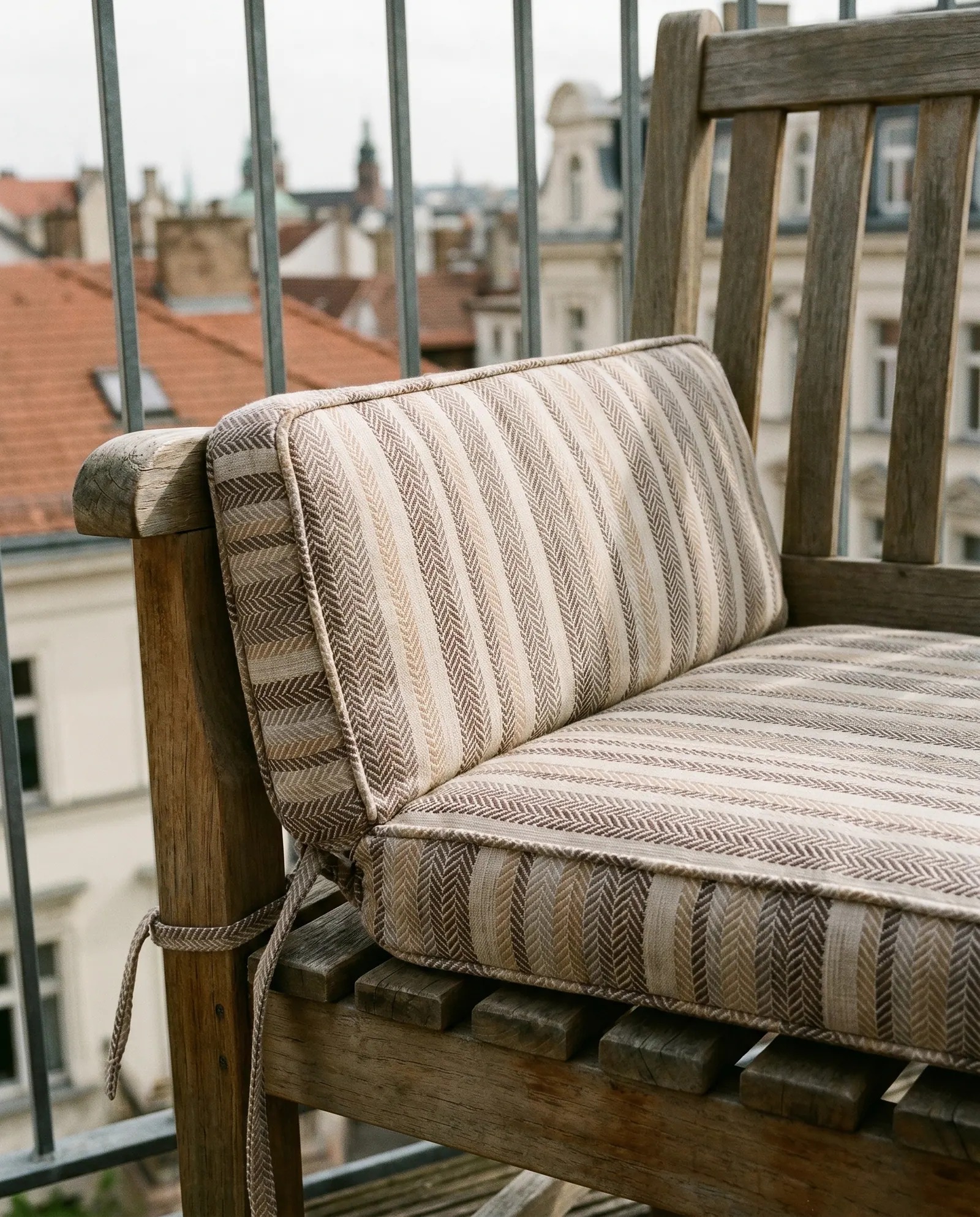
| Knife edge | Two panels sewn straight together, thin at the rim | Chair pads and light seat pads that tie on |
| Rounded corners | Box edge with softened corners | Free-standing benches where knees and bags brush past the ends |
| Clipped corners | Corners cut on a short diagonal | Bays and niches where a wall meets the seat at an angle |
On the cutting table: the loggia bench
| Product | Custom bench cushion, one piece |
|---|---|
| Shape | Rectangle with square corners |
| Edge | Box edge |
| Piping | Self piping |
| Fabric | Outdoor acrylic in a fine taupe, cream and brown stripe |
| Fit | Wall to wall between two plaster walls |
| Measure | Length at the back and the front, plus depth; give a maximum length |
| Best for | Built-in benches, loggias, balconies and niches |

Have it made
Have this made — ask Callum’s workshop
Short list: size, sun hours, how fast it has to dry. The workshop goes through it with you. — Callum
Leave your details and the workshop will call you to confirm measurements, fabric, foam and piping. No prices, dates or payment on this page: it is a request, not an order.
A cushion for a built-in bench should meet both walls with square box corners. A rounded corner between two square walls leaves a dark triangle of gap.
Callum
Questions buyers ask next
Should a built-in bench cushion touch both walls?
Yes, for a finished look. Cut it to the measured length between the walls so both ends meet the plaster with square corners. Give a maximum length rather than a rounded-up one, since a cushion that is too long bows up in the middle.
When do rounded corners make sense on a bench cushion?
On free-standing benches with open ends, where knees and bags brush past the corners and a softer shape looks gentler. Between two walls, square corners fit better and leave no gap at either end.
Can an outdoor striped fabric go on a covered balcony or loggia bench?
Yes. Outdoor acrylic handles sun and damp air better than an indoor cotton, and a fine stripe in warm neutrals suits plaster and tile. Bring the cushion in or cover it during long wet spells so the filling stays dry.
Fair winds — Callum
More photographs to read
 Save
 Save
 Save
 Save
 Save
 Save