A Reading by RosaWindow Seat Cushions
An ivory window seat cushion outlined in chocolate: the piping decision, line by line
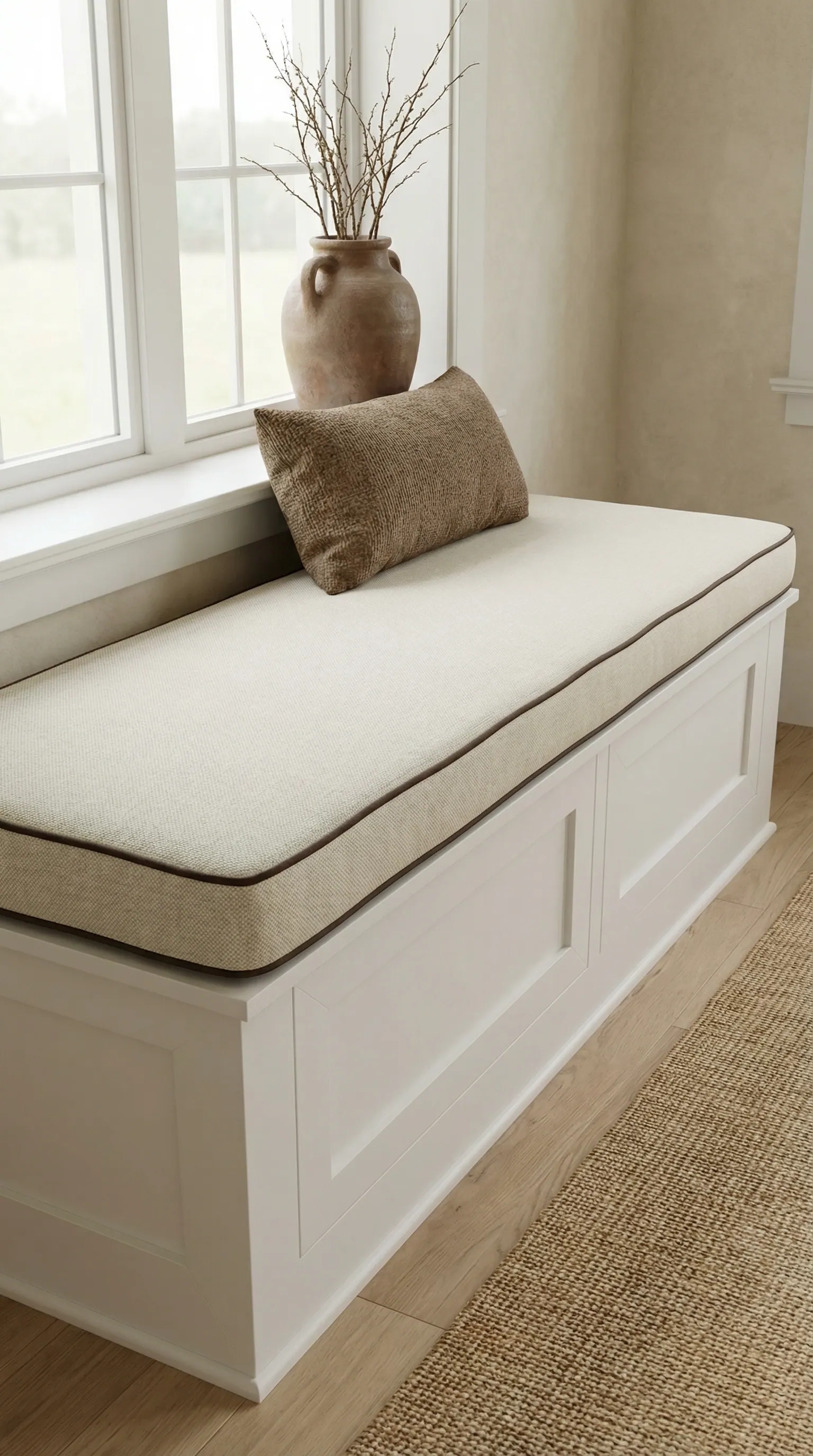
White cushion, white chest, white window. One dark cord is the reason you can see the seat at all, and piping is one of the questions we get most.

 Save
The quick answer
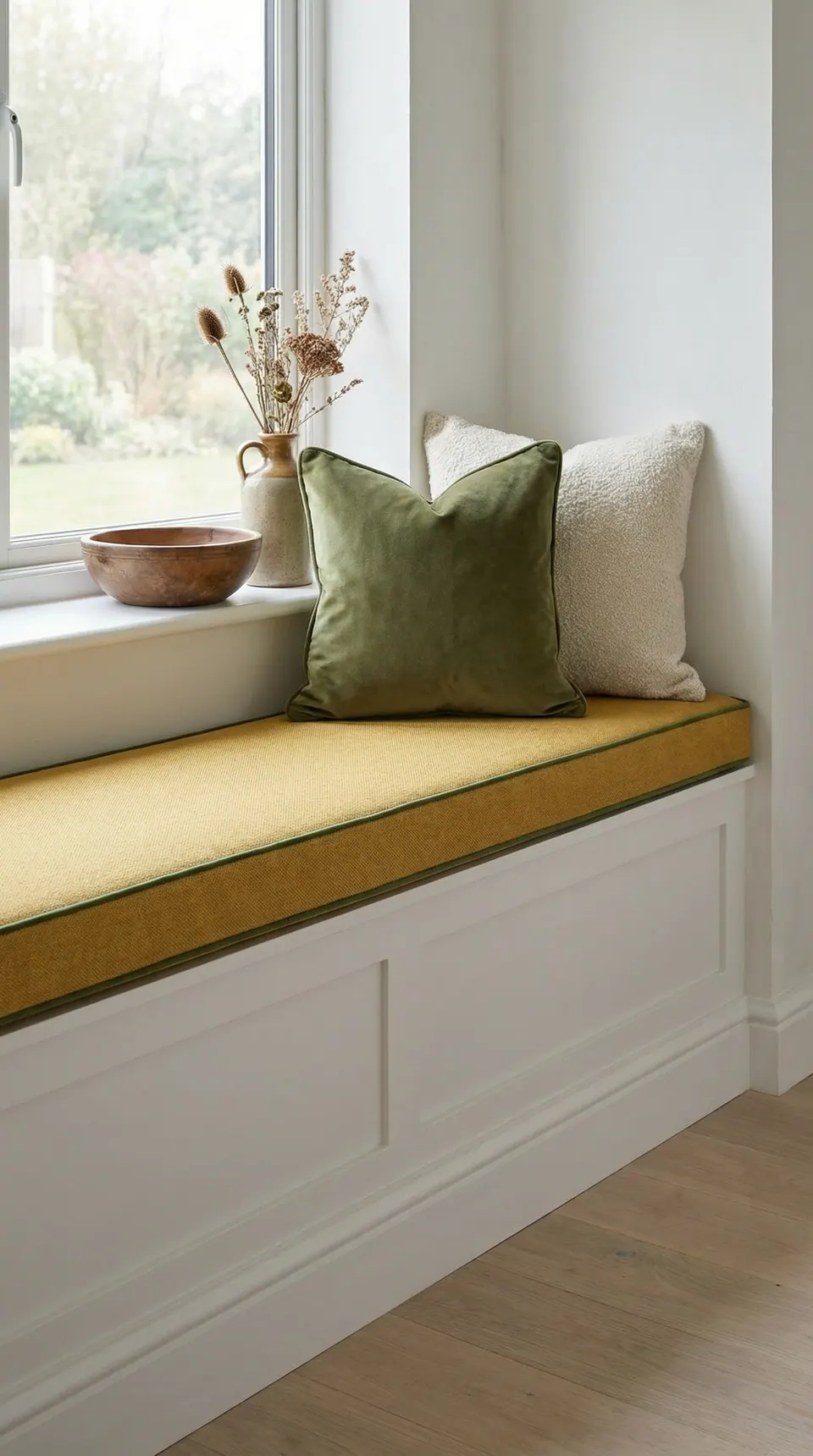
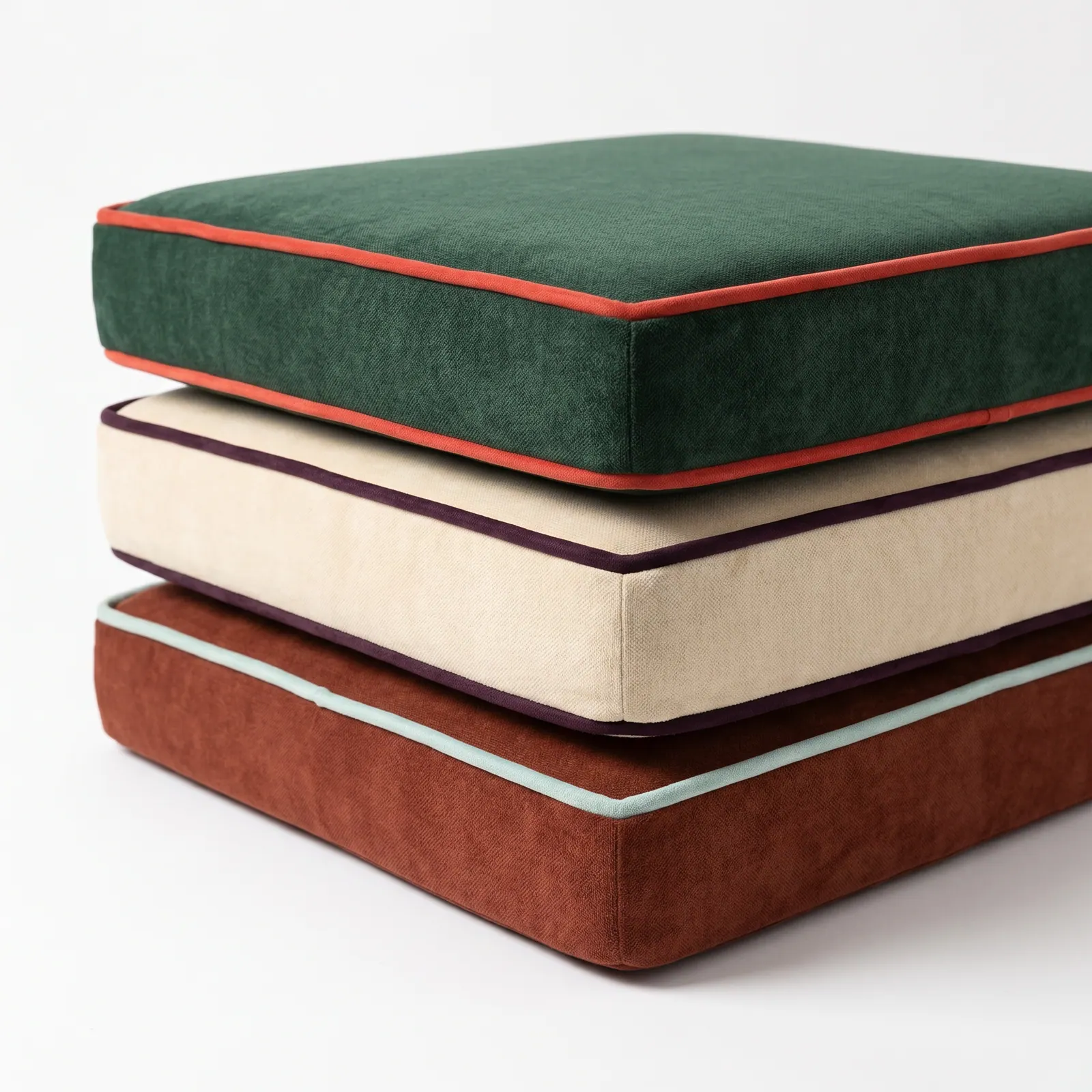
Choose contrast piping when a pale window seat cushion sits on a pale base, because a dark cord like chocolate brown draws the outline that white-on-white would blur. Choose self piping for a soft, textured edge, and no piping for the flattest, most modern line. Matching or contrast, piping costs nothing extra.
Buyer questions
- A common question
Should I pick 4 in or 5 in foam if I want my bench cushion to feel more like a sofa?
The workshop's answerThey feel the same: both use 32-density foam wrapped in polyester fiber, firm enough for a timber bench. The difference is the look. On a 25 1/2 x 71 in (65 x 180 cm) bench, 4 in looks plush and sofa-like, while 5 in can look heavy. Tufted cushions use a softer filling.
- A common question
Can I order just the two L-shaped backrests, without the rest of the sofa?
The workshop's answerYes. The two L-shaped backrests can be ordered on their own, and covers alone for them are possible too if you already have the inserts.
- A common question
What measurements do you need for an angled bay window seat cushion?
The workshop's answerEvery edge, not just the front and depth: front, window edge, left angled end, right angled end, plus depth, labeled on a template or a rough sketch. The workshop checks that the shape closes before cutting and sends the full list back to confirm.
Now, the reading
Why the piping is chocolate, not ivory
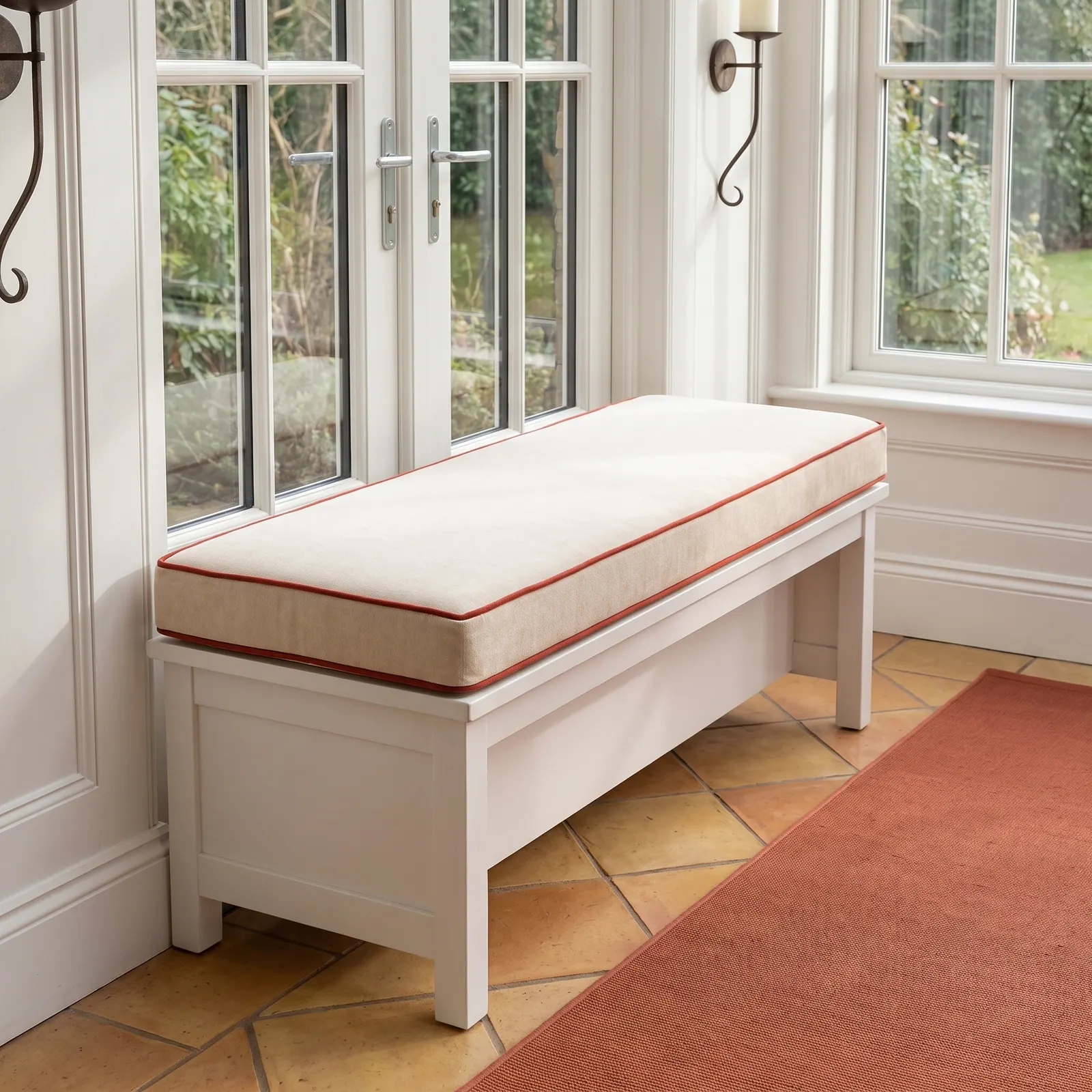
White cushion on white joinery is the hardest pairing there is. Put an ivory cushion on a white paneled chest under a white mullioned window and, left alone, the seat melts into the furniture. The chocolate piping is the rescue. It runs along the box edge and draws the silhouette clean against the paint, like a pencil line around a cloud.
Then the brown comes back, on purpose. A nubby bouclé lumbar pillow sits in the piping color, the only pillow this window seat cushion needs. A terracotta amphora with bare branches repeats the brown in clay and gives the corner height. Plaster walls, a jute rug that echoes the seat's linen-look weave, and a light oak floor keep all that white warm to the touch.
Self piping in ivory would have made the edge a soft ridge, and the seat would float. No piping would be cleaner still, and it would vanish faster. The piping Pattern weighs all three, but on a white chest the answer is a dark line.
Here's the test I give every seat, neighbor: squint at the photo. What happens to your cushion when you squint? If it disappears, it needs a line.
Self, contrast or no piping: what each does to the line
| Piping | What the line does | Choose it when |
|---|---|---|
| Self piping | A soft ridge in the same cloth, read as texture | The cushion color should lead |
| Contrast piping | Draws the outline in a second color | Cushion and base are both pale |
| No piping | A plain seam, the flattest edge | Thin cushions and minimal rooms |
Pinned by Rosa: the ivory window seat, pin by pin
Five spots where the brown thread runs through the room.
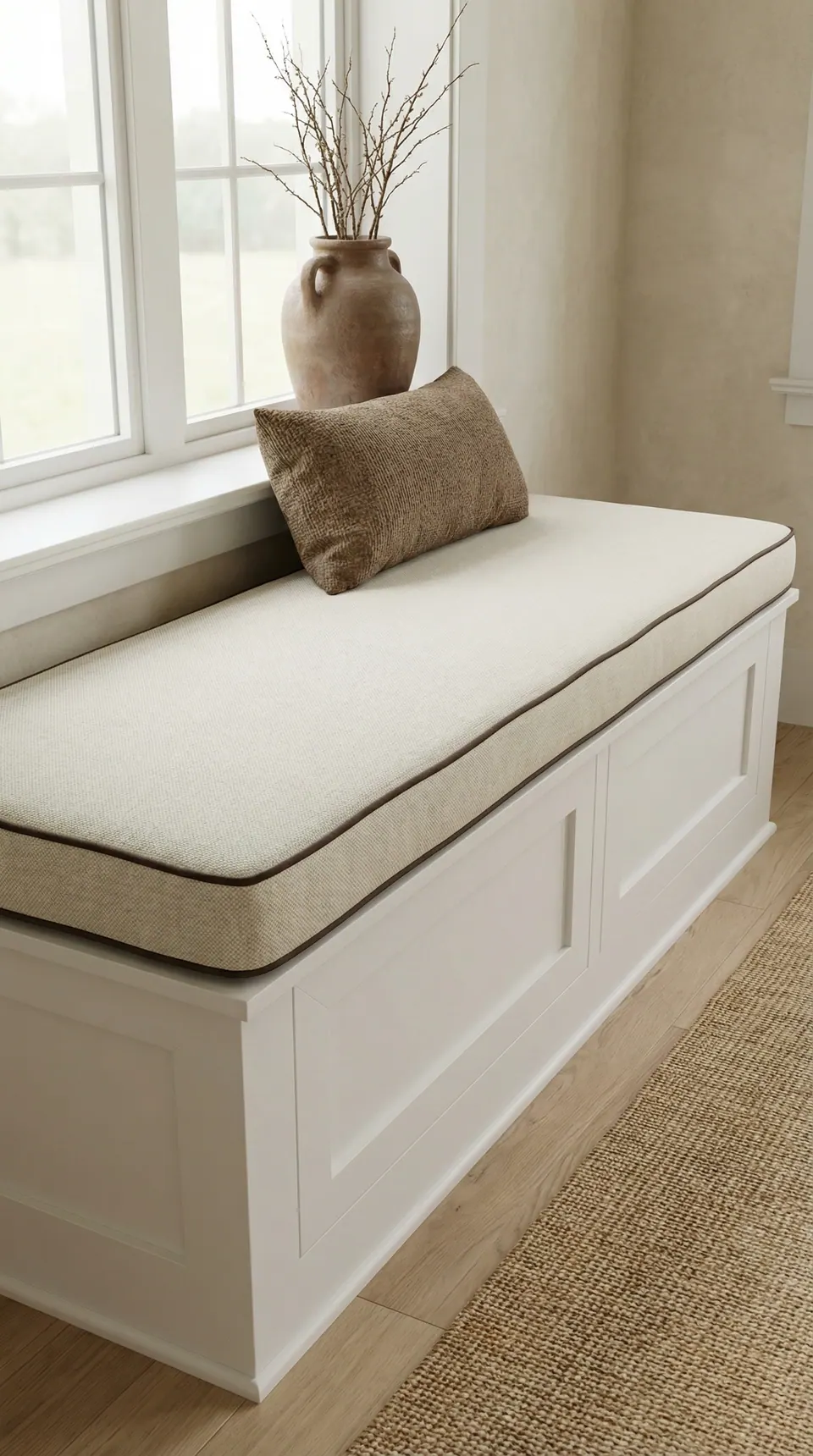
- Ivory seat top
A pale, finely textured weave keeps the bench light against warm plaster.
- Chocolate piping
Dark piping draws a sharp line so a pale cushion doesn't vanish into white joinery.
- Brown lumbar pillow
One textured lumbar in the piping color is all this bench needs.
- Amphora vase
A tall clay vase with branches adds height and repeats the earthy brown.
- Jute rug
Jute underfoot matches the woven texture of the seat.
- Ivory seat topA pale, finely textured weave keeps the bench light against warm plaster.
- Chocolate pipingDark piping draws a sharp line so a pale cushion doesn't vanish into white joinery.
- Brown lumbar pillowOne textured lumbar in the piping color is all this bench needs.
- Amphora vaseA tall clay vase with branches adds height and repeats the earthy brown.
- Jute rugJute underfoot matches the woven texture of the seat.
The window seat built around an air conditioner
A buyer messaged the workshop about a big rectangular window seat with a problem in the middle: an air-conditioning unit. The cushion had to wrap around it, with a rectangular notch cut to clear the unit.
The workshop asked for a drawing with every size marked, then pointed the buyer to the linen color chart to choose the body and the piping. For a cut-out like that, mark three things on the drawing: the notch width, its depth, and its distance from each end. The notched cushion Pattern shows where to hold the tape.
On the cutting table: the ivory window seat cushion
| Cushion | Window seat box cushion on a storage chest |
|---|---|
| Fabric | Ivory linen-look weave |
| Piping | Contrast, chocolate brown |
| Foam | About 2.0 lb/ft³ (32 kg/m³), fiber-wrapped |
| Thickness | 4 in (10 cm) for a plush look |
| Cut-outs | From a drawing with every size marked |
| Piping cost | No charge, matching or contrast |
| Best for | Pale seats on painted joinery |

Have it made
Have this made — ask Rosa’s workshop
Tell the workshop who sits there: grandkids, the dog, a cup of coffee at six. The right fabric and foam follow from the people. — Rosa
Leave your details and the workshop will call you to confirm measurements, fabric, foam and piping. No prices, dates or payment on this page: it is a request, not an order.
If a pale window seat cushion sits on a pale painted base, choose contrast piping: a dark cord like chocolate brown draws the outline white-on-white would lose.
Rosa
Questions buyers ask next
Does dark piping on a light cushion hide wear?
It helps. The edge is where hands and legs brush on and off, so it shows wear first, and a dark cord hides that better than a pale one. The light top still needs washing, so keep the cover removable.
Can the piping match a pillow instead of the cushion?
Yes. Pick the piping code to repeat a pillow, a vase or a rug, the way a chocolate cord here matches one bouclé lumbar. You can change the piping code until the order goes into production.
Is no piping a good choice for a window seat?
It gives the flattest, most modern edge and suits thin cushions and minimal rooms. On a pale cushion over a pale base, though, a plain seam can let the shape blur into the furniture.
Porch light's on — Rosa
More photographs to read
 Save
 Save
 Save
 Save
 Save
 Save