A Reading by MaggieBench Cushions
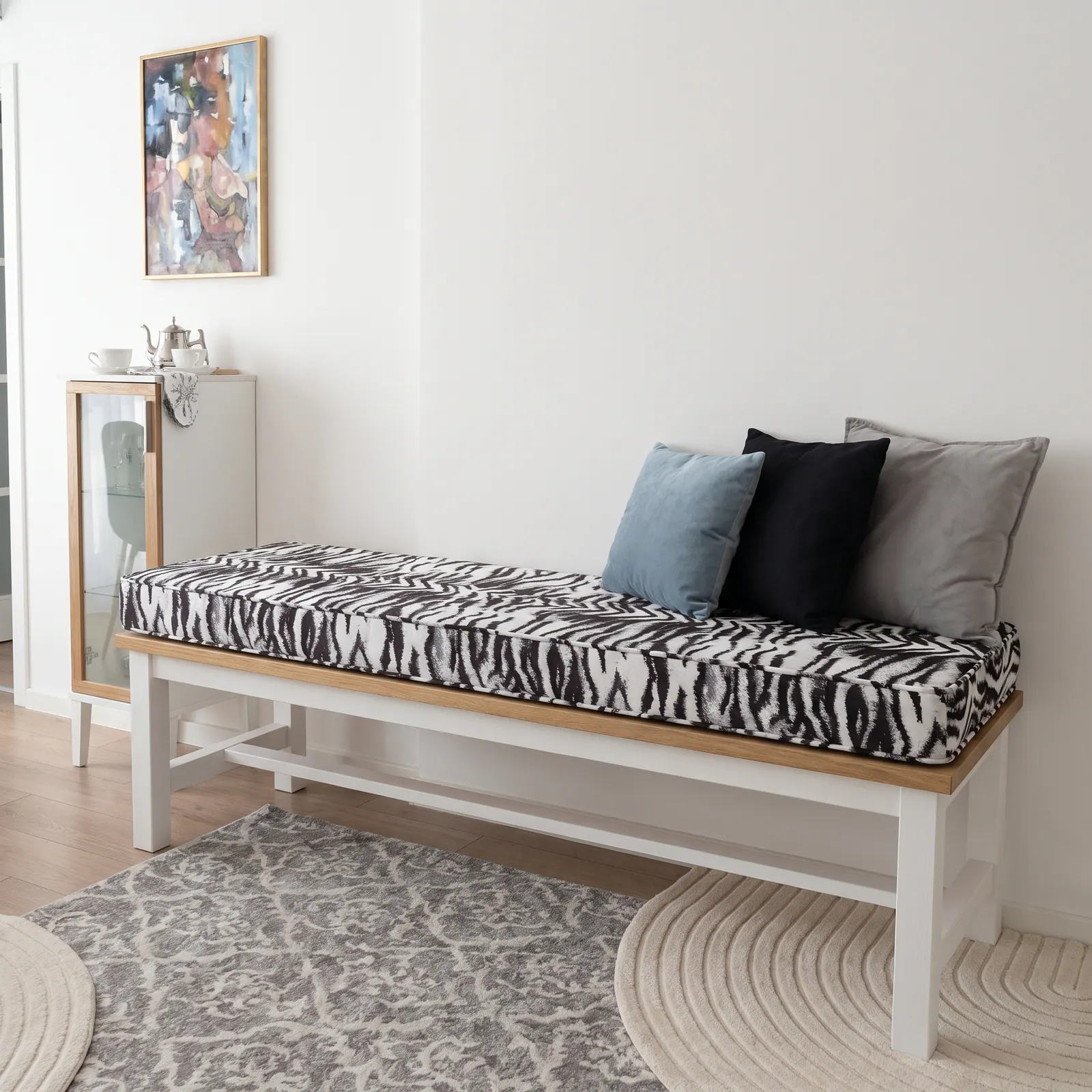
Measuring for a brushstroke-stripe bench cushion on a long white bench
Painterly stripes forgive a lot, but not a cushion that stops an inch short. Here is how I would measure this exact bench, including the mistakes I made first so you needn't.

 Save
The quick answer
To measure a long bench for a custom bench cushion, take the length and depth of the bare seat top, settle the thickness first, and choose one piece so a bold stripe is not cut by a center seam. This brushstroke-stripe cushion runs the whole white bench as one boxed piece with self piping, and three velvet pillows sit along the back.
Buyer questions: zippers, fabric codes and quoting by size
- A common question
Does the bench cushion cover have a zipper, so I can wash it?
The workshop's answerYes. The zipper runs around two corners, so the foam insert slides out easily and the cover can go in the washing machine.
- A common question
Where do I tell you which fabric color I picked?
The workshop's answerWrite the fabric code in the personalization or order note box, for example COR-207 for the dark green corduroy. If you can't find the box, or forget, send a message right after ordering; the workshop contacts anyone whose order is missing a code before production starts.
- A common question
How do you price a custom bench or window seat cushion?
The workshop's answerBy its size, so send the exact measurements and the workshop quotes that seat. Quotes have run from a 14 x 44 in (36 x 112 cm) window seat to an 84 x 16 in (213 x 41 cm) sill cushion, and three 16 x 32 in (41 x 81 cm) cushions to fill a 96 in (244 cm) bench. Ask for shipping cost and timing in the same quote.
Now, the reading
Pinned by Maggie: a long seat and what leans on it
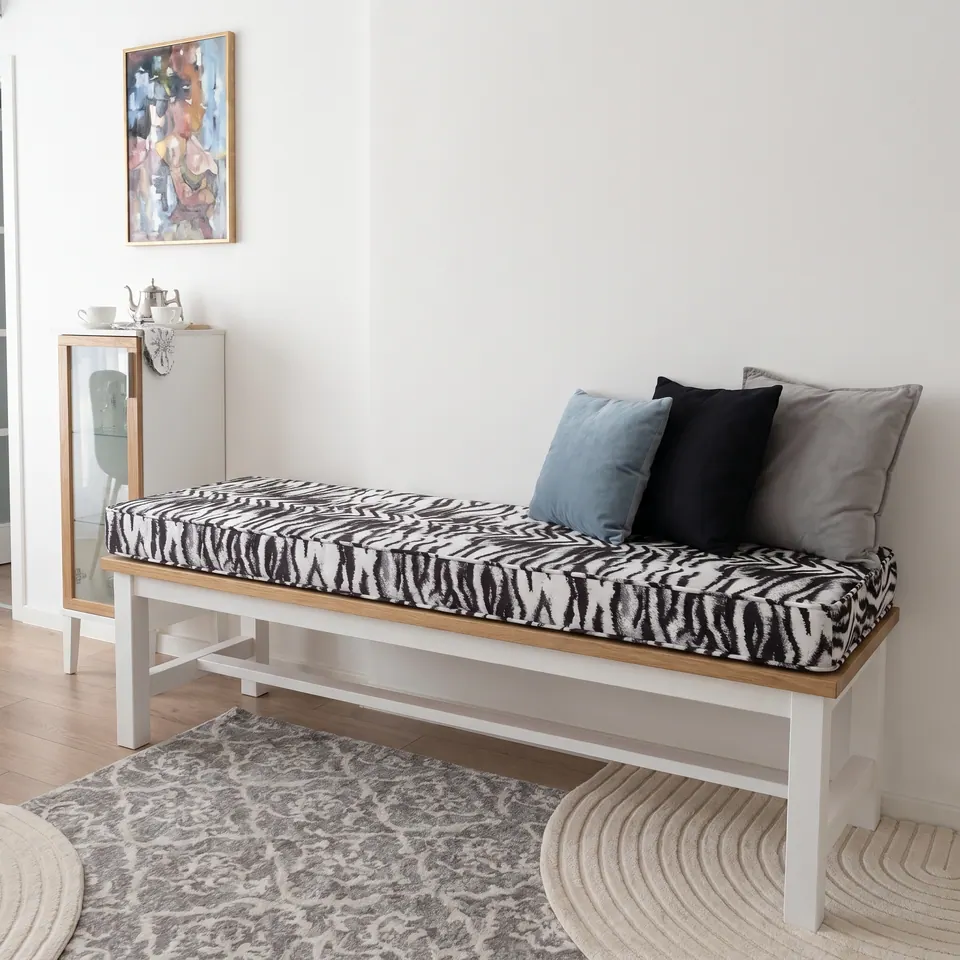
Five pins cover the unbroken stripe, the three velvet pillows, the painting that echoes the print and the carved round rug underfoot.
- Brushstroke stripe print
On a long bench, a single-piece cushion keeps the stripes from being cut by a center seam.
- Dusty blue velvet
The blue picks up the cool cast in the print's gray shading.
- Black and gray velvet
Soft sheen contrasts with the matte printed cotton.
- Abstract painting
Its loose brushwork echoes the painterly stripes on the seat.
- Carved round rug
Tonal texture on the floor adds pattern without clashing.
- Brushstroke stripe printOn a long bench, a single-piece cushion keeps the stripes from being cut by a center seam.
- Dusty blue velvetThe blue picks up the cool cast in the print's gray shading.
- Black and gray velvetSoft sheen contrasts with the matte printed cotton.
- Abstract paintingIts loose brushwork echoes the painterly stripes on the seat.
- Carved round rugTonal texture on the floor adds pattern without clashing.
Why this cushion is one long piece
The first thing I check on a photograph like this is the thing nobody notices: there is no seam in the middle. The bench is long, the stripes are loud, and a join at the center would slice a tiger stripe in half exactly where everyone looks.
So the cushion is one boxed piece, end to end, with self piping. Self piping is the quiet choice on a busy print; a contrast cord would draw a second frame around stripes that already have plenty to say. On a run this long, any wobble in the welt shows, so it had better be straight.
The styling does measuring work too. Three velvet pillows in dusty blue, black and gray lean along the back, and every one of them sits on seat depth. The abstract painting in its gold frame repeats the loose brushwork, and two tonal rugs below add pattern without a fight. The case for and against a single run is in one piece or two on a long bench, and prints like this one sit in striped cotton and ticking.
Measuring this exact bench, in the order that saves you grief
Tape the bare seat
Measure the bench, not the cushion you used to have. Old foam slumps, and copying it copies its faults.
Take the length twice
Measure along the front edge and again along the back. If they differ, write down both and say which is which.
Measure depth straight
Take the depth at 90 degrees to the front edge, never on a slant. Pillows leaning at the back sit on that same depth.
Settle thickness before lengths
The standard is 4 in (10 cm). Decide it first; thickness changes how pieces butt together at a corner.
Choose one piece or two
One piece keeps a bold stripe whole; two pieces are easier to lift and wash. Say which before anything is cut.
The corner set that kept its 4 inches
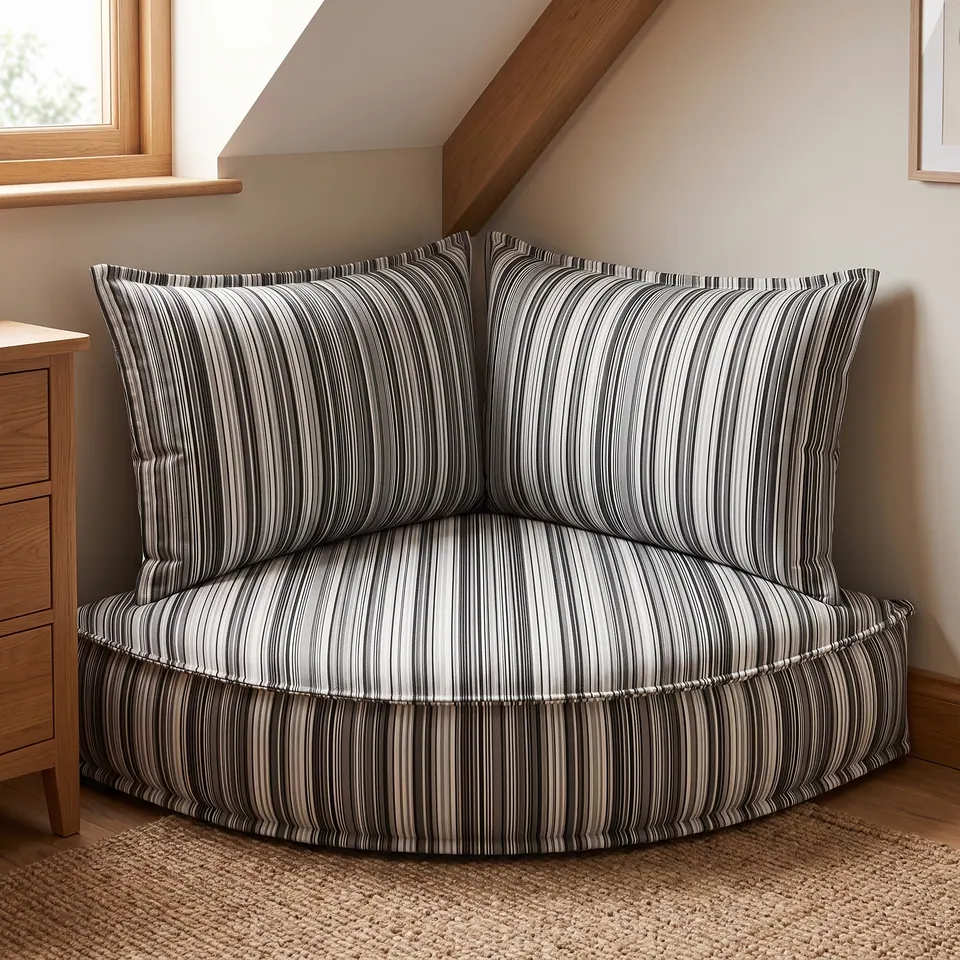
A buyer messaged the workshop wanting a cafe-style corner: one cushion along a bench and three on a low ground cushion tucked into the corner. They asked for linen or cotton, not velvet, so the workshop explained that its soft fabric is a durable poly-cotton blend and sent charts for both the linens and the soft fabrics.
Then came thickness. The standard is 4 in (10 cm); going to 5 in (13 cm) would have raised the price noticeably. The buyer kept 4 in and adjusted the measurements to suit, and that is the part I admire: the lengths changed after the thickness was settled, not before.
The final set was 57 7/8 x 24 3/4 in (147 x 63 cm) in burgundy, 57 7/8 x 15 3/4 in (147 x 40 cm) in emerald and two 15 3/4 x 20 7/8 in (40 x 53 cm) pieces in khaki, all 4 in thick. Production took 7 to 10 days, delivery 3 to 5 more. I once did it the other way round, dear, and learned what recutting corner foam does to a Saturday. What does your bench measure along the front edge, and along the back? The bench measuring pattern and the bench cushion builder will hold your numbers.
On the cutting table: the brushstroke bench cushion
| Cushion | One-piece rectangular box cushion for a long bench |
|---|---|
| Brushstroke tiger stripes in black, white and gray on cotton canvas (P-06) | |
| Piping | Self piping in the same print |
| Edge | Boxed, square corners |
| Standard thickness | 4 in (10 cm) |
| Cover | Zipper around two corners; the foam slides out and the cover machine washes |
| Pillows | Velvet in dusty blue, black and gray |
| Measure | Bare seat length at front and back, depth at 90 degrees, thickness first |
| Best for | A white dining corner or kitchen nook that wants pattern without color |

Have it made
Have this made — ask Maggie’s workshop
Have the tape measure handy when they call. Old cushions shrink and sag; the seat underneath does not. — Maggie
Leave your details and the workshop will call you to confirm measurements, fabric, foam and piping. No prices, dates or payment on this page: it is a request, not an order.
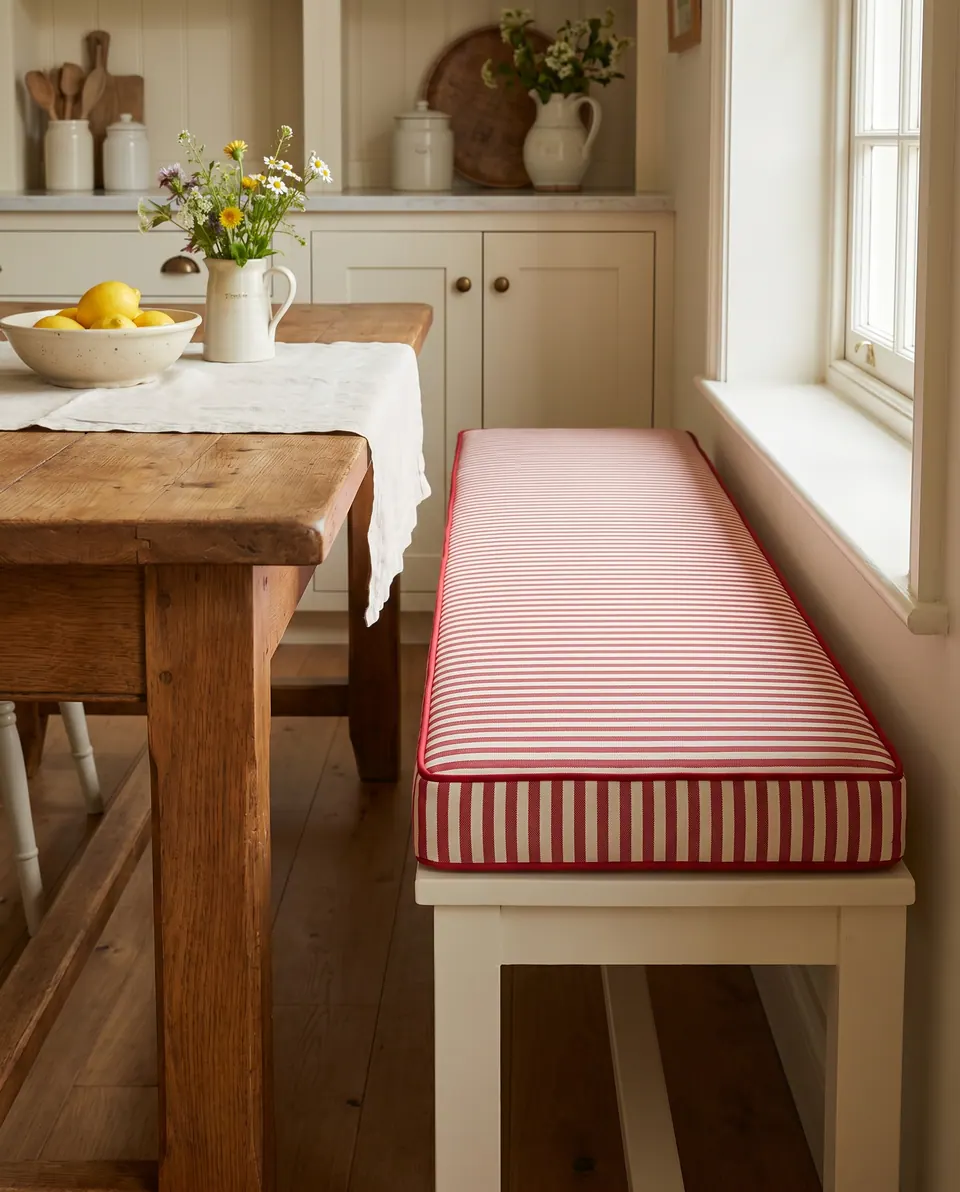
A long bench cushion in a bold stripe should be one piece: a center seam cuts the pattern exactly where everyone looks.
Maggie
Questions buyers ask next
Is one piece or two better for a bold striped cushion on a long dining bench?
One piece keeps the pattern whole, as on this brushstroke-stripe cushion: no center seam slices a stripe where the eye lands. Two pieces are easier to lift and wash, so choose them when the print is quiet or handling matters more than the pattern.
Where do people go wrong when measuring a dining bench for a cushion?
Three slips to avoid: copying the old cushion instead of the bench, measuring depth on a slant instead of straight front to back, and fixing lengths before thickness. Tape the bare seat, write down front and back lengths, then settle thickness.
Why use self piping on a patterned bench cushion?
Self piping is cut from the same fabric, so the edge stays crisp without adding a new color. On a loud print like these brushstroke stripes, a contrast cord would draw a second outline and compete with the pattern.
Stitch straight — Maggie