A Reading by CallumBench Cushions
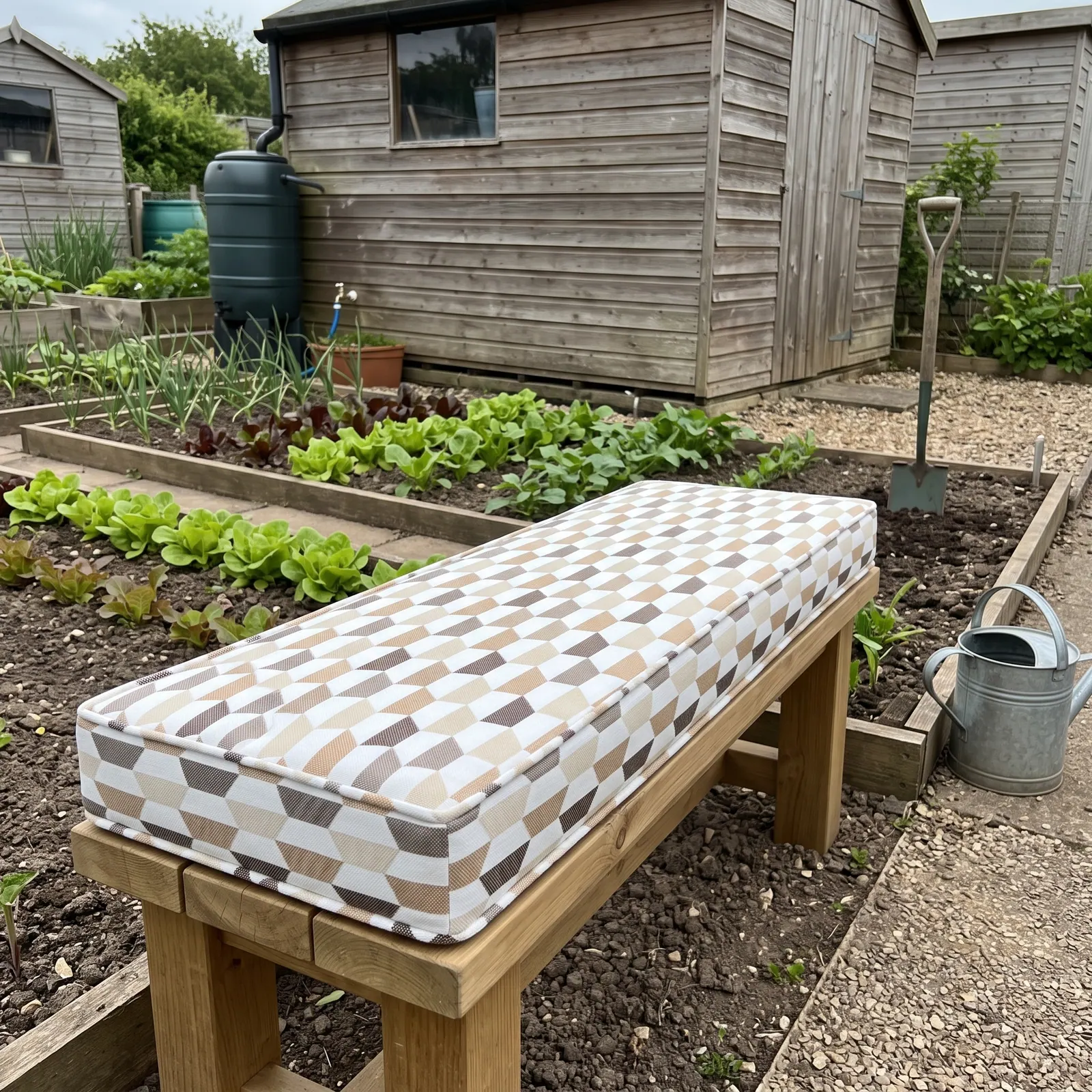
A brown geometric custom bench cushion on a pine bench in a community garden
Callum writes a letter from a garden bench about what a working outdoor cushion can teach an indoor one, and what it should keep to itself.

 Save
The quick answer
A custom bench cushion for a working garden should be mid-brown or tan, box-edged, light enough to carry into the shed, and exactly as thick as the frame allows. Bring those habits indoors for mudroom and kitchen benches: forgiving colors, ties or non-slip backing, and a cushion you can lift. Leave the stiff outdoor weave outside unless the bench gets wet.
Portland ·
Friend,
Friend, a garden bench letter from between the raised beds
I'm writing from a pine bench between two raised beds, where nobody sits longer than a cup of coffee at a time. That is exactly why the cushion matters.
It's a custom bench cushion in an outdoor weave printed with brown, tan and cream geometric tiles, a touch of gray among them, boxed at the edge and self-piped. It covers the whole top of a chunky pine bench, which is far kinder to the back of your legs than a thin pad on rough-sawn wood. Around it: lettuces and red-leaved seedlings, weathered timber sheds, a gravel path, and a spade left standing in the soil.
The spade tells you this is a working rest stop, not a patio set for a catalog. The green rain barrel and its downpipe hang back, so the cushion stays the brightest shape in the frame. A galvanized watering can picks up the gray tiles in the print, and a terracotta pot shares its warmth with the pine and the tan.
Look at the palette. Soil, pollen and a muddy knee all land on this seat. Brown and tan tiles swallow those marks; the cream keeps the whole thing from looking like mud itself. A pale plain cushion here would be done for by the second weekend.
On a bright overcast day there's no glare to wash the print out. Sun is the slow enemy out here; rain is the quick one. Rain doesn't negotiate, and neither does a trowel of wet compost. That's why an outdoor acrylic weave belongs on this bench, and why the cushion should be light enough to carry into the shed at the end of the day. More working seats sit among our bench cushions. Which bench in your house takes the most dirt?
The rush order that came in two inches proud
A buyer in the US was moving across the country and worried that two bench cushions wouldn't land in time. The workshop was straight with them about how busy it was, then pushed their order through with priority.
Speed cost precision. The cushion meant to be 2 in (5 cm) thick arrived at 4 in (10 cm), and the larger cushion came with its ties on the wrong side. Forced into its frame, the thick one buckled at the corners and humped in the middle, like a sail stuffed into a bag cut for a smaller one.
The workshop owned the mistake. It remade the 2 in cushion correctly and held dispatch until the buyer confirmed they were at the new address. The ties were fixed locally.
The rule I took from it: thickness must match the frame. An over-thick cushion squeezed into a boxed bench buckles and wears faster. Measure the frame's depth before you pick the foam; the bench measuring Pattern shows how.
Pinned by Callum: from the spade to the pine bench frame
Five pins, from the spade in the soil to the pine frame under the print.
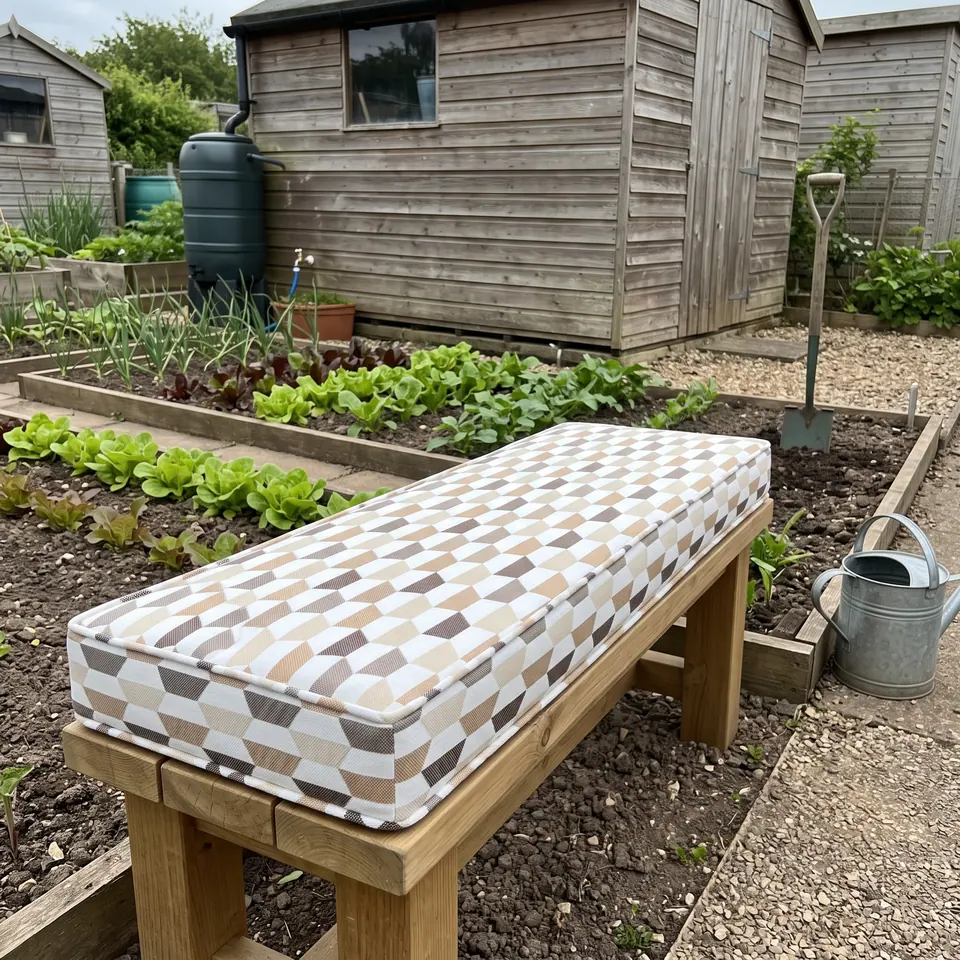
- Spade in the soil
A tool left in shot makes it clear this bench is a working rest stop.
- Galvanised watering can
The metal can echoes the gray tiles in the geometric print.
- Green water butt
Bulky garden kit stays in the background, so the cushion remains the brightest shape.
- Geometric tile print
Brown and tan tiles hide soil marks better than a plain pale cushion would.
- Pine bench frame
Chunky pine and the tan print share a tone, so the cushion looks made for this bench.
- Spade in the soilA tool left in shot makes it clear this bench is a working rest stop.
- Galvanised watering canThe metal can echoes the gray tiles in the geometric print.
- Green water buttBulky garden kit stays in the background, so the cushion remains the brightest shape.
- Geometric tile printBrown and tan tiles hide soil marks better than a plain pale cushion would.
- Pine bench frameChunky pine and the tan print share a tone, so the cushion looks made for this bench.
Borrow it indoors, or leave it in the garden
| Garden habit | Indoors | Why |
|---|---|---|
| Brown and tan prints | Borrow | Mudroom and kitchen benches collect the same scuffs and grit |
| A cushion light enough to carry | Borrow | Cushions that lift out get cleaned; heavy ones get ignored |
| Ties or non-slip backing | Borrow | Ties for frames and slats, non-slip backing against a flat wall |
| Thickness matched to the frame | Borrow | A cushion too thick for a boxed frame buckles at the corners |
| Stiff outdoor weave | Only where it gets wet | A dry indoor seat can be chosen for feel instead |
On the cutting table: the garden-plot bench
| Cushion | Full-length box bench cushion |
|---|---|
| Fabric | Outdoor acrylic in a brown, tan, cream and gray geometric print |
| Piping | Self piping |
| Edge | Box edge covering the whole bench top |
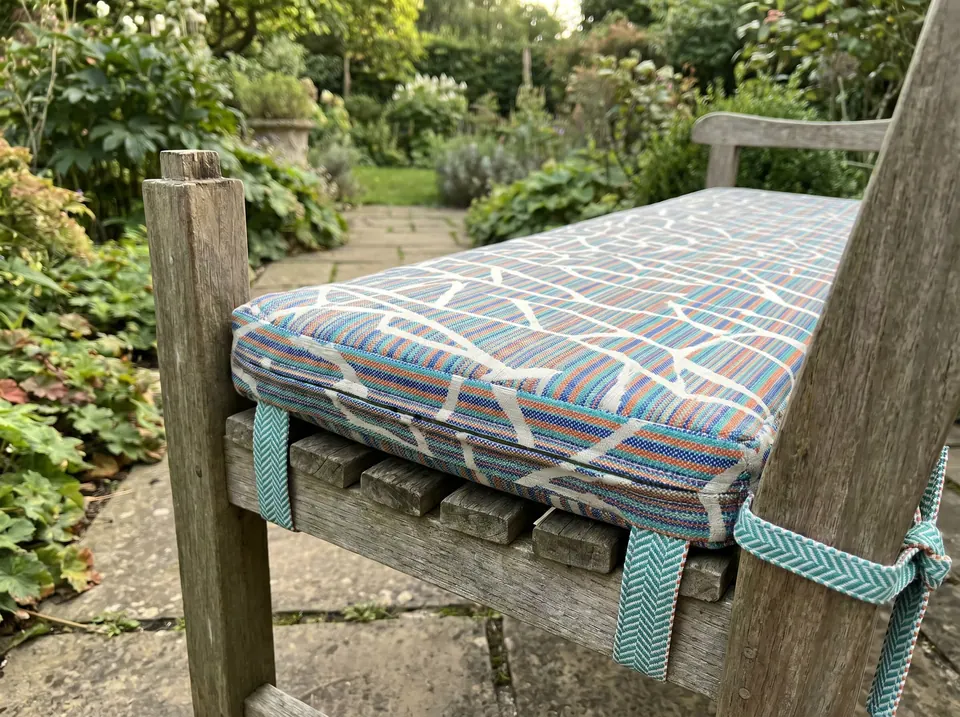
| Fastening | Ties for slatted frames; non-slip backing against a flat wall |
| Color logic | Mid-brown and tan hide soil and pollen |
| Storage | Light enough to carry into the shed |
| Best for | Working gardens, potting benches and mudroom benches |

Have it made
Have this made — ask Callum’s workshop
Short list: size, sun hours, how fast it has to dry. The workshop goes through it with you. — Callum
Leave your details and the workshop will call you to confirm measurements, fabric, foam and piping. No prices, dates or payment on this page: it is a request, not an order.
Three bench-cushion questions: sliding backs, long runs and fabric codes
- A common question
What keeps back cushions from sliding off the bench?
The workshop's answerIt depends on what they lean against. Against a frame, railing or slats, matching fabric ties let you tie them on. Against a flat wall or a solid backrest, a non-slip backing works better to stop the sliding.
- A common question
Can you make a very long cushion for our kitchen bench, and how is it priced?
The workshop's answerYes; the price follows the size you select on the listing. One cushion ran 21 x 138 5/8 x 2 in (53 x 352 x 5 cm), more than 11 1/2 ft long, with double piping and a zipper down the long side, at the regular listing price even in a special fabric. Put the color codes and the zipper note in the personalization box.
- A common question
Which fabric codes should I look at for olive green, taupe, cream or white?
The workshop's answerOlive green is code 123 in the velvet chart, not P60. Taupe and cream tones sit in the Velvet and Soft charts, and the linen bench listing carries the full range, including several white and off-white tones. Shortlist a few codes and the workshop sends close-ups so you can judge warmth, and how white a white really is.
A pale plain cushion on a working garden bench lasts until the first muddy knee; a mid-brown or tan geometric print forgives soil and pollen.
Callum
Questions buyers ask next
What color garden bench cushion hides dirt best?
Mid-brown, tan and mixed prints. They absorb soil, pollen and scuffs that would show at once on a pale plain, and a little cream in the print keeps the cushion from looking muddy.
How thick should a bench cushion be for a boxed frame?
As thick as the frame allows and no thicker. In a boxed frame, an over-thick cushion buckles at the corners and in the middle and wears faster; on an open bench, a proper boxed cushion is kinder than a thin pad.
Does an outdoor fabric make sense on an indoor bench?
On benches that meet wet boots, muddy paws or garden gear, yes, as in a mudroom. Where the seat always stays dry, you can choose a softer indoor cloth for its feel instead.
Where should garden bench cushions go at the end of the day?
Indoors or into the shed, dry. Keep the cushion light enough that carrying it is no chore, because a cushion left out in rain and sun night after night ages much faster.
Fair winds — Callum
More photographs to read
 Save
 Save
 Save
 Save
 Save
 Save