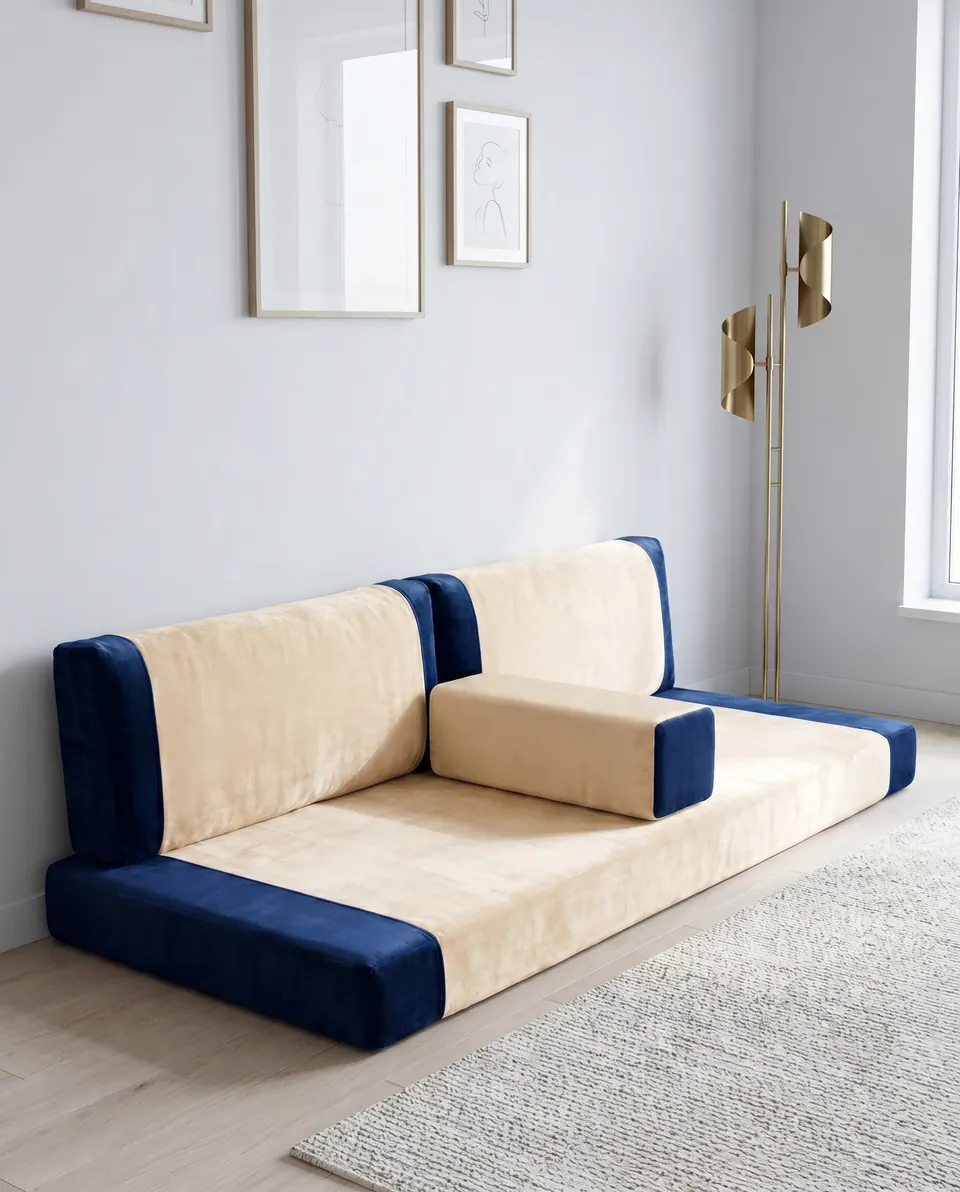
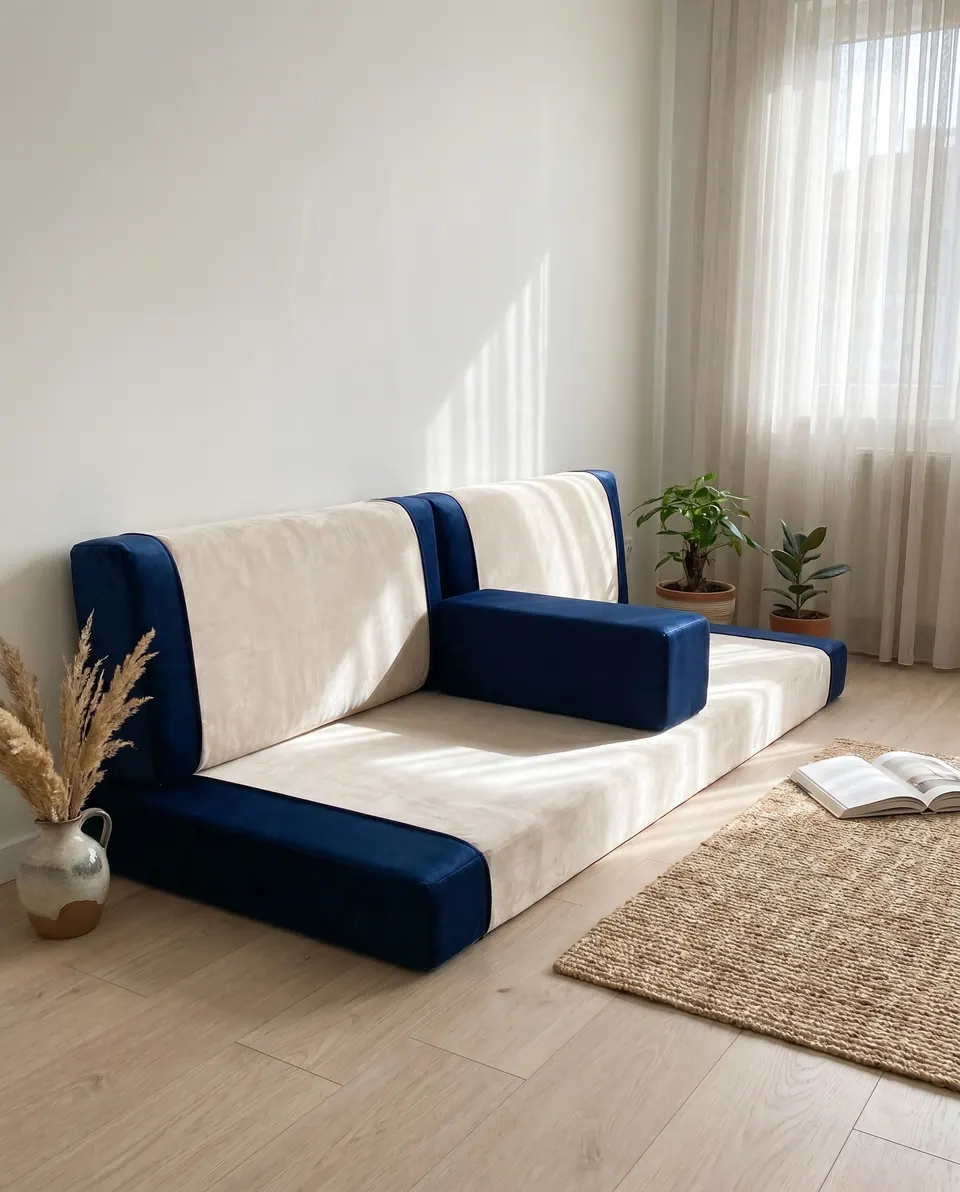
The Cutting Table · a question, worked through
Is there velcro under the floor sofa to stop the cushions sliding apart?
Right, then. I once hook-and-looped two daybed cushions together and spent a year hearing them rip apart every time someone stood up. This floor sofa takes a quieter route.

Pinned by Maggie
The quick answer
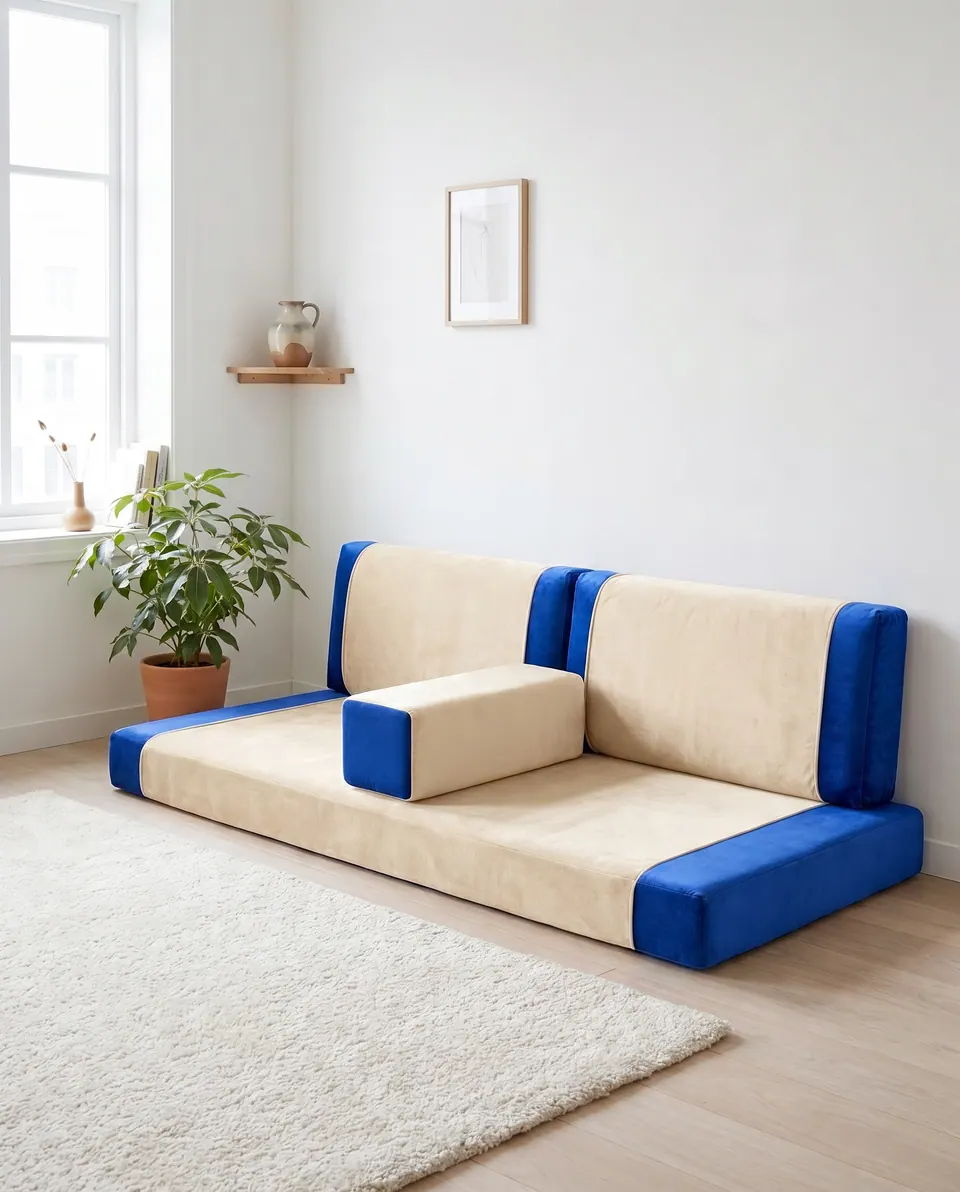
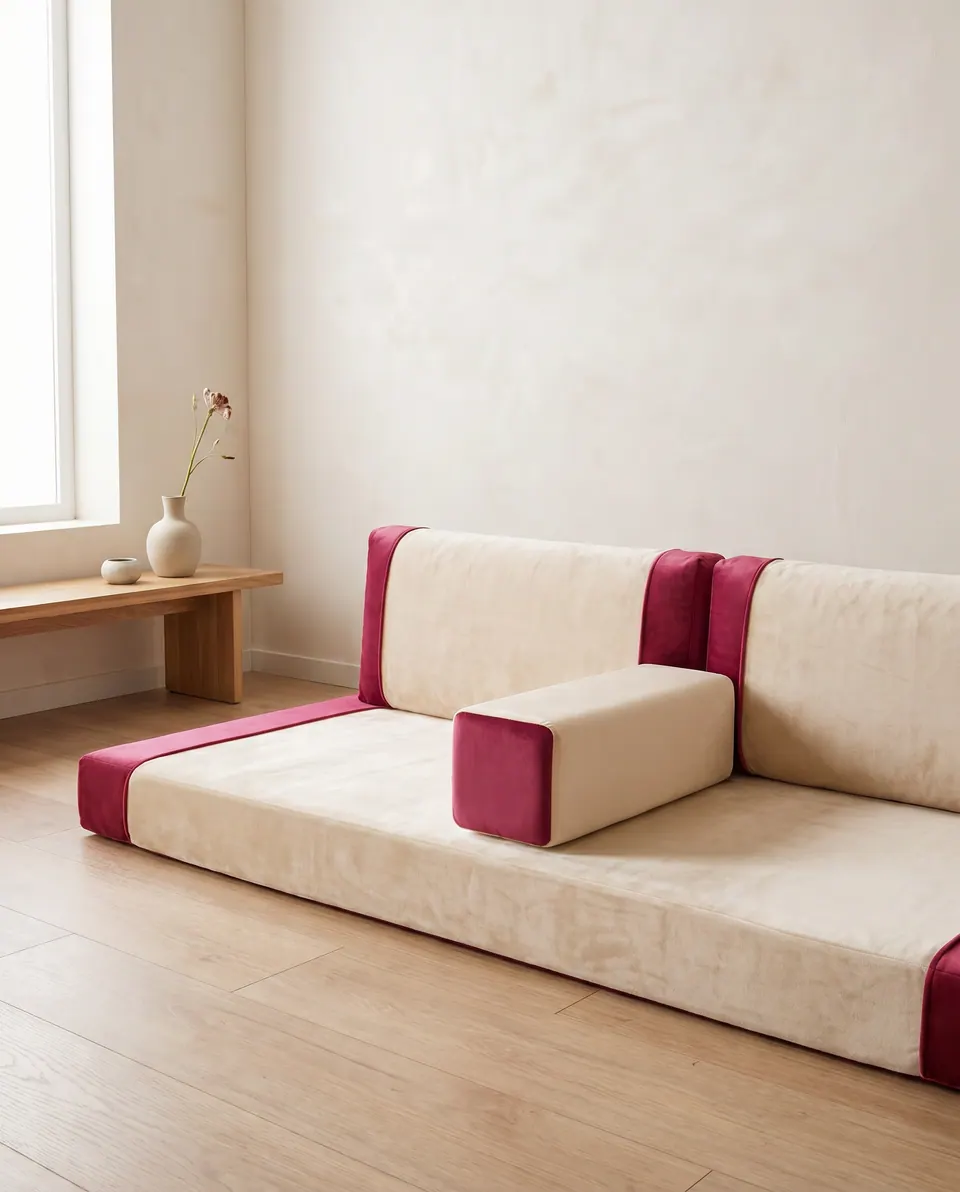
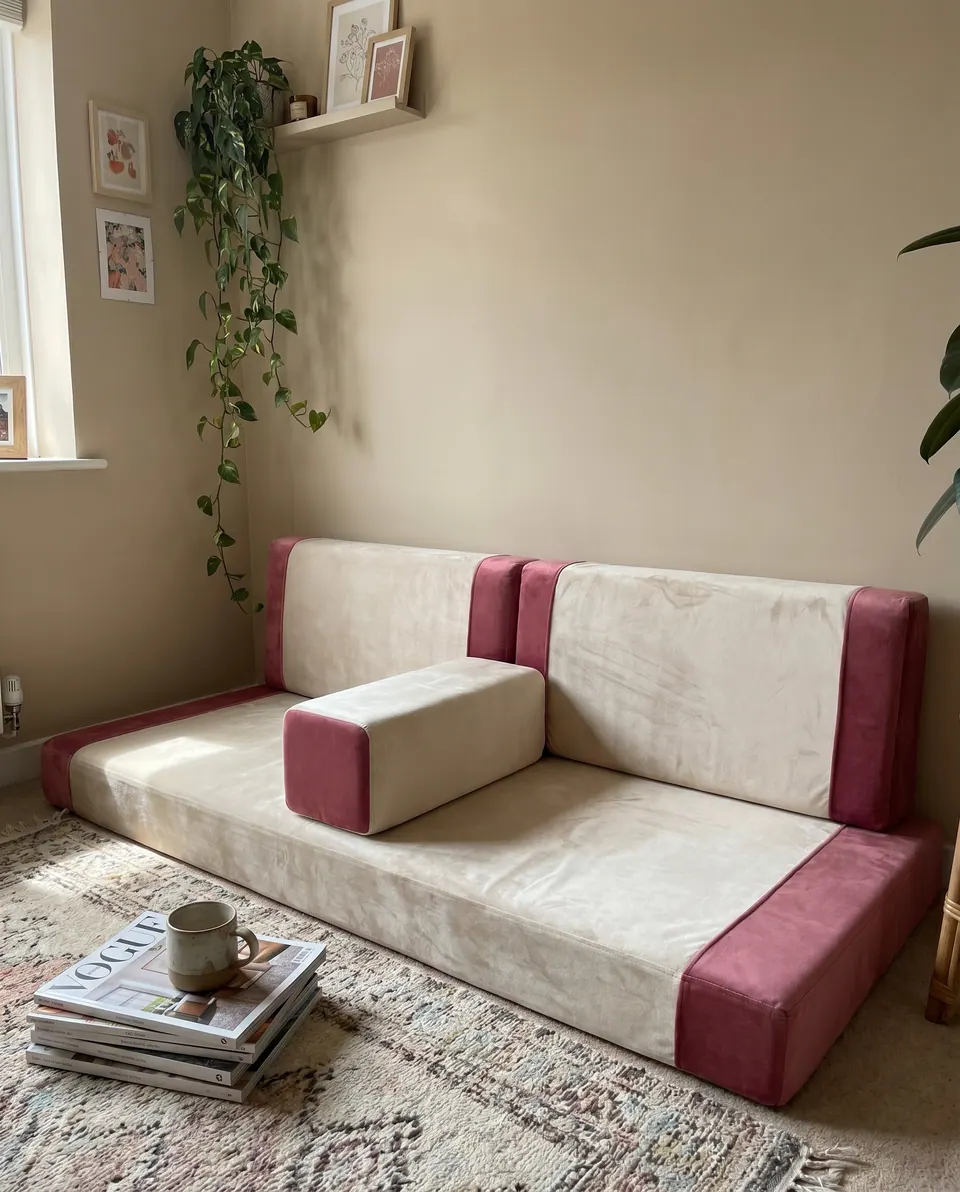
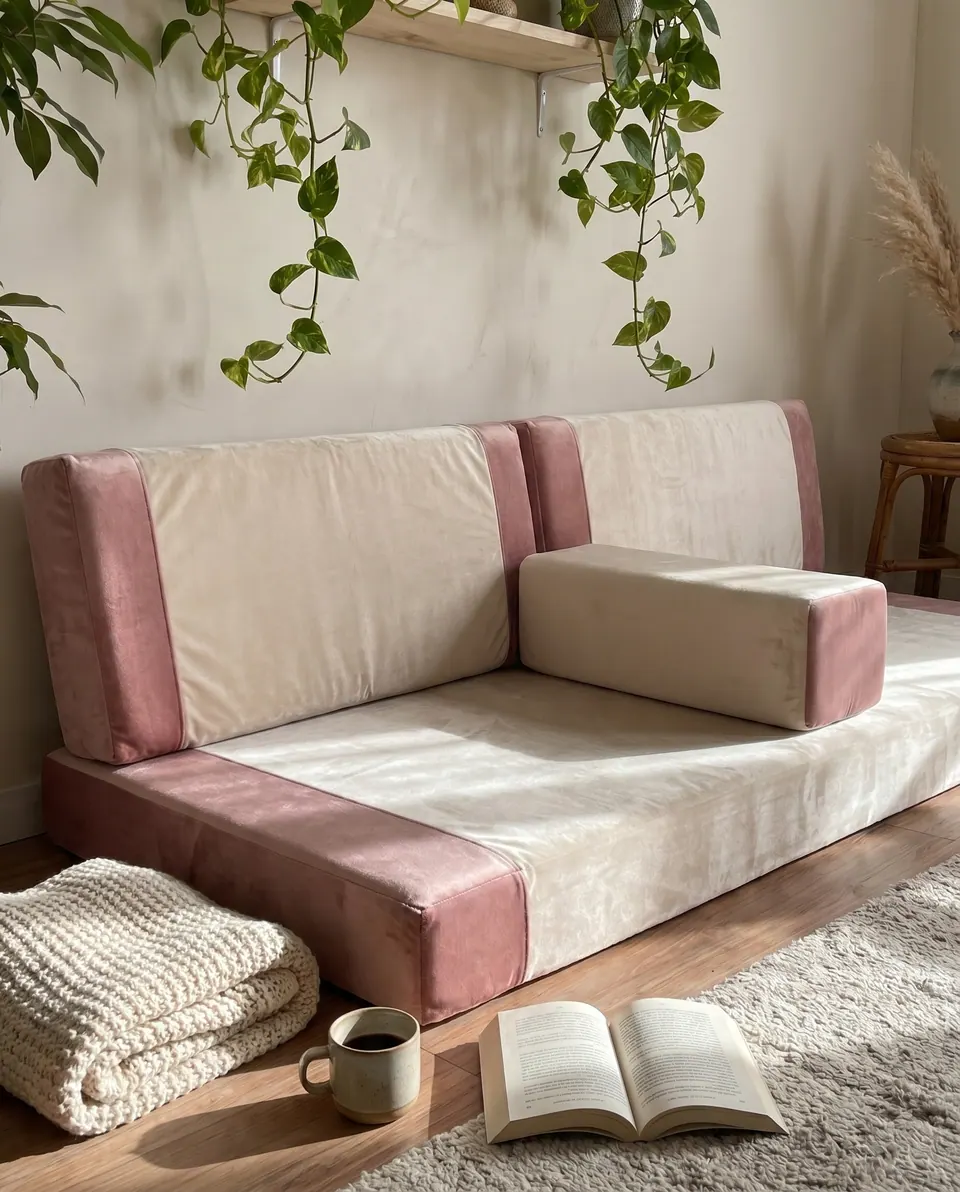
No, there is no velcro joining the floor sofa pieces, and none is needed. Each seat cushion and mattress has a white non-slip fabric on its underside that keeps it from sliding on the floor or drifting from its neighbor. The metal bars and the cushions' own size and weight do the rest, and ties aren't made for this model.
Get a quote for a modular floor sofa
Key facts
- No velcro (hook-and-loop tape) connects the floor sofa pieces.
- Each seat cushion or mattress has a non-slip fabric bottom, white as standard.
- The non-slip fabric is sometimes described as velcro-like, which causes the mix-up.
- The metal bars and the cushions' size and weight keep the pieces in place.
- Heavy backrest cushions hold the side bars in place when you lean back.
- Ties are not made for this floor sofa model.
- The metal bars are about 5/8 in (16 mm) thick; pad them on a wood floor.
- Each seat mattress is about 79 x 39 x 6.5 in (200 x 100 x 17 cm), with the non-slip fabric on its underside.
- A standard floor sofa weighs about 55 to 77 lb (25 to 35 kg) in total.
- Covers wash at up to 86°F (30°C), but the white non-slip panel comes off first and is wiped clean, because the machine shrinks it.

Have it made
Have Maggie’s workshop cut this for you
Numbers first, fabric second, piping last. Jot down what you have, and the workshop will go down the list with you, item by item. — Maggie
Leave your details and the workshop will call you to confirm measurements, fabric, foam and piping. No prices, dates or payment on this page: it is a request, not an order.
Why a few replies said “yes, velcro”
You may have read a yes somewhere. That yes meant the non-slip fabric, which has a grippy, velcro-like feel. It is not hook-and-loop tape, and nothing hooks one cushion to the next. The standard underside is white, so if you wondered what the bottom looks like, that's it.
What does the holding on a modular floor sofa is weight and friction. The seat cushions are big and heavy, the underside grips the floor, and the metal support bars stand behind the backrests. Lean back and the heavy backrests press the side bars into place.
Follow-up: “Then can you add ties?”
Not on this model. The workshop first offered them, then its tailor said ties can't be made on this floor sofa, and they aren't needed. On an ordinary custom cushion it's a different story: ties go into the seam wherever you ask. The sliding Pattern compares ties, grip and velcro side by side.
Follow-up: “My floor is slick hardwood”
Put a rug, carpet, fabric or anti-slip mat under it; that usually stops the sliding even on smooth floors. If the sections still drift apart, extra metal bars can be bought to hold them together. And the bars themselves are bare metal, about 5/8 in (16 mm) thick, so slip carpet, a scrap of fabric or felt feet under them, dear, before they meet your oak.
If floor sofa sections drift on a hardwood floor, put a rug or anti-slip mat underneath first; extra metal bars come after that.
Maggie
Buyer questions
- A common question
How do I stop two big floor cushions sliding apart when they sit side by side?
The workshop's answerThe underside of each cushion has a non-slip fabric, so they shouldn't move much when placed next to each other.
- A common question
Is there velcro or a connector to keep the two mattresses and the frame together?
The workshop's answerThere's no velcro, and none is needed. Every mattress has non-slip fabric underneath, and the large, heavy backrests keep the side bars in place when you lean back.
- A common question
Does the teddy sofa have anything underneath to stop it sliding?
The workshop's answerYes: a special non-slip fabric on the underside of the seat cushions, which that reply called velcro. It is grip fabric, not hook-and-loop tape.
- A common question
Do the cushions slide apart? Are there ties to hold them?
The workshop's answerThe seat cushions have a non-slip, velcro-like underside, and the metal bars and cushion size stop them moving. Ties were offered at first, but the tailor said this model can't take them, and they aren't needed.
Questions buyers ask next
Will the floor sofa's metal bars scratch a wood floor?
Bare bars can. Put carpet or a small piece of fabric under the 5/8 in (16 mm) bars, or add felt feet.
Is a non-slip bottom standard on custom seat cushions too?
No. On made-to-measure bench and seat cushions it is an optional add-on, priced by size. Write 'non-slip base' and your exact size in the order note.
Can ties be added to an ordinary custom cushion?
Yes. Ties can be sewn onto any custom cushion on request. Write how many you want and where, such as the corners, the back edge or one side, and they are sewn into the seam.