 Save
A Reading by RosaWindow Seat Cushions
A navy wildflower window seat cushion, and how to mix patterns around it
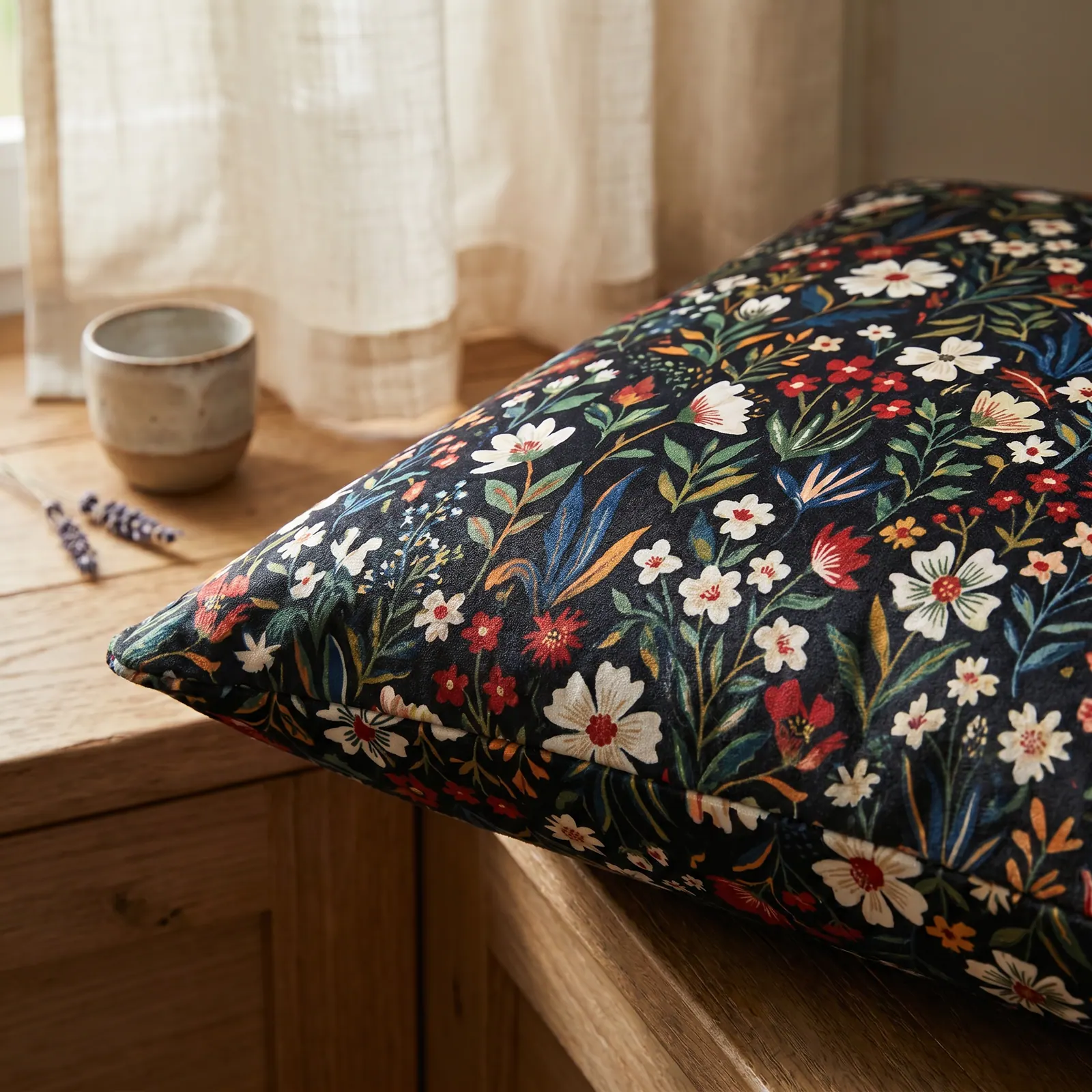
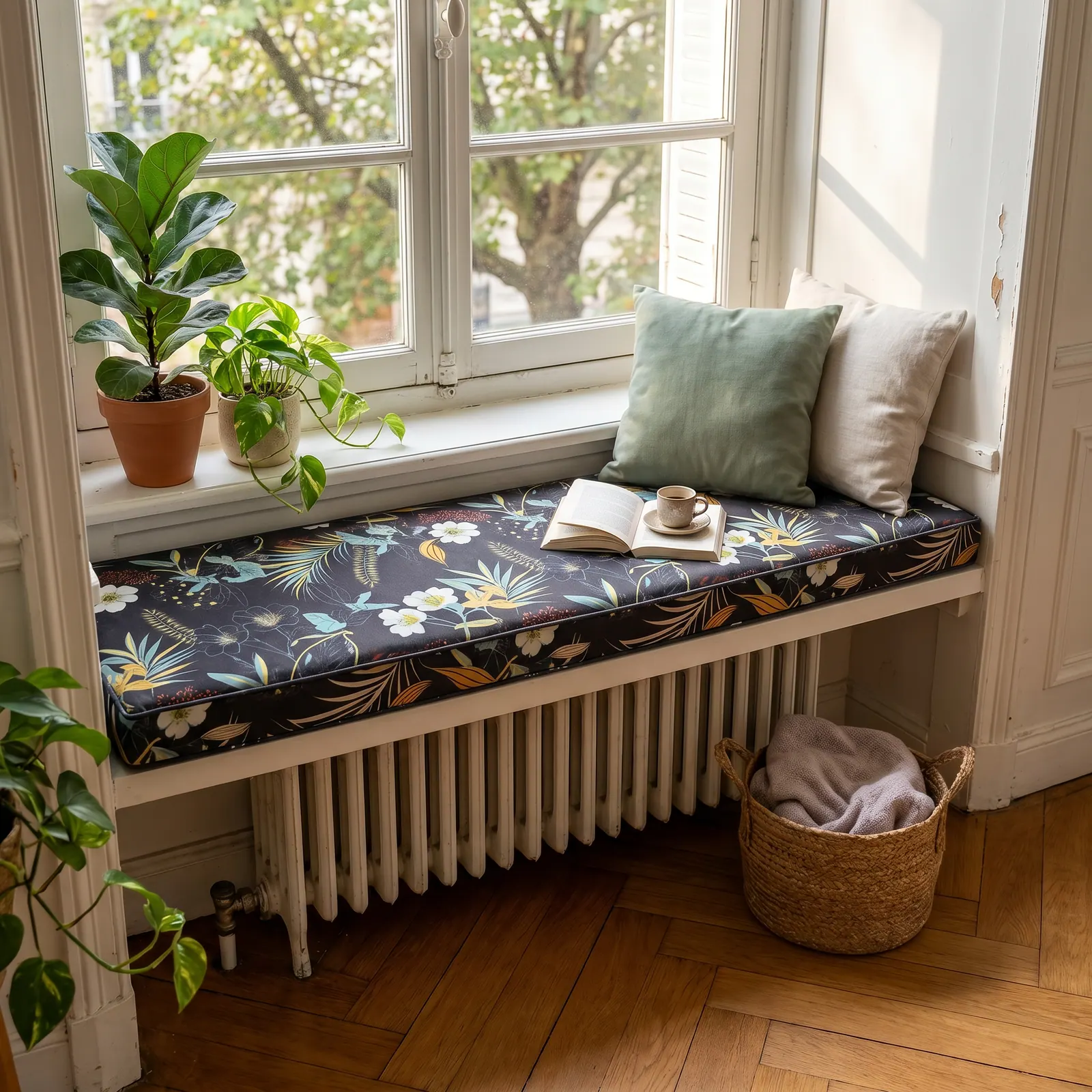
A small floral, an oak ledge and a stoneware cup. One print leads here, and the rest of the room follows along happily.
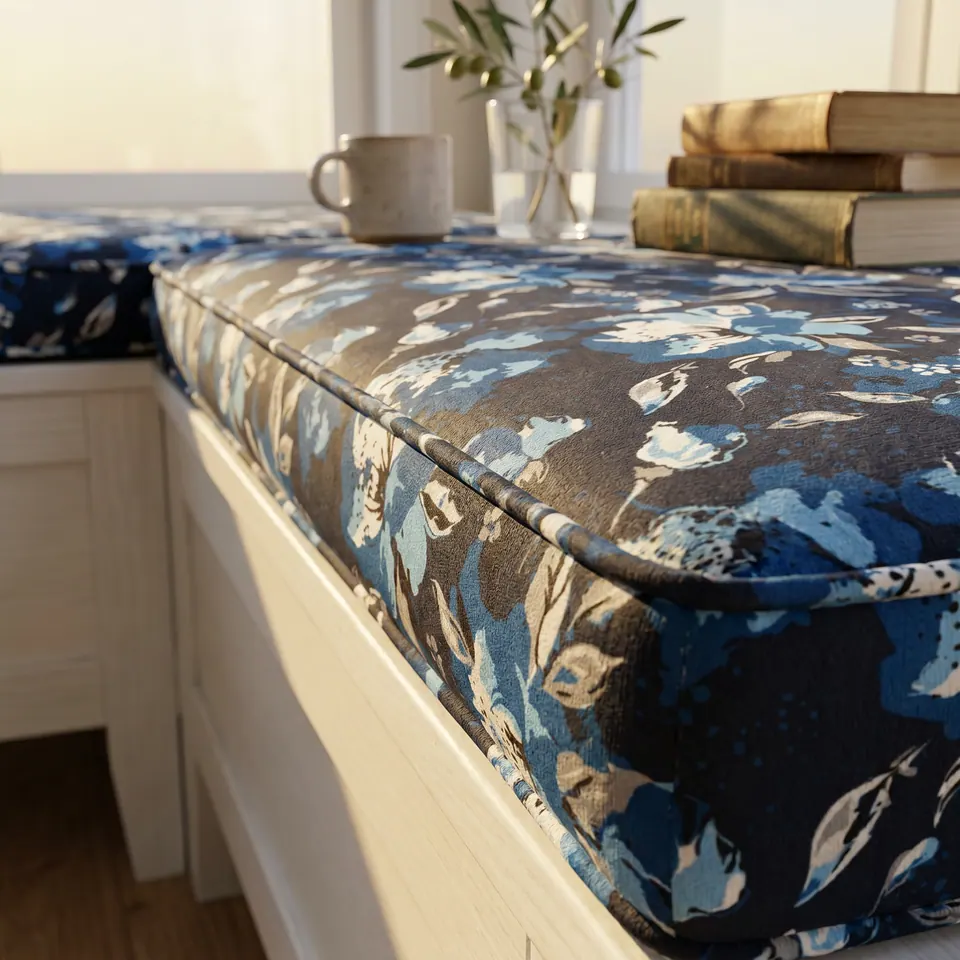
A knife-edge cushion has no side panel, so it keeps this soft, pillowy wedge: a relaxed cottage alternative to a box edge.
The quick answer
A knife-edge window seat cushion has no side panel: the top and bottom are sewn together in one seam, giving a soft, wedge-shaped edge that suits cottage rooms and small prints. To mix patterns around it, let one print lead, add a stripe in a different scale taken from the print's colors, and rest the eye with plain linen, stoneware and wood.
A soft wedge of wildflowers
Look at the corner first. This cushion has no side panel. The top and bottom are sewn straight together along a single seam, so the edge closes into a soft, pillowy wedge instead of a squared-off box. That's a knife edge, and it suits an old oak window seat.
The print is a dense, small-scale wildflower: red and cream blooms and sage leaves on navy. From a few steps back a print this small behaves almost like a texture, which is why it mixes so easily. The props agree with the flowers. A stoneware cup in an oatmeal glaze repeats the cream, dried lavender adds a touch of purple, and a sheer unbleached linen curtain softens the light. Nothing else in the frame is a second loud pattern.
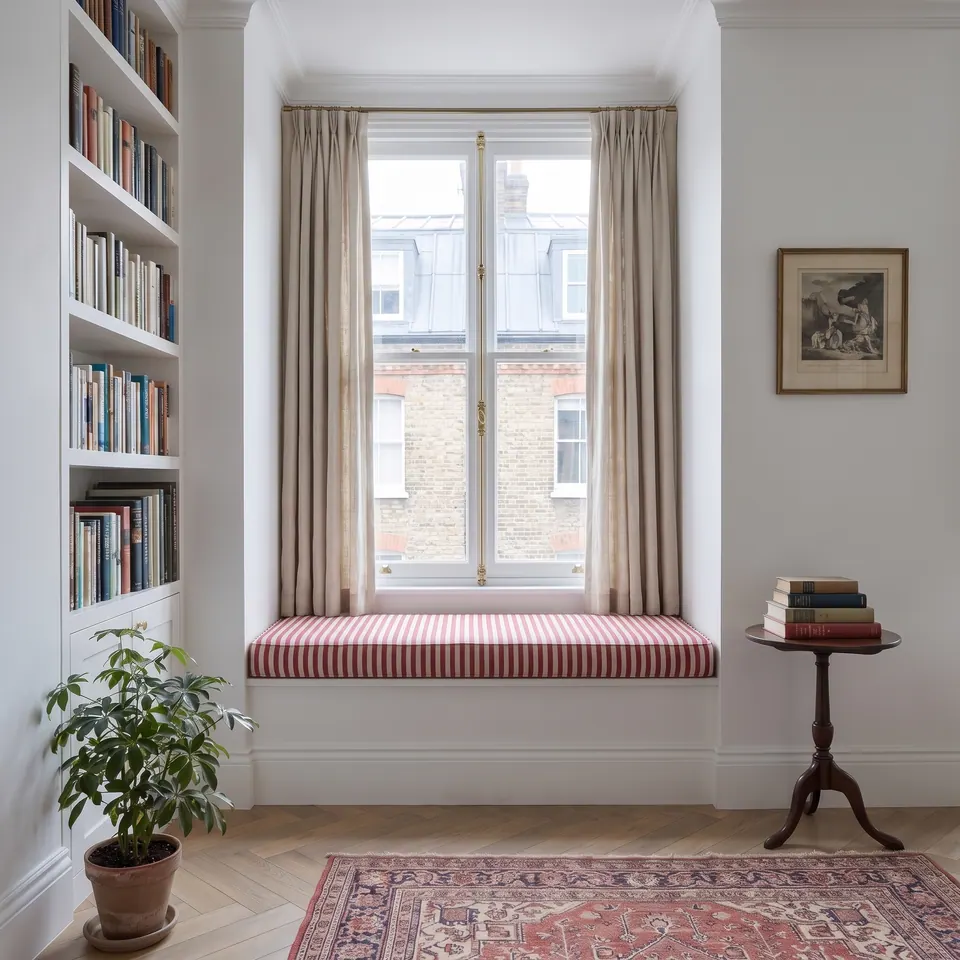
Here's how I'd build on it, neighbor. Keep the wildflower as the one print that leads. Add a stripe only in a different scale, a wide ticking or a fine pinstripe, and take its color from the flowers: navy or red. Then rest the eye with plains and texture, like linen, stoneware and oak. Two busy florals side by side squabble like cousins at Thanksgiving. What's already patterned in your room?
Choose a knife edge for a relaxed cottage look, a box edge when the seat needs a crisp front line. The box edge vs knife edge Pattern shows both, and more built-ins live under window seat cushions.
Four colors hiding in one small print
- Navy#1F2A44The ground; repeat it in a stripe.
- Poppy red#A8342BThe loudest bloom; use it once more, not three times.
- Oatmeal cream#D4C6B2Echoed by the stoneware cup.
- Sage#8E9A7CThe leaves; a plant picks it up.
Pinned by Rosa: seam to lavender
Five details, from the single seam to the dried lavender.
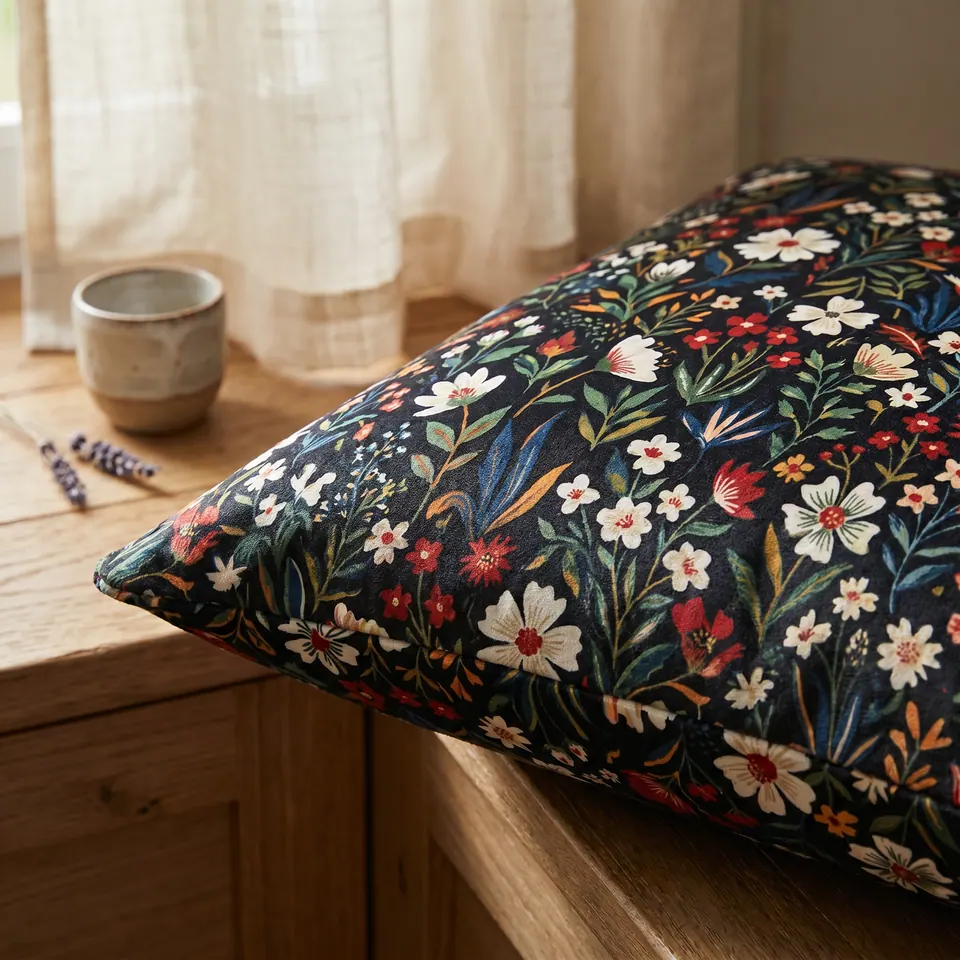
- Knife-edge corner
Top and bottom are sewn straight together, giving a soft pillowy wedge.
- Edge seam
A single seam with no side panel, the defining detail of a knife edge.
- Wildflower print
A dense small-scale floral in red, cream and sage on navy.
- Stoneware cup
Its oatmeal glaze repeats the cream in the flowers.
- Lavender sprigs
Dried lavender adds a cottage note and a touch of purple.
- Knife-edge cornerTop and bottom are sewn straight together, giving a soft pillowy wedge.
- Edge seamA single seam with no side panel, the defining detail of a knife edge.
- Wildflower printA dense small-scale floral in red, cream and sage on navy.
- Stoneware cupIts oatmeal glaze repeats the cream in the flowers.
- Lavender sprigsDried lavender adds a cottage note and a touch of purple.
A 106-inch ledge over a radiator
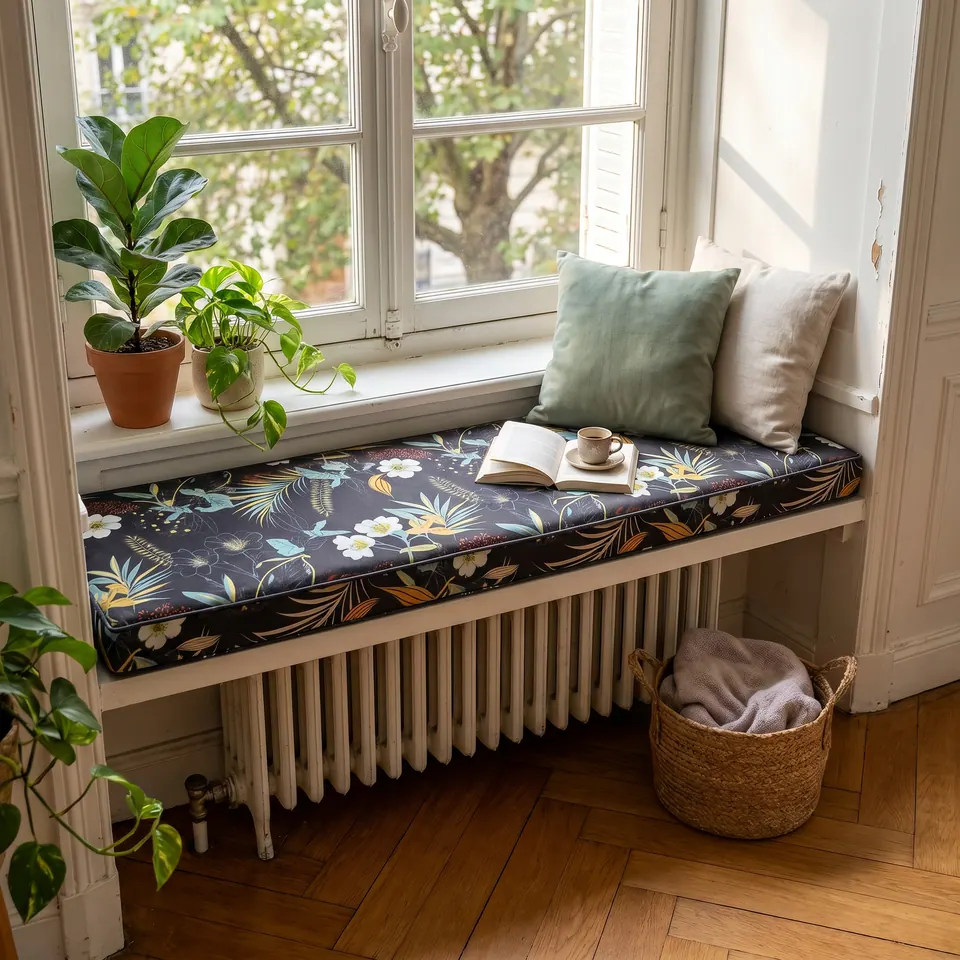
A buyer in the US measured a front bay window ledge at 106 x 15 in, with a radiator underneath. One long cushion would have blanketed the whole radiator top.
The workshop suggested two cushions of 53 x 15 in instead, so the radiator isn't fully covered, heat can get out and each piece lifts out on its own. Then the buyer took their time with the color chart, and I respect that. On a ledge that long, you live with the choice a while.
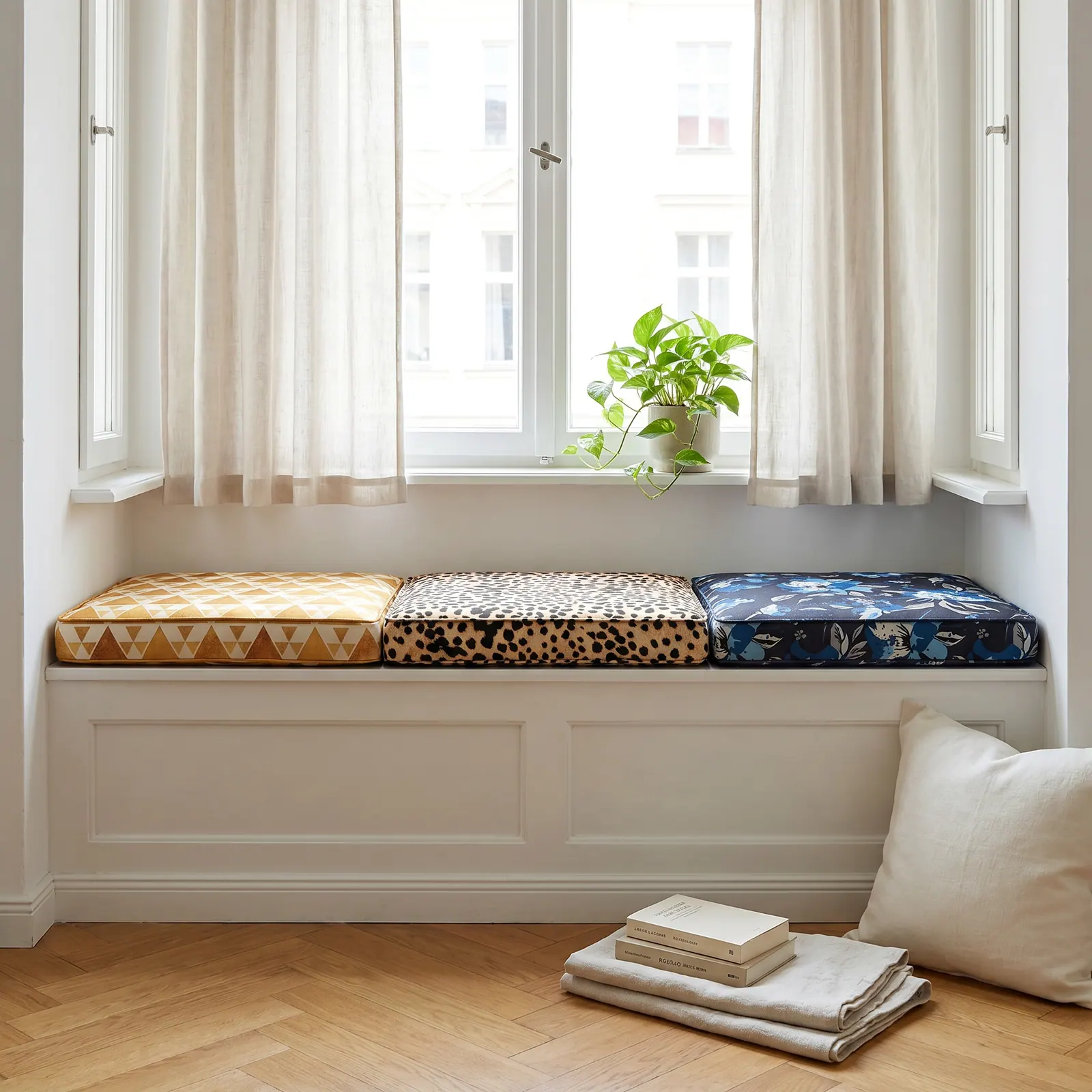
Two cushions also make mixing easy: the same print on both, or one print and one plain.
- Sizes
- 2 x 53 x 15 in (2 x 135 x 38 cm)
The lesson: Split long window cushions over radiators so heat can escape and pieces lift out easily.
Shapes, thickness and price, asked plainly
- A common question
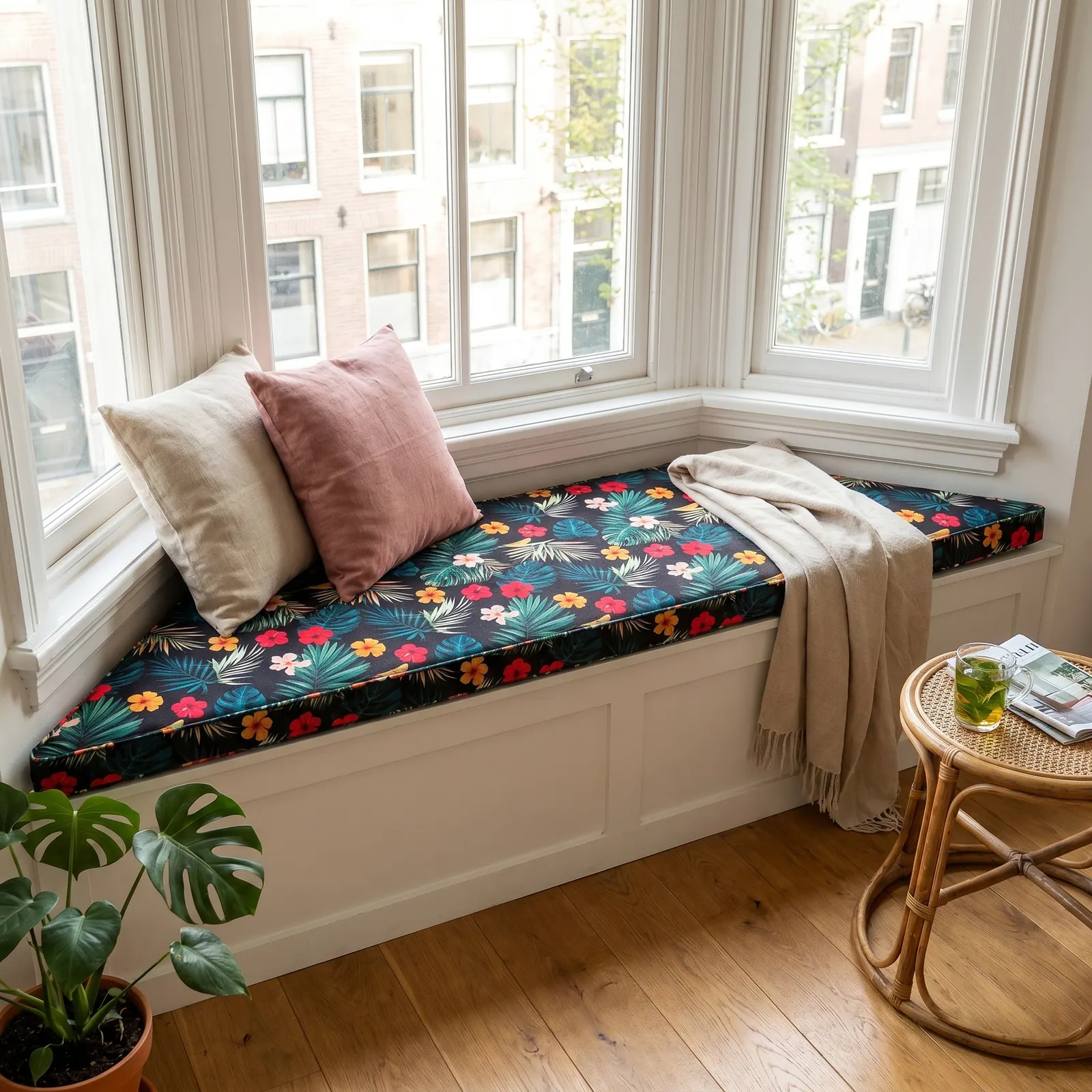
My bay window seat is a trapezoid. Can you make a cushion, and what do you need from me?
The workshop's answerYes. Send a drawing with every side measured, plus a photo of the space; there is a size chart to help. Measure the angled sides separately: in a trapezoid, two sides can't both be 43 in. Include length, width and thickness.
- A common question
Do your cushions only come 4 inches thick, or can I go thinner, like 2 inches?
The workshop's answerFour thicknesses are standard: 2, 3, 4 and 5 in (5 to 12.5 cm). You pick it in the thickness option or the personalization box. The product photos show 4 in, and most buyers choose 3 or 4 in.
- A common question
How do I find out what my custom-size window seat cushion will cost?
The workshop's answerChoose the size range that covers your measurements, then your thickness, and the price appears right away. Prices are in US dollars; check the shipping line for your address before you pay, and several cushions can be quoted together.
A knife-edge cushion has no side panel: the top and bottom meet in one seam, so the corner closes into a soft wedge instead of a box.
Rosa
On the cutting table
| Cushion | Window seat cushion, knife edge |
|---|---|
| Edge | Top and bottom sewn together, no side panel |
| Fabric | Wildflower print on navy, small scale |
| Piping | Self, in the same print |
| Thickness | 2 to 5 in; most choose 3 or 4 in |
| Long ledges | Split in two over a radiator |
| Best for | Cottage window seats, reading ledges |

Have it made
Have this made — ask Rosa’s workshop
Every good cushion I know started with a long porch chat. This is the short version: leave your number and the workshop will call. — Rosa
Leave your details and the workshop will call you to confirm measurements, fabric, foam and piping. No prices, dates or payment on this page: it is a request, not an order.
Questions buyers ask next
When should I choose a box edge instead of a knife edge?
Choose a box edge when the seat needs a crisp front line, on a bench people perch on or a sleek built-in. A knife edge gives a softer, relaxed silhouette that suits small prints and old wood.
Can I mix a floral cushion with striped pillows?
Yes, when the scales differ and the colors agree. Let the small floral lead, choose a stripe that is clearly wider or finer, and take its color from the flowers, such as navy or red.
Should two cushions on one ledge match?
Either way works. Matching prints on both halves read as one long seat; one print and one plain rests a busy room. Over a radiator, two separate pieces also let the heat out.
Porch light's on — Rosa
More photographs to read
 Save
 Save
 Save
 Save
 Save
 Save