The Cutting Table · a common question
Can I put the cushion covers in the tumble dryer?
Also asked as:Can I tumble dry the covers?Does the sofa fabric go in the dryer?
Velvet and linen come out of the wash wanting air, not heat. Give them a line and a little sun, and they come back to the sofa the way they left it.

The quick answer
Cushion covers are best air dried, on a line, outdoors or in the sun; if you use a dryer on the fabric covers, choose the low setting, medium at most, and never high heat. Never tumble dry non-slip bottom pieces or rubber-backed covers: the backing can shed particles and deform until the cover won't zip shut.
 Save
Key facts
- Air drying, on a line, outdoors or in the sun, is the recommended method.
- Fabric covers tolerate a dryer on low heat, medium at most.
- High heat is never recommended.
- Non-slip bottom pieces never go in the dryer.
- Rubberized non-slip backing can shed particles and deform in a machine.
- Covers wash at 86°F (30°C) or below on a gentle cycle.
- After drying, shake covers out and lint-roll any leftover particles.
- Fitted covers are cut about 1/2 to 3/4 in (1-2 cm) under the measured thickness, so there is little room to lose in a hot dryer.
- A floor sofa seat cover spans about 79 x 39 in (200 x 100 cm), so it dries best spread over a line.
- Back pillows, about 16 in (40 cm) tall as standard, keep their fill in an inner cover, so only the outer cover is washed and dried.

Have it made
Have Élodie’s workshop cut this for you
A fabric reads one way at noon and another at dusk. Mention your light, and the workshop will weigh it with you. — Élodie
Leave your details and the workshop will call you to confirm measurements, fabric, foam and piping. No prices, dates or payment on this page: it is a request, not an order.
What heat does to a cover that has to zip again
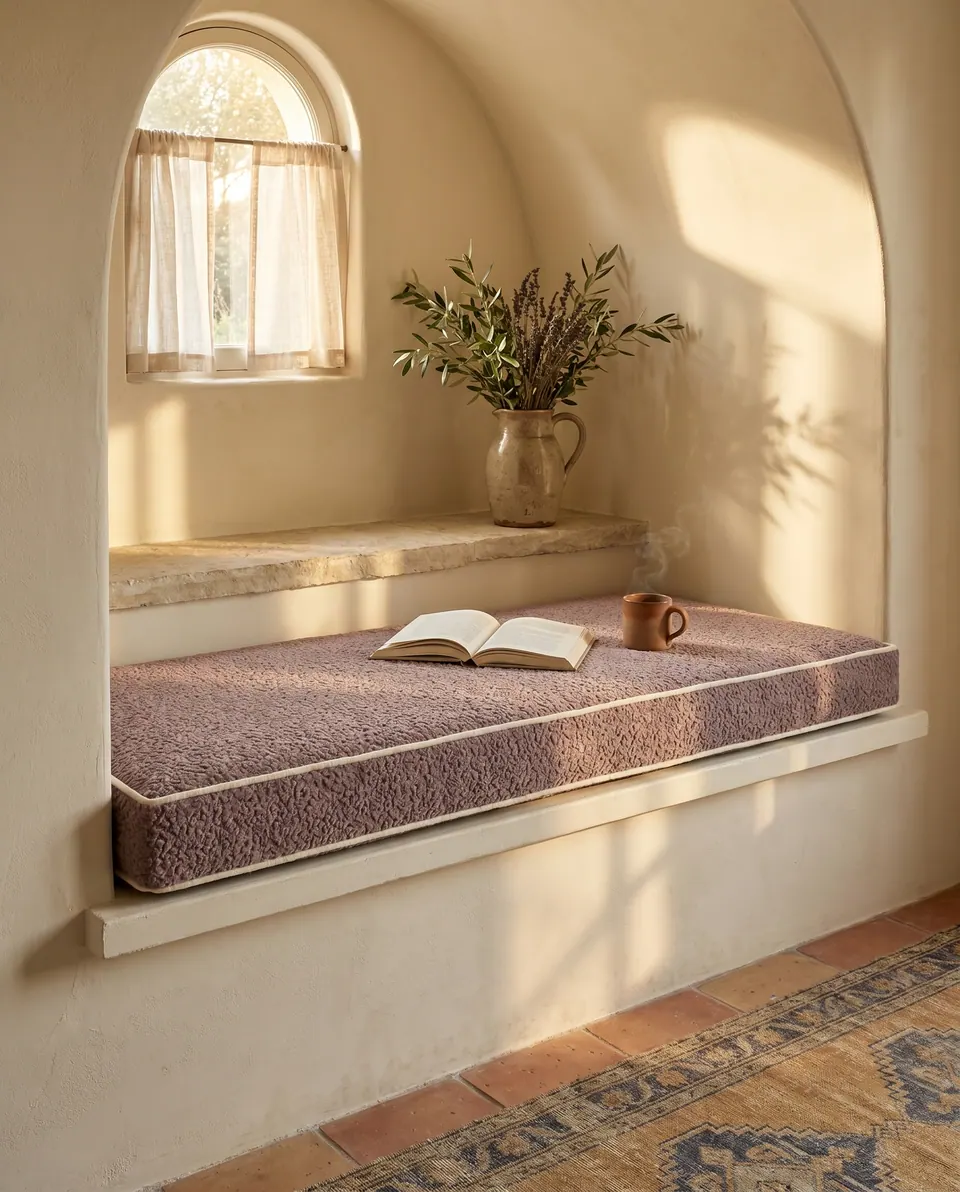
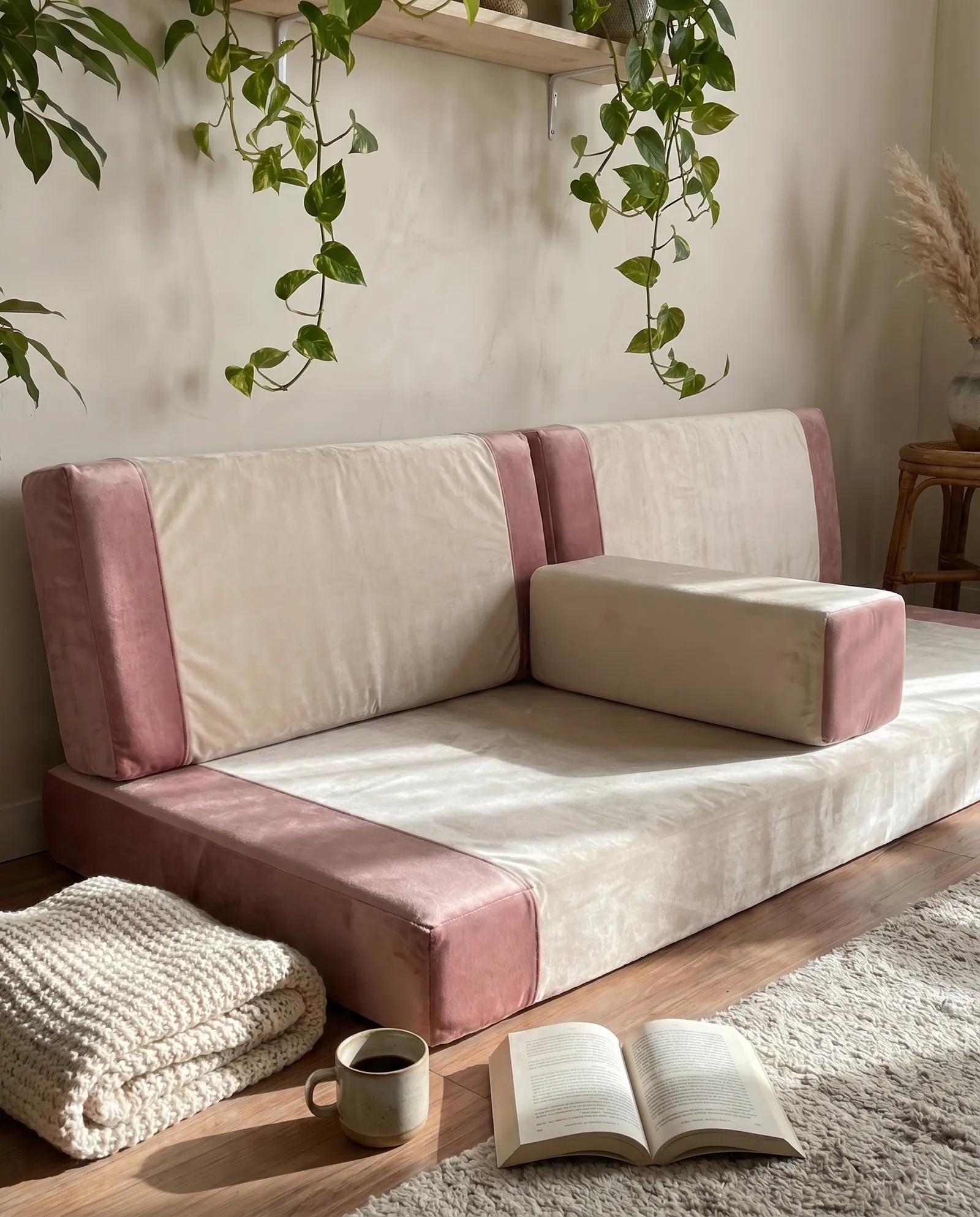
The dusty rose floor sofa in the photograph is really two materials sewn together: soft fabric on top and, on some pieces, a rubberized non-slip backing underneath. The fabric forgives a low tumble. The backing does not. In a hot drum it can shed particles and deform, and a deformed cover is how a zipper that closed last week stops meeting in the middle.
So the fabric covers get air, or low heat at most, and the non-slip base never sees the dryer. The full routine lives in the Pattern on washing cushion covers, and the modular floor sofa pages show how the pieces go together.
Where do your covers dry in summer, my friends: a backyard line or a rack by the window?
Dryer settings for fabric covers and non-slip bottoms
- Fabric top covers: line dry, or the dryer on low
- Medium heat: the ceiling, never the habit
- High heat: not for any cover
- Non-slip bottom pieces: no dryer, and no washing machine either
- Covers with rubberized backing: air dry, shake out, lint-roll
From the washer back to the sofa
Unzip and wash cool
Machine wash at 86°F (30°C) or below on a gentle cycle; turning covers inside out is optional.
Hang them in the open air
A line outdoors or a sunny spot is the workshop's first choice.
Or tumble on low
Fabric covers only. Low setting, medium at most.
Shake and lint-roll
Any leftover backing particles come off with a good shake and a lint roller.
A fabric cushion cover can take a tumble dryer on low, medium at most; high heat is the one setting to leave alone.
Élodie
Buyer questions
- A common question
Are the floor sofa covers removable and washable, and what about the non-slip bottom?
The workshop's answerYes, the top covers come off and are machine washable. Don't wash the anti-slip bottom section. After washing, dry the covers in the sun or use a dryer on low or medium, never high.
- A common question
How do I wash and dry the zippered sofa covers?
The workshop's answerMachine wash below 86°F (30°C); turning them inside out is optional. If you use a dryer, choose low. Covers with a rubberized non-slip base can shed particles in the machine, so air dry those, shake them out and use a lint roller.
- A common question
Should the sofa covers go in the tumble dryer at all?
The workshop's answerThe safest answer is no: dry them outside or air dry them. Wash only the fabric cover itself, such as the corduroy part. The white non-slip base piece should never go in the washing machine.
- A common question
What temperature and cycle do the covers need?
The workshop's answerUnzip the cover, turn it inside out and machine wash at 86°F (30°C) max on a gentle or delicate cycle with mild detergent and no bleach. Air dry rather than tumble drying, and iron on low if needed.
Questions buyers ask next
Do tufted cushion covers go in the dryer?
Tufted covers don't come off at all, because the buttons are stitched through cover and foam. Clean them in place: wipe gently with a damp cloth and a little mild soap and water. Choose an untufted zippered cushion if machine washing matters to you.
Why won't my floor sofa cover zip after drying?
Heat is the usual suspect. Rubberized non-slip backing can deform in a tumble dryer, and a deformed cover no longer lines up at the zipper. Air dry any cover with a non-slip base, then shake it out and lint-roll it.
Is drying velvet and linen covers in the sun all right?
Yes. Drying outdoors or in the sun is one of the workshop's recommended methods, and velvet and linen covers both machine wash at 86°F (30°C) on a gentle cycle. Hang them on a line until they're fully dry.